
REVIEW · WALKING TOURS
Prague: Highlights Walking Tour to the German embassy 1989
A walk here feels like history with street-level traction. This Prague highlights tour strings together major sights and specific 20th-century events, so you do not just see landmarks, you understand why people once risked everything near the German Embassy. I especially like the way Charles Bridge and John Lennon Wall get paired with lessons about communism’s fall, and the route also works well if you want a focused 150-minute plan without spending your whole day in transit.
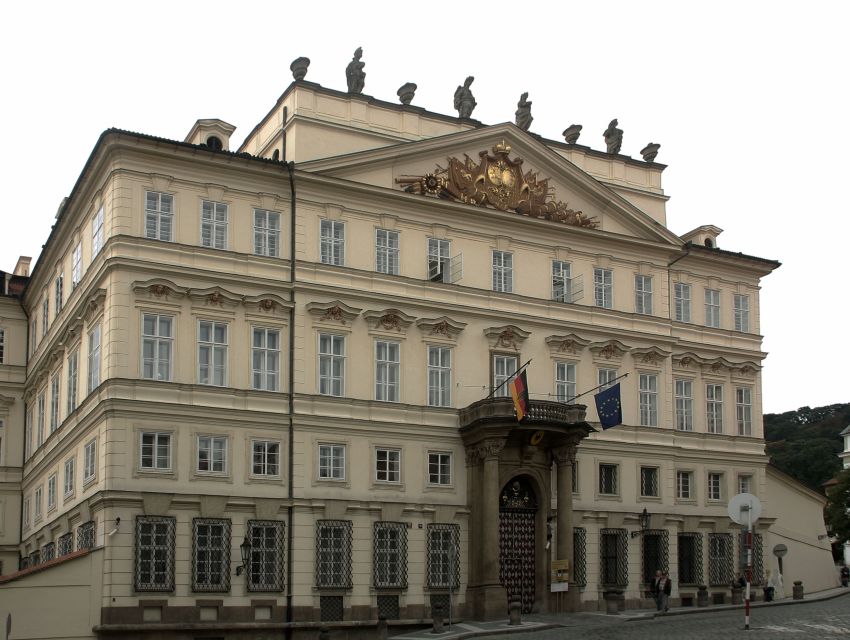
One thing to keep in mind: the German Embassy interior is not open to the public, so you are viewing the key spots from the outside, including the balcony area tied to Hans-Dietrich Genscher’s speech.
In This Review
- Key things I’d mark on your mental map
- From Faculty of Law to the Old Town pulse, fast
- Old Jewish Cemetery and Josefov: why this part of town matters
- Jan Palach Square and the Velvet Revolution Memorial
- Charles Bridge as a historical corridor, not just a view
- John Lennon Wall: the contrast you feel in your gut
- Wenceslas Square, Prague National Museum, and a city built for attention
- Malostranské Square and the exterior German Embassy balcony
- Price and time value: what you get for $32
- Guide style and what to do during the walk
- Who this tour suits best
- Should you book this Prague highlights walk to the German Embassy balcony?
- FAQ
- How long is the tour?
- What language is the guide?
- Where do I meet the guide?
- Is hotel pickup and drop-off included?
- Are food and drinks included?
- Can I enter the German Embassy during the tour?
- What’s the general route and pace like?
- Is the tour suitable for people with mobility impairments?
- Is there free cancellation?
Key things I’d mark on your mental map
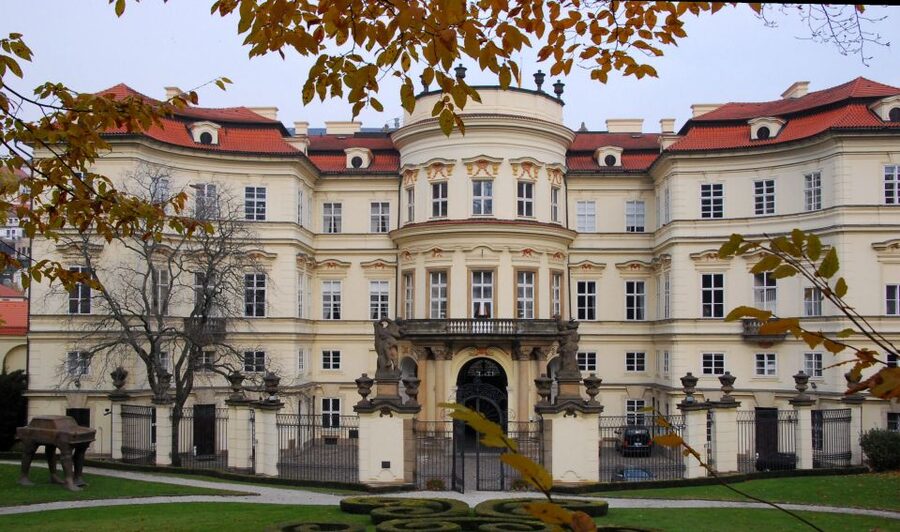
- Hans-Dietrich Genscher balcony moment, explained on location from the outside (embassy interior stays closed).
- Refugee crisis story in 1989, tied directly to why people ended up at the West German Embassy in Prague.
- Jan Palach and the 1968 Prague Spring, with stops at the square that remembers him and the turmoil around it.
- Charles Bridge walk plus the German Embassy view, using Prague’s most famous river crossing as a historical corridor.
- John Lennon Wall and Lennon’s homage, a strong visual counterpoint to the politics of the era.
- Licensed German-speaking guide, with time built in for guided photo stops and questions.
From Faculty of Law to the Old Town pulse, fast
You start in a very practical spot, right in central Prague, in front of the Faculty of Law at Charles University (nám. Curieových 7). If you arrive by metro, get off at Staroměstská, then walk about 550 meters. Prefer trams, take tram 17 and stop at Pravnická Fakulta.
I like this meeting point because it puts you close to the walking action immediately. Within minutes you are outside, oriented, and moving through areas that connect Old Town, Lesser Town, and the places tied to modern Czech memory.
Old Jewish Cemetery and Josefov: why this part of town matters
The early stretch uses short photo stops that still feel meaningful. You pause at Čech’s Bridge for scenic views on the way, then you shift into Josefov, the old Jewish quarter, with stops that help you understand Prague as more than a postcard.
You will visit the Old Jewish Cemetery and then spend time with Josefov as a reminder that Prague’s story is layered. You get a real sense that 20th-century politics did not happen in a vacuum. This part of the tour also gives your guide chances to set context before the route swings harder into 1968 and 1989.
If you have even a little curiosity about how cities remember, you will enjoy these pauses. They also serve a practical purpose: they break up the walking rhythm so the later stops, like Charles Bridge and Wenceslas Square, do not feel like a blur.
Jan Palach Square and the Velvet Revolution Memorial
This tour earns its name once you hit Jan Palach Square. You learn about the fate of Jan Palach, a student at the Faculty of Philosophy, during the Prague Spring in 1968. That is not abstract. It is tied to a specific person and a specific year that the city still marks.
From there you continue to the Velvet Revolution Memorial, another guided photo stop. Even if you already know the big theme, you’ll appreciate how your guide connects the dots between Czech events, Central European politics, and what led to the dramatic turning point in 1989.
This is a good place to ask questions. I found this kind of historical tour works best when you nudge it from “I see the place” to “I get the why.” With a German-speaking guide like David Klaus Travel Manager Service Prag, you get a consistent narrative voice throughout the walk, so the answers usually fit the next stop instead of feeling like side notes.
Charles Bridge as a historical corridor, not just a view
Now for the highlight route moment: you cross Charles Bridge on foot. The walking portion is part sightseeing, part story delivery, and it is one of the best ways to experience Prague because your eyes keep changing.
What I like here is that the bridge is not treated like a static backdrop. You connect the crossing to what comes next, including the ability to see the German Embassy building from the river crossing area. Standing with the bridge in front of you helps the political narrative feel physical.
Charles Bridge also gives you something practical: great photo angles and an easy way to pace your group. If your legs are not used to long walks, this section is still doable because it is a controlled, guided crossing with regular pauses.
John Lennon Wall: the contrast you feel in your gut
A big stop follows at the John Lennon Wall. You take time to see the homage and talk through what it represents in the broader cultural mood around resistance and expression.
I like this part because it changes the tone. You are still in the same political neighborhood of ideas, but now the story reaches you through art, names, and messages instead of speeches and policy. It is also a visually easy stop to remember later when you think back on 1989 as more than a news headline.
This is the kind of stop where you can slow down without feeling lost. Your guide keeps the history line connected, but the wall itself gives you something your mind can hold onto after the group moves on.
Wenceslas Square, Prague National Museum, and a city built for attention
Next comes Wenceslas Square with a guided visit and sightseeing. The tour includes a stop at the Prague National Museum area as well, even if you only see it from the street.
Wenceslas Square is wide and dramatic, and that matters for understanding how demonstrations and public moments take shape. A place like this helps you understand why public politics can feel unavoidable. It is also a relief if you want open sightlines, because it makes it easier to see where you are headed next.
The tour keeps things brisk here with guided time, photo opportunities, and moving flow. If you prefer slower pacing, this is the one segment where you might want to linger on your own for a few minutes after the group finishes the planned look.
Malostranské Square and the exterior German Embassy balcony
You end up on the Lesser Town side with stops that keep the story connected to the real geography of Prague. Malostranské Square is your photo stop and sightseeing moment, and then you finish at the area tied to the Embassy of Germany in Prague.
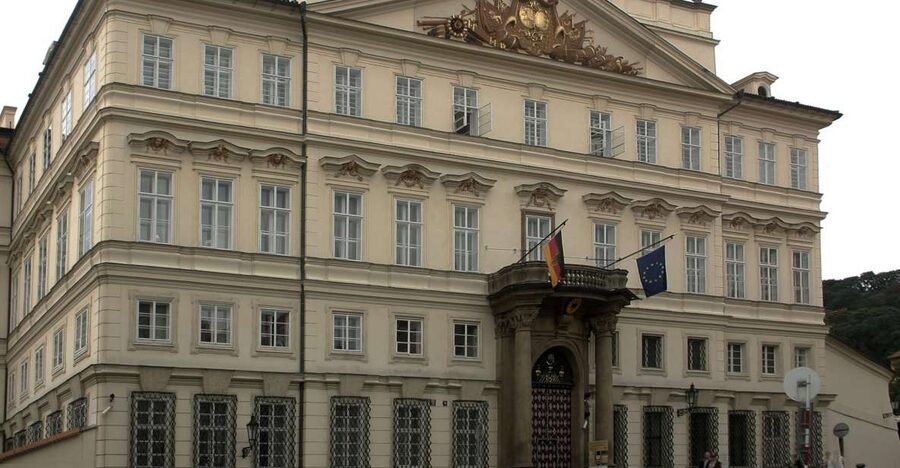
The key promise here is the famous balcony linked to Hans-Dietrich Genscher’s speech. You see it from the outside, and the tour also shows you the embassy garden area viewpoint that becomes emotional for people who connect it to personal memory.
I cannot stress this enough: the embassy interior is not open to the public, so your payoff is the exterior viewing and the guide’s explanation. That said, the guide’s focus on the balcony moment and what it meant in 1989 can still land very hard, because the location does the heavy lifting.
This stop is also where the 1989 refugee crisis story gets weight. You learn about East German citizens fleeing through Poland and Hungary to the West German Embassy in Prague. Hearing that while you look toward the embassy area makes the political story turn into a human one fast.
A German guest described returning decades later to the German Embassy garden and balcony viewpoint where, as a child, they heard the news beside Genscher. That kind of detail explains why this tour hits above its price point, it is not just a history lesson, it is a place where the story can feel personal.
Price and time value: what you get for $32
At $32 per person for 150 minutes, this tour is built for people who want high value in a short window. You get a licensed German-speaking guide, a guided walk through central neighborhoods, and multiple major stops that each carry a specific historical theme.
You also get variety without wasting time. In one stretch, you cover: Old Town-adjacent streets, Josefov and the Old Jewish Cemetery, Jan Palach Square, a Charles Bridge crossing, the John Lennon Wall, Wenceslas Square, and finally the German Embassy exterior viewpoint.
If your Prague time is tight, this is the kind of tour that helps you avoid the common trap of “I saw everything but I remembered nothing.” Here, each sight earns a reason to exist in your mental timeline.
Guide style and what to do during the walk
This is a German-speaking experience, led by a licensed German-speaking guide. The tour is provided through David Klaus Travel Manager Service Prag, and one of the best signals you can use is how consistently the guide handles questions. A past guest highlighted that David answered questions brilliantly, and that matters on a history-forward route because your curiosity will likely pop up at unexpected moments.
If you want to maximize the experience, bring one simple question for each era. For example:
- What did Prague’s public spaces mean during the shift toward freedom in 1989?
- Why does Jan Palach still matter when you visit his memorial sites?
- What made the German Embassy area so central during the refugee crisis?
Even if your German is basic, asking one targeted question often works, because the guide’s narration is already structured around these moments.
Who this tour suits best
This one fits best if you:
- Want major Prague sights plus clearly explained 20th-century events
- Like historical tours that point to specific places tied to people and decisions
- Prefer a guided route with short photo stops rather than a long “stand and lecture” format
It is not for everyone. The tour is not suitable for people with mobility impairments, so if mobility is an issue, I would look for a different format with easier pacing and access.
Should you book this Prague highlights walk to the German Embassy balcony?
Yes, I think you should book if you want Prague to make sense, not just look pretty. The best reason is the combination: you walk the city center highlights, then you connect them to 1968, 1989, and the human stories tied to the German Embassy balcony and the refugee crisis.
Skip it if your top priority is going inside the German Embassy, because the interior is not open to the public. Also skip it if long walking and the specific route layout would be hard for you physically.
If you are comfortable with a focused 150-minute walk and a German-speaking guide, this tour offers strong value for the time, and the ending spot near the German Embassy can stay with you long after the bridge photos fade.
FAQ
How long is the tour?
The tour lasts 150 minutes.
What language is the guide?
The tour is guided in German.
Where do I meet the guide?
You meet in front of the Faculty of Law at Charles University. If you use metro, get off at Staroměstská. If you take tram 17, get off at Pravnicka Fakulta.
Is hotel pickup and drop-off included?
Hotel pickup and drop-off are not included. Pickup is offered as an optional service in Prague 1, 2, 3 or in the city center near Můstek, or at the Faculty of Law.
Are food and drinks included?
No. Food and drinks are not included.
Can I enter the German Embassy during the tour?
No. The interior of the German Embassy is not open to the public.
What’s the general route and pace like?
It is a walking tour with guided photo stops and sightseeing across the central city, including the Charles Bridge area, John Lennon Wall, Wenceslas Square, and the German Embassy exterior area, ending at Malostranské náměstí.
Is the tour suitable for people with mobility impairments?
No, it is not suitable for people with mobility impairments.
Is there free cancellation?
Yes. Free cancellation is available up to 24 hours in advance for a full refund.
Walking Tours, compared.
 ★ 4.73-Hour Walking Tour of Old Town & Prague CastleFrom $305,696 reviews
 ★ 4.4Ghost Walking Tour Where Legends Come To LifeFrom $275,253 reviews
 ★ 4.7Jewish Quarter Walking Tour with Admission TicketsFrom $763,729 reviews
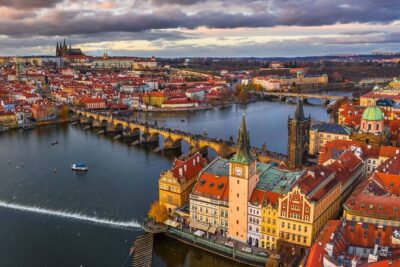 ★ 5.0Prague Guided Walking Tour and Cruise with Authentic Czech LunchFrom $1023,627 reviews
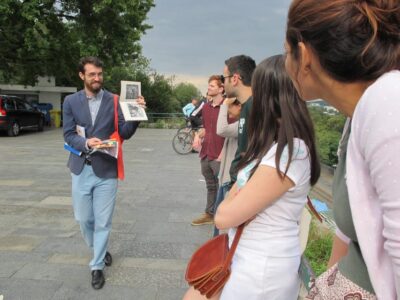 ★ 4.6Old Town and Jewish Quarter Guided Walking TourFrom $222,847 reviews
 ★ 4.5Prague Ghost and Legend of Old Town Walking TourFrom $212,630 reviews
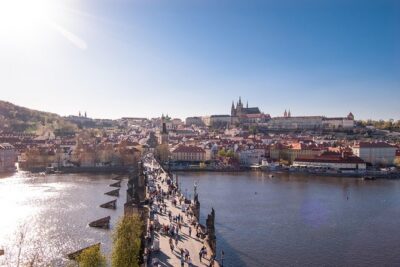 ★ 5.0Prague 3-hour Afternoon Walking Tour including Prague CastleFrom $531,899 reviews
 ★ 4.7Ghosts and Legends Nighttime Guided Walking TourFrom $221,462 reviews
Browse the lists this tour appears in