
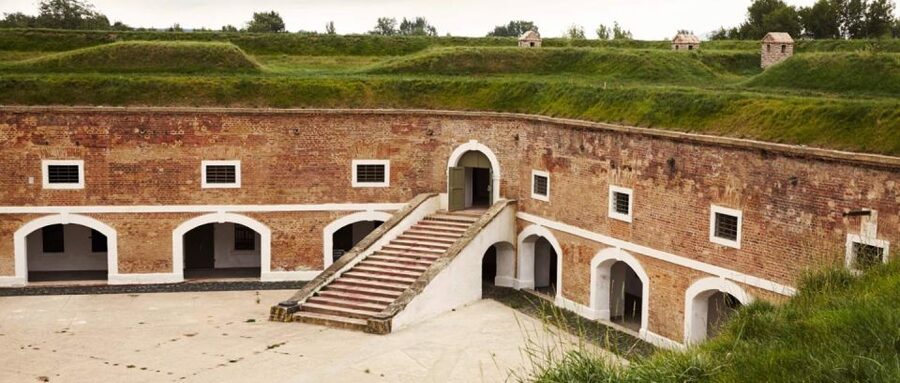
REVIEW · TEREZIN MEMORIAL TOURS
Terezin concentration field excursion
From Holocaust history sites to the road that leads there, this trip matters. You get a structured route that connects the Terezín Memorial purpose to what the fortresses became in WWII. I especially like how the guide explains the difference between a ghetto and a concentration camp, and how the visit moves in a prisoner-like sequence. One drawback to consider: the topic is heavy, and parts of the route are emotionally intense even when the narration is clear and respectful.
You’ll also appreciate the practical value here: round-trip transport from Prague, museum entries, and a live Spanish guide for a set 6-hour window. In the reviews, the guide named Eric stands out for being clear and respectful, especially when explaining life under Nazi use. If you do not feel comfortable with Spanish, plan accordingly because the tour is Spanish.
In This Review
- Key points you should care about
- A 6-hour route from Prague that follows prisoners’ steps
- The drive begins with the Anthropoid Operation and sets the tone
- Terezín Memorial and Ghetto Museum: where names and structure come first
- The Jewish ghetto story: city spaces, cemetery context, and first contrasts
- Following the same route as prisoners: administrative courtyard to prisoner areas
- The great fortress as the Jewish ghetto: what the spaces are teaching you
- Casematas and the shooting field: the details that change your perspective
- Small fortress and the Lecca resistance field: a second layer of meaning
- Price and value: is $68 worth it for a 6-hour guided visit?
- Who should book this tour, and who should think twice
- Should you book the Terezin concentration field excursion?
- FAQ
- How long is the Terezín concentration field excursion?
- Where do we meet for the tour?
- What time does the tour start?
- How much does the tour cost?
- What language is the live guide?
- Is the tour wheelchair accessible?
- Are pets allowed?
- Can I cancel for a full refund?
Key points you should care about
- A route with built-in context that starts before the main site, so you are not arriving cold.
- The memorial mission explained: commemoration of victims of Nazi political and racial persecution during WWII.
- Two fortress perspectives: the great fortress as the Jewish ghetto and the small fortress tied to resistance in the Lecca field.
- Ghetto vs camp, clearly separated during the walk, not left for you to guess.
- A prisoner-like order of spaces: administrative courtyard, prisoner areas, casematas, and the shooting field.
- Good hands on the ground: the guide Eric gets praised for clarity and respectful tone.
Further escorted visits to Terezin and its memorial grounds
- From Prague: Terezin Concentration Camp Tour★ 3.7 · 573 reviews
- Terezin Memorial: Entry Ticket Combo w. Guided Walking Tour★ 4.0 · 77 reviews
- Terezin: Guided Tour of the Concentration Camp and Museum★ 4.3 · 54 reviews
- Terezin Concentration Camp w/Holocaust Historian SMALL GROUP★ 5.0 · 4 reviews
A 6-hour route from Prague that follows prisoners’ steps
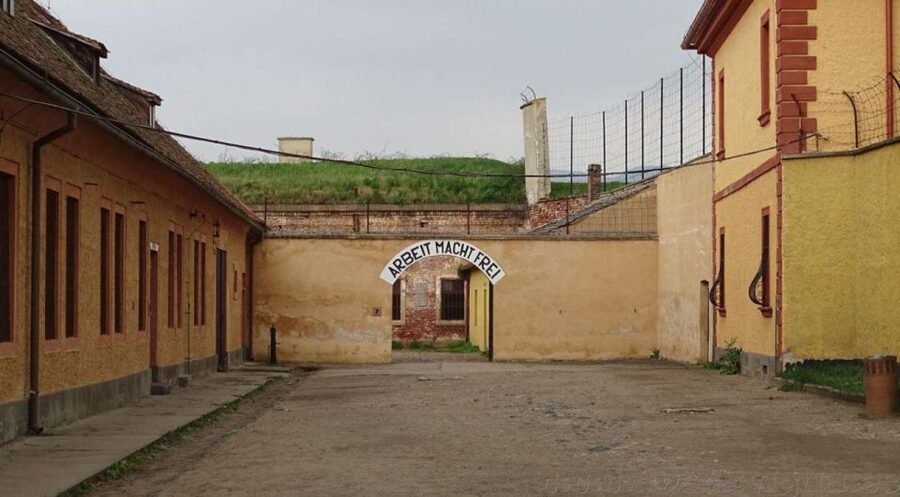
This excursion is built like a guided story, not a checklist. You meet at 9:00 at V Celnici 4, and the day is timed so you reach the main fortress fairly quickly. Even during the ride, you get historical and technical context that the guide then connects back to what you will see.
What I like about this format is that it helps your brain do the work while you are standing in the places themselves. Instead of treating Terezín as a set of buildings, you get a route with cause and effect: the place, what it was designed to be, and what it was turned into. The heavy subject is still heavy, but the order makes it easier to process.
Also, because it is only 6 hours, it is a realistic add-on when you are traveling in the Prague area. You get a lot of site coverage without losing the whole day.
The drive begins with the Anthropoid Operation and sets the tone
Before you ever reach the fortresses, the trip quietly sets historical context. On the way out of Prague, you pass the monument to the actors of the Anthropoid Operation. It is a reminder that occupation-era resistance and Nazi repression were happening in the same period, not in separate worlds.
Then you are introduced to the idea that Terezín was used as a city system, not just an isolated prison. You will see how the entire city functioned as a Jewish ghetto, which matters because it changes how you interpret what comes next. You are not looking at random facilities. You are looking at a whole human system that was broken down into spaces.
This early framing is also useful if you have only a vague sense of Terezín from books or documentaries. You arrive with questions already forming, and the guide gives you language to answer them.
Terezín Memorial and Ghetto Museum: where names and structure come first
One of the first stops is the Terezín Memorial and the ghetto museum. The visit includes a photo stop and a guided tour, so you get both orientation and interpretation.
What the memorial is doing, and why it matters, is spelled out clearly: it is the only institution of its class in the Czech Republic dedicated to commemorating the victims of Nazi political and racial persecution during the occupation of Czech lands in WWII. The memorial also carries out museum, research, and educational activities, and it supports visits to related commemorative sites.
Inside the museum portion, you are led to understand names, facts, and ways. That is important in a place where it is easy to get lost in the scale of suffering. Names and documented details pull the story down to people and choices, which is the point of a museum visit like this.
If you want a practical tip, it is simple: listen for how the guide connects objects or spaces to the daily reality of confinement. That is what turns your visit from scenery into understanding.
The Jewish ghetto story: city spaces, cemetery context, and first contrasts
After the drive and museum time, you continue through the setting that gives Terezín its specific gravity. You see the main fortress and you hear how the city became the Jewish ghetto.
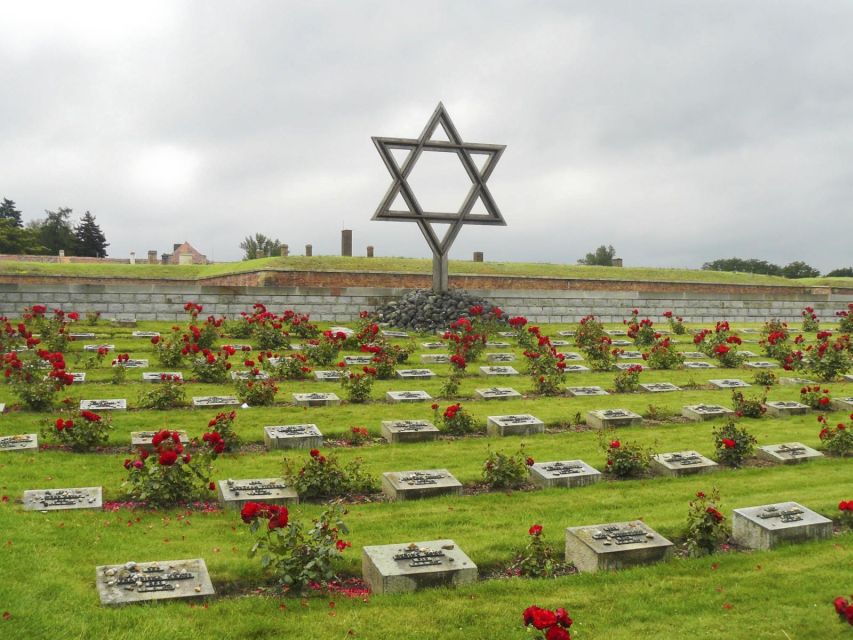
A cemetery complex visit is part of this early flow, where you listen to figures, motives, and methods. The details are not just trivia. They help you understand how persecution was carried out and how people tried to survive, resist, or endure. It also gives the guide a chance to set expectations for what you will see in the fortresses later.
Then comes one of the most valuable parts for first-time visitors: the guide explains the differences between the ghetto and the field. If you have ever felt that those terms blur together, you will appreciate having them separated while you are already at the relevant places. Words matter here, because they shape the facts behind the walls.
Following the same route as prisoners: administrative courtyard to prisoner areas
The concentration camp section of the route is designed so you walk in an order that resembles what prisoners experienced. You start at the administrative courtyard. That matters because it reframes what you might think you know.
In many visits to detention sites, people jump straight to the most shocking areas first. Here, the route begins with the administrative logic, the control structure, and the way imprisonment was managed. It helps you understand why the later spaces feel so strict and so controlled.
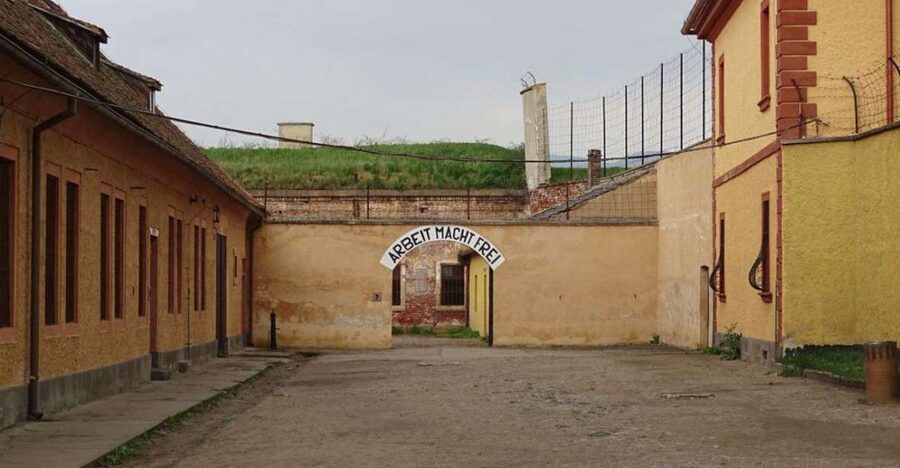
Then you move through the area after Arbeit Macht Frei. From there, you reach the section for prisoners. That sequence is not random. It is a way to connect entry, control, and confinement without asking you to imagine the missing steps.
As you walk, you should let the guide pace your attention. In places like this, your instinct may be to scan for the “big” highlights. The real value comes from noticing how each space answers a question. Who was in charge here? Where did people pass through? Where did conditions tighten?
The great fortress as the Jewish ghetto: what the spaces are teaching you
One of the tour highlights is straightforward: you visit the great fortress, which was the Jewish ghetto. This is the heart of the site coverage, and it is why the trip is worth doing with a guide.
Fortress architecture can feel abstract on its own, but Terezín is not just about stone walls. It is about how the walls were used to control movement, compress lives, and enforce a system. When you are told how the fortress functioned, you start reading the layout differently, and that is when the visit becomes memorable.
A special thing here is the combination of museum knowledge and walk-through placement. You are not left to infer everything from the exterior. The guide’s job is to translate the site’s purpose into human meaning, and the route supports that.
In the reviews, the Spanish guide Eric is praised for being clear and respectful when explaining what life was like during Terezín’s use as a concentration site. That kind of explanation is exactly what you want at the great fortress, because the temptation is to treat it as a set of ruins. With a good guide, it becomes a structured account.
Casematas and the shooting field: the details that change your perspective
The route continues through casematas, often described in the visit as Casamatas de la Fortaleza. This is the kind of place where the environment can feel more claustrophobic than the outside. The value of seeing it as part of a route is that it lands after you have already understood how the site worked.
Then you reach the shooting field. This is the moment when the visit stops being about logistics and becomes about consequences. Even when you know the history, your body understands the scale differently in person. You are standing where harm was carried out, and the guide helps you keep the focus on what that means.
One caution for yourself: plan on emotional heaviness. Bring a moment of silence with you, in whatever way works for you. It is also okay to pause and look away when you need to. A respectful visit is not about forcing yourself to absorb everything at maximum intensity.
After the shooting field, you continue toward a part of the residential area. That last step is important because it prevents the visit from becoming purely a story of execution and confinement. It also reminds you that these systems affected everyday spaces, not just isolated corners of violence.
Small fortress and the Lecca resistance field: a second layer of meaning
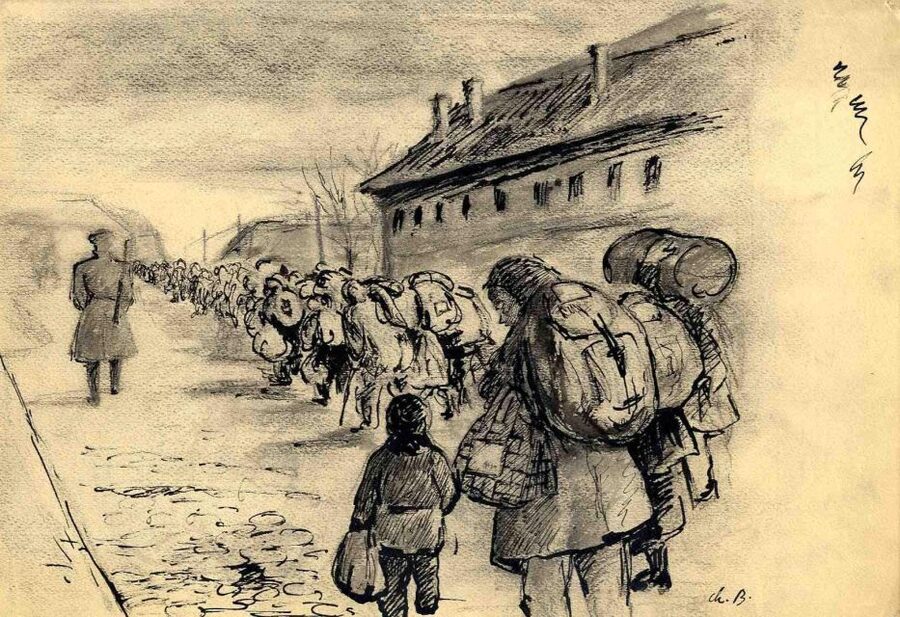
The other fortress highlight is the small fortress, tied to the field of Lecca resistance. This is a key part of why the tour feels more complete than a single-site visit.
The small fortress adds a different angle to the story. Instead of only experiencing the machinery of oppression, you are also shown how resistance and punishment were intertwined. That duality is part of what makes Terezín more than a historical stop. It becomes a place where you see repression and defiance in the same overall system.
If you are the type of traveler who wants context, you will like how this is handled as part of the same guided route rather than a separate add-on. You can compare fortress functions in your head as you move, and that comparison strengthens your understanding.
Price and value: is $68 worth it for a 6-hour guided visit?
At $68 per person for a 6-hour guided excursion, this sits in the range where you expect solid value if you care about interpretation. Here’s what you get that justifies the cost: round-trip transportation, guide service, and entries in the facilities.
The real value is not just access. It is the translation of complex history into a walkable order. A guided route matters most at sites like Terezín, because terms, functions, and layouts can blur together without explanation. When the guide is praised for being clear and respectful, like Eric in the reviews, that is a strong sign you are paying for understanding, not only entry tickets.
One more practical point: the tour is Spanish. If you speak it, you are likely to get a lot more out of the narration. If you do not, you might still appreciate the route, but the interpretation will be harder to follow.
Who should book this tour, and who should think twice
This excursion is a good fit if you:
- Want an organized, guided route that connects museum context to fortress spaces.
- Appreciate clarity around terms like ghetto and concentration camp.
- Prefer a set timeframe that still covers multiple key site areas.
You might think twice if:
- You are very sensitive to emotionally intense historical content and do not want that pace of exposure.
- Spanish is a barrier for you, because the tour includes a live guide in Spanish only.
If you are traveling with someone who needs flexibility, build in extra mental buffer. The duration is fixed, and the sites require attention. It is not a casual sightseeing loop.
Should you book the Terezin concentration field excursion?
Yes, I would book it if you want a guided visit that takes you through the real structure of Terezín: the memorial and museum first, then the prisoner-like route through administrative spaces, prisoner areas, casematas, and the shooting field, with the small fortress and Lecca resistance field included in the story.
If your top priority is learning and you respect the gravity of the subject, the guided interpretation is the deciding factor. And with the guide Eric specifically highlighted for clear, respectful explanations, this is the kind of tour where the wording and tone really matter.
If Spanish is not for you, consider either finding a different language option for Terezín or planning extra independent reading before you go. But for Spanish-speaking visitors, this offers strong value for a single half-day visit.
FAQ
How long is the Terezín concentration field excursion?
The tour lasts 6 hours.
Where do we meet for the tour?
You meet at V Celnici 4.
What time does the tour start?
The itinerary begins at 9:00 in the morning.
How much does the tour cost?
The price is $68 per person.
What language is the live guide?
The live tour guide speaks Spanish.
Is the tour wheelchair accessible?
Yes, the tour is wheelchair accessible.
Are pets allowed?
No, pets are not allowed.
Can I cancel for a full refund?
Free cancellation is available up to 24 hours in advance for a full refund.
More Tours in Terezin
More Tour Reviews in Terezin

Terezin and Its Memorial Sites
Freshly written up in Terezin
- Terezin Concentration Camp w/Holocaust Historian SMALL GROUP
★ 5.0 · 4 reviews - Terezin: Guided Tour of the Concentration Camp and Museum
★ 4.3 · 54 reviews - Terezin Memorial: Entry Ticket Combo w. Guided Walking Tour
★ 4.0 · 77 reviews - From Prague: Terezin Concentration Camp Tour
★ 3.7 · 573 reviews
Terezin Memorial Tours, compared.
 ★ 4.5From Prague: Terezin Concentration Camp Guided Tour w/ AudioFrom $671,959 reviews
 ★ 4.4From Prague: Tour of Terezin Concentration CampFrom $661,269 reviews
 ★ 4.0Terezin Concentration Camp Day Tour from PragueFrom $781,007 reviews
 ★ 3.7From Prague: Terezin Concentration Camp TourFrom $53573 reviews
 ★ 4.3From Prague: Terezín and Ghetto Museum Guided TourFrom $86571 reviews
 ★ 5.0Terezin & Bohemian Switzerland from Prague: Bastei, Narnia & CaféFrom $145445 reviews
 ★ 4.5Terezin Concentration Camp Day Tour Including Admission From PragueFrom $96179 reviews
 ★ 5.0Terezin In-Depth Holocaust Tour From Prague’s Center (max 7 pax)From $145170 reviews
Browse the lists this tour appears in