
REVIEW · CZECHIA
Discover Prague’s most Photogenic Spots with a Local
Prague turns your camera into a passport. In 1.5 hours, this local-led route strings together Charles Bridge and the Lennon Wall, so you get headline-worthy shots without getting lost. The one drawback to watch for is value: for $76.46, you will get photo pacing and practical pointers more than deep, highly detailed commentary.
I like that it stays hands-on and adjustable, with a small group of up to 8 and an itinerary that can adapt to your interests and walking pace. I also like how the experience is set up for easy meet-ups, with clear arrival coordination using text messages reported by at least one guide host like Stefan.
You’ll cover a mix of modern design, quirky public art, and classic Prague landmarks, then finish near Letná Park. Weather can change specific stops, but the photo-first theme stays the same from Dancing House to the Metronom at Letná.
In This Review
- Quick hits for photographers and first-timers
- Price and time: how $76.46 really plays out
- Jiráskovo náměstí to Letná: the walking reality
- Dancing House: shooting modern Prague without chasing crowds
- Kafka’s rotating head: how to photograph 42 moving layers
- David Černý time: Freud above, Babies at your feet
- Old Town Square and the Astronomical Clock in motion
- Charles Bridge: the 14th-century postcard, with better guidance
- Lennon Wall and Pařížská Street: street color meets polish
- Wallenstein Palace Gardens and Letná Park: the final calm and the big view
- Who this photo tour is best for (and who should skip it)
- Should you book this Prague photo walk?
- FAQ
- How long is the Prague photogenic spots tour?
- How much does the tour cost?
- How many people are in the group?
- What language is the tour offered in?
- Where do you meet and where does the tour end?
- Is public transportation involved, and are entry tickets included?
Quick hits for photographers and first-timers
- Small group (up to 8) means less waiting and more time for your specific angles
- Outdoor photo stops focus on big visual moments, from Charles Bridge to David Černý sculptures
- A guide who makes recommendations helps you decide what to shoot and what to skip next
- Kafka and Freud themed art gives you cinematic-looking subjects that are unusual anywhere else
- End at Letná Park puts you in position for wide city views right after the core sights
- Mobile ticket and English hosting keep the whole experience straightforward
Undecided so far? These Prague write-ups land nearest this one.
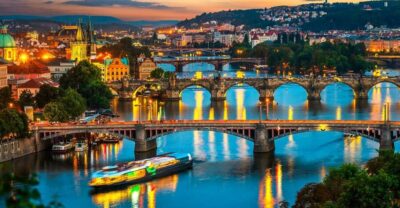
- Prague: 50-Minute Sightseeing Evening Cruise★ 4.2 · 33,780 reviews
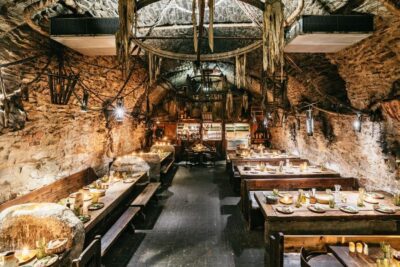
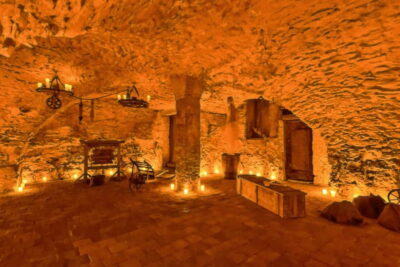
- Prague: Medieval Dinner with Unlimited Drinks★ 4.4 · 19,847 reviews
- Prague: Castle Tour with Local Guide and Entry Ticket★ 4.6 · 10,422 reviews
- Prague Castle 2.5-Hour Tour Including Admission Ticket★ 4.7 · 8,927 reviews
Price and time: how $76.46 really plays out
At $76.46 per person for about 1 hour 30 minutes, you’re paying mainly for two things: a local guiding eye and a tight, efficient route. This is not a long walking day. You should treat it like a concentrated best-of session that helps you see photo-worthy spots in the right order.
Entry tickets are not included for public transportation, museums, or monuments. In practice, that matters because some of the most famous sights are outside and free to look at, but any ticketed add-ons you choose on your own after the tour will be on you. If you hate surprise costs, plan your solo time around public areas first.
One more value check: the tour is often booked in advance (on average about 53 days ahead). That’s usually a sign the route and timing are popular, so it can help to lock in your slot earlier rather than gambling on a last-minute booking.
Jiráskovo náměstí to Letná: the walking reality
The meeting point is at Jiráskovo náměstí in Prague 2 (Nové Město). The tour ends at Letenské sady 173, in Prague 7 (Holešovice), which puts you at the edge of Letná Park.
Because the route is designed as a walking circuit with multiple stops, you should expect steady time on your feet. The experience is not recommended for guests with impaired mobility, which is a polite way of saying this is not an easy stroll with lots of long sit-down breaks.
Good news if you’re trying to keep stress low: the start point is near public transportation, and the experience is hosted in English. Also, you’ll receive confirmation at booking time, and you can usually rely on a smooth meet-up thanks to clear coordination from the local host.
Dancing House: shooting modern Prague without chasing crowds
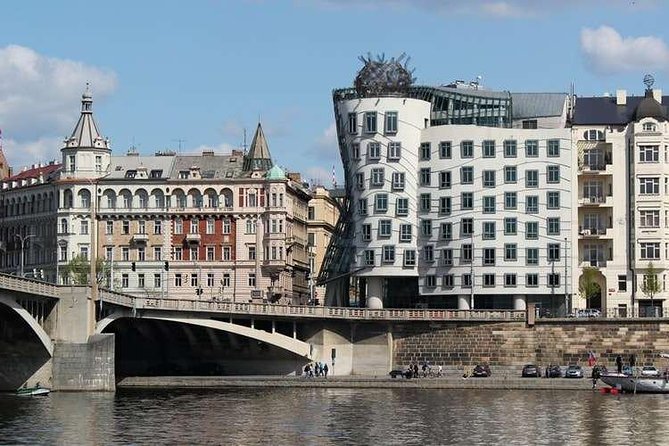
The first major architectural photo moment is the Dancing House. It’s a modern landmark in Prague that twists the rules of what buildings are supposed to look like, giving you that playful, motion-like feel in stone and glass.
For photography, this kind of building rewards two habits:
1) take your time at the first angle, then
2) move slightly to catch how the curves distort reflections.
A small group matters here. With fewer people, you’re less likely to get boxed in while you frame the shot, and you can ask your guide where the light tends to show the architecture best (your exact answer may depend on time of day and weather).
Potential drawback: if your expectation is a lot of deep architectural history, you might find the tour language more practical than academic. It should still help you notice details you would otherwise miss.
Kafka’s rotating head: how to photograph 42 moving layers
Next comes the dynamic tribute to Franz Kafka, the 11-meter rotating metallic head with 42 moving layers. This is one of those Prague pieces where you get better photos when you stop trying to get a single perfect frame and instead time your shots.
Here’s what to do for better results:
- Look for the best angle to capture rotation while keeping the background clean.
- Be ready to shoot more than once as the head turns.
- If you’re using a phone, try burst mode or short bursts, because motion makes everything sharper only if you catch the right moment.
Also, it helps to think of it as performance art, not just a statue. The “moving” element is the whole point, so plan to watch briefly before you start rapid clicking.
David Černý time: Freud above, Babies at your feet
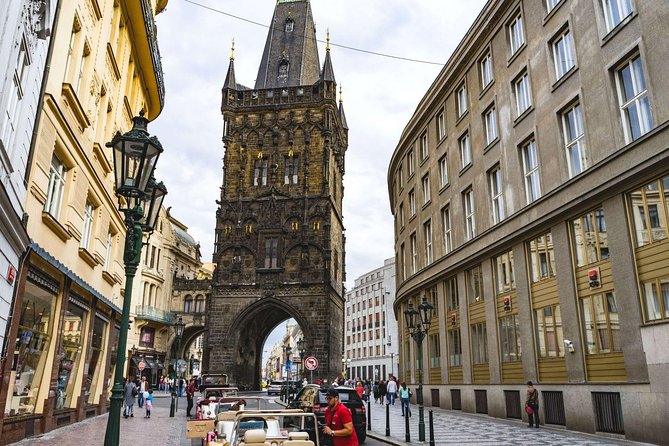
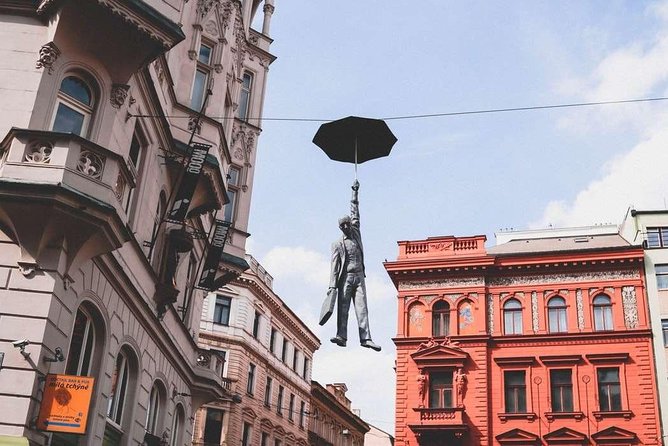
The tour also includes David Černý’s provocative work, including Man Hanging Out – Sigmund Freud. This one is designed for looking up, which is a nice change from the usual Prague-photo habit of keeping your lens aimed at street level.
Then you shift to another Černý signature: Babies, bronze sculptures that crawl around Isla Kampa. Even if you don’t know the full story of the artist, the photo appeal is immediate. These figures create strong compositions because they sit in unexpected poses and lead your eye through the scene.
For your photos, treat this as a “low angle” stop:
- Get down closer to the ground to make the sculptures look like they are literally part of the walkway.
- Use nearby edges or walkways as leading lines to guide the viewer toward the crawling forms.
One practical tip: if the wind is gusty, it can make it harder to stabilize phone shots or cameras. Hold steady and let the sculptures settle visually between angles.
Old Town Square and the Astronomical Clock in motion
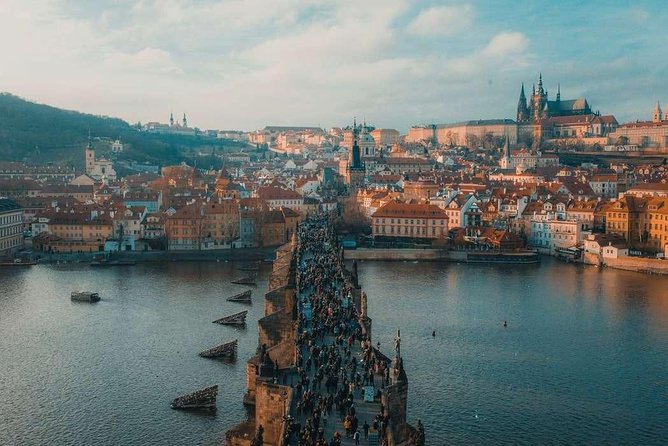
Old Town Square is where Prague leans classic. You’ll spend time here admiring old architecture and seeing the Astronomical Clock in motion. This is the kind of moment that can be both impressive and chaotic, mostly because it’s popular.
The best way to make it pay off for your camera is to plan your job:
- First, locate the best viewpoint for the clock mechanism itself.
- Then, take a few “environment” shots that include square architecture around it, so your photos tell the story, not just the object.
Even if you’re not a clock person, it’s a great place to get context for Prague’s civic pride and show you the square as a stage for centuries of life. Your guide can help connect what you’re seeing to what it meant to the city.
Potential drawback: when you ask questions here, keep them specific. One downside mentioned by a past participant is that some context can stay fairly general. If you want precision, ask about what you’re looking at right now, not broad Prague history.
Charles Bridge: the 14th-century postcard, with better guidance
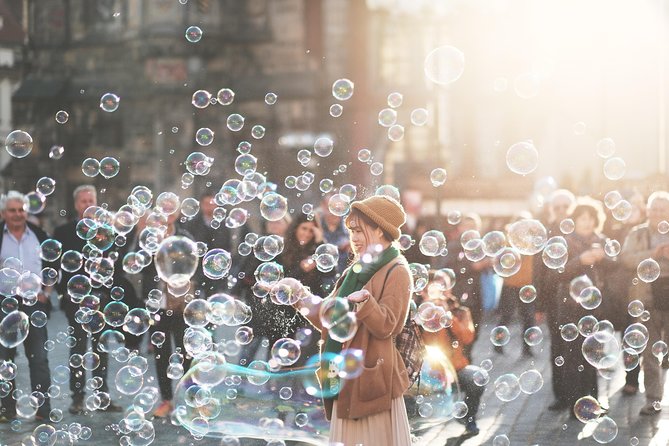
Charles Bridge is the iconic stop most people come for, and you’ll get it here. It dates back to the 14th century, and the statues and architecture make it endlessly photographable.
What makes this tour stop more useful than doing it on your own is the pacing and explanation. You’re not just crossing a bridge. You’re learning what to look for in the sculptural details and how the bridge fits into the city’s long timeline.
For photos, Charles Bridge is all about layers:
- Capture the bridge structure from a distance.
- Then zoom in or step closer for statue details.
- If you can, add one shot that includes a strong leading line, like the bridge span pulling the eye toward the far side.
One more thing I like: this kind of stop can reset your expectations. If you felt overwhelmed earlier by modern buildings and contemporary art, Charles Bridge gives you a clear, classic anchor.
Lennon Wall and Pařížská Street: street color meets polish
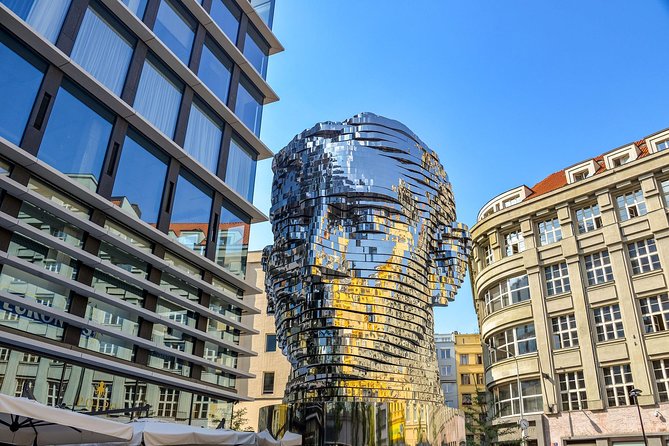
The tour includes the ever-evolving Lennon Wall, a wall covered with messages connected to freedom and peace and inspired by John Lennon. This is pure photo fuel because the wall invites you to frame colorful details, not just capture a wide view.
A practical approach helps:
- Start with a wider shot that shows the wall as a whole.
- Then move in for message and texture shots.
- Don’t ignore the background. Some of the charm is how the wall contrasts with the surrounding city.
From there, you’ll head to Pařížská Street, Prague’s prestigious boulevard and a fashion focal point. The visual value here is different from the Lennon Wall. Instead of handwritten messages and bright paint, you get street-level style, refined storefront rhythm, and a more polished urban feel.
This is a good place for photos if you like fashion photography style framing:
- Keep your composition straight and controlled.
- Look for reflections in windows and clean lines in façades.
- If your guide adjusts the route based on your interests, you might get extra minutes here if you care about street-level details.
Wallenstein Palace Gardens and Letná Park: the final calm and the big view
The highlights mention a walk through Wallenstein Palace Gardens, and that makes sense in the flow of the day. After Prague’s heavy hitters like Old Town Square and Charles Bridge, gardens give your eyes a break. You can also reset your camera settings because lighting under trees and near garden paths often behaves differently than open stone plazas.
Then you finish at Letná Park, a green oasis with city views, recreation activities, and the Metronom Monument. Letná is where Prague feels wide and airy. The Metronom gives you a strong focal point for skyline shots, especially if you want one photo that says: this is the city, seen from a higher angle.
For your photos, think composition, not just scenery:
- Use the monument as your anchor.
- Add skyline layers behind it so your image has depth.
- If the wind picks up, plan on a few try-and-adjust moments before you commit to your best frame.
Ending here also helps practically. You’re already positioned near a viewpoint, so if you have extra time afterward, you can keep shooting or find a café nearby without immediately hiking back into the busy center.
Who this photo tour is best for (and who should skip it)
This tour makes sense if you want:
- A compact hit list of Prague’s most photogenic stops in one guided circuit
- Photo-first guidance that helps you see what matters in the frame
- A small-group setup so the guide can slow down and adjust your walking pace
- English hosting and a mobile ticket for an easier start
It may not be your best choice if:
- You want museum-style depth and highly specific historical explanations
- You have mobility limitations and need low-impact walking
- You’re looking for a very long day. At 1 hour 30 minutes, it’s designed for efficiency, not lingering
Should you book this Prague photo walk?
I’d book it if your top priority is getting strong images of a mix of Prague styles, from 14th-century Charles Bridge to modern architecture and David Černý public art. The small group size and flexible pace are the biggest reasons this tour can feel smoother than DIY wandering.
I would hesitate if you’re expecting a highly detailed lecture for the price. Based on feedback tied to a guide host like Stefan, meet-up coordination can be very solid, but answers to questions may not always land as confidently or precisely as you’d like.
If you do book, go in with a photo plan. Decide ahead of time what you want most, Charles Bridge, Kafka, Černý sculptures, Lennon Wall, or the Letná views. Then use your guide’s local recommendations to get your shots faster and with less guesswork.
FAQ
How long is the Prague photogenic spots tour?
It runs for about 1 hour 30 minutes.
How much does the tour cost?
The price is $76.46 per person.
How many people are in the group?
The tour is limited to a maximum of 8 travelers, with small-group format.
What language is the tour offered in?
The tour is offered in English.
Where do you meet and where does the tour end?
You start at Jiráskovo náměstí (Praha-Praha 2) and end at Letenské sady 173 (Praha 7-Holešovice).
Is public transportation involved, and are entry tickets included?
The meeting area is near public transportation, but entry tickets for public transportation, museums, and monuments are not included.
More Tour Reviews in Prague
Freshly written up in Prague
- World War II 4WD Tour from Prague with Lunch
★ 4.4 · 3 reviews - World War II History Tour of Prague’s Old Town
★ 5.0 · 3 reviews - Welcome to Prague – Private Tour with Licensed Guide
★ 5.0 · 3 reviews - Gourmet Brunch with Chef: Unlimited Drinks & Stunning River Views
★ 5.0 · 3 reviews - VIP Prague Segway Tour Around Monastic Breweries
★ 4.0 · 3 reviews