
REVIEW · WWII & OPERATION ANTHROPOID TOURS
World War II History Tour of Prague’s Old Town
A city walk about WWII can sound heavy, yet Prague makes it physical and specific. This tour strings together Jewish Quarter sites, resistance landmarks, and the Heydrich Terror Memorial, so you see how occupation, persecution, and courage played out street by street. I love the way the route stays focused on real places you can point at right in front of you, and I love the crisp, English explanations that connect each stop to the next. One drawback to plan for: it is a fully outdoor walk, so bring a warm layer and be ready for rain.
You’ll start at the World of Franz Kafka and end back near the same point, which keeps logistics simple on a day you may want to explore more on your own after. It’s also a private tour for your group, which usually means questions get answered instead of rushed. The time can run about 2 to 4 hours, and the longer option adds the underground Heydrich memorial.
In This Review
- Key Highlights You Should Know
- A WWII Story You Can Walk, Point, and Remember
- Starting at World of Franz Kafka, Then Getting Your Bearings Fast
- Kafka, Maisel and Spanish Synagogues, and the Nazis’ Distorted Plans
- Josefov, the Jewish Quarter, and Why 1941 Changed Everything
- Old Town Hall and the Astronomical Clock, Scarred by May 1945
- Petschek Palace as a Gestapo Seat, Then Resistance at Wenceslas Square
- The Heydrich Terror Memorial Crypt: The Long Option You Should Consider
- Old Town Square Landmarks With a WWII Lens
- Petschek to Metro to Photos, How Your Guide Adds Real Value
- Price and Value: What You Pay For and Why It Can Be Worth It
- Timing, Duration, and What a 2 to 4 Hour Walk Feels Like
- What to Wear When Prague Turns Chilly and Wet
- Who This Tour Is Best For
- Should You Book This WWII History Tour of Prague’s Old Town?
- FAQ
- How long is the WWII History Tour of Prague’s Old Town?
- Where does the tour start and end?
- Is the tour private?
- Is the Heydrich Terror Memorial included?
- What language is the tour offered in?
- Are there admission tickets required for the stops?
- Is it easy to reach the meeting point with public transportation?
- What if the weather is bad?
- Can I cancel for a full refund?
Key Highlights You Should Know
- Kafka to the Jewish Quarter: the early stops set the stage for what Nazis tried to erase and control.
- Synagogues turned into a message: you’ll see how Jewish objects were stored with plans tied to a Nazi museum concept.
- Gestapo links at Petschek Palace: you’ll connect architecture to power, then pivot to Czech resistance.
- Wenceslas Square, Nazi mass demonstrations: the tour points out how public space was weaponized.
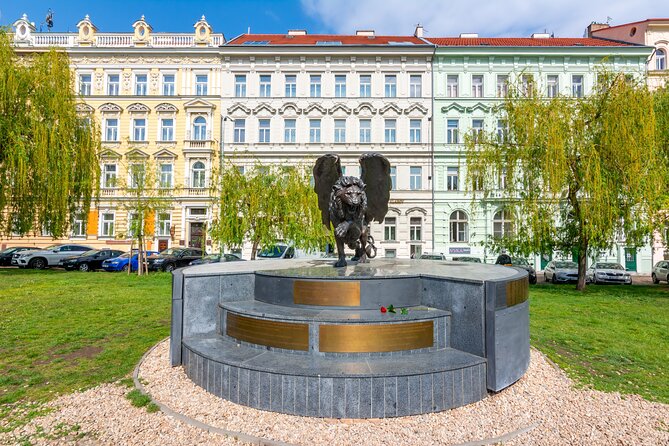
- The Heydrich crypt memorial: the longest option includes the underground site tied to the Anthropoid operation.
Old Town listings, lane by lane
- Prague: Oldtown, Medieval Underground & Dungeon History Tour★ 4.2 · 8,244 reviews
- Prague: Old Town Hall Tower Entry Ticket★ 4.5 · 6,749 reviews
- Prague: 3-Hour Walking Tour of Old Town & Prague Castle★ 4.7 · 5,696 reviews
- Prague: 3-Hour Old Town and Prague Castle Tour in German★ 4.8 · 5,671 reviews
A WWII Story You Can Walk, Point, and Remember
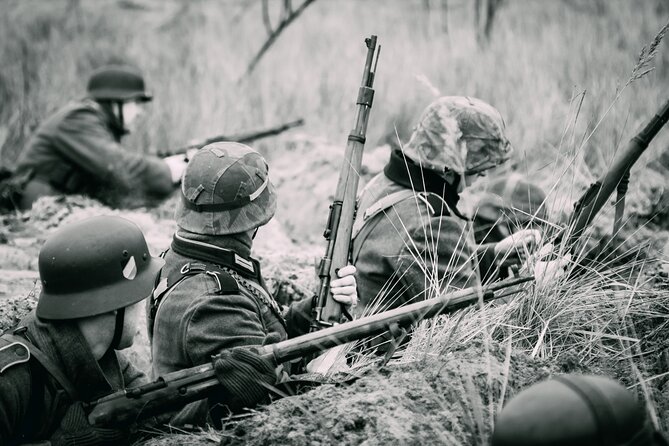
Prague can be a postcard city, but this tour puts the lens on what happened under Nazi rule. You’re not just hearing dates. You’re standing at places tied to occupation, resistance, and the chilling attempt to control what people remembered. That makes the information stick, especially if you like history that feels grounded.
The route also helps your brain. It moves from earlier cultural life and Nazi interference, to the machinery of terror, and then to the counter-story of Czech and allied resistance. Even if you know some WWII facts already, the streets force new connections.
Starting at World of Franz Kafka, Then Getting Your Bearings Fast
Meet at the World of Franz Kafka at Nám. Franze Kafky 16/1 in Staré Město. This is a handy start because it’s right in the Old Town area, so you can reach it easily by tram or metro, and the tour ends back at the meeting point.
The guide kicks things off with an outline of what you’ll see. In practice, that means you get a mental map early, and the rest of the walk feels like a guided story rather than a random list of stops. It’s also where you’ll hear small practical notes that help you read the buildings around you.
Also, plan for walking. This is set up as a street route, not a sit-down museum day. Comfortable shoes matter, and you’ll appreciate having a weather plan because the tour is outdoors.
Kafka, Maisel and Spanish Synagogues, and the Nazis’ Distorted Plans
Stop 1 is the World of Franz Kafka. It’s a starting point more than a WWII stop, but it works well because it situates you in the old city fabric before the tour turns darker. Prague’s Jewish story and the story of persecution are woven into the same neighborhoods, and starting here helps you understand the contrast.
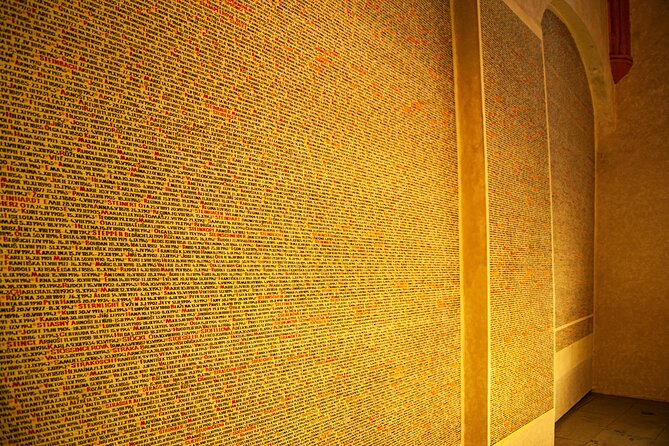
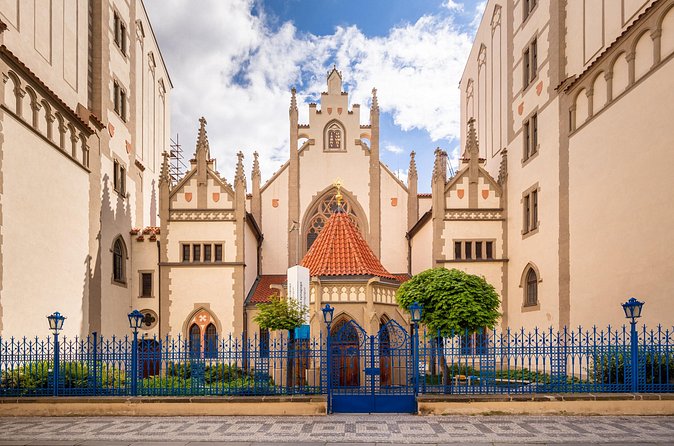
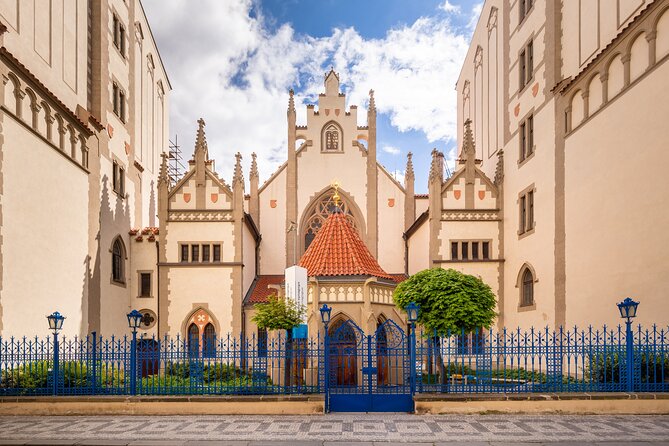
Stop 2 brings you to the Maisel Synagogue, and then the Spanish Synagogue area as well. Here you’ll see how valuable Jewish objects were stored with the intention to install them in a Nazi museum tied to the idea of an extinct race. That’s one of those historical details that is hard to process until someone points to it plainly in the physical setting.
Why this stop matters: it shows that persecution was not only about forced transport and violence. It was also about control of narrative, control of identity, and control of what would be remembered.
One practical note: some Jewish venues can be closed depending on the day. If you’re booking for a Saturday, don’t be surprised if public access differs. Either way, your guide can still explain the context around what you’re seeing.
Further wartime ground covered in Prague
Josefov, the Jewish Quarter, and Why 1941 Changed Everything
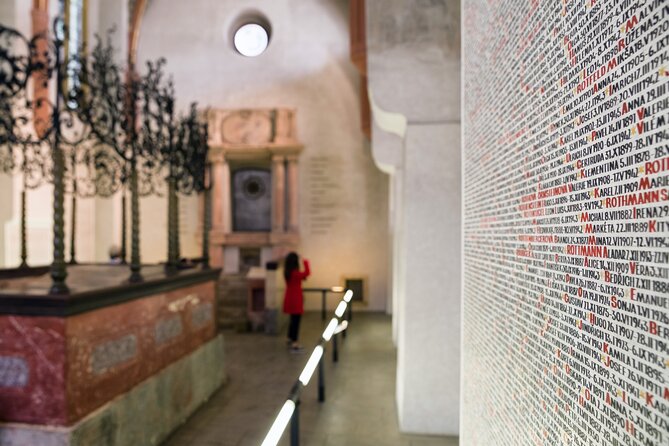
Stop 3 is the Prague Jewish Quarter, often referred to as Josefov. The tour walk starts through this Old Jewish Quarter and focuses on how Nazi policy changed Jewish life. You’ll hear that this area became a particular interest of the Nazi regime and that it was deserted in 1941 when transportation of Czech Jews to Theresienstadt began.
If you’re trying to understand WWII at street level, this is the part where the timeline becomes real. It’s not abstract. It’s about who lived where, how they were uprooted, and how the city reshaped itself under terror.
What you’ll get from a guide here: your guide helps you connect the dots between historic policy and the streetscape. Without that, Josefov can look like just another pretty historic quarter. With the explanation, it becomes a place with scars you can actually trace.
Old Town Hall and the Astronomical Clock, Scarred by May 1945
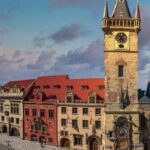
Stop 4 is the Old Town Hall with the Astronomical Clock. The tour zooms in on the facade and the fact it suffered heavy damage during the Prague uprising in May 1945. The iconic Astronomical Clock survived, which adds a powerful contrast: destruction and endurance in the same frame.
Why this matters for your understanding: it shifts the story from occupation to upheaval. This is Prague pushing back, not just enduring. And it’s a reminder that liberation didn’t arrive neatly. It came with fighting, damage, and risk.
If you love clocks, details, or just old-city architecture, you’ll likely enjoy this stop even if you’re not a WWII specialist. The guide ties the building’s survival into the bigger story, so it doesn’t feel like a detour.
Petschek Palace as a Gestapo Seat, Then Resistance at Wenceslas Square
Stop 5 is Petschek Palace. You’ll hear it was the former seat of the Gestapo headquarters. Seeing that kind of connection makes the term Gestapo feel less like a word from a textbook and more like a real institutional presence tied to specific walls and rooms.
Then you move to Stop 6, Vaclavske NamEsti. At a corner of a building you’ll find a memorial plaque dedicated to the Czech resistance. The guide discusses their offensive efforts, interrogations, and tortures. The story doesn’t hide the brutal parts, but it also doesn’t treat resistance as an abstract idea. It frames it as action by real people facing real consequences.
The tour ends this segment in Wenceslas Square. Here you learn that Nazis used this space for mass demonstrations. Wenceslas Square can be photographed like a clean, central landmark. The tour reframes it as a stage used for power and propaganda.
Practical tip: when you’re at Wenceslas Square, look up and around. The guide’s explanation will make you notice sightlines and how crowds would move. That turns a major city square into a WWII-era setting.
The Heydrich Terror Memorial Crypt: The Long Option You Should Consider
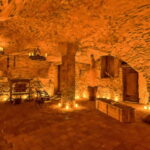
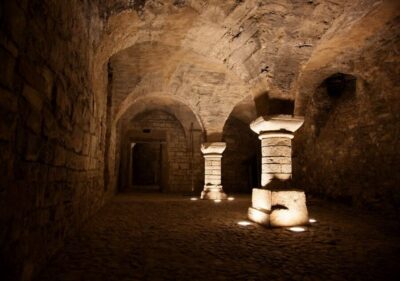
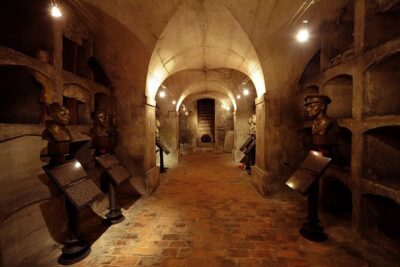
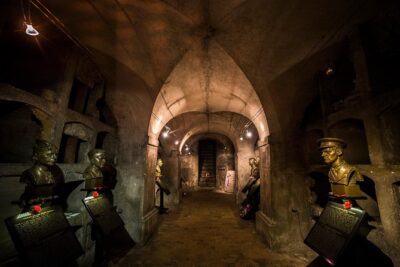
Stop 7 is the National Memorial to the Heroes of the Heydrich Terror. It’s in the underground crypt of the Cathedral of Saints Cyril and Methodius. This stop is the one you need to plan around because it may not be included in the basic 2-hour option.
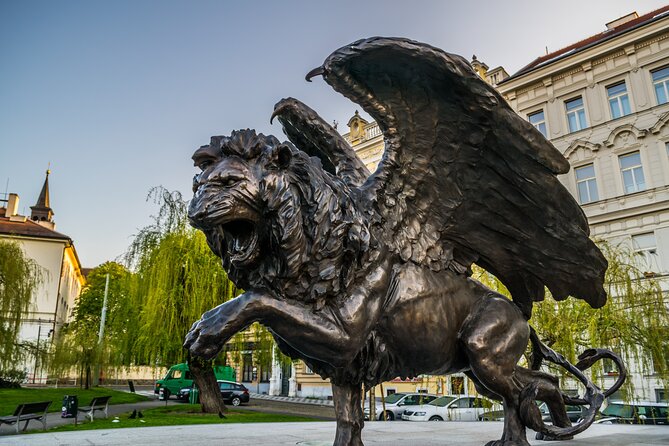
If you choose the longer option, you’ll visit this underground memorial, which is described as the last hideout of seven SOE-trained Czechoslovakian agents involved in the assassination of Reinhard Heydrich, a high-ranking German SS and police official. You’ll also hear stories of Czech resistance connected to the events after the assassination.
Why the crypt stop hits harder: underground spaces change how you feel. The location makes the mission and the aftermath more immediate. You’re not just hearing what happened. You’re standing in a place tied to how people hid, survived, and were hunted.
From a practical planning standpoint, this is the stop that can add more time, so if you’re tight on schedule, check which option you’re selecting before you book.
Old Town Square Landmarks With a WWII Lens
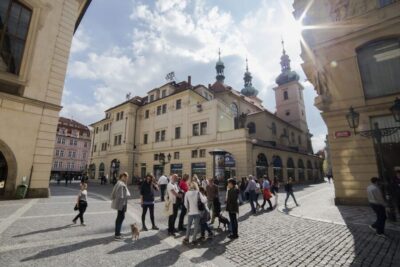
Stop 8 returns you to the Old Town Square area. You’ll see landmarks like the Church of St Nicholas, the Kinsky Palace, and the Church of Our Lady before Týn. This part can feel lighter than the Gestapo and crypt stops, but it still works because the guide keeps the focus on the city’s lived-in reality.
How to enjoy this section: don’t just treat it as photo time. Use it as a moment to mentally reset. You’ll have heard heavy stories, then you’ll be back in a square that will look familiar from postcards. The contrast helps your brain process what you learned earlier.
Petschek to Metro to Photos, How Your Guide Adds Real Value
A standout part of a tour like this is how the guide handles practical movement through the city. One guide named Hubert was described as having superb English and a nicely paced style. That kind of pacing matters because you’re outside for hours, and WWII topics can feel emotionally dense. If the guide speeds up too much, you miss the connections.
Hubert was also mentioned as helping with using the Metro to get to and from key places, and offering tips so you could take longer-distance photos at the Petschek Palace area. The review also noted that Petschek Palace is now the US Ambassador’s residence, which can make it extra interesting if you like seeing how historic buildings are reused in modern Prague.
If you care about getting the most out of your time, a guide who can both explain and help you navigate is a major part of the value. This tour is built on that idea: the route gives you the sites, but your guide gives them meaning.
Price and Value: What You Pay For and Why It Can Be Worth It
The tour costs $93.36 per person, with group discounts and mobile tickets. At first glance, it can seem like a lot for a walking tour, especially since the listed attractions show free admission tickets for the stops. Here’s the key: you’re mostly paying for the guide’s time and expertise, plus the convenience of a structured route that connects multiple meaningful WWII-related places.
A private tour format for your group adds value when you want a slower pace, more questions, or a more tailored flow. It also helps on days when access may vary, like possible closures at specific Jewish venues.
In short: you’re not paying for entrance fees. You’re paying for the story that makes entrance fees irrelevant.
Timing, Duration, and What a 2 to 4 Hour Walk Feels Like
The experience is listed at about 2 to 4 hours. That range mainly comes from whether the Heydrich Terror Memorial crypt stop is included. In the longer option, expect you’ll spend more time on the underground memorial and likely get more explanation there.
Plan your day like this: keep your after-tour plans flexible. You’ll likely want time to wander back through areas you learned about, especially around Old Town Square and the broader Wenceslas Square area.
Also, booking earlier can help. The tour is on average booked 42 days in advance, so if you’re traveling in peak season or on specific dates, it’s smart to lock it in early.
What to Wear When Prague Turns Chilly and Wet
This tour is outdoors. One review specifically noted it was chilly and rainy during their visit, and that it’s fully outside. That’s all you need to know to pack right.
Bring layers, not just one jacket. A warm mid-layer can save you. Use waterproof footwear if you can, and consider a compact umbrella or rain shell. If you’re the kind of person who dislikes being cold mid-walk, you’ll want to treat clothing as part of the plan, not an afterthought.
Who This Tour Is Best For
This is a strong fit if you want WWII history you can see in real places, not just read in a book. It’s especially good for first-time Prague visitors who want a deeper understanding of the city beyond the usual highlights.
It’s also a good choice if you like guided storytelling with a structured route, because the stops are intentionally connected. From synagogues and the Jewish Quarter to Gestapo-associated sites and resistance landmarks, the tour gives you a clear chain of events.
If you prefer hands-on museum time or mostly indoor stops, you might find the outdoor walking aspect challenging. But if you can handle the weather with proper gear, you’ll likely appreciate how tangible the history feels.
Should You Book This WWII History Tour of Prague’s Old Town?
If you’re asking whether this tour is worth your time, here’s my straight answer. Book it if you want WWII context you can physically walk through, and you enjoy guides who explain what you’re looking at. The combination of Jewish Quarter sites, Petschek Palace as a former Gestapo seat, the Wenceslas Square context, and the option to visit the Heydrich crypt makes it more than a standard city walk.
Hold back or choose the shorter option if you know you won’t make the underground stop, or if your schedule is tight. Also, if weather really affects you, prepare for the outdoor reality so you can focus on the story rather than shivering.
If you do book, pick the option that matches your interest level in the Heydrich operation. That crypt memorial is the part that turns the tour from informative into unforgettable.
FAQ
How long is the WWII History Tour of Prague’s Old Town?
It runs about 2 to 4 hours, depending on the option you choose.
Where does the tour start and end?
You meet at World of Franz Kafka, Nám. Franze Kafky 16/1, 110 00 Staré Město, Prague, and the tour ends back at the meeting point.
Is the tour private?
Yes. It is listed as a private tour/activity, meaning only your group participates.
Is the Heydrich Terror Memorial included?
That depends on the option. The visit to the National Memorial to the Heroes of the Heydrich Terror is noted as not included in the basic 2-hour option.
What language is the tour offered in?
The tour is offered in English.
Are there admission tickets required for the stops?
The stops listed include admission ticket Free, and you receive a mobile ticket for the experience.
Is it easy to reach the meeting point with public transportation?
Yes, the meeting point is near public transportation.
What if the weather is bad?
The tour is fully outdoors, and it can be chilly or rainy, so dress for the weather.
Can I cancel for a full refund?
Yes. You can cancel up to 24 hours in advance for a full refund.
More Tour Reviews in Prague
Wartime Ground in Prague
Old Town, Lane by Lane
Freshly written up in Prague
- World War II 4WD Tour from Prague with Lunch
★ 4.4 · 3 reviews - World War II History Tour of Prague’s Old Town
★ 5.0 · 3 reviews - Welcome to Prague – Private Tour with Licensed Guide
★ 5.0 · 3 reviews - Gourmet Brunch with Chef: Unlimited Drinks & Stunning River Views
★ 5.0 · 3 reviews - VIP Prague Segway Tour Around Monastic Breweries
★ 4.0 · 3 reviews
WWII & Operation Anthropoid Tours, compared.
 ★ 4.7WWII Guided Tour & The Crypt of Operation AnthropoidFrom $421,030 reviews
 ★ 5.0WWII in Prague Tour & The Crypt of Operation AnthropoidFrom $43817 reviews
 ★ 5.0Small-Group World War 2 & Operation Anthropoid Tour in PragueFrom $33231 reviews
 ★ 4.8World War 2 and Operation Anthropoid Walking TourFrom $32193 reviews
 ★ 4.7World War II and Communist History TourFrom $34130 reviews
 ★ 4.7Communists and World War II TourFrom $2988 reviews
 ★ 5.0Half-Day WWII Prague Walking TourFrom $4768 reviews
 ★ 4.93–Hour Communism and World War 2 E-Bike TourFrom $7456 reviews
Browse the lists this tour appears in