
REVIEW · WWII & OPERATION ANTHROPOID TOURS
Small-Group World War 2 & Operation Anthropoid Tour in Prague
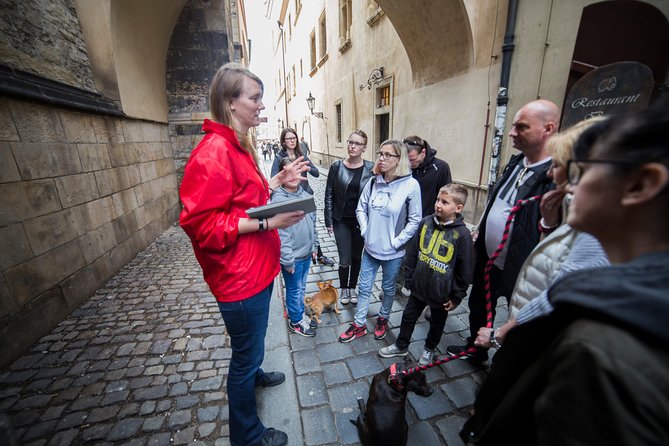
WWII feels different when it is written on your route. This small-group walk through Prague connects the Nazi occupation, the Czech resistance, and the assassination of Reinhard Heydrich to real buildings and street corners. I love that it is small-group paced and stays tight to a 3-hour plan, so you do not lose your day hunting for the right addresses. The main drawback is that the story is heavy, and there is a lot of standing and walking.
You meet in central Prague and end at the Orthodox Cathedral of Saints Cyril and Methodius, after a final stop at the National Memorial to the Heroes of the Heydrich Terror, including a crypt visit. The tour runs in English, uses a mobile ticket, and keeps the group to a maximum of 30 people, so it is easier to hear your guide and ask questions.
In This Review
- Key things to look forward to
- WWII in Prague, in real places and a tight timeline
- Start at Týnská 627, and how the 3-hour pace works
- From Treaty of Versailles to the Protectorate at U Budovce and Stone Bell House
- Old Town churches and the 1945 uprising at Staroměstská radnice
- Celetná to Melantrichova: Nazi control, student executions, and resistance hideouts
- Operation Anthropoid trail: Heydrich, Baťa, and paratrooper fallout
- Lidice, Esplanade, and Petschek Palace, where retaliation met interrogation
- National Museum, covert ops on Vodičkova, and the bombing at Karlovo náměstí
- St. Cyril and Methodius and the Heroes of the Heydrich Terror crypt
- Price and value: what you get for $33.88
- Who should book this Prague WWII tour, and who should skip it
- Final call: should you book this WWII and Operation Anthropoid tour?
- FAQ
- What is the tour duration?
- What language is the tour offered in?
- Where does the tour start?
- Where does the tour end?
- Is food included?
- Are tickets included?
- Is this tour suitable for children?
- Is the tour accessible for people with limited mobility?
- Can service animals join the tour?
- Is there a group size limit?
- What is the cancellation policy?
Key things to look forward to
- A Heydrich-to-uprising timeline that links events across the city, not just one famous moment
- Short stop moments at key sites, including places tied to resistance hideouts and Gestapo work
- Operation Anthropoid context, including the exiled government in London and earlier plans like Operation Benjamin, Silver A, and Silver B
- Lidice and the 1945 Prague Uprising, where the consequences of terror and retaliation become impossible to ignore
- A guided church and memorial crypt at the end, when the story turns from facts into atmosphere
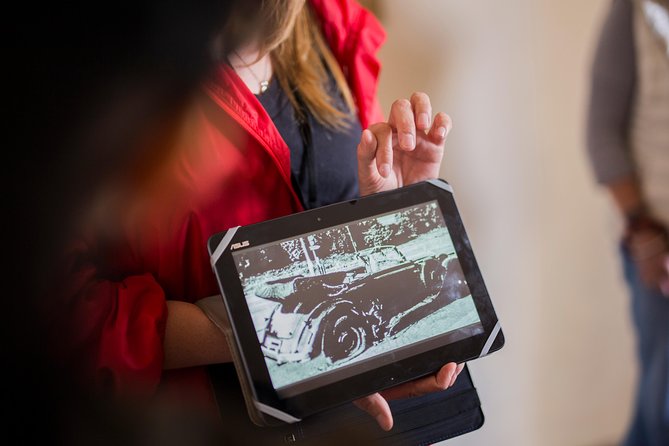
- Guides who teach with photos and storytelling, which helps at spots where you cannot see much today
Further wartime ground covered in Prague
- Prague: WWII Guided Tour & The Crypt of Operation Anthropoid★ 4.7 · 1,030 reviews
- WWII in Prague Tour & The Crypt of Operation Anthropoid★ 5.0 · 817 reviews
- Small-Group World War 2 & Operation Anthropoid Tour in Prague★ 5.0 · 231 reviews
- Prague: World War 2 and Operation Anthropoid Walking Tour★ 4.8 · 193 reviews
WWII in Prague, in real places and a tight timeline
Prague did not turn into a battlefield city in the same way some other places in Europe did. But the war still reached deep, through occupation rules, arrests, interrogations, and the resistance’s constant risk. What makes this tour gripping is that it treats the war like a chain of decisions and consequences, not just a list of dates.
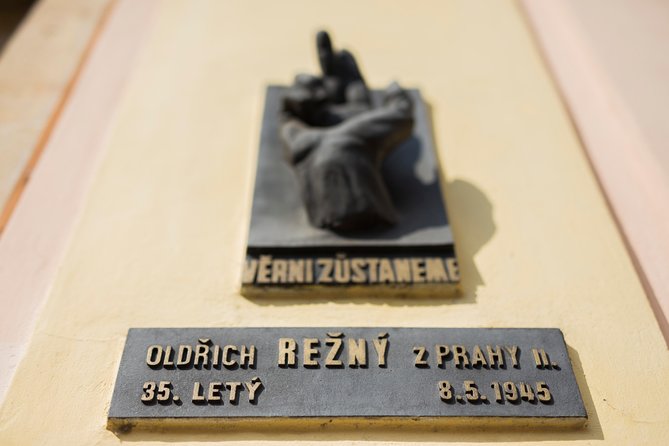
You start with the political pressure that feeds the occupation, then move into daily life under Nazi control. After that, the walk narrows into one event with huge fallout: the 1942 assassination of Nazi security head Reinhard Heydrich, followed by the hunt for those responsible. The story does not end with the assassination. It follows the reprisals, including the tragedy of Lidice, and finishes with the Prague Uprising in 1945 and the people who paid with their lives.
Start at Týnská 627, and how the 3-hour pace works
The tour meets at Týnská 627/7, Staré Město (Prague 1), with the start time listed as 1:30 pm. It runs about 3 hours, and it ends at the Orthodox Cathedral of Saints Cyril and Methodius at Resslova 9a, Prague 2.
This matters for planning. Prague is beautiful, but the city center can make you lose time in transit between landmarks. Here, the route is built to keep you walking in a manageable loop, with frequent stops that are short enough to fit busy itineraries.
One more practical note from what you are told up front: this is not recommended for small children because the content deals with violence and persecution. If you bring kids, know that children up to 6 are free, but they still must be accompanied by an adult, and the tour is flagged as not ideal for younger ages.
From Treaty of Versailles to the Protectorate at U Budovce and Stone Bell House
Many Prague WWII tours start at Heydrich and work backward. This one does the opposite, which I think is smarter. It helps you understand how quickly Czechoslovakia became a piece on the board.
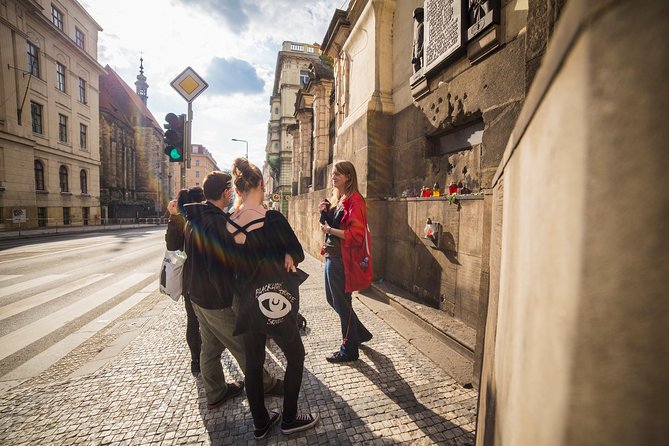
At U Budovce, you get the lead-in: how the Treaty of Versailles reshuffled power after World War I, leading to the creation of new nations including Poland, Austria, and Czechoslovakia. The guide ties in runaway inflation, the Great Depression, economic trouble across Europe, and the rise of nationalism. Then it lands on the rise of Hitler’s popularity.
Next is Stone Bell House, where the discussion moves into the late-1930s politics around the Sudeten Deutsche Party, the Munich Agreement, and how the Protectorate of Bohemia and Moravia formed. If you only know WWII as a Germany-versus-everyone story, these stops make it feel local and specific.
Old Town churches and the 1945 uprising at Staroměstská radnice
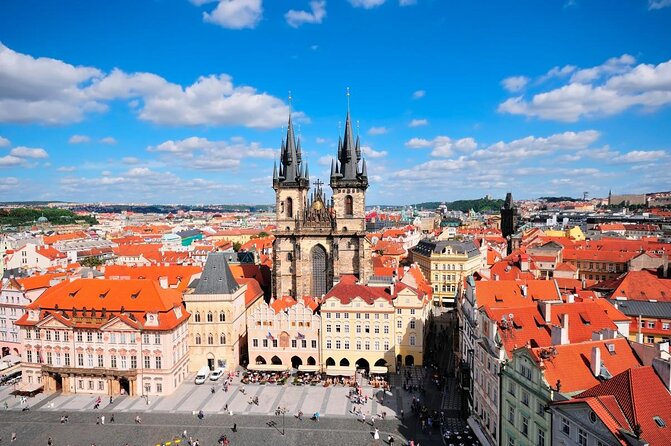
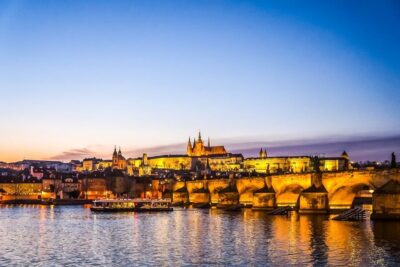
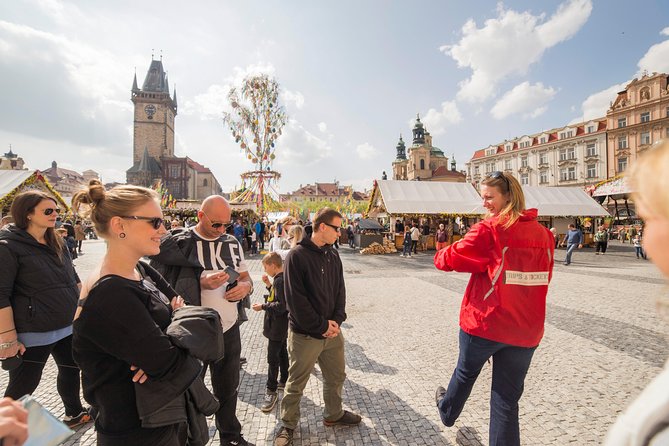
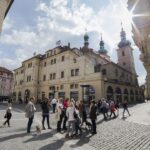
A gorgeous Gothic church sightline pops into view in the Old Town area early on. The tour pauses there for context, reminding you how long these buildings have anchored the city, including the fact that this Gothic church has been the main church for its area since the 14th century. It is a small moment, but it sets up the contrast you will keep seeing: beauty in architecture, violence in the wartime choices around it.
Then you reach Staroměstská radnice (the Old Town Hall) and focus on the wing destroyed during the Prague Uprising in 1945. The guide connects that damage to the lived reality of occupation, including what “every-day life” meant when the city was under control and fear.
The tour frames the uprising as a turning point that helped lead to victory, ending the war on May 8th. Even if you already know the ending, hearing it explained as a local resistance story changes the emotional temperature.
Celetná to Melantrichova: Nazi control, student executions, and resistance hideouts
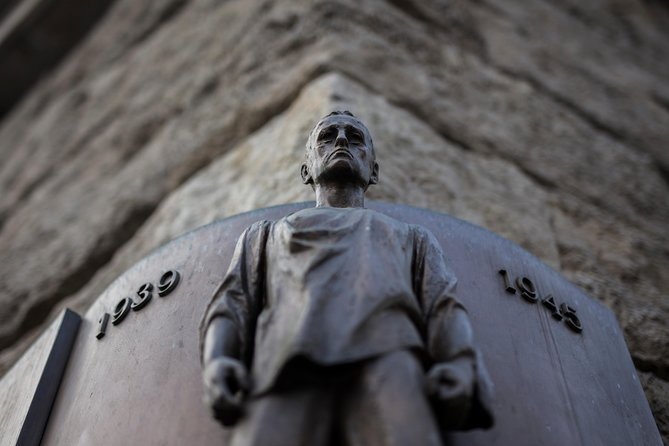
At Celetná Street, you get one of the most stark “how occupation looked on the ground” sections. The guide describes 17 November 1939, including the execution of Czech students and the closure of Czech universities. You also hear how Konstantin von Neurath’s tenure fit into the timeline, before the story turns sharply toward Reinhard Heydrich.
A key date is September 27, 1941, when Heydrich is appointed to a position that the tour describes as a turning point for the Protectorate. This is a useful setup, because later stops about assassination and retaliations make more sense when you understand the role Heydrich played in tightening control.
Next is Melantrichova, where the tour talks about resistance plotting in homes, not just in underground pamphlets. You see the building tied to the apartment of Josef and Marie Svatoš, and the guide explains that it functioned as a key resistance hideout. I like this kind of stop because it shrinks the distance between history and people. The resistance was not made of ghosts, it was made of neighbors and families risking everything.
Operation Anthropoid trail: Heydrich, Baťa, and paratrooper fallout
This is the core of the tour: the assassination of Heydrich and the operation built around it.
At Baťa Department Store, the tour connects the event to what was shown afterward. The guide explains that the store was used to exhibit the objects found at the scene of the assassination. It is one of those stops where you might not see dramatic physical evidence today, but you do get a clear explanation of why certain public spaces were used to control the story.
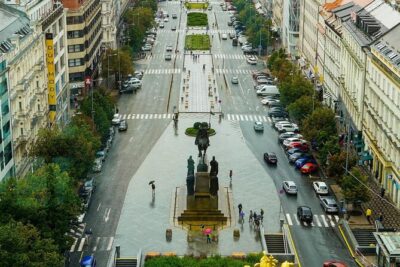
From there, the route moves to Wenceslas Square, and the narration becomes about consequence. The guide tells the story of the village Lidice, including that on June 10, 1942 around ten in the morning, men were executed and women were taken to concentration camps. The tour also highlights that Lidice ceased to exist. It is hard to hear, but it is also the point where the Nazi response to the assassination becomes undeniable.
You then visit the broader context that led to the assassination, including the exiled government in London and the earlier planning steps mentioned in the tour narrative, such as Operation Benjamin and the code names Silver A and Silver B. Later, the guide ties it all back to the daring assignment codenamed Operation Anthropoid, including how paratroopers were flown in to carry out the mission aimed at killing the Butcher of Prague, Heydrich.
Lidice, Esplanade, and Petschek Palace, where retaliation met interrogation
The tour does not treat occupation as an abstract force. It shows you where it operated.
At Esplanade Hotel Prague, you hear that it was a favorite hotel of the Nazis during the occupation. That fact is chilling because it is not about a secret bunker. It is about status, comfort, and how power showed itself in everyday prestige.
Then comes Petschek Palace, described on the tour as a Gestapo headquarters, where Czechoslovaks were interrogated, tortured, and killed in thousands. The guide brings the story down to a single turning moment with June 16, 1942, when Karel Čurda enters the building and betrays his comrades. That betrayal becomes a pivot in the hunt for Heydrich’s assassins.
A key value here is that you see how resistance success did not mean safety. The consequences hit families and friends through arrests and betrayal, and the Nazis used their systems to punish people far beyond the original target.
National Museum, covert ops on Vodičkova, and the bombing at Karlovo náměstí
After the darker stops, there is a more reflective section where the tour points out impressive architecture linked to memory and collection. The route includes a stop for the National Museum building, described as housing nearly 14 million items across natural history, history, arts, music, and librarianship, spread across dozens of museum buildings. It is not a WWII site in the way Petschek is, but it gives you a sense of what survives and what gets preserved.
Back out on the streets, Vodičkova is used to explain two covert, unfortunately unsuccessful operations called Tin a Bioscop. The point is not that these failed missions were dramatic on the streets. The point is that the resistance tried many plans, not just the one that became famous.
Finally, at Karlovo náměstí, the guide explains the bombing of Prague in 1945. This balances the narrative because the tour has focused on occupation control and assassination reprisals. Here, you see that the city also suffered in the final push of the war.
St. Cyril and Methodius and the Heroes of the Heydrich Terror crypt
The end phase is the most emotional part of the walk.
First, you visit St. Cyril and St. Methodius Church for a guided stop. The tour frames this church as a place that carries the weight of the Nazi response to Heydrich’s assassination. That means the guide does not just talk about the building. The narration connects the structure to the reprisals that followed.
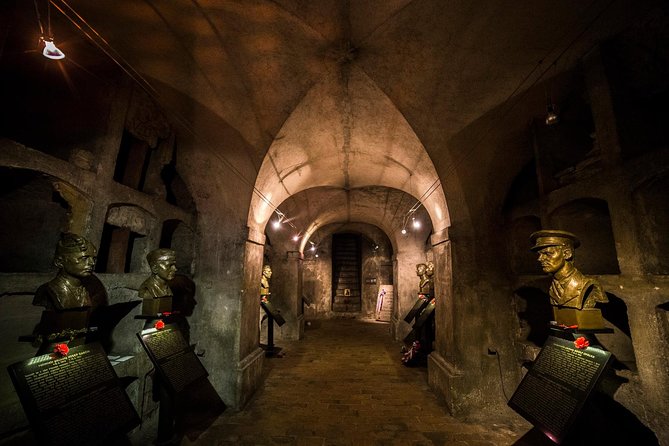
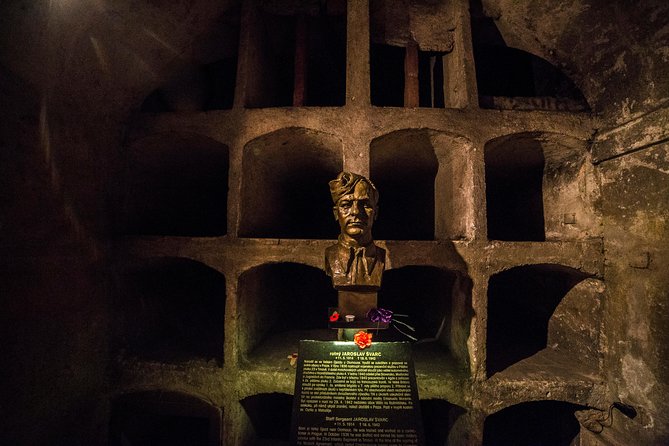
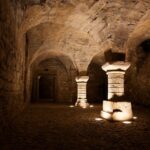
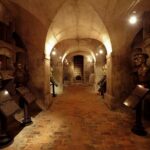
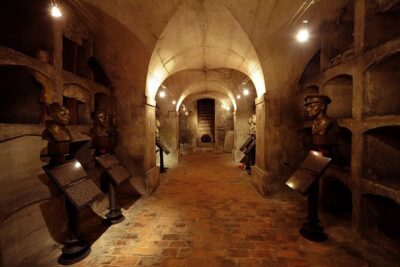
Then the tour finishes at the National Memorial to the Heroes of the Heydrich Terror, including the crypt where the Czech paratroopers paid the ultimate price. This is where the story shifts from explanation to atmosphere. It is also one of the stops that people most often call out as a highlight, because the crypt experience makes the sacrifices feel immediate and personal.
Price and value: what you get for $33.88
At $33.88 per person, you are paying for a local guide, and for at least two paid-included experiences: the Church of St Cyril and Methodius and the National Memorial (including crypt time). All the other stops listed are marked as free admission stops.
Is it worth it? For me, the value is that you get a guided storyline across multiple locations without having to piece it together yourself from a dozen sources. Also, the tour’s structure is ideal for a day already full of Prague sights. You get a clear beginning, middle, and end in about 3 hours.
The small-group limit of 30 helps too. Even when several stops are brief, you are less likely to lose the guide’s voice or miss key details, especially in busy city corners.
Who should book this Prague WWII tour, and who should skip it
Book this tour if you want WWII in Prague as a story you can physically follow. It is a good fit for people who care about the Czech resistance, the assassination of Reinhard Heydrich, and the chain of retaliations and uprisings that followed. If you are comfortable with standing and walking for a few hours, you will get more from it.
Skip it if you are expecting battlefield ruins or war scenes like you might find in other European cities. Prague’s wartime story in this route is about occupation systems, resistance networks, and consequences, not large-scale street fighting.
Also think carefully if you are bringing kids. The tour is explicitly flagged as not recommended for small children because of the heavy subject matter. For adults and older teens, the guidance style described by multiple guides suits the topic, with sensitivity and storytelling that keeps the focus on people, not just facts.
Final call: should you book this WWII and Operation Anthropoid tour?
Yes, I would book it if you have a couple of hours to spare and you want WWII that feels specific to Prague. The tour makes the occupation and resistance easier to place because you walk the locations tied to Heydrich’s assassination, the fallout including Lidice, and the 1945 Prague Uprising, then you end with a church and crypt visit that ties the emotional knot.
If you are nervous about heavy history or if you hate standing, go in with the right expectations: shoes that handle cobblestones, a calm mindset, and questions ready for the guide. With that, you will leave with a clearer Prague story, not just names and dates.
FAQ
What is the tour duration?
It runs for about 3 hours.
What language is the tour offered in?
The tour is offered in English.
Where does the tour start?
The meeting point is at Týnská 627/7, Staré Město, 110 00 Praha-Praha 1, Czechia.
Where does the tour end?
The tour ends at the Orthodox Cathedral of Saints Cyril and Methodius, Resslova 9a, 120 00 Praha 2-Nové Město.
Is food included?
No, food and drinks are not included.
Are tickets included?
The tour includes visits to St. Cyril and St. Methodius Church and the National Memorial to the Heroes of the Heydrich Terror, which include admissions for those stops. Other stops are listed as free admission ticket stops.
Is this tour suitable for children?
It is not recommended for small children due to the historical content. Children up to 6 are free, but children must be accompanied by an adult.
Is the tour accessible for people with limited mobility?
The tour lists a moderate physical fitness level requirement, and it includes walking and standing.
Can service animals join the tour?
Yes, service animals are allowed.
Is there a group size limit?
Yes. The tour has a maximum of 30 people.
What is the cancellation policy?
Free cancellation is available if you cancel up to 24 hours before the experience start time for a full refund.
More Tours in Prague
More Tour Reviews in Prague
Wartime Ground in Prague
Freshly written up in Prague
- World War II 4WD Tour from Prague with Lunch
★ 4.4 · 3 reviews - World War II History Tour of Prague’s Old Town
★ 5.0 · 3 reviews - Welcome to Prague – Private Tour with Licensed Guide
★ 5.0 · 3 reviews - Gourmet Brunch with Chef: Unlimited Drinks & Stunning River Views
★ 5.0 · 3 reviews - VIP Prague Segway Tour Around Monastic Breweries
★ 4.0 · 3 reviews
WWII & Operation Anthropoid Tours, compared.
 ★ 4.7WWII Guided Tour & The Crypt of Operation AnthropoidFrom $421,030 reviews
 ★ 5.0WWII in Prague Tour & The Crypt of Operation AnthropoidFrom $43817 reviews
 ★ 4.8World War 2 and Operation Anthropoid Walking TourFrom $32193 reviews
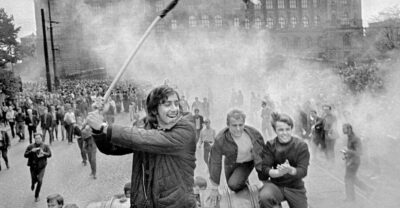 ★ 4.7World War II and Communist History TourFrom $34130 reviews
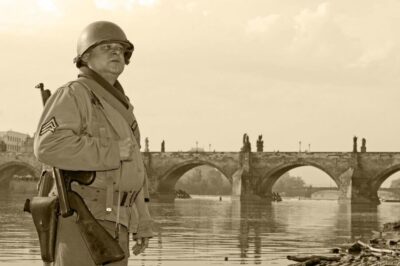 ★ 4.7Communists and World War II TourFrom $2988 reviews
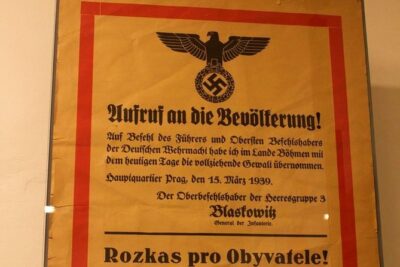 ★ 5.0Half-Day WWII Prague Walking TourFrom $4768 reviews
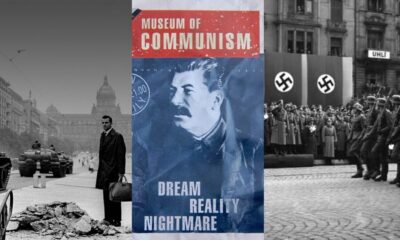 ★ 4.93–Hour Communism and World War 2 E-Bike TourFrom $7456 reviews
 ★ 5.0Second World War & Communism (Tip-based 3 hour tour)From $347 reviews
Browse the lists this tour appears in