
REVIEW · WWII & OPERATION ANTHROPOID TOURS
Second World War & Communism (Tip-based 3 hour tour)
Prague has a way of packing big 20th-century stories into small streets. This tip-based Second World War & Communism tour threads WWII trauma, the Prague Uprising, and the Cold War right through to the Velvet Revolution, with stops that are easy to follow and not stuck only in the Old Town postcard zone. I really like the clear, linear storytelling quality guides bring, and I love that the route hits people, places, and turning points in one smooth arc. One thing to consider is walking time, it is not ideal if you have mobility limits.
What makes this one genuinely useful is the mix of sites: you get the fate of Czech Jewish communities, the Communist era and the shock of 1968, plus the ending in the crypt linked to Operation Anthropoid. I also like the value angle here, the tour price is low and it includes free entry to a major WWII museum stop. If your group is large, you may want to ask how your day’s pacing will work, since street space in central Prague can feel tight.
In This Review
- Key things I found most compelling
- Where the Story Starts at Klárov: resistance monuments and WWII setup
- Pinkas Synagogue: the fate of Czech Jewish communities, not just dates
- From Old Town Hall to Prague’s uprising center: liberation and the first Cold War fractures
- Wenceslas Square: 1968 Warsaw Pact invasion and where Jan Palach acted
- OC Quadrio and Kafka: art under Communism, told through a public oddball
- Narodni třída to the National Theater: Velvet Revolution, then Vaclav Havel
- Dancing House and the Operation Anthropoid ending: from tragedy to resistance in a crypt
- Price and value: why $3.60 can still feel like a bargain
- Logistics you will actually care about: tickets, transit, and walking reality
- Who should book this Prague WWII and Communism tour
- Should you book Second World War & Communism in Prague?
Key things I found most compelling
- WWII and Communism in one stitched timeline, from occupation to Operation Anthropoid to Velvet Revolution
- Pinkas Synagogue as a direct, emotional stop on the fate of Czech Jews during WWII
- Prague Uprising and Jan Palach’s story placed at the places where these ideas became real
- Art under Communism explained through a very Prague landmark, the Rotating Head of Kafka
- Velvet Revolution into Vaclav Havel, with political change anchored to street-level sites
- Museum of Anthropoid Operation included, with the tour ending in a crypt linked to the mission
Further wartime ground covered in Prague
- Prague: WWII Guided Tour & The Crypt of Operation Anthropoid★ 4.7 · 1,030 reviews
- WWII in Prague Tour & The Crypt of Operation Anthropoid★ 5.0 · 817 reviews
- Small-Group World War 2 & Operation Anthropoid Tour in Prague★ 5.0 · 231 reviews
- Prague: World War 2 and Operation Anthropoid Walking Tour★ 4.8 · 193 reviews
Where the Story Starts at Klárov: resistance monuments and WWII setup
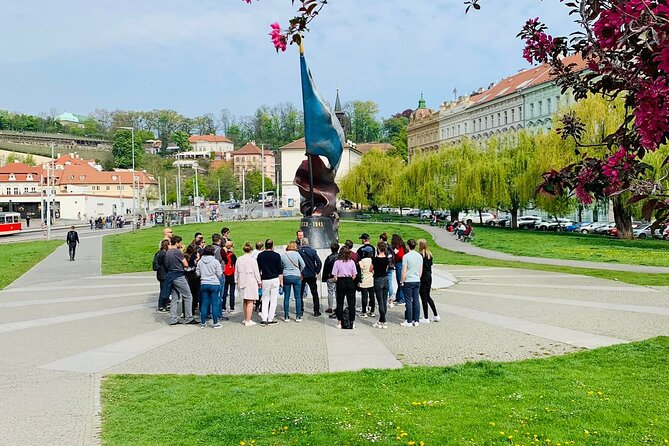
The tour begins at Klárov, a smart first choice because it sets tone fast. You start by looking at the Memorial to the Second Resistance and the Winged Lion Memorial, both of which point you toward what Prague learned the hard way about Nazi occupation and local resistance.
Your guide also frames the earlier context in plain language. You get a quick line back to how Czechoslovakia gained independence after World War I, then the focus shifts to why Hitler occupied the country and what happened to Czechoslovak soldiers during World War II. It is a useful foundation because it keeps the later stories from feeling like disconnected history slides.
What to expect: a short orientation and a lot of context before the heavier stops.
Potential drawback: this part can feel more background-heavy than you might want if you already know the basics.
Pinkas Synagogue: the fate of Czech Jewish communities, not just dates
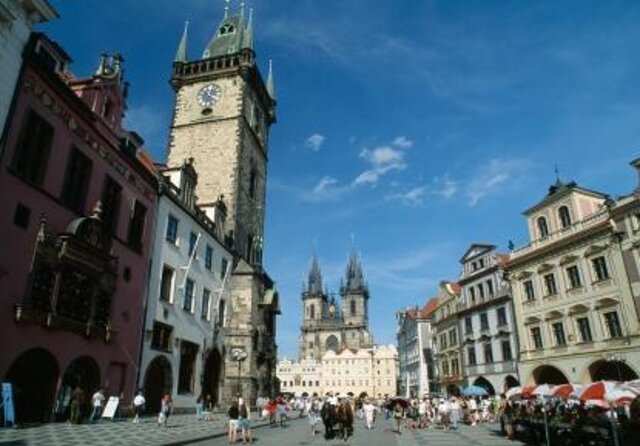
Next comes the Pinkas Synagogue, where the tour turns from generals and governments into lives. This stop is designed to answer the question that hangs over Prague’s WWII era: what happened to Czech Jewish people, and why did some escape while others were trapped?
You will hear the story in the form of choices and outcomes. Some people managed to emigrate, while those who could not faced persecution and murder. The tour uses the synagogue space to make the story feel specific, not abstract.
Why this stop matters for you: it is one of the few places in central Prague where the WWII narrative is directly tied to a community, not only to battles or political leaders.
Practical note: it is a free-admission stop on the tour, which helps you keep the day focused on the guide and the meaning.
From Old Town Hall to Prague’s uprising center: liberation and the first Cold War fractures
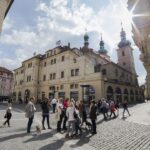
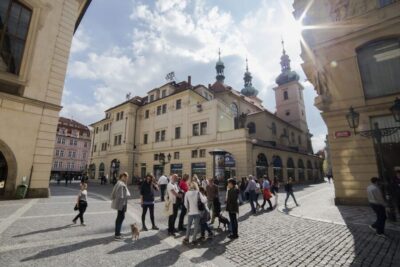
At Staroměstské náměstí (Old Town Square), the guide brings in the Prague Uprising, and then shifts the lens to what liberation actually changed. This is where the tour does something valuable: it shows that the end of WWII did not end control, it just changed who held the steering wheel.
The point is not to overwhelm you with dates. It is to connect cause and effect. After WWII, the groundwork was set for the rise of Communism in Czechoslovakia, and you will see how the city’s wartime emotions carried into postwar politics.
You are standing in the middle of a place that still feels civic and public. That matters, because resistance and authority always play out in public spaces.
What I like here: the guide keeps the timeline readable, so you feel like you are tracking history, not collecting facts.
Walking the 1948 to 1989 chapters of Prague
Wenceslas Square: 1968 Warsaw Pact invasion and where Jan Palach acted
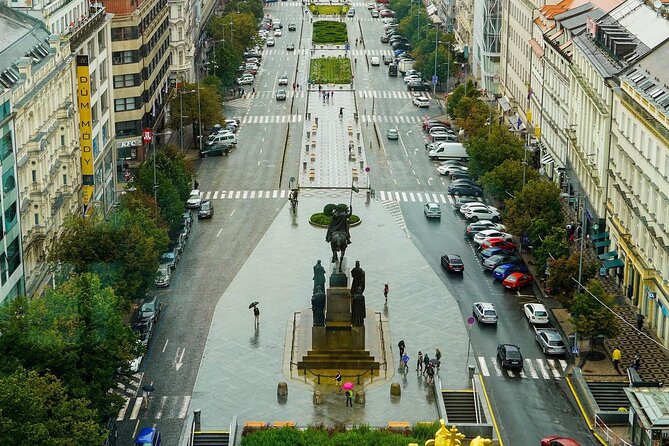
Then you move to Wenceslas Square, another smart staging point. If Old Town Square gives you the uprising atmosphere, Wenceslas Square gives you the later tension of the Cold War.
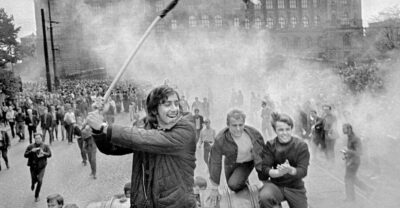
The tour explains what happened after Communism began in Czechoslovakia. Then it zooms out to the broader system: why Warsaw Pact armies invaded in 1968, and what that meant on the ground for Czech society.
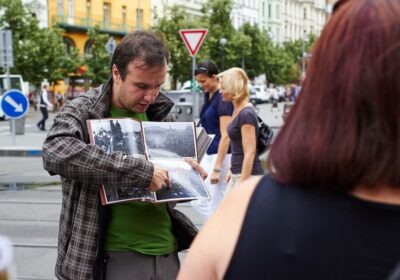
Most tours mention 1968 in passing. This one anchors it with a human act: you learn the place on the square where Jan Palach carried out his self-immolation. That moment lands better when you are literally in the same public space, because it turns history into a decision made in daylight.
Tip for you: wear comfortable shoes here, because it is a long square and the time you stand still matters less than the walking between points.
OC Quadrio and Kafka: art under Communism, told through a public oddball
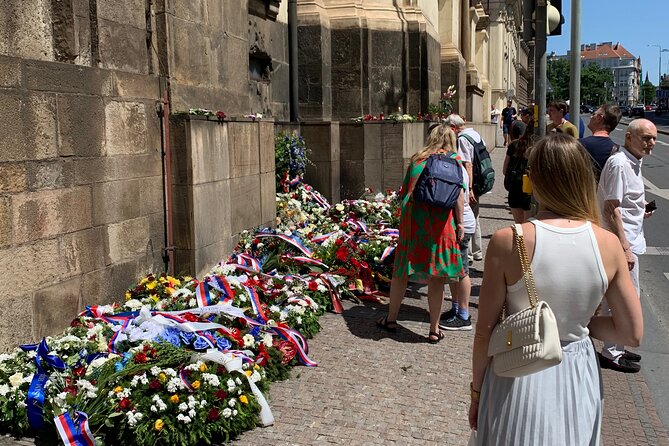
At OC Quadrio, you get the Rotating Head of Kafka. This is a great stop because it is visually memorable and it opens a topic many people skip: what art did under Communism.
The tour connects literature and artistic expression to how a controlled state treated culture. You will hear about why certain forms of art could be tolerated, redirected, or pressured, and why writers and artists found ways to communicate through what they could publish, stage, or imply.
Even if you are not a Kafka expert, the point is clear. Public art can act like a map of politics, because it shows you what a society celebrates or circles around.
What makes this stop worth your time: it breaks up the heavier WWII and political content with something that still has meaning, not just a photo op.
Narodni třída to the National Theater: Velvet Revolution, then Vaclav Havel
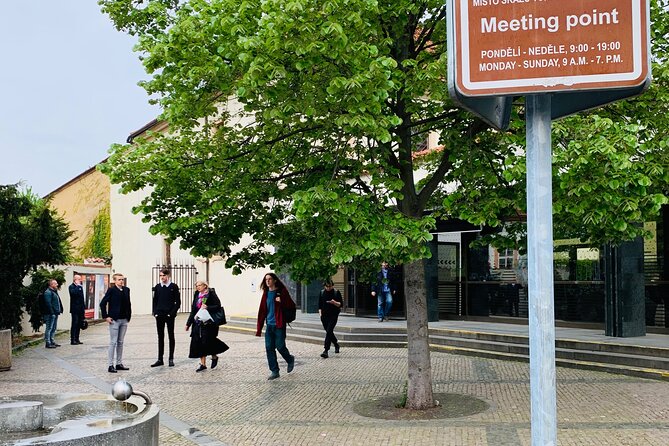
The tour continues along Narodni třída, where you learn about the Velvet Revolution and the fall of Communism. This section works best if you let the guide build the link between street energy and national change.
You are not just told that Communism ended. You get a story about why it became vulnerable, how momentum built, and why public pressure mattered.
Then you move to the National Theater, where the tour introduces Vaclav Havel and his role during the Velvet Revolution. For many people, Havel is a name from textbooks. Here, the tour puts him into the narrative of civic courage and political change, so it feels less like a unit in school and more like a turning point you can picture.
I like the pacing: the tour keeps shifting scale, from memorials to public squares to a major civic building, so the ideas keep landing.
Dancing House and the Operation Anthropoid ending: from tragedy to resistance in a crypt
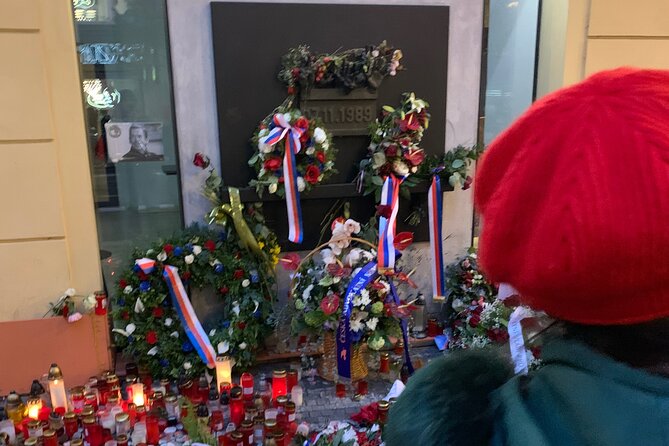
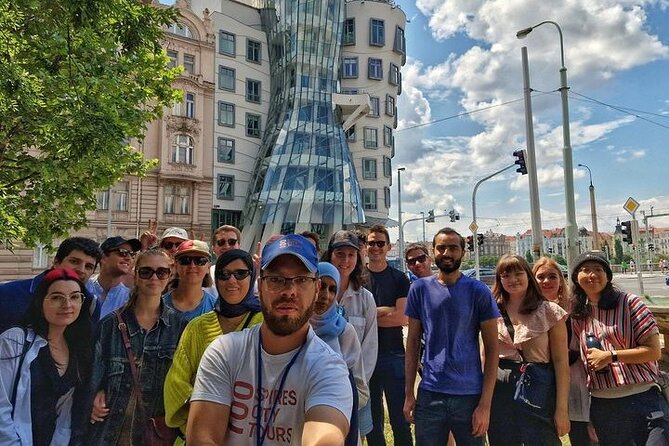
Finally, the route goes to the Dancing House, including the story of the Valentine’s Day bombing. This is not just set dressing. The guide uses it to reinforce the wartime atmosphere in Prague, where civilian life and resistance operations were close enough that the city could hold both pain and defiance at the same time.
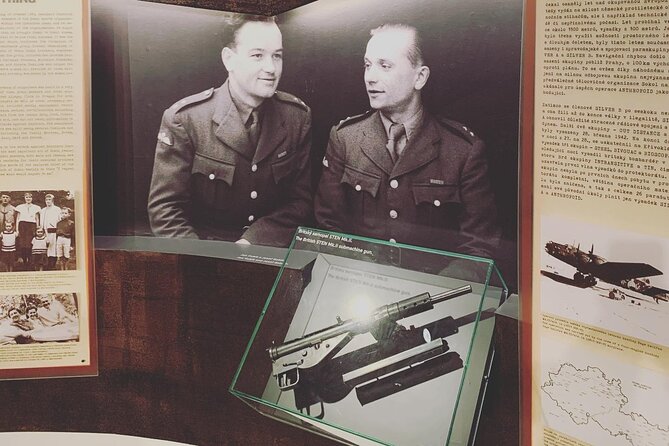
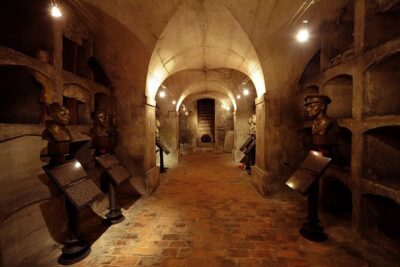
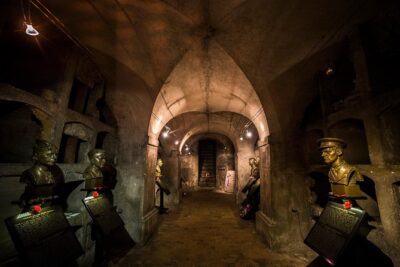
From there you finish at St Cyril and St Methodius Cathedral, and the stop becomes the tour’s emotional and historical anchor. The guide ends with Operation Anthropoid, described as the most important achievement of Czechoslovak resistance during World War II. And crucially, this is where you get the included Museum of Anthropoid Operation entry.
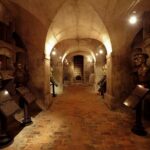
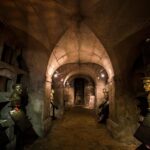
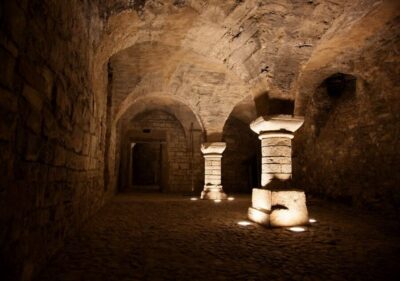
The tour ends in the crypt, a hideout linked to soldiers involved in the Anthropoid operation. The crypt location is about a 1-minute walk from the Dancing House or Charles Square, so even after the tour, you are not stuck far from other sights.
Important practical note: the tour info says animals are not allowed inside the war memorial you visit at the end. Service animals are allowed, but check the rule for non-service animals if you are bringing one.
Why this ending works: it is not a generic wrap-up. It ends where the physical spaces connect directly to the mission.
Price and value: why $3.60 can still feel like a bargain
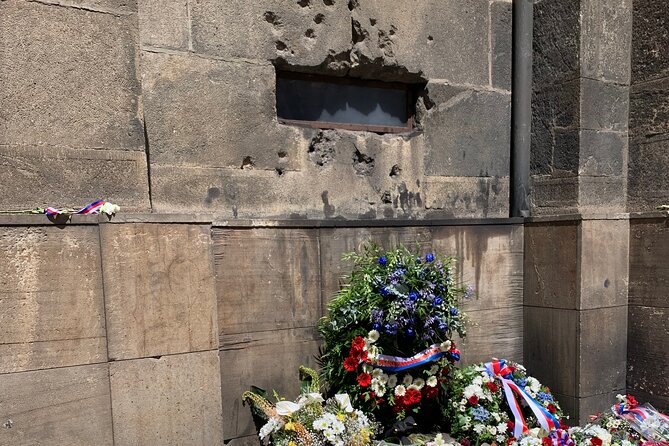
The stated price is $3.60 per person, with the tour described as tip-based and guided in English for about 3 hours. Even if you ignore the romance of history tours, the math of value is strong here.
You are paying for a certified, in-person guide plus free entry to the Museum of Anthropoid Operation, and the tour list also shows free admission at the other major stops. So you are not spending your energy and money figuring out ticket logistics across the day.
The best way to think about the price is this: it is low enough that you should treat the tour as a guided interpretation experience, not a self-guided checklist. If the guide is doing their job well, you get way more than a walk through famous points.
Logistics you will actually care about: tickets, transit, and walking reality
A few details matter for comfort and stress levels.
- You get a mobile ticket.
- The stops are near public transportation, which helps if you want to start close to the metro and keep the day easy.
- The tour says it works for travelers with moderate physical fitness, and it is not recommended for travelers with mobility problems.
- It is a private tour, meaning only your group participates, so you are not fighting for attention with strangers if your group is small.
One more thing: central Prague streets can be tight, especially near major squares. Guides handle this with the route pacing, but if you are sensitive to group size or want extra space, I suggest you message the provider ahead of time and ask how many people will be in your group.
Who should book this Prague WWII and Communism tour
This is a good fit if:
- you care about World War II and the Cold War, and you want the connection made clearly
- you want more than the classic castle-and-old-town highlights
- you like stories that focus on human choices, not only military dates
It is also a great pick if you are visiting Prague for a short time. In about three hours, you cover WWII occupation impacts on Czech Jews, the Prague Uprising, Communism and resistance, then the Velvet Revolution, ending with a WWII resistance mission site.
If you are a total history beginner, it still can work well because the guide keeps the timeline in motion. If you already know the broad strokes, you will still appreciate the specific anchors, like the synagogue stop and the Jan Palach place on Wenceslas Square.
Should you book Second World War & Communism in Prague?
I think you should book it if you want a guided Prague that explains cause and effect across 100 years, using real locations as your timeline. The combination is strong: WWII Jewish history, Prague’s resistance storylines, and the Communist era explained at street level, with the Operation Anthropoid ending and museum entry giving the day a satisfying historical finish.
Skip it only if you know you cannot manage the walking and standing involved with a city-center route, or if you want a purely light, sightseeing-focused outing. This tour is built for people who prefer meaning over selfies.
If you do book, plan for good shoes and arrive ready to listen. The guides can turn dense topics into a sequence you can follow, and that is exactly what makes this kind of tour worth the time.
More Tour Reviews in Prague
Between 1948 and 1989
Wartime Ground in Prague
Freshly written up in Prague
- World War II 4WD Tour from Prague with Lunch
★ 4.4 · 3 reviews - World War II History Tour of Prague’s Old Town
★ 5.0 · 3 reviews - Welcome to Prague – Private Tour with Licensed Guide
★ 5.0 · 3 reviews - Gourmet Brunch with Chef: Unlimited Drinks & Stunning River Views
★ 5.0 · 3 reviews - VIP Prague Segway Tour Around Monastic Breweries
★ 4.0 · 3 reviews
WWII & Operation Anthropoid Tours, compared.
 ★ 4.7WWII Guided Tour & The Crypt of Operation AnthropoidFrom $421,030 reviews
 ★ 5.0WWII in Prague Tour & The Crypt of Operation AnthropoidFrom $43817 reviews
 ★ 5.0Small-Group World War 2 & Operation Anthropoid Tour in PragueFrom $33231 reviews
 ★ 4.8World War 2 and Operation Anthropoid Walking TourFrom $32193 reviews
 ★ 4.7World War II and Communist History TourFrom $34130 reviews
 ★ 4.7Communists and World War II TourFrom $2988 reviews
 ★ 5.0Half-Day WWII Prague Walking TourFrom $4768 reviews
 ★ 4.93–Hour Communism and World War 2 E-Bike TourFrom $7456 reviews
Browse the lists this tour appears in