
REVIEW · COMMUNIST PRAGUE & COLD WAR HISTORY
Prague: Communism and Bunker Tour with 70s Canteen Lunch
Underground history, explained clearly. I like how the route tells the communist story in a clear, engaging timeline, and I love the hands-on stop in a 1950s nuclear bunker. One heads-up: the bunker is tight, so it is not suitable for claustrophobia.
You get two choices built for different travel styles, a 2-hour walking version or a longer 4-hour outing that adds the bunker and a 30-minute break. The pace works because you are guided on foot through Old Town and New Town, with a local expert who can answer questions in real time.
For the longer option, you also get a break that feels like stepping into another Prague, a 1970s-style workers’ canteen where you can try lunch or a bottle of Kofola. Budget for food at your own expense, since the lunch portion is not included in the base price.
In This Review
- Key takeaways before you go
- Getting oriented: communist Prague in plain language
- Powder Tower to Old Town and New Town: the route you follow
- 2-hour vs 4-hour: bunker tour plus a 70s canteen break
- Inside the 1950s nuclear bunker: what to expect underground
- The 1970s workers canteen and Kofola break
- Your guide and small-group format: how it really feels
- Price and value: what $33 buys you
- Should you book this Prague communism and bunker tour?
- FAQ
- How long is the Prague Communism and Bunker Tour?
- Where do I meet for the tour?
- Is the tour offered in English?
- Is the tour run in bad weather?
- Does the price include the nuclear bunker entry fee?
- Is lunch included?
- Do I get a souvenir?
- What is the maximum group size?
- Is the tour suitable for claustrophobia?
Key takeaways before you go
- Start at Powder Tower, Republic Square, with guides holding a blue umbrella so you can find them fast.
- Small groups capped at 15, so you are not stuck listening in silence.
- A timeline walk across Old Town and New Town, covering the 1948 coup through the Velvet Revolution.
- A real 1950s nuclear bunker visit in the 4-hour option, with guided access included.
- A 70s workers canteen break with lunch or Kofola, at your own expense.
- A communist-era pin souvenir, a fun keepsake that actually fits the theme.
Walking the 1948 to 1989 chapters of Prague
- Prague: Communism History and Nuclear Bunker Guided Tour★ 4.7 · 2,417 reviews
- Communism & Nuclear Bunker Tour + 70s Canteen Lunch (own expense)★ 5.0 · 1,036 reviews
- Prague: Communism and Bunker Tour with 70s Canteen Lunch★ 4.8 · 250 reviews
- Prague: World War II and Communist History Tour★ 4.7 · 130 reviews
Getting oriented: communist Prague in plain language
Prague has a way of looking peaceful while its past was anything but. That is what makes this tour such a useful way to get your bearings. Instead of bouncing between random plaques, you follow a story line, from the big political shift in 1948 to the late-stage shakeups that culminated in the Velvet Revolution.
What I like most is how the information stays connected to the places you stand in. You see how power changed everyday life, not just speeches and dates. On top of that, the guides often bring personal angles that make the era feel specific, not textbook. In past tours, I have heard names like Klara, Leo, and Tereza come up, and the common thread is that they keep the pace lively, with room for questions and practical context.
Here is the one consideration you should respect: this experience includes a nuclear bunker. Even if the tour stays factual and guided, underground spaces are still underground spaces. If you know tight places make you panic, skip the bunker option or choose something else entirely.
The upside is that you leave with a mental map. You walk away understanding why certain buildings and street areas matter, and you also understand what people hoped for, feared, or adjusted to under communism.
Powder Tower to Old Town and New Town: the route you follow
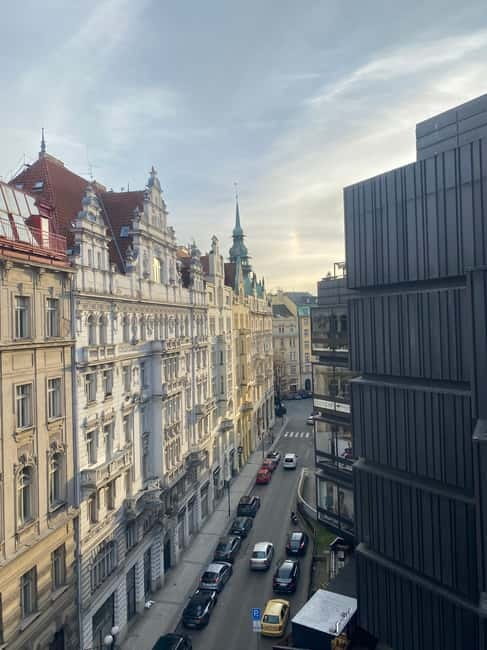
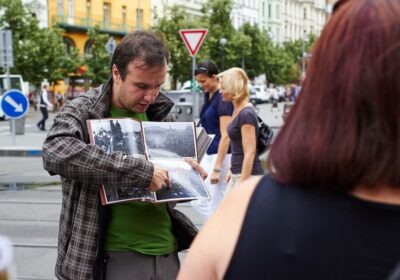
Everything starts at the Powder Tower on Náměstí Republiky, Republic Square. It is central, easy to orient yourself, and you can spot the guide because they hold a blue umbrella. That small detail matters. It cuts down the pre-tour wandering, and you start moving right away.
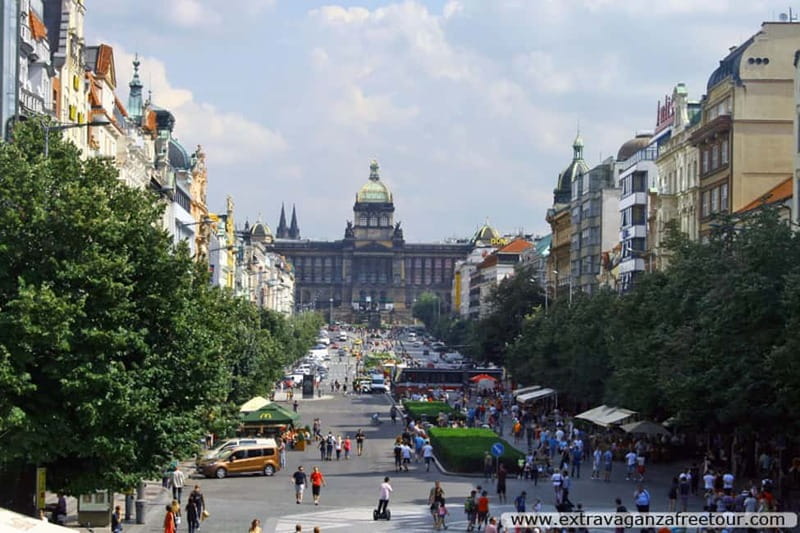
From there, the tour shifts into a two-part walking structure. In the first major phase, you cover Old Town with guided commentary for about an hour. Then you head to New Town for another guided hour. This split is smart because Old Town and New Town each give you different angles on how Prague grew and how the political climate shaped the city.
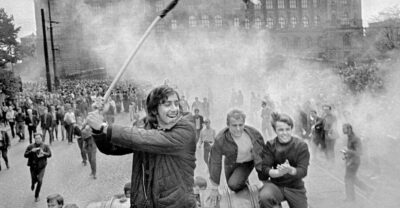
Expect the guide to connect key moments into a clear thread: the 1948 Communist coup, the Prague Spring, and the Velvet Revolution of 1989. If you have only skimmed these terms before, this is the kind of tour that helps them click. And if you already know the headlines, you still get value from the way the guide frames them on the ground.
Along the way, you also get a sense of how everyday life worked under the system. That includes how people navigated shortages, rules, and propaganda, and how different groups experienced the same state in totally different ways. I like that your questions are welcome. You are not just watching a narration happen to you.
The tour ends back at the meeting point in some schedules, while other schedules list Jalta Boutique Hotel as a finish reference. Either way, you are not being dropped somewhere remote. Plan on returning to the city center so you can keep exploring afterward.
2-hour vs 4-hour: bunker tour plus a 70s canteen break
This is not a one-size-fits-all outing. You choose between a 2-hour walking tour and a longer 4-hour tour that adds two key experiences: a 1950s nuclear bunker visit and a break in a retro workers’ canteen.
If you take the 2-hour version, you basically get the heart of the story on foot. You still cover the Old Town and New Town sections with guided commentary, and you still get the communist timeline explained in a straightforward way. This option is great if you want historical grounding but you do not want the added time spent underground.
If you pick the 4-hour option, you add a scheduled 30-minute break where you can try lunch or order Kofola in a 1970s-style working-class canteen. The food itself is at your own expense, so you can keep it light or go for a fuller Czech meal based on your appetite.
Then the biggest add-on is the bunker. The bunker entry fee is included for the 4-hour option, listed as 250 CZK or 10 EUR, and the bunker tour is also guided. That inclusion matters for value. You are paying for an experience you would otherwise have to budget separately.
Group size is limited to 15, which is a practical advantage on a walking tour like this. Smaller groups mean fewer people asking the same question and more chance for the guide to tailor explanations to your level of interest. You can also hear what the guide says at stop points without straining.
If you are short on time, the 2-hour tour is the cleanest choice. If you like hands-on history, the 4-hour option is where the story becomes physical.
Bookings around Prague our notes circle repeatedly

Inside the 1950s nuclear bunker: what to expect underground
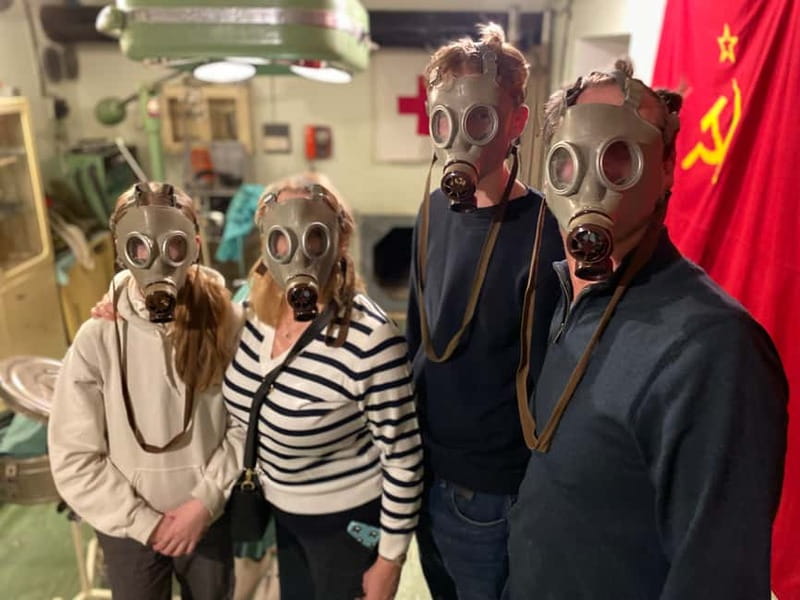
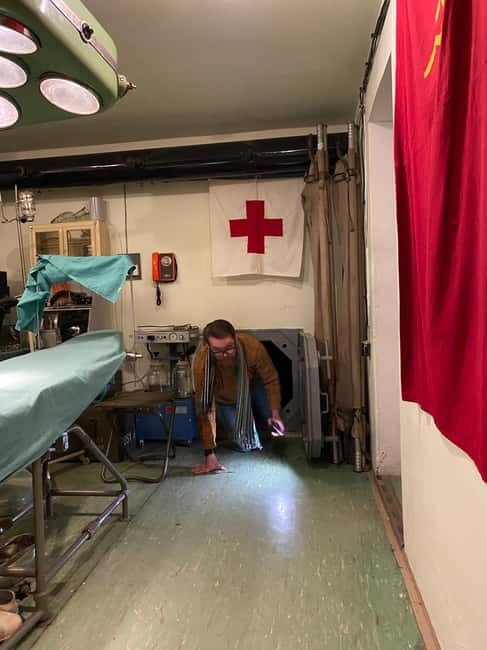
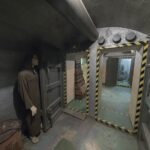
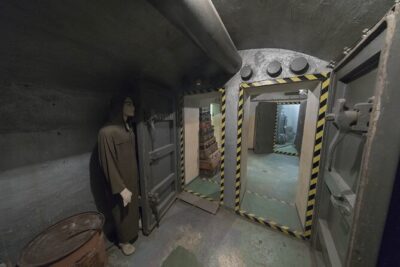
The nuclear bunker is the moment that turns the tour from informative into memorable. You step into a Cold War-era 1950s space designed to capture fear and atmosphere from that era. It is not just a room to look at. You are guided through it, and the experience is built to help you understand what living with the threat of nuclear conflict might feel like.
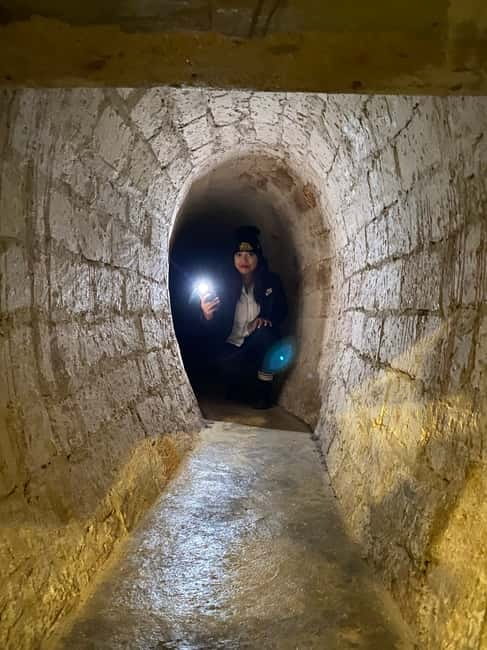
Be ready for the setting to be tight and concrete-heavy. The tour explicitly is not suitable for people with claustrophobia, and that warning is there for good reason. If you are even mildly uncomfortable in confined spaces, you will probably want to rethink the bunker portion.
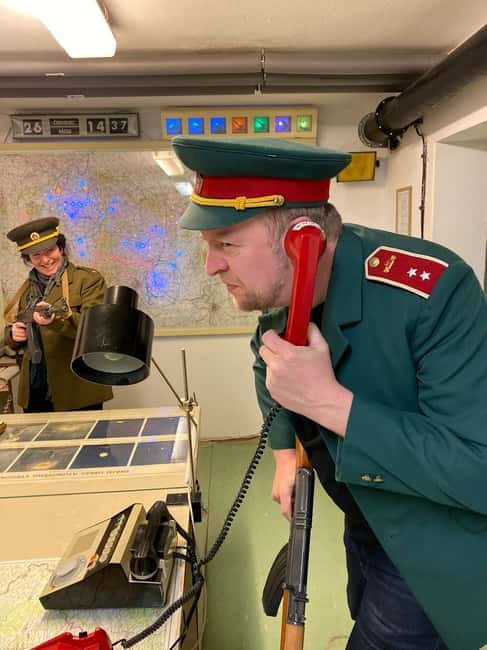
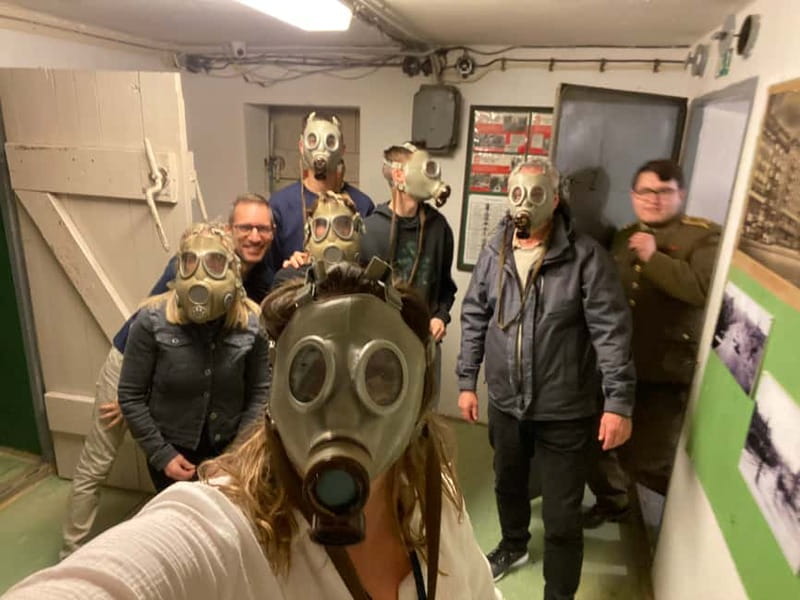
The good news is that the tour is guided, and you are not wandering around confused. In the past, guides have helped make the bunker experience more interactive, with moments like trying on period uniforms or handling bunker equipment. Even when it stays strictly observational, the guide’s storytelling typically ties the physical space back to human behavior, like how authority and planning shaped daily routines.
Also, this is where you appreciate the value of a local guide. If the guide has personal stories or family memories, those details can make the bunker feel less like a museum set and more like lived reality. You might not need that added layer to understand the politics, but it can make the experience stick.
If you are visiting Prague primarily for architecture and food, this bunker stop might be the most intense part of your day. That intensity is also why it is worth it. You leave with a deeper sense of what people were preparing for, and how the state tried to control uncertainty.
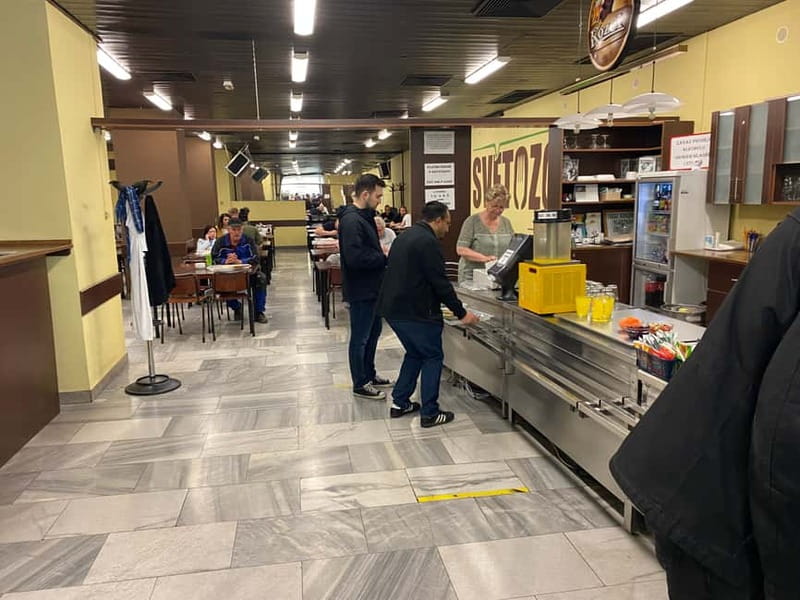
The 1970s workers canteen and Kofola break
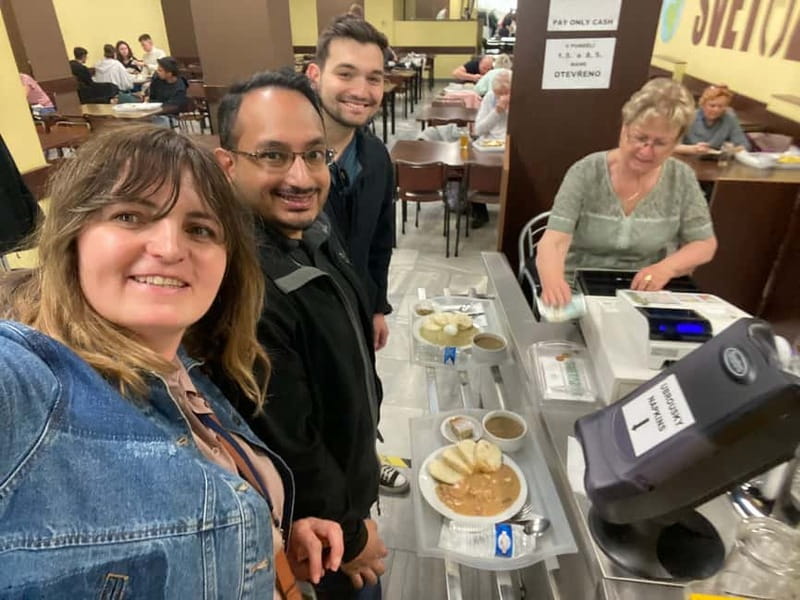
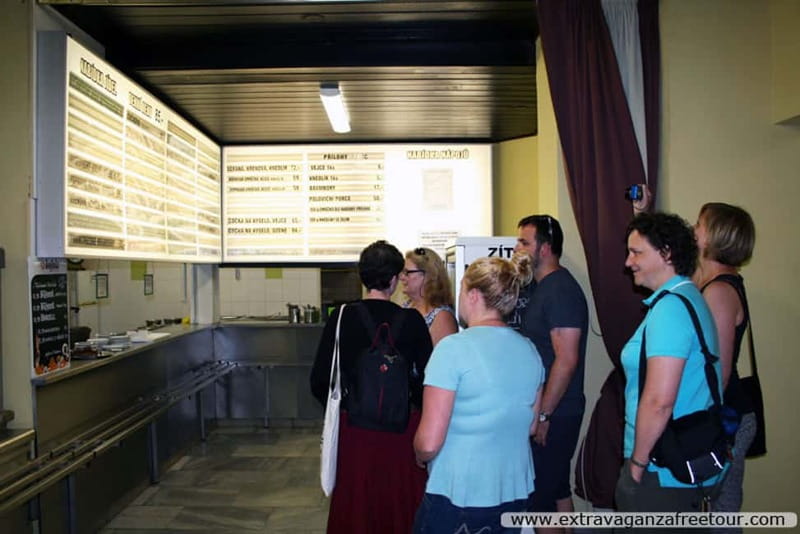
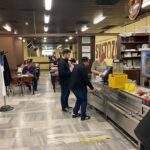
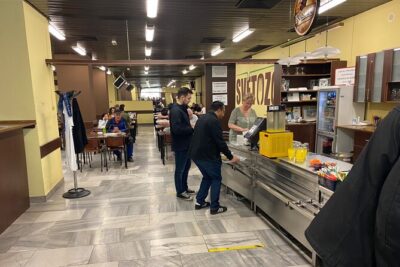
The break is not random. It is part of how you learn the era. On the longer tour, you get a 30-minute stop to try lunch or drink Kofola in a retro working-class canteen from the 1970s.
Even if you only have time for something small, I think Kofola is the smart move because it is tied directly to this setting. It is a Czech standby that fits the theme without requiring you to overcommit time or money. The lunch option is at your own expense, so you can choose the portion that makes sense for you.
What I like about including food in the middle of a history tour is that it forces a shift from facts to comfort. After walking and absorbing political context, your brain needs a reset. Sitting down in a period-style canteen gives that reset while keeping you in the story.
The canteen stop also tends to make the tour feel less like a lecture. Guides sometimes share practical tips around that break too, like where to grab snacks nearby or what Czech treats to look for. I find those small suggestions useful because they help you turn a guided experience into better independent exploring afterward.
Just plan your expectations: this is not a fine-dining stop. It is an authentic throwback style place. Order what looks good, take your time, and use those 30 minutes to ask your guide any questions you saved up.
Your guide and small-group format: how it really feels
A big reason this tour scores high is the guide factor. Names like Klara, Leo, and Tereza show up in strong feedback, and the common vibe is clarity plus energy. In practice, that means you are not just hearing dates. You are getting explanations that connect events to people, and you get chances to ask follow-ups.
A small group also changes the tour dynamic. With a maximum group size of 15, the guide can keep track of who has questions and who wants more detail. In some groups, you might even see the guide using visual aids to show how areas changed before and after communist rule, which makes it easier to picture what the city looked like.
The bunker segment can also become more engaging when a guide offers hands-on moments, like trying bunker-era gear or uniforms. That kind of activity is never guaranteed for every visitor, but it does reflect the tour style: making you feel the era instead of just reading about it.
One practical tip for you: treat the tour like a conversation with local context. If there is a specific angle you care about, like life under communism for ordinary people versus the system’s leadership side, ask early. Guides do a better job tailoring when they know what you are curious about.
Also note the tour runs rain or shine. Bring a rain layer if the forecast looks questionable. You still cover Old Town and New Town on foot, so comfort matters.
Price and value: what $33 buys you
At $33 per person, this tour is priced like a budget-friendly guided history experience, but it includes several meaningful pieces. You get an expert local guide and a focused walking tour built around Prague’s Cold War story. You also get a communist-era pin souvenir, which is a small cost-effective item but adds to the sense that you actually did something themed.
If you choose the 4-hour option, you also get bunker entry included, listed at 250 CZK or 10 EUR, plus the guided bunker tour. That turns the $33 into better value than it looks at first glance, because bunker admission would otherwise be a separate line item.
Lunch is the only obvious “extra.” The canteen break is part of the schedule, but the lunch itself is at your own expense. That is normal for this style of tour, and it gives you control over what you order and how much you spend.
So here is the real value question: are you the type who likes history explained in context, plus a physical site that you can walk into? If yes, this is a strong buy. If you only want to skim the surface and you hate confined spaces, the bunker makes the 2-hour walking option the safer bet.
If you are traveling with a friend or family group, the small group cap helps keep the experience personal rather than chaotic.
Should you book this Prague communism and bunker tour?
Book it if you want your communist-era Prague experience to be organized, guided, and tied to real places. I think it is especially worth it when you are mixing a first-time visit with a desire to understand the country beyond the postcard view.
Skip or choose carefully if claustrophobia is an issue, since the 1950s bunker is part of the core value in the 4-hour version. If you just want the big political timeline without the underground setting, take the 2-hour walk.
If your priority is a memorable hands-on Cold War moment, the 4-hour option is the one that makes the story tangible, and the canteen break keeps the day from feeling too heavy.
FAQ
How long is the Prague Communism and Bunker Tour?
The tour options are 2 hours or 4 hours, depending on which version you choose.
Where do I meet for the tour?
You meet at the Powder Tower on Náměstí Republiky (Republic Square). Look for the guide holding a blue umbrella.
Is the tour offered in English?
Yes, the tour guide provides the tour in English.
Is the tour run in bad weather?
Yes, the tour takes place rain or shine.
Does the price include the nuclear bunker entry fee?
For the 4-hour option, the nuclear bunker entry fee (listed as 250 CZK / 10 EUR) is included.
Is lunch included?
Lunch in the 1970s-style workers’ canteen is not included in the price. The break gives you the option to buy lunch or Kofola at your own expense.
Do I get a souvenir?
Yes, you receive an original communist-era pin as a souvenir.
What is the maximum group size?
Group size is limited to 15.
Is the tour suitable for claustrophobia?
No. The tour is not suitable for people with claustrophobia because it includes a bunker visit.
More Tours in Prague
More Tour Reviews in Prague
Between 1948 and 1989
Freshly written up in Prague
- World War II 4WD Tour from Prague with Lunch
★ 4.4 · 3 reviews - World War II History Tour of Prague’s Old Town
★ 5.0 · 3 reviews - Welcome to Prague – Private Tour with Licensed Guide
★ 5.0 · 3 reviews - Gourmet Brunch with Chef: Unlimited Drinks & Stunning River Views
★ 5.0 · 3 reviews - VIP Prague Segway Tour Around Monastic Breweries
★ 4.0 · 3 reviews
Communist Prague & Cold War History, compared.
 ★ 4.7Communism History and Nuclear Bunker Guided TourFrom $442,417 reviews
 ★ 5.0Prague Communism History and Nuclear Bunker TourFrom $451,742 reviews
 ★ 5.0Communism & Nuclear Bunker Tour + 70s Canteen Lunch (own expense)From $351,036 reviews
 ★ 4.7World War II and Communist History TourFrom $34130 reviews
 ★ 4.93–Hour Communism and World War 2 E-Bike TourFrom $7456 reviews
 ★ 5.0Second World War & Communism (Tip-based 3 hour tour)From $347 reviews
 ★ 5.0Communism and World War 2 Prague City TourFrom $7833 reviews
 ★ 4.5Prague Communism and World War II Walking TourFrom $3028 reviews
Browse the lists this tour appears in