
REVIEW · COMMUNIST PRAGUE & COLD WAR HISTORY
Prague Communism History and Nuclear Bunker Tour
Cold War Prague hits different below ground.
What makes this tour special is the mix of real city landmarks and a 4-floor-deep nuclear bunker that turns abstract history into something you can walk through. I especially like how the guide ties the story to specific places you might otherwise pass by, including the StB Holding Cells and the Velvet Revolution Memorial.
I also love the human angle. You spend time with English live commentary and guides who bring personal context, including names like Ladislav, Pavel, Stan, Karl, Tom, and Lada showing up in different groups. That personal lens helps the Soviet-era story feel less like a textbook and more like something people lived through.
One possible drawback: this is not a light stroll. If you have claustrophobia or mobility limits, or you’re traveling with very young kids, this tour may be a poor fit because the underground bunker and the walking segments require full participation.
In This Review
- Key things you should know before you go
- Prague communist history on streets, then underground
- Price and what you truly get for the money
- Start point at Malé Náměstí, and how the tour actually moves
- Stop by stop: StB Holding Cells and the StB story in Prague
- Practical note
- Velvet Revolution Memorial: 1989 told through a place, not a timeline
- Národní třída and Wenceslas Square: the politics you can still read
- If you’re looking for one “wow” moment on the surface
- Olšanské náměstí and socialist architecture from the 1970s era
- The nuclear bunker: what it feels like and why it matters
- What the bunker experience is actually doing
- A note on expectations
- Guides make or break the experience
- Who this tour is best for (and who should skip it)
- Tips to make the day smoother
- Should you book this Prague communism and nuclear bunker tour?
- FAQ
- How long is the Prague Communism and Nuclear Bunker Tour?
- How much does the tour cost?
- Is the nuclear bunker entrance included?
- Does the tour include an English guide?
- Can I join if I have mobility issues?
- Is the tour suitable for claustrophobia?
- What is the group size?
- Are photos and video allowed?
- What age limits are there for children?
- What is the cancellation policy?
Key things you should know before you go
- StB Holding Cells stop gives you the secret-police context behind the Communist system
- Velvet Revolution Memorial focuses on 1989 and what changed in Czechoslovakia
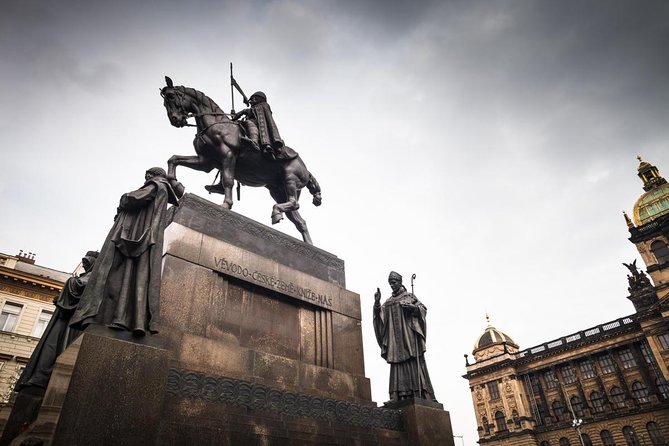
- Wenceslas Square and August 1968 connect the Soviet invasion to everyday life
- Nuclear Bunker is four floors down and built for Cold War fear, not comfort
- Smaller group size (max 26) helps the guide keep the pace and answer questions
- Good shoe policy matters, because this tour includes ramps and a lot of stair steps
Walking the 1948 to 1989 chapters of Prague
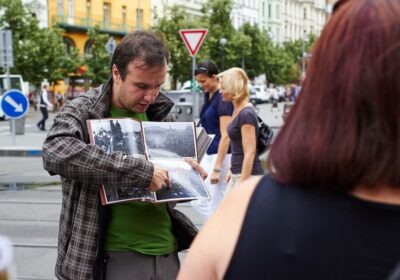
- Prague: Communism History and Nuclear Bunker Guided Tour★ 4.7 · 2,417 reviews
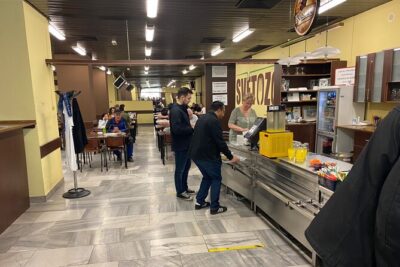
- Communism & Nuclear Bunker Tour + 70s Canteen Lunch (own expense)★ 5.0 · 1,036 reviews
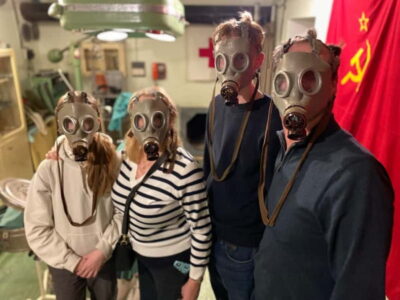
- Prague: Communism and Bunker Tour with 70s Canteen Lunch★ 4.8 · 250 reviews
- Prague: World War II and Communist History Tour★ 4.7 · 130 reviews
Prague communist history on streets, then underground
Prague is one of those cities where politics never really left. Even if you stick to the usual postcard streets, the Cold War era still shows up in squares, facades, and the way people talk about 1968 and 1989.
This tour gives you both sides of that equation. On the surface, you walk through locations tied to the StB secret police, the Velvet Revolution, and the political pressure around the Prague Spring. Then you go below ground into an actual nuclear bunker museum, where the story becomes physical, with steep steps and tight spaces that were meant for survival.
You can think of it as a guided line from surveillance and control, to resistance and reform, to the paranoia of living with nuclear risk. If you like history that has a “why” and a “how,” this is the kind of tour that makes those connections for you.
Price and what you truly get for the money
At $45.16 per person, this isn’t a budget throwaway, but it’s also not trying to charge you like a premium attraction with no added value. Here’s where the money goes:
- English live guide during the walking and the bunker segment
- Entrance to the nuclear bunker museum
- A photo booklet plus a bunker survival guide
- Transport to and back from the bunker (so you’re not guessing how to reach it on your own)
That combination matters. You’re not just paying for a site ticket. You’re paying for a guided narrative across multiple stops, plus the kind of guided interpretation that helps you understand what you’re seeing in the bunker exhibit.
Also, the tour caps at 26 people. That’s a sweet spot for a story-heavy tour like this. You won’t feel lost in a crowd, and the guide can keep the pace moving without turning it into a lecture hall.
Start point at Malé Náměstí, and how the tour actually moves
The meeting point is inside the Passage at Malé Náměstí 459/11, about 20 meters to the right of Hotel U Prince. It’s the kind of location that can be confusing if you arrive late or out of sync with the group, so I’d build a little buffer into your schedule.
The tour is listed at about 2 hours 20 minutes. In practice, some groups report that the transit segment can take a noticeable chunk of time. Since the route includes moving between multiple Communist-era sites and then going down to the bunker, expect a mix of walking and sitting time.
You’ll want to plan for:
- A walk-and-stop rhythm in central Prague
- A longer underground visit (the bunker portion is about an hour)
- Lots of stairs and ramps during the bunker experience
If you hate tight timing, show up a few minutes early and stay flexible. Once the group leaves the start, it’s not guaranteed you can just jump in.
Further history, angled differently
Stop by stop: StB Holding Cells and the StB story in Prague
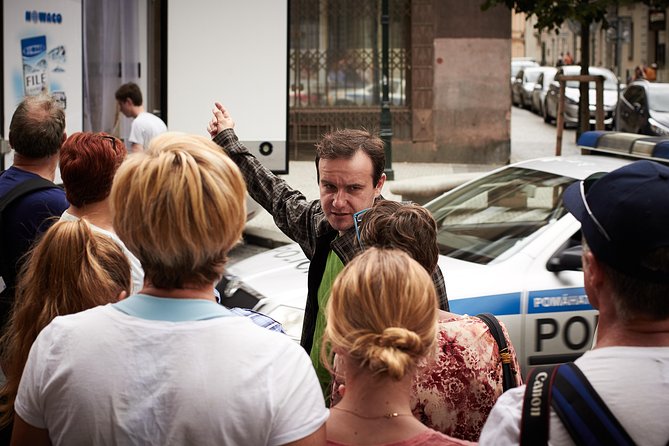
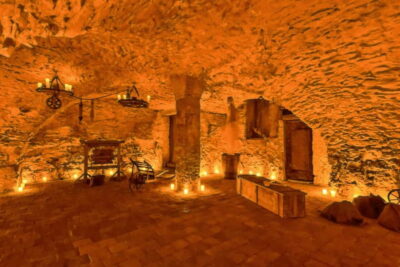
Your first real “this is the system” moment comes with the StB Holding Cells, the former secret police building where prisoners were held.
This stop sets the tone. It’s one thing to hear the word StB. It’s another to stand in a space tied to interrogation and detention. The guide also connects the story to Vaclav Havel, which is important because Havel represents more than a name. He becomes a thread that ties oppression to resistance, and resistance to political change.
What you’ll likely take away here:
- How control worked day to day, not just in abstract terms
- Why the Velvet Revolution in 1989 was not a sudden miracle, but a culmination
- How Czechoslovakia’s political life was shaped by fear, surveillance, and coercion
Practical note
This is a short stop, around 10 minutes. It’s not meant for deep questions while standing in a tight area. If you like to linger, plan to take photos, jot one question, and save deeper follow-ups for the guide during the walking stretches.
Velvet Revolution Memorial: 1989 told through a place, not a timeline
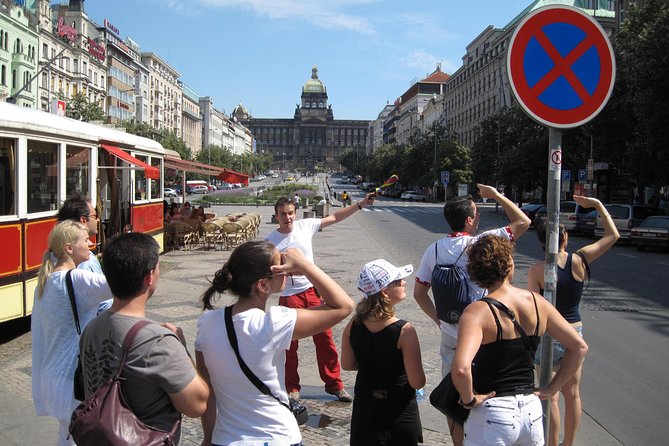
Next up is the Velvet Revolution Memorial, focused on what happened in 1989 and why it mattered. Even if you know the basics of the fall of Communism in Eastern Europe, this stop gives you a place to attach the story to.
The Velvet Revolution is often described with simple words like peaceful or swift. On this tour, the guide typically frames it against the prior decades of control, so the revolution feels less like a switch flipped overnight and more like pressure that finally broke.
If you enjoy history where the cause-and-effect is clear, you’ll probably appreciate how the guide keeps steering you back to mechanisms: who had power, how people responded, and what risks citizens faced.
Národní třída and Wenceslas Square: the politics you can still read
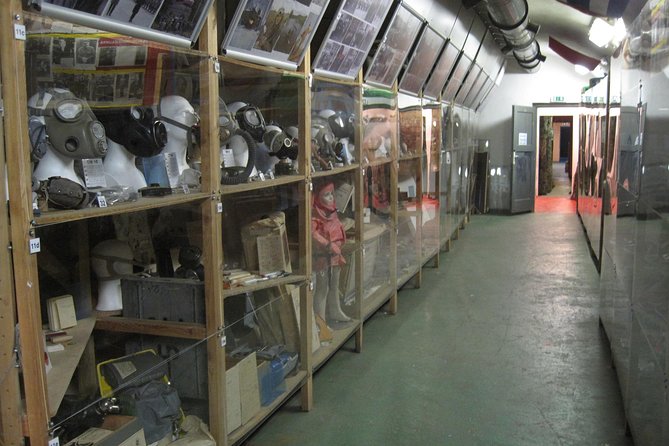
Two of the most important surface stops are Národní třída and Wenceslas Square.
At Národní třída, the guide connects historical events and more recent political history in the Czech Republic. This is one of those stops where the city itself helps. The architecture and the urban layout make it easy to picture political life happening in public space, not only in government offices.
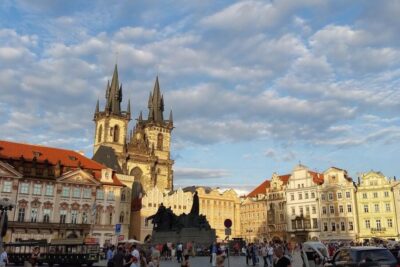
Then you move to Wenceslas Square, where the story turns sharply toward the Soviet invasion of August 1968 and the role of Alexander Dubček. Even if you have only a vague memory of the Prague Spring, this stop is designed to sharpen your mental map.
This is also the kind of stop where personal guide style matters. Different guides bring different pacing and emphasis. You may hear humor used to keep the mood from turning heavy too fast, and you may also get more intensity if your guide carries personal experience. In past groups, guides including Stan and Pavel were praised for how well they connected the Cold War to real people.
If you’re looking for one “wow” moment on the surface
For many people, it’s Wenceslas Square. It’s a big stage in the city, and it holds onto layers. The guide helps you see those layers instead of just walking through them.
Olšanské náměstí and socialist architecture from the 1970s era
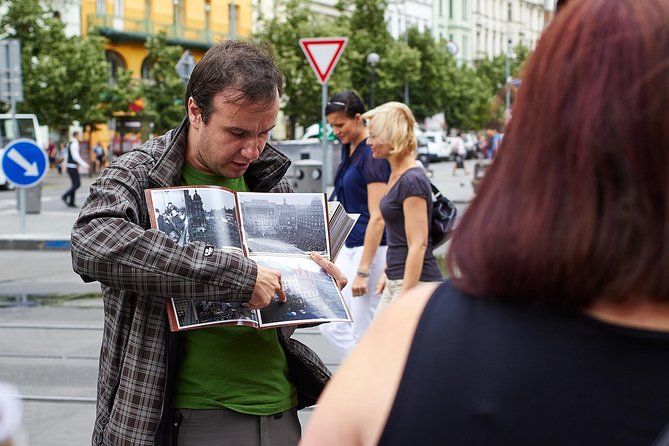
At Olšanské náměstí, you get something a bit different from the politics-first story. This stop is about the setting, specifically the former workers’ district and the socialist architecture that still shows up from the 1970s concrete era.
This matters because a lot of Communist-era tours focus only on documents, arrests, and revolutions. But the system also shaped daily life through housing, urban planning, and the look and feel of neighborhoods.
Here, you’re basically learning how ideology becomes concrete. You see original buildings from that era and hear how that environment related to the workers district and the broader socialist project.
If you like architecture and city planning as a way to understand history, this is one of the more interesting stops. Even if you don’t, it gives your brain a rest from the heavy political narrative and shows you how power can be built into the everyday.
The nuclear bunker: what it feels like and why it matters
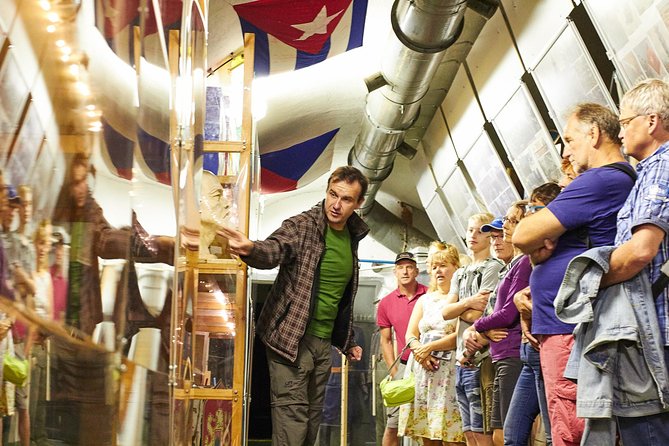
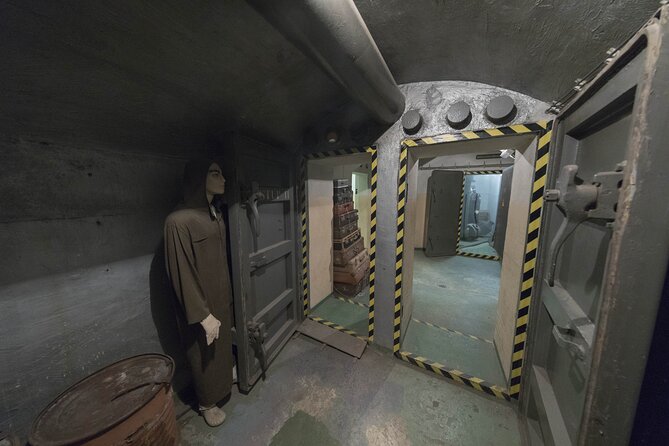
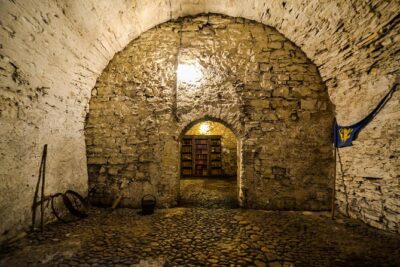
The main event is the Prague Nuclear Bunker, the Prague Nuclear Bunker Communism and Cold War Museum. The bunker visit is about 1 hour, and this is where your tour becomes hands-on.
You’re going four floors underground, and the tour sets expectations for a reason: there are a lot of stairs and up ramps, and you are in enclosed spaces. If you’re prone to anxiety in tight environments, this is not the time to test yourself.
What the bunker experience is actually doing
Even though the museum is full of Cold War details, its real purpose is interpretive. It shows you how governments planned for catastrophe and how that planning shaped fear. It’s less about learning a new historical date and more about understanding how life could be organized around the possibility of nuclear attack.
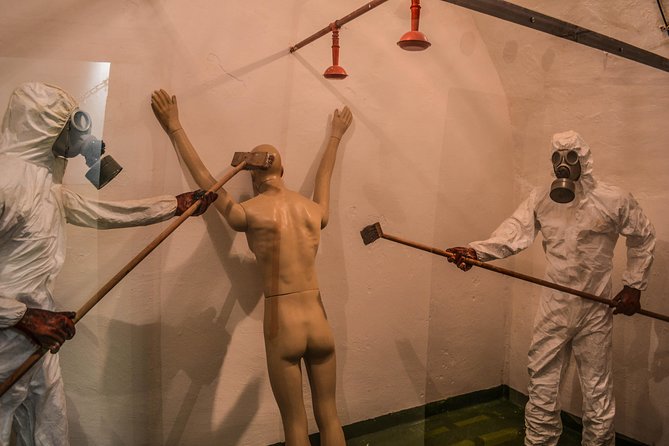
Some people arrive expecting the bunker to recreate daily living in a Communist state. What they often find is that the exhibits feel like Cold War fear made visible: old mannequins, period items, and a mix of display elements tied to the era.
A note on expectations
If you want a story-driven explanation of ordinary life under Communism, the walking part of this tour does more of that work. The bunker is more about the atmosphere of survival planning and the Cold War mindset.
Still, this is usually the part people remember. Stepping into a place designed for worst-case scenarios makes the Cold War feel real in a way that surface stories alone can’t.
Guides make or break the experience
This tour lives and dies by the guide. The highest praise you’ll see repeatedly is for guides who are both passionate and able to make complicated history feel personal.
Names that have come up in different groups include:
- Stan, praised for charisma, humor, and personal stories
- Ladislav, praised for bringing his own experience into the narrative
- Pavel, praised for knowledge and friendly pacing
- Karl and Tom, praised for making the tour run smoothly and explaining clearly
- Lada and L, praised for authenticity and the patience to answer questions
The pattern is clear: you get better value if you pick a guide who can explain context, not just deliver facts. And when the guide leans into personal perspective, the tour becomes more than a list of sites. It becomes a way to understand what the Czech people went through.
If you’re picky about presentation style, here’s what to watch for: one review-style complaint suggests the tour can sometimes feel repetitive or heavy on non-historical chatter, or that the tram segment and timing can feel longer than expected. Most guides, though, get strong marks for flow and historical insight.
Who this tour is best for (and who should skip it)
This tour is a strong fit for you if:
- You’re a history fan, especially Cold War and Eastern Europe
- You like guided city walks that connect politics to specific places
- You want a real underground site experience, not just a surface photo stop
- You want English live guiding, plus printed booklets
It may not be for you if:
- You have claustrophobia or anxiety around enclosed spaces
- You have mobility issues, because the tour notes it is not possible for people with walking disability or mobility concerns
- You’re traveling with very small kids. It states no entry for the smallest children under school age
- You’re very pregnant, because it’s not recommended for high pregnancy
And it’s also a rules-heavy tour: no pets, no smoking, no disruptive behavior, and you need to speak the chosen language of the tour. If you like calm, focused group experiences, you’ll fit right in.
Tips to make the day smoother
A few practical things that will save you stress:
- Wear comfortable shoes. The bunker is stair-heavy, and the tour includes ramps.
- Bring your patience for a mix of walking and transit. Some time goes into getting between stops.
- Plan your expectations around the bunker time being the longest single segment. That hour is where you should not rush.
- Photos are allowed. If you want video, you’ll need special permission, so don’t assume you can film freely everywhere.
- If you’re the type who asks lots of questions, great. Still, remember some stops are only about 10 minutes, so your best chance for detail questions may be during walking segments.
Should you book this Prague communism and nuclear bunker tour?
I think you should book it if you want one day in Prague that actually touches the Cold War in two ways: history on the surface and survival planning underground. The price feels reasonable for a guided multi-stop walk plus an hour inside a major underground museum, with transport included to and from the bunker.
Skip it if you hate enclosed spaces, can’t handle stairs, or you’re only looking for a light, quick overview. The tour is not light, and the bunker is the heart of it.
If you’re on the fence, I’d decide based on one question: do you want Prague’s Communist story told through sites you can stand in, plus a bunker that makes the fear feel physical? If yes, this is a very solid pick.
FAQ
How long is the Prague Communism and Nuclear Bunker Tour?
It runs about 2 hours 20 minutes (approx.), and the duration can vary by around 10 to 15 minutes depending on group size.
How much does the tour cost?
The price is $45.16 per person.
Is the nuclear bunker entrance included?
Yes. Entrance to the Nuclear Bunker Museum is included, along with the guide and transport to and back from the bunker.
Does the tour include an English guide?
Yes. The tour provides an English live guide.
Can I join if I have mobility issues?
No. The tour states it is not possible for people with any walking disability or mobility issue.
Is the tour suitable for claustrophobia?
No. It is not recommended for claustrophobia, and it specifically notes it is not for people with claustrophobia or similar concerns.
What is the group size?
The tour has a maximum of 26 travelers.
Are photos and video allowed?
Photos are allowed. Video recording is only with special permission.
What age limits are there for children?
Smallest children under school age are not allowed.
What is the cancellation policy?
Free cancellation is available up to 24 hours in advance for a full refund. If you cancel less than 24 hours before the start time, the amount paid is not refunded.
More Tours in Prague

More Tour Reviews in Prague

Between 1948 and 1989
Freshly written up in Prague
- World War II 4WD Tour from Prague with Lunch
★ 4.4 · 3 reviews - World War II History Tour of Prague’s Old Town
★ 5.0 · 3 reviews - Welcome to Prague – Private Tour with Licensed Guide
★ 5.0 · 3 reviews - Gourmet Brunch with Chef: Unlimited Drinks & Stunning River Views
★ 5.0 · 3 reviews - VIP Prague Segway Tour Around Monastic Breweries
★ 4.0 · 3 reviews
Communist Prague & Cold War History, compared.
 ★ 4.7Communism History and Nuclear Bunker Guided TourFrom $442,417 reviews
 ★ 5.0Communism & Nuclear Bunker Tour + 70s Canteen Lunch (own expense)From $351,036 reviews
 ★ 4.8Communism and Bunker Tour with 70s Canteen LunchFrom $33250 reviews
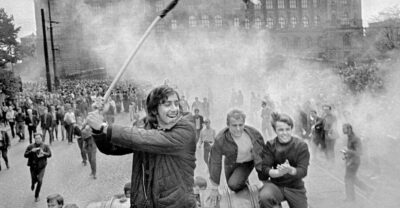 ★ 4.7World War II and Communist History TourFrom $34130 reviews
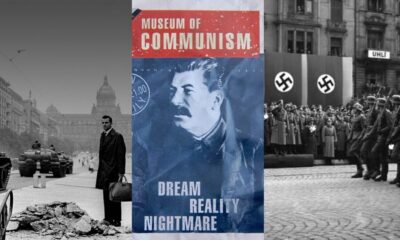 ★ 4.93–Hour Communism and World War 2 E-Bike TourFrom $7456 reviews
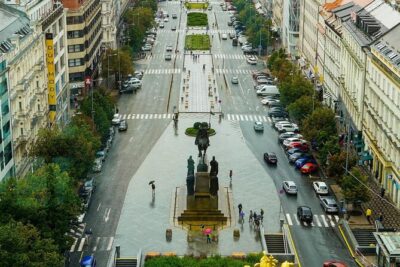 ★ 5.0Second World War & Communism (Tip-based 3 hour tour)From $347 reviews
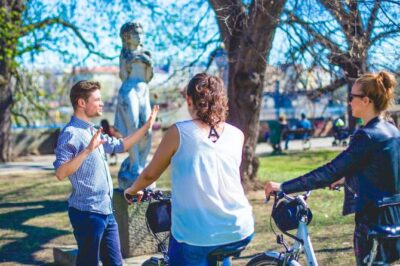 ★ 5.0Communism and World War 2 Prague City TourFrom $7833 reviews
 ★ 4.5Prague Communism and World War II Walking TourFrom $3028 reviews
Browse the lists this tour appears in