
REVIEW · PRAGUE CASTLE TOURS
Prague Castle: Small-Group Tour with Visit to Interiors
Prague Castle tells stories at street level. This small-group tour lines you up with an English guide for interior visits across Prague Castle highlights, including skip the ticket line admission for several major sights.
I like the way this format keeps you moving without feeling rushed, with a group limited to 10 people. You also get real focus on the key icons like St. Vitus Cathedral and the dreamy, characterful Golden Lane.
One thing to plan for: the castle hill is often windy, and the cathedral and basilica are not heated, so winter can feel seriously cold inside.
In This Review
- Key highlights at a glance
- Prague Castle, but with the important parts explained
- Meeting at Hradany Square, then getting into the castle flow
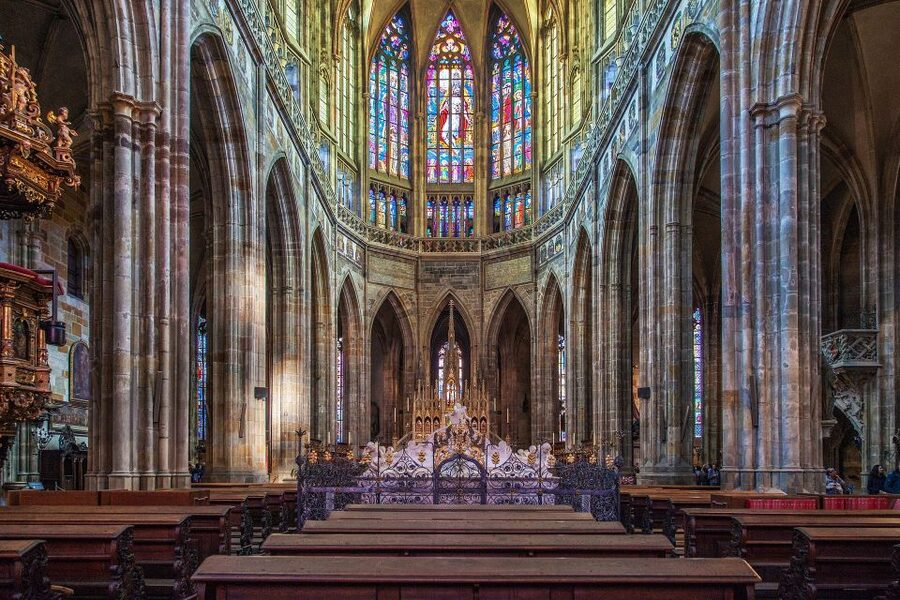
- St. Vitus Cathedral: why the coronation church feels like a storybook
- Old Royal Palace and the third Defenestration lesson
- St. George’s Basilica: oldest surviving building on the castle grounds
- Golden Lane and Daliborka Tower: castle life in miniature
- The interior line reality: what skip the ticket line actually means
- Weather, cold interiors, and smart pacing
- Price and value: what $52 buys you in real time
- Who should book this tour, and who might prefer something else
- Should you book the Prague Castle interiors small-group tour?
- FAQ
- How long is the Prague Castle small-group tour with interior visits?
- Where do I meet the guide?
- What is included in the price?
- What does skip the ticket line mean here?
- How big is the group?
- Is the tour wheelchair accessible?
- Are pets or large luggage allowed?
- What should I wear or bring?
Key highlights at a glance
- Small group of 10 keeps the pace friendly and the questions flowing
- Interior tickets included for St. Vitus Cathedral, Old Royal Palace, St. George’s Basilica, and Golden Lane
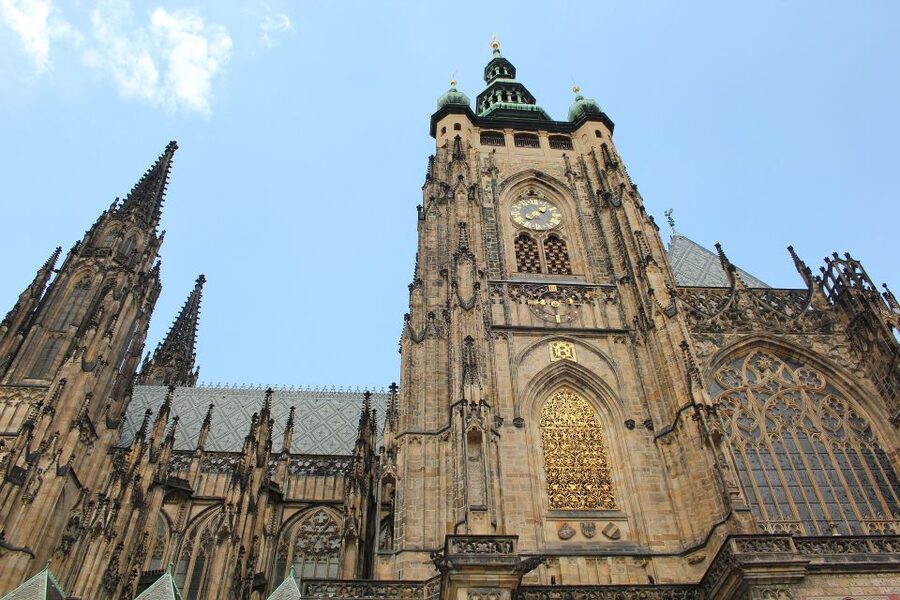
- St. Vitus Cathedral visit with guided time centered on architecture and stories (not just photos)
- Old Royal Palace lesson on the third Defenestration of Prague tied to what you’re seeing
- Golden Lane and Daliborka Tower give you the castle’s more human, everyday side
Other routes onto the Castle promontory, compared
- Prague Castle 2.5-Hour Tour Including Admission Ticket★ 4.7 · 8,927 reviews
- Prague: 3-Hour Walking Tour of Old Town & Prague Castle★ 4.7 · 5,696 reviews
- Prague: 3-Hour Old Town and Prague Castle Tour in German★ 4.8 · 5,671 reviews
- Prague: Prague Castle and Lobkowicz Palace Entry Tickets★ 4.4 · 5,066 reviews
Prague Castle, but with the important parts explained
Prague Castle is the kind of place that can overwhelm you if you go in solo. It is huge, layered, and full of details you would otherwise miss. This tour helps you connect the dots. You walk the hill, pause at major buildings, and get guidance for what you are looking at, from grand royal spaces to smaller, more quirky corners like Golden Lane.
You also get a practical advantage: it is a small-group experience, capped at 10 participants. That size matters here. Prague Castle draws crowds, and with a larger group you end up seeing more legs than landmarks. With fewer people, your guide can actually manage the flow of the group around stairs, narrow passageways, and the spots where you naturally want time to look up, not just forward.
Finally, the tour does not only stop at the postcard points. It brings you into interiors at the sites that visitors most often treat like quick photo stops. That is where the guided storytelling really pays off.
Meeting at Hradany Square, then getting into the castle flow
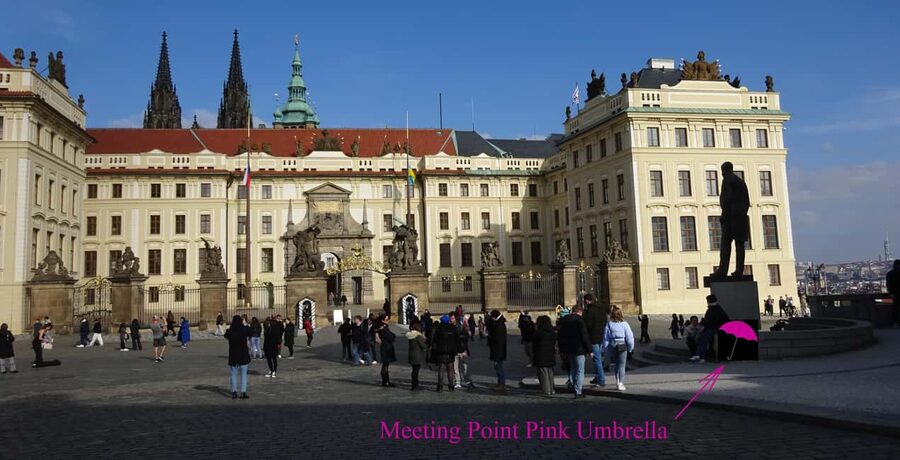
Your tour starts at the statue of Tomáš Garrigue Masaryk (TGM) on Hradcany square, right by the main gate area of Prague Castle. The guide holds a pink umbrella, so you can spot them quickly even if the crowd is thick.
This matters because Prague Castle can feel like a maze when you are arriving. Getting the start point right means you avoid wandering, backtracking, and losing time right at the top of the hill. From there, the walk begins with orientation, including how the hill fort from the 9th century grew over time into the sprawling castle complex you see today. That early context helps later stops make more sense, instead of feeling like separate attractions.
One small but real practical note: this is a hill, and it is often windy. Comfortable shoes are a must. You will be on your feet for a couple of hours, and the castle’s surfaces can be uneven. If you dress for wind and cold, you will enjoy the interiors more, instead of rushing them just to escape the weather.
St. Vitus Cathedral: why the coronation church feels like a storybook
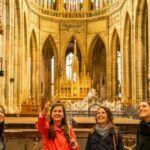
St. Vitus Cathedral is the centerpiece for a reason. You get a guided visit timed at about 50 minutes, which is enough to see more than the biggest features and still absorb what makes the cathedral special.
What I like about the way this stop is handled is that it is not a generic “look at this, look at that” routine. The guide spends time on the details that make the architecture and interior feel alive, including decoration and graves. This is the kind of place where you can stand in silence and admire, but the guided explanation adds meaning.
Also, St. Vitus Cathedral is the coronation place of the Bohemian kings. That fact turns the stop into something more than art appreciation. You are standing in a space tied to political identity and power, and your guide connects that significance to what you can actually see.
Potential drawback: cathedrals are cold in winter, and this one is not heated. If you run hot, fine. If you do not, bring layers that you can keep on without feeling bulky. I also recommend having gloves or at least something to protect your hands, because your comfort level affects how much you enjoy looking around slowly.


Old Royal Palace and the third Defenestration lesson
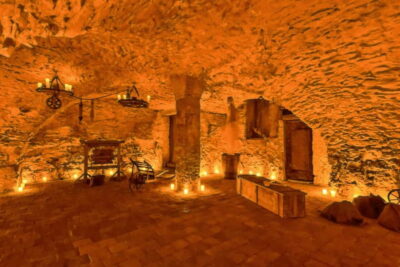
Next comes the Old Royal Palace, where the guide points you toward one of Prague’s most famous political stories: the third Defenestration of Prague. You get about 30 minutes here with a guided visit.
This is a great stop because it reframes “castle interiors” as more than historical wallpaper. Instead of just admiring rooms, you learn what events happened in connection with the palace. That makes the spaces feel less like museums and more like places where real conflict played out.
The Old Royal Palace also fits well after St. Vitus Cathedral. You start with a ceremonial center, then shift into a more political and dramatic atmosphere. If you like history that has tension and consequence, this is the moment you will remember.
The tradeoff is time. Thirty minutes goes fast inside a complex building. If you prefer long, unstructured wandering, you might want extra time afterward on your own. If you prefer guidance that keeps you oriented and pointed at what matters, the shorter palace visit is a good match.
St. George’s Basilica: oldest surviving building on the castle grounds
St. George’s Basilica is one of the most rewarding stops on the hill because it feels both historic and intimate. You get about 30 minutes with a guided visit.
Here is what stands out: it is the oldest surviving building of Prague Castle. That is not a trivia line. It changes how you experience the space. You are in a structure tied to the castle’s earliest surviving chapter, and the guide’s explanation helps you notice signs of age and continuity that you might otherwise treat as decoration only.
This stop also balances the day. After the scale and grandeur of St. Vitus, and the political story focus of the Old Royal Palace, St. George’s Basilica gives you a different flavor. It feels like a quieter piece of the puzzle, one that helps the whole complex read as a living timeline rather than a collection of monuments.
Practical consideration again: the basilica is not heated. Plan on cold air and slow breathing while you look up. If you keep moving and wear proper layers, you will be fine. If you expect cozy interior comfort, you will be disappointed.
Golden Lane and Daliborka Tower: castle life in miniature
Golden Lane is the stop where Prague Castle starts to feel human. You visit it with guided time of about 30 minutes, and you end your tour here.
Golden Lane is known for its picturesque houses, and the experience becomes more than sightseeing when your guide adds context around the place. Even in a limited time window, you can appreciate why this pocket of the castle complex became such a strong memory for people who visit.
Also, Golden Lane ties in with Daliborka Tower. That connection helps explain how the area functioned within the overall castle system, not just as a scenic row of buildings. You get a better sense of how people lived, worked, or moved through the castle world, rather than only seeing royal spaces.
One caution: this area can get crowded. The tour group stays managed, but Prague Castle is famous, and lines and bottlenecks happen. If you want the best chance of a calmer feel, consider an early morning start. Guides have a way of making waiting tolerable, but fewer crowds makes it easier to enjoy the atmosphere you came for.
The interior line reality: what skip the ticket line actually means
This tour is described as skip the ticket line. Here is the practical meaning: you receive your admission tickets before the tour starts or during the tour. That helps you avoid standing at the main ticket counters before you can enter the sites.
But there is still a common line once you are heading into the interiors. The reason is simple, and it is outside your guide’s control. All guides and their groups must stand together for interior entry.
The good news is that the line generally moves quickly, and your guide uses that waiting time. They share interesting facts and legends you likely would not find as quickly on your own. That is a real value point of a guided tour, especially in a complex place like this.
If you hate lines, plan your expectations now. You are not getting a private, separate entrance to bypass everything. What you are getting is fewer minutes spent at the ticket stage, plus a guide who keeps the time productive instead of wasting it.
Weather, cold interiors, and smart pacing
Prague Castle sits on a hill. That means wind exposure is common, even when the rest of the city feels mild. The tour info also makes it clear that the cathedral and basilica interiors are not heated. In winter, that changes how you should pack.
What to do:
- Wear comfortable shoes you can stand in for a couple hours
- Dress in layers that you can keep on indoors
- Bring something for cold hands if you get chilly easily
Your guide will pace the group through the key stops, with guided time built into each main site. People often love this tour for exactly that reason: it does not leave you guessing where to go next. It also gives you explanations at each location, so you are not walking through silent rooms wondering what you are supposed to notice.
Also, some dates can affect opening schedules at specific points. If a major interior has limited hours on your travel day, it can mean extra waiting. The guide will do what they can to keep you engaged, but having buffer time in your schedule is always smart.
Price and value: what $52 buys you in real time
At $52 per person for about 2.5 hours, you are paying for three things at once: a guide, access to major interiors, and a small group size.
The admissions included are meaningful: St. Vitus Cathedral, Old Royal Palace, St. George’s Basilica, and Golden Lane. If you priced those entries separately, the guide fee plus admission bundle is usually where the value shows up.
The small group is the second value layer. In a place this crowded, fewer participants means less time spent negotiating for space and more time hearing the story behind what you are seeing.
The guide quality is the third value layer. English guides like Inna Poljakova are the kind of professionals who focus on clear storytelling and practical context. Other guides mentioned in experiences, like Marta and Kamil, have been praised for professional delivery, entertaining humor, and a strong command of details. That combination matters here because Prague Castle can easily feel like “look at buildings” unless someone helps you connect the why.
So, is $52 fair? For a guided interior-focused castle circuit with tickets included and a max 10 group, it is a solid deal.
Who should book this tour, and who might prefer something else
This works especially well if you are:
- A first-time visitor to Prague Castle
- Interested in how big events connect to specific palace and royal buildings
- Short on time and want the main interiors handled in a single morning-style outing
- The type of person who likes architecture, graves, decoration, and stories you can’t easily read on a plaque
You might want to think twice if you:
- Want to do lots of solo wandering and photo stops at your own pace
- Strongly dislike queues, because there is still a common interior line
- Travel in a season when cold interiors will be a major discomfort for you, unless you pack well and keep moving
The finishing point at Golden Lane is a good fit for continuing your exploration on foot. Once you reach that area, you are already in a pocket of the castle complex that makes a natural next step.
Should you book the Prague Castle interiors small-group tour?
Yes, I would book it if you want the most value out of your time on the hill. The big reason is simple: this is guided time inside the places that matter, with admissions included for the cathedral, royal palace, basilica, and Golden Lane, plus a small group size that keeps the experience manageable.
Book it early in your visit if you want this tour to act like a key for the rest of your Prague walking. After you learn what you are seeing at St. Vitus, the palace, and the basilica, your later strolls around the city make more sense, because you understand the layers behind the monuments.
If cold weather is on your itinerary, pack smarter than you think you need to. Dress for wind and unheated interiors. Do that, and you will come away with the kind of Prague Castle memory that lasts longer than a set of photos.
FAQ
How long is the Prague Castle small-group tour with interior visits?
It lasts about 2.5 hours.
Where do I meet the guide?
Meet at the statue of Tomáš Garrigue Masaryk (TGM) on Hradcany square, in front of the main gate to Prague Castle. The guide holds a pink umbrella.
What is included in the price?
You get the guide fee and admission tickets to visit St. Vitus Cathedral, Old Royal Palace, St. George’s Basilica, and Golden Lane.
What does skip the ticket line mean here?
You receive your admission tickets before the tour starts or during the tour. For interior visits, you still join a common line with other guides and groups.
How big is the group?
The group is limited to 10 participants.
Is the tour wheelchair accessible?
Yes, the tour is wheelchair accessible.
Are pets or large luggage allowed?
Pets are not allowed. Luggage or large bags are also not allowed.
What should I wear or bring?
Wear comfortable shoes. The castle hill can be windy, and the cathedral and basilica are not heated, so dress warmly, especially in winter.
More Tours in Prague


More Tour Reviews in Prague

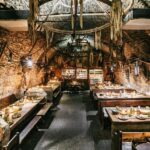
The Castle Promontory, Revisited


Freshly written up in Prague
- World War II 4WD Tour from Prague with Lunch
★ 4.4 · 3 reviews - World War II History Tour of Prague’s Old Town
★ 5.0 · 3 reviews - Welcome to Prague – Private Tour with Licensed Guide
★ 5.0 · 3 reviews - Gourmet Brunch with Chef: Unlimited Drinks & Stunning River Views
★ 5.0 · 3 reviews - VIP Prague Segway Tour Around Monastic Breweries
★ 4.0 · 3 reviews
Prague Castle Tours, compared.
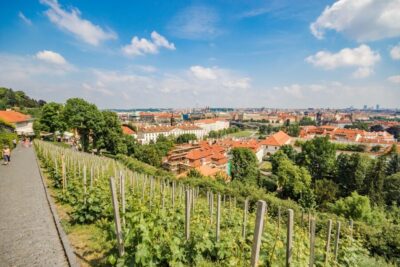 ★ 4.7Prague Castle 2.5-Hour Tour Including Admission TicketFrom $578,927 reviews
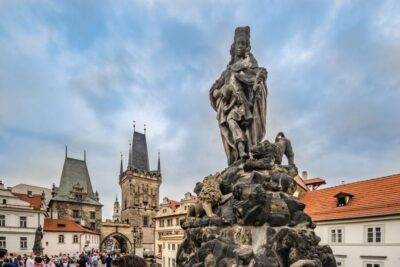 ★ 4.73-Hour Walking Tour of Old Town & Prague CastleFrom $305,696 reviews
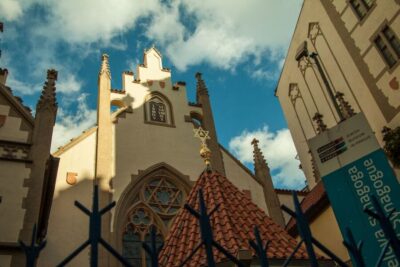 ★ 4.83-Hour Old Town and Prague Castle Tour in GermanFrom $365,671 reviews
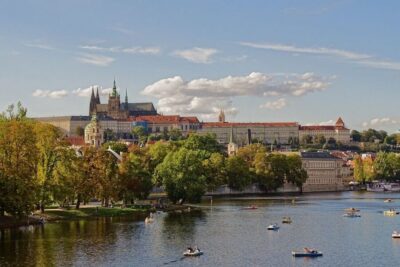 ★ 4.4Prague Castle and Lobkowicz Palace Entry TicketsFrom $385,066 reviews
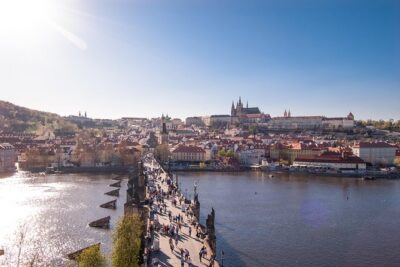 ★ 5.0Prague 3-hour Afternoon Walking Tour including Prague CastleFrom $531,899 reviews
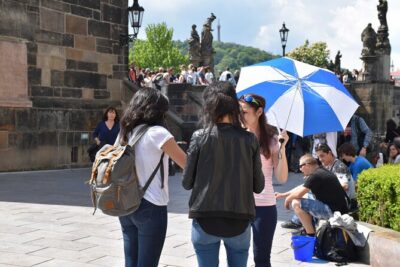 ★ 4.5Prague Castle Tour Including Admission Ticket – 2.5 HourFrom $591,171 reviews
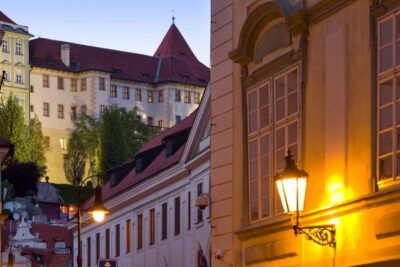 ★ 4.6Prague Castle: Midday Classical Concert at Lobkowicz PalaceFrom $281,106 reviews
 ★ 4.0Full-Day Prague Tour with Prague Castle, Lunch and Vltava CruiseFrom $75921 reviews
Browse the lists this tour appears in