
REVIEW · PRAGUE CASTLE TOURS
Prague Castle Walking Tour
Prague Castle is never just one building. This small-group walk gives you the big-picture story of the castle complex and the Royal District, with your guide easy to hear and a focus on architecture styles across centuries. I also like that you can pick morning or afternoon, which helps you manage crowds on this hilltop site. One thing to plan for, though, is that key interiors require separate Prague Castle entrance and other site tickets, so your total spend can rise.
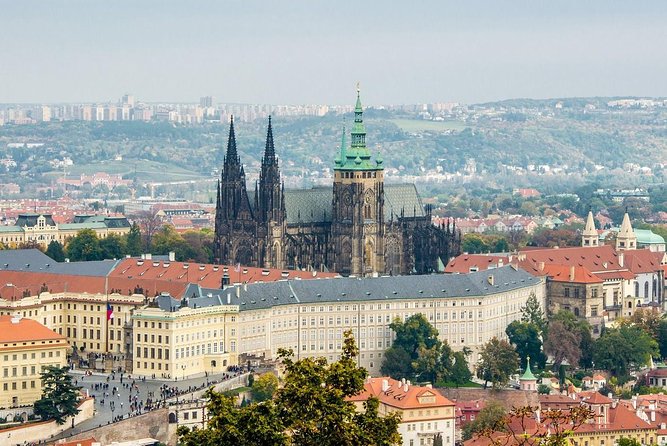
You start in Malá Strana near public transport, then climb up toward Hradčany Hill. Over about three hours, you’ll move through courtyards and major landmarks, with time for standout stops like St. Vitus Cathedral and Golden Lane. This is a good match if you like history that explains how places changed, not just what they look like.
If you want a “see everything, take zero breaks” type of tour, this may feel more thoughtful than rushed. But if you like walking, listening, and getting the why behind the buildings, it’s a strong way to spend a half afternoon in Prague.
In This Review
- Key takeaways before you go
- Starting in Malá Strana, then climbing to Hradčany Hill
- Royal Garden to Stag Moat: reading Prague Castle as a timeline
- Ball Game Hall: Renaissance art with a surprisingly sporty backstory
- Queen Anne’s Summer Palace and the astronomy crowd at Rudolf II’s court
- St. Vitus Cathedral: Gothic in 600 years, plus tombs you can actually name
- Old Royal Palace and Vladislav Hall: where power got dramatic
- St. George’s Basilica to Golden Lane: two styles, one mood
- Past the castle walls: Domeček and Strahov’s old library vibe
- Price and ticket reality: where the value comes from
- How to get the most out of your 3-hour walk
- Who should book, and who might skip
- Should you book the Prague Castle Walking Tour?
- FAQ
- How long is the Prague Castle walking tour?
- How big is the group?
- Is the tour offered in English?
- Where does the tour meet?
- What is included in the price?
- Do I need to buy Prague Castle entrance separately?
- Are tickets for St. Vitus Cathedral included?
- Is food and drink included?
- Do I get a mobile ticket?
- Can I cancel for a full refund?
Key takeaways before you go
- Max 8 people keeps the group small and makes questions practical.
- Architecture in Romanesque to Neoclassical layers helps you read Prague Castle like a timeline.
- Renaissance science at Queen Anne’s Summer Palace connects astronomy to Rudolf II, Tycho de Brahe, and Johannes Kepler.
- St. Vitus Cathedral details that matter include the silver tomb of St. John of Nepomuk and St. Wenceslas Chapel relics.
- Royal intrigue you can point to at Vladislav Hall, including the defenestration linked to the Thirty Years’ War.
- Tickets are your add-on for castle interiors and several churches, so budget ahead.
Other routes onto the Castle promontory, compared
- Prague Castle 2.5-Hour Tour Including Admission Ticket★ 4.7 · 8,927 reviews
- Prague: 3-Hour Walking Tour of Old Town & Prague Castle★ 4.7 · 5,696 reviews
- Prague: 3-Hour Old Town and Prague Castle Tour in German★ 4.8 · 5,671 reviews
- Prague: Prague Castle and Lobkowicz Palace Entry Tickets★ 4.4 · 5,066 reviews
Starting in Malá Strana, then climbing to Hradčany Hill
The meeting point is Bagel Lounge MalostranskáLetenská, 118/1, in Malá Strana. You’ll meet right before your start time, in an area that’s easy to reach with public transit, which is a real advantage because you do not want to be late for a hilltop walk.
From there, the day’s rhythm is simple: regroup, listen, walk. This tour is designed for an easy-to-find start and a smooth build toward the Prague Castle area, rather than trying to cram in a dozen random photos. If you like having a plan but still want time to look up and around, this one usually works well.
Group size is capped at 8 travelers, and that’s a big deal here. Prague Castle is a complex site. In a larger group, people lose the thread quickly. In a small group, your historian guide can keep the story clear and the audio workable.
Royal Garden to Stag Moat: reading Prague Castle as a timeline
Once you’re up on Hradčany Hill, the tour centers on why Prague Castle is so fascinating: it’s a large complex that changed hands, survived conflict, and rebuilt itself many times. Your guide sets the stage with the core idea that the buildings you see today were constructed, reconstructed, and reshaped through many architectural eras.
As you walk, you’ll pass the Royal Garden and over the Stag Moat, then get viewpoints that help the whole complex click into place. Instead of only naming styles, your guide connects each one to a moment in Czech and regional history, including periods when the castle faced artillery and plunder, and later stretches when it deteriorated due to indifference from Austrian rulers. That “why it looks like this” framing is what makes the hilltop walk more rewarding.
A practical note: Prague Castle can be windy and uneven, and you’re outdoors for a chunk of the tour. Wear shoes you trust. You’ll want to look slowly at details, not sprint between stops.
Ball Game Hall: Renaissance art with a surprisingly sporty backstory
One of the tour’s pleasant surprises is how it handles the lighter side of power. In the Royal Garden, you’ll stroll past the Renaissance Ball Game Hall, tied to a world where aristocrats played court games linked to the Emperor. It sounds oddly specific, but that’s the point. The building becomes a doorway into how prestige and everyday “leisure” worked for the ruling class.
You’ll also get attention drawn to a Renaissance sgraffito that includes allegories of virtues and the arts and sciences. Even if you only catch parts of it from your walking position, your guide’s explanation helps you see it as more than decoration. It’s politics, taste, and education all mixed into stone.
Time here is short, so don’t expect a long photo session. Still, it’s an efficient stop, and it breaks up the heavier history that follows.
Further routes we laced boots for


Queen Anne’s Summer Palace and the astronomy crowd at Rudolf II’s court
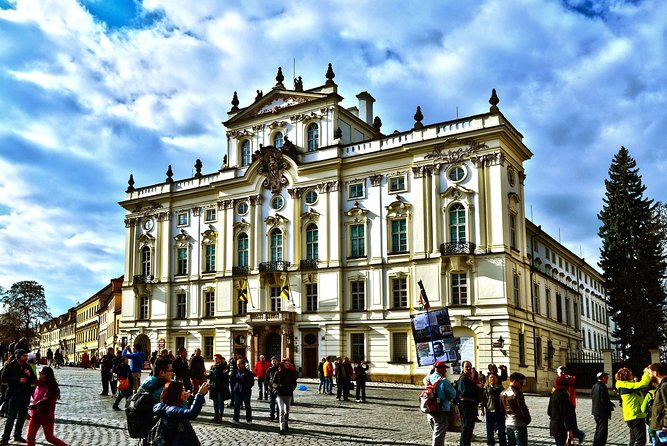
Next up is Queen Anne’s Summer Palace, described as a pure Renaissance example outside Italy. The big reason I like this stop is that it turns the castle from a war-and-thrones setting into an ideas-and-science setting.
This summer palace was commissioned by Ferdinand I in the mid-1500s, and later converted into an astronomical observatory by Rudolf II. The tour connects the place to people you likely recognize from science history: Tycho de Brahe and Johannes Kepler. Even if your background is basic, the story gives you a clear mental picture of why an observatory would belong in a royal garden at a time like that.
A detail to watch for: this is not just “a building where something happened.” It’s a building whose function changed with the ruler’s interests. That’s the theme you keep returning to across the tour, which is exactly why the architecture focus works so well.
St. Vitus Cathedral: Gothic in 600 years, plus tombs you can actually name
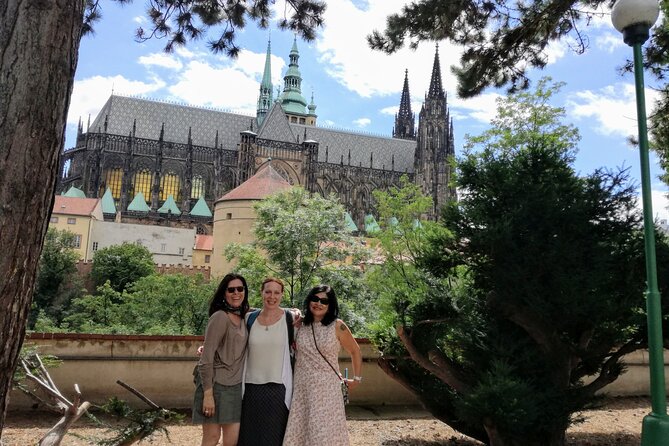
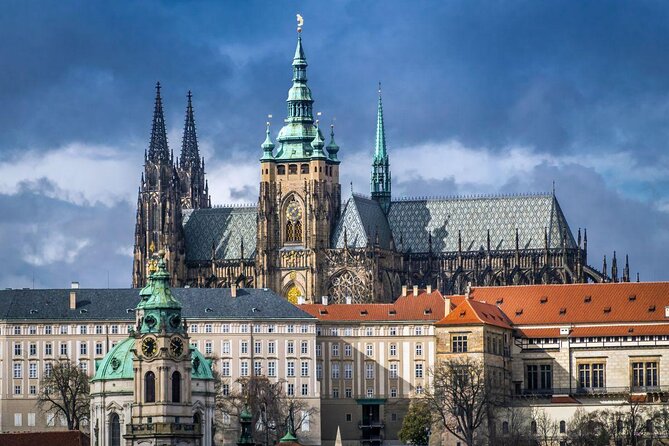
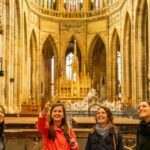
St. Vitus Cathedral is the Gothic highlight you’ll understand faster because you already saw the castle complex change across eras. The cathedral began in the first half of the 14th century and took until the first half of the 19th century to complete, about 600 years later. That timeline alone makes it feel less like one project and more like generations leaving their stamp.
Your guide also points out why you should care even if you’re not a cathedral superfan: St. Vitus is the site of the royal crypt for Czech sovereigns and patron saints. And there are specific artworks and chapels that get real attention, including the Baroque tomb of St. John of Nepomuk, famous here as a silver-cast monument, plus the Gothic St. Wenceslas Chapel, which holds relics of the saint.
Plan for ticket cost at this stop. The cathedral admission is not included, so check what you’ll need before you go. Also, give yourself a moment to slow down inside, because the cathedral can be visually loud, and your guide’s pointers help you spot what matters without you having to know everything on day one.
Old Royal Palace and Vladislav Hall: where power got dramatic

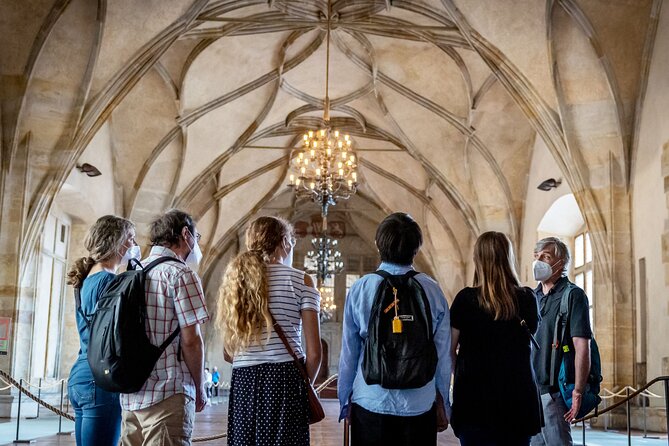
In the Old Royal Palace area, the star is Vladislav Hall. This space was built at the end of the 15th century, mixing Late Gothic structure with a newer Renaissance style. The result is a hall designed for big ceremonies, not a quiet stroll.
The most memorable part here is the way the tour explains how people moved through the space. Knights’ tournaments were part of the story, including an arrangement where riders entered for jousting in full armor and used the Riders’ Staircase, built for that purpose. If you picture it once, you’ll never see the hall as just an interior room again.
The tour also connects the hall area to a political trigger that escalated into the Thirty Years’ War, pointing to the Ludwig Wing and the act of defenestration, when members of the Czech Estates threw two Austrian governors and their scribe from a window. It’s one of those facts that sounds like a history textbook until someone shows you the place in relation to the hall.
Tickets are not included for this stop either, so if you’re hoping to go inside, budget for the entrances you will need.
St. George’s Basilica to Golden Lane: two styles, one mood
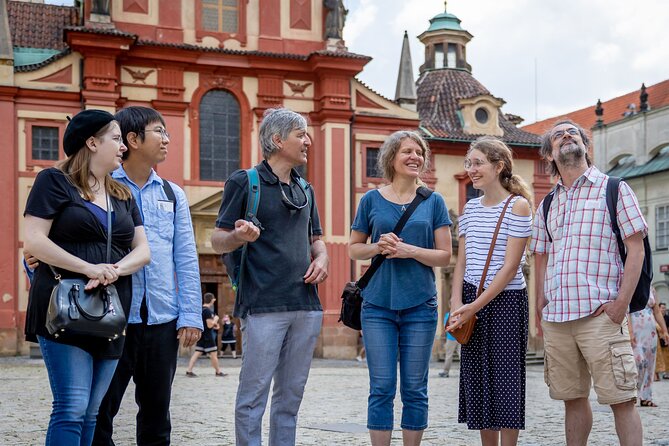
After you get the Gothic wow factor at St. Vitus, St. George’s Basilica gives you an architectural contrast that’s easy to feel. This Romanesque basilica dates to the 1100 hundreds. Standing near it, you get a direct comparison to the Gothic shape and feel you saw moments earlier. It’s not a long stop, but it works as a reset.
Then comes Golden Lane, which is the kind of small street you can walk through at a slow pace. It was originally built in the 16th century for Rudolf II’s castle guards, and the rooms now mostly function as souvenir stalls. Don’t rush it. The best value is in how the tour frames the street as a working environment inside a royal fortress, not a postcard snack.
Your guide points you to two more links that give Golden Lane depth. First, there’s a museum of medieval armor inside the former 14th-century fortification area accessible from Golden Lane. Second, Golden Lane connects to Dalibor Tower, which was used as a dungeon.
This area is short on time, so it helps to decide what you care about most. If you’re into art and architecture, Golden Lane can feel like a quick pass. If you like stories of daily life and punishment systems inside forts, it hits harder.
Past the castle walls: Domeček and Strahov’s old library vibe
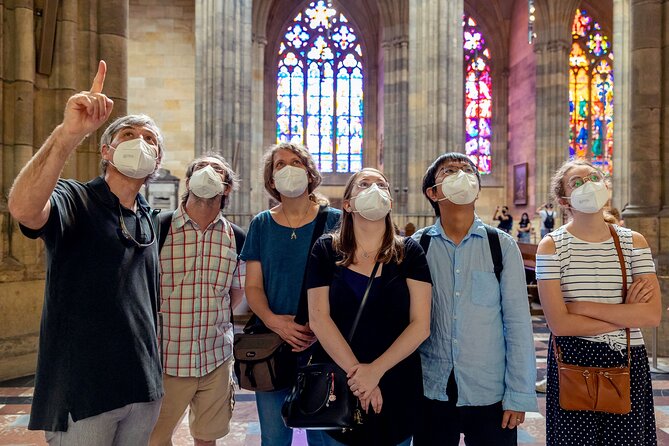
Once your time in the castle complex ends, you head over to Hradčany. Two notable waypoints can stop your feet mid-walk: Domeček and Strahov Monastery.
Domeček is the former prison where political opponents were imprisoned by the Gestapo. It’s not the kind of stop meant for long lingering, but it changes the tone of the walk. Instead of only grand architecture, you’re reminded that castles and power structures also have a dark side.
Then there’s Strahov Monastery, where an ancient library is housed. Even without turning this into a long museum visit, the setting gives you a calm contrast to the earlier stone-and-stories rush. This is a nice finish because it lets the tour end with atmosphere rather than only crowds and stairs.
Price and ticket reality: where the value comes from
The price is $126.16 per person for a tour that runs about three hours and caps at 8 travelers. On paper, that sounds like a “tour company price” until you break down what you’re actually buying.
You’re paying for a historian guide and guided movement through a complex site where the details can get lost fast. In a small group, the guide can keep the connections clear, which is exactly what you want at Prague Castle, where Romanesque, Gothic, Baroque, Rococo, Renaissance, and Neoclassical elements all sit close enough to confuse you.
What’s not included is the biggest line item for many people: Prague Castle entrance. Adults are listed at CZK 450, students and seniors at CZK 300. On top of that, admissions for St. Vitus Cathedral and other interior sites are not included. So your final cost depends on what you choose to enter.
My advice is simple: treat the booked price as the guided walk value, and plan your budget for the castle and cathedral tickets separately. That way, you won’t get surprised mid-day.
Also, the tour offers mobile ticket support and you can choose morning or afternoon timing. If you’re juggling limited time in Prague, that flexibility helps.
How to get the most out of your 3-hour walk
This tour works best if you keep your energy steady and your curiosity turned on.
Bring:
- Comfortable shoes for a hilltop day
- A willingness to look up at architecture, not only at the main sights
- A plan for paid entries so you do not have to make decisions at the last minute
If you’re the kind of traveler who likes “what you’re looking at and why it exists,” this is a strong fit. If you prefer a casual wander with no context, you may feel the pace is a bit structured. The guide’s role is to connect buildings to stories, including religion, nobility, emperors, and the turbulent political past that shaped the sites you see.
One more practical point: this tour is often booked around 40 days in advance. If your dates are fixed, book earlier rather than trusting luck.
Who should book, and who might skip
Book this tour if you:
- Want a small-group experience instead of a crowd scene
- Like architecture that changes over time, rather than one era only
- Enjoy history explained in a human way, with clear connections between buildings and events
It’s also a good choice for families if everyone can manage the walking. One guide mentioned in past group experiences, Robert, has been praised for entertaining delivery and strong regional context, which matters when you have mixed attention spans. Even with a stroller in the group, it still sounded like the experience stayed enjoyable when the pacing and group size worked well.
Consider skipping or pairing with a lighter plan if you:
- Hate paying separate admissions and would rather keep costs tight
- Want long, free time inside churches and chapels without a schedule
- Are visiting Prague Castle only for a quick checklist photo spree
Should you book the Prague Castle Walking Tour?
I think this is a smart book if you want your Prague Castle visit to make sense. The small group size, the architectural focus, and the way the guide connects sites to real events add up to a high value experience, even with extra ticket costs.
If you’re budgeting carefully, plan for the Prague Castle entrance and remember that some major stops have admission not included. If you’re okay with that tradeoff, this tour gives you a guided framework that makes the castle complex and the Royal District feel like one connected story instead of a pile of sights.
FAQ
How long is the Prague Castle walking tour?
It lasts about 3 hours.
How big is the group?
The tour has a maximum of 8 travelers.
Is the tour offered in English?
Yes, it is offered in English.
Where does the tour meet?
It starts at Bagel Lounge MalostranskáLetenská, Letenská 118/1, 118 00 Praha 1-Malá Strana, Czechia.
What is included in the price?
The included item is a historic guide.
Do I need to buy Prague Castle entrance separately?
Yes. Prague Castle entrance is not included. Adults are listed at CZK 450, and students and seniors at CZK 300.
Are tickets for St. Vitus Cathedral included?
No. St. Vitus Cathedral admission is listed as not included.
Is food and drink included?
No. Food and drinks are not included.
Do I get a mobile ticket?
Yes. A mobile ticket is part of the tour features.
Can I cancel for a full refund?
You can cancel for free. A full refund is available if you cancel at least 24 hours before the experience’s start time.
More Tours in Prague


More Tour Reviews in Prague


The Castle Promontory, Revisited


Freshly written up in Prague
- World War II 4WD Tour from Prague with Lunch
★ 4.4 · 3 reviews - World War II History Tour of Prague’s Old Town
★ 5.0 · 3 reviews - Welcome to Prague – Private Tour with Licensed Guide
★ 5.0 · 3 reviews - Gourmet Brunch with Chef: Unlimited Drinks & Stunning River Views
★ 5.0 · 3 reviews - VIP Prague Segway Tour Around Monastic Breweries
★ 4.0 · 3 reviews
Prague Castle Tours, compared.
 ★ 4.7Prague Castle 2.5-Hour Tour Including Admission TicketFrom $578,927 reviews
 ★ 4.73-Hour Walking Tour of Old Town & Prague CastleFrom $305,696 reviews
 ★ 4.83-Hour Old Town and Prague Castle Tour in GermanFrom $365,671 reviews
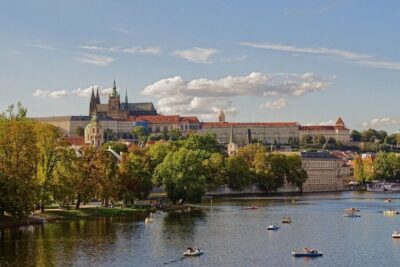 ★ 4.4Prague Castle and Lobkowicz Palace Entry TicketsFrom $385,066 reviews
 ★ 5.0Prague 3-hour Afternoon Walking Tour including Prague CastleFrom $531,899 reviews
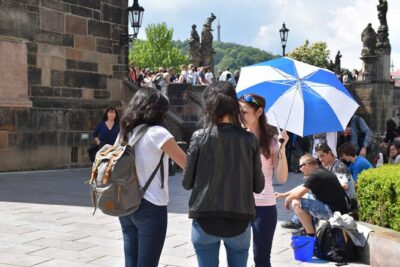 ★ 4.5Prague Castle Tour Including Admission Ticket – 2.5 HourFrom $591,171 reviews
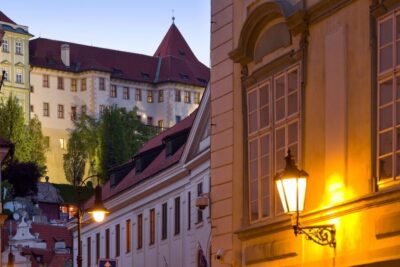 ★ 4.6Prague Castle: Midday Classical Concert at Lobkowicz PalaceFrom $281,106 reviews
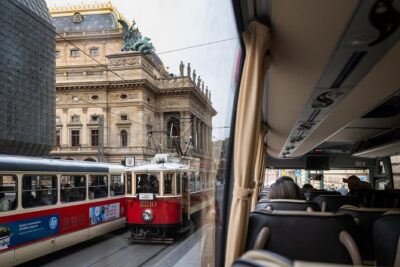 ★ 4.0Full-Day Prague Tour with Prague Castle, Lunch and Vltava CruiseFrom $75921 reviews
Browse the lists this tour appears in