
REVIEW · PRAGUE ESCAPE GAMES & VR
Prague City Tour with Virtual Reality
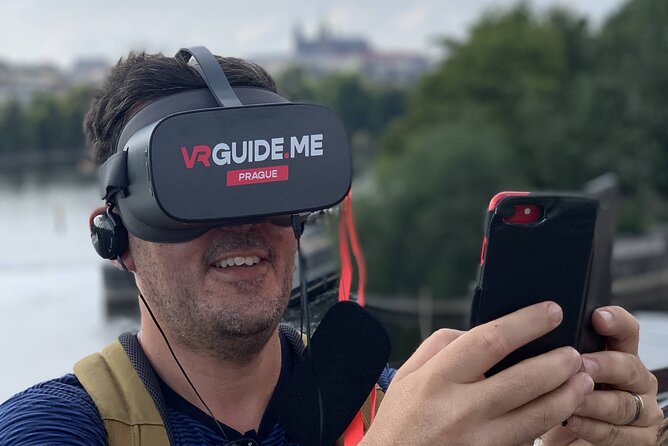
Prague looks different when it time-travels. This Prague City Tour with Virtual Reality uses VR glasses while you walk, so you are not just looking at landmarks, you are watching them change. I especially like how the tour mixes famous sights with offbeat stops, which helps you feel like you are getting the story from the ground up.
Two things I like a lot are the VR moments at key squares and viewpoints, and the way the guide keeps the group moving at a human pace. You get a small group (up to 15), and there is room to ask questions instead of being swept along like a crowd. One possible drawback: the experience needs good weather, since much of it is outside before you switch into churches and indoor spots.
If you want a standard Old Town walk, this is not that. If you want Prague with added context and a few visual “wait, that used to look like that” moments, you are in the right place.
In This Review
- Key takeaways before you go
- VR glasses in Prague: why this feels different than a normal walk
- Meeting at Panská 892, ending at the Dancing House, and what to expect
- Old Town Square in 1900: the VR warm-up that sets the pace
- The Prague astronomical clock stop: hearing the story beyond the face
- National Museum viewpoint and the VR Prague Spring moment
- Entering a Gothic and Baroque church: height, light, and real scale
- Kafka’s Head: a modern art pause that resets your eyes
- Old Town Hall surprises and the Butcher of Prague story
- Prague Castle views and the Dancing House finish line
- Price and value: is $43.14 worth it?
- Who should book this Prague VR city tour?
- Should you book this Prague City Tour with Virtual Reality?
- FAQ
- How long is the Prague City Tour with Virtual Reality?
- What time does the tour start?
- Where does the tour start?
- Where does the tour end?
- Is the tour offered in English?
- Are audio guides available in other languages?
- How big is the group?
- Can you do the VR part if you wear glasses?
- What happens if the weather is bad?
- What is the cancellation policy?
Key takeaways before you go
- VR at multiple stops helps you picture Prague in 1900 and during the Prague Spring
- Small group size (max 15) means you can actually ask your guide questions
- English guided tour plus audio guides in several European languages
- Church entry adds a vertical, Gothic-and-Baroque change of pace
- Modern art break at Kafka’s Head keeps the route from feeling repetitive
- Ends with big views of Prague Castle and the Dancing House
Further sealed rooms and headset rigs to burn an hour in
- Prague: Petřín Tower and Mirror Maze Entry Ticket★ 4.3 · 2,294 reviews
- Prague: Glow Golf Mini Golf Game by UV Light★ 4.5 · 2,254 reviews
- Prague Wizard Experience Magic School Escape Game★ 5.0 · 746 reviews
- Magic School: Episode II Escape Game in Prague★ 5.0 · 304 reviews
VR glasses in Prague: why this feels different than a normal walk
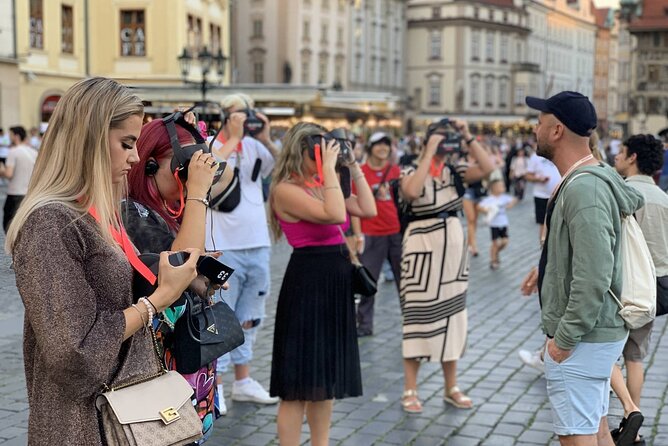
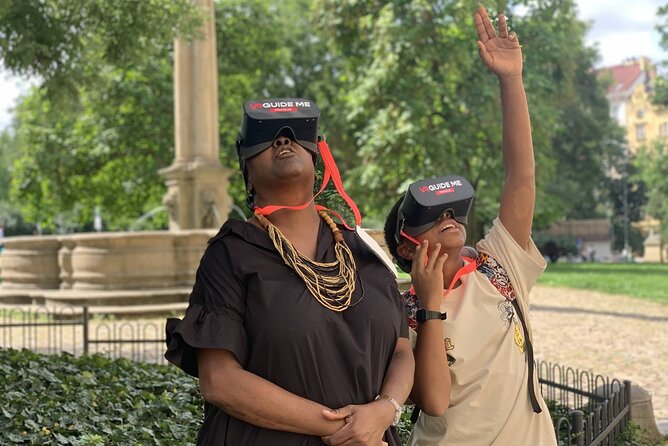
A lot of Prague tours do the job of pointing. This one does something extra: it turns the past into something you can see. When you put on the glasses at a real landmark, the lesson lands faster than it ever does from a photo or a lecture.
I also like that the VR is not random. It is attached to specific places, like Old Square and a viewpoint near the National Museum, so your brain keeps “mapping” the city while it changes time periods. That is the practical benefit.
There is still walking, still crowds nearby, and still some stairs. But the VR stops give your feet a reward, because the visuals help you remember what you just saw and where it was.
Meeting at Panská 892, ending at the Dancing House, and what to expect
You start at Rafidein s.r.o.1, Panská 892, Nové Město, Praha 1, and you finish at the Dancing House on Jiráskovo nám. in Praha 2. The start time is 10:30 am, and the tour runs about 2 hours.
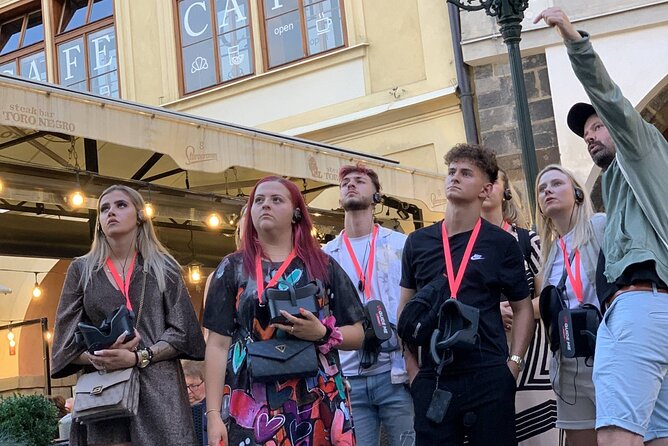
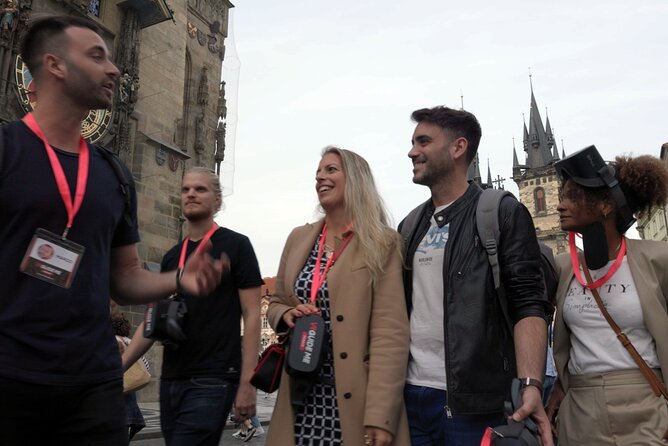
The group is limited to 15 travelers, which matters more than you might think. Smaller groups mean fewer delays, fewer “did I miss the explanation” moments, and a better chance to ask follow-up questions.
You also get a mobile ticket, and the tour is offered in English. If you prefer extra support, there are audio guides available in several European languages, which can be helpful in a multi-language group.
One more detail to plan for: the tour requires good weather. If it is canceled due to poor weather, you will be offered a different date or a full refund. This is not a do-anything-in-any-weather kind of walking tour.
Old Town Square in 1900: the VR warm-up that sets the pace
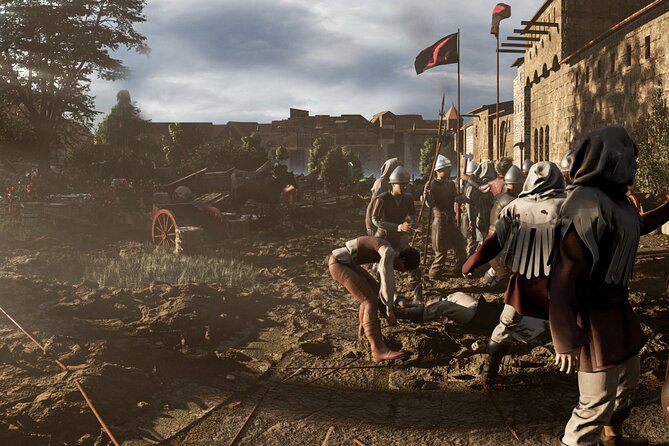
The tour begins at Prague’s Old Square, where you start with the place itself and then add the time layer. You see its history and then use virtual reality glasses to experience what the square looked like in the year 1900.
This is a smart first stop because it resets your expectations. Prague can feel timeless when you look at stone and towers. The VR moment gives you a comparison point, so later stories about events and architecture make more sense.
You will likely find it helpful to arrive ready to look up as well as around. Squares can hide details at street level, but the bigger shapes, domes, and facades give the context the VR is trying to show.
Practical consideration: if VR glasses are uncomfortable for you, ask early if you can use them with lenses. The tour explicitly notes that it is possible to do it with lenses, so you should not have to choose between seeing and wearing glasses.
Bookings around Prague our notes circle repeatedly


The Prague astronomical clock stop: hearing the story beyond the face
Next comes the famous story of the Prague astronomical clock. This kind of stop is where a guide can either recite facts or make the clock feel meaningful.
Here, you get a guided explanation that is meant to clarify the significance, not just point at the mechanism. And because the tour is paced for questions, you can ask what you should notice while you are in front of it.
If you have seen the clock before, you will still get value. The payoff is in understanding what you are looking at, and why people care about it year after year.
If you are there for the first time, this is also a good moment to ask about timing. Since your time is limited to about 2 hours, you want to make sure you are not only watching landmarks, you are understanding what makes each one worth a second look.
National Museum viewpoint and the VR Prague Spring moment
At the main square of the country, you get views of the National Museum. Then comes another VR stop: you use VR glasses to understand what happened during the Prague Spring.
This is where the tour becomes more than sightseeing. The Prague Spring is not just a date in a book. Seeing something visual while you are standing near major landmarks can make the story feel tied to the geography instead of floating in your memory.
This stop also works for different travel styles. If you like history, you get guided context. If you like photography, you get a reason to look at the skyline and positions of buildings with more attention than usual.
The one caution is energy management. VR can be mentally tiring if you cram too many things back to back. In a 2-hour tour, the schedule is tight by design, so bring patience and keep your body relaxed during the transitions.
Entering a Gothic and Baroque church: height, light, and real scale
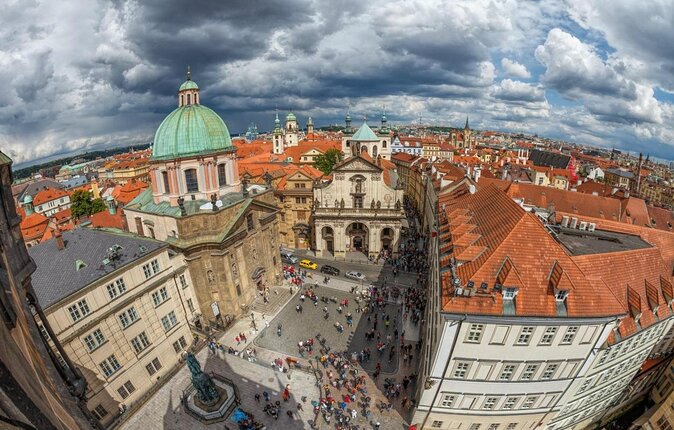
From the outdoor squares, the tour enters a beautiful Gothic and Baroque church. You go inside to be amazed by its beauty and height.
Church stops can be hit-or-miss on walking tours, depending on whether the guide gives you a reason to look. Here, the emphasis is on the design and scale, so you are not just walking through to say you did.
When you are inside, look up first. Height is the main feature mentioned, and with Gothic work, your eyes need that initial direction to catch the rhythm of the architecture. Then scan the details at eye level, where Baroque elements can feel more personal.
A practical benefit: indoor moments give your pace a break. If you are traveling in a season with hot afternoons or cold mornings, that relief is not trivial.
Kafka’s Head: a modern art pause that resets your eyes
Next you visit Kafka’s Head to enjoy modern art. This is a useful mid-tour reset. By the time you reach here, you have already learned about time periods, clocks, and major historical moments tied to squares.
Modern art in Prague can feel like a breath of fresh air after centuries of stone. It also helps you see the city as something alive, not only staged for postcards.
I like stops like this because they prevent the “everything looks the same” feeling that can happen in Old Town areas. Your eyes get a new job. Your brain gets a new pattern to remember.
If you are the kind of traveler who thinks, I can always skip this, do not. The art stop makes the route feel more balanced, and it gives the tour a texture that straight monument-hopping often lacks.
Old Town Hall surprises and the Butcher of Prague story
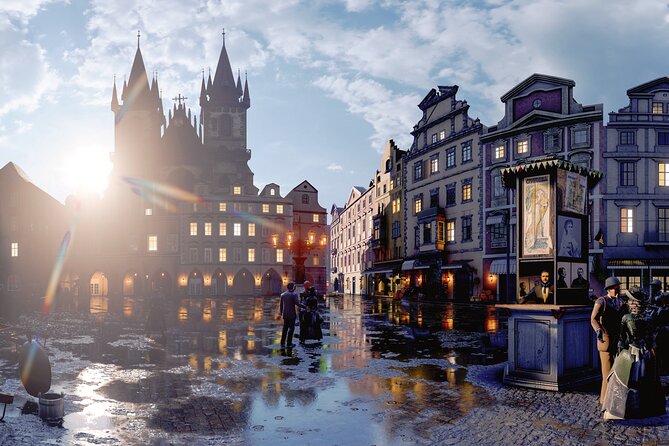
The tour then arrives at the Old Town Hall, where you are surprised by what happened there. After that, you hear about the story of the Butcher of Prague, and you learn where paratroopers hid to allow one of the most impactful moments in the city’s history.
This portion is why I like tours that mix famous landmarks with specific stories tied to particular corners. The Old Town Hall area can feel like it is all about architecture, until a guide connects it to a dramatic human episode.
Even if you only catch part of the details, you will still gain something useful: a sense that Prague has layered meanings. Buildings hold more than style, they hold scenes.
One practical tip for this section: keep your attention when the guide shifts from general background to a named episode. These are the moments that turn a “nice stop” into a memory you keep.
Prague Castle views and the Dancing House finish line
You end with views of Prague Castle and the Dancing House, described as the city’s most modern and emblematic building. Ending here is clever, because you finish with a contrast: old power up the hill, and modern curves in the city center.
This last stretch is where the walking tour payoff becomes visible. You can look at the skyline and understand why Prague is hard to simplify. The city has eras stacked on top of each other, and the tour’s structure mirrors that idea.
The Dancing House is also a good closing image. It is distinct enough that it helps you anchor the end of the route, so you do not leave wondering where your time went.
Bring your camera, but also bring your curiosity. If you look at it like a finished sculpture, you miss the point. Look at it like a deliberate choice to express modern life against historical surroundings.
Price and value: is $43.14 worth it?
At $43.14 per person for about 2 hours, this tour is not the cheapest walking option. But the value comes from what is included in the experience.
You are paying for more than a guide. You are also paying for VR equipment use at multiple points, a guided narrative that connects events to specific locations, and added variety with a church interior and stops like Kafka’s Head. The small group size up to 15 also helps justify the price, because it reduces bottlenecks and makes interaction possible.
If you have done the classic “three-hour Old Town highlights” before, this can feel like a smarter use of time. The VR moments create quick understanding, and they give you context that is hard to get from just walking and reading plaques.
If you are traveling on a tight budget, the VR portion is the deciding factor. If VR is not your thing, you might prefer a lower-cost walking tour. But if you like learning fast through visuals and you want a tour that goes past the usual highlights, the price feels more reasonable.
Who should book this Prague VR city tour?
Book it if you want a guide-driven experience with added visuals and you like history that connects to place. It is also a great fit if you prefer smaller groups and you do not want to feel lost while you hunt for explanations.
It is especially good for people who learn better with a story plus a visual cue. The VR at Old Square (1900) and at the viewpoint tied to the Prague Spring gives you quick context that is easy to remember.
It also fits multi-language travel. The tour is in English, but audio guides are available in several European languages, which can make it more comfortable if you are traveling with friends who process information better that way.
If you are sensitive to VR headsets or you expect a purely outdoor walking tour with no indoor stops, you should consider how you handle VR equipment and church interiors.
Should you book this Prague City Tour with Virtual Reality?
Yes, if you want more than a checklist of landmarks in Old Town. This tour offers a real change of pace through VR at meaningful points, plus a route that mixes famous Prague icons with stories that do not always get told on the standard circuit.
I would skip it only if you know VR will not work for you, or if you are traveling in a period where weather is unpredictable and you cannot be flexible with dates. Since it requires good weather, your best bet is a day when you can handle a reroute or reschedule.
If you are looking for value, remember what you are buying: guided context, VR experiences tied to specific locations, and a small-group pace for about two hours. For many people, that combo is exactly what turns a Prague trip from seeing into understanding.
FAQ
How long is the Prague City Tour with Virtual Reality?
It runs for about 2 hours.
What time does the tour start?
The start time is 10:30 am.
Where does the tour start?
It starts at Rafidein s.r.o.1, Panská 892, Nové Město, 110 00 Praha-Praha 1, Czechia.
Where does the tour end?
It ends at the Dancing House, Jiráskovo nám. 1981/6, 120 00 Praha 2-Nové Město, Czechia.
Is the tour offered in English?
Yes, it is offered in English.
Are audio guides available in other languages?
Yes, audio guides are available in several European languages.
How big is the group?
The tour has a maximum of 15 travelers.
Can you do the VR part if you wear glasses?
Yes, it is possible to do it with lenses.
What happens if the weather is bad?
The experience requires good weather. If it is canceled due to poor weather, you will be offered a different date or a full refund.
What is the cancellation policy?
Free cancellation is available. You can cancel up to 24 hours in advance for a full refund. If you cancel less than 24 hours before the start time, the amount you paid will not be refunded.
More Tours in Prague

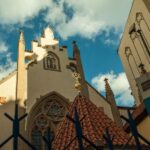
More Tour Reviews in Prague

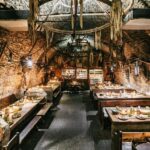
Sealed Rooms and Headsets


Freshly written up in Prague
- World War II 4WD Tour from Prague with Lunch
★ 4.4 · 3 reviews - World War II History Tour of Prague’s Old Town
★ 5.0 · 3 reviews - Welcome to Prague – Private Tour with Licensed Guide
★ 5.0 · 3 reviews - Gourmet Brunch with Chef: Unlimited Drinks & Stunning River Views
★ 5.0 · 3 reviews - VIP Prague Segway Tour Around Monastic Breweries
★ 4.0 · 3 reviews
Prague Escape Games & VR, compared.
 ★ 4.3Petřín Tower and Mirror Maze Entry TicketFrom $142,294 reviews
 ★ 4.5Glow Golf Mini Golf Game by UV LightFrom $122,254 reviews
 ★ 5.0Prague Wizard Experience Magic School Escape GameFrom $47746 reviews
 ★ 5.0Apocalypse Zombie 2213 Escape Game in PragueFrom $47383 reviews
 ★ 5.0Magic School: Episode II Escape Game in PragueFrom $47304 reviews
 ★ 5.0Star Element Escape Game in PragueFrom $47275 reviews
 ★ 5.0Prague Immersive Tour: Travel back in time with virtual realityFrom $18248 reviews
 ★ 5.0Moriarty’s Phantom Trap Escape Game in PragueFrom $47140 reviews
Browse the lists this tour appears in