
REVIEW · TICKETS
Prague: House at the Golden Ring Entry Ticket
That first step inside the Golden Ring is a time machine. You’ll move through medieval Prague with models, video mapping, and interactive displays that show how the city looked and worked under the House of Luxembourg, then switch gears to the Rudolf II era with a large animation and a crowd-filled city image. It is a smart, low-cost way to get context fast, even if you only have a day.
I especially liked the multimedia approach: artifacts and objects sit alongside videos and visuals, including 3D-style viewing, so you are not just reading captions. I also loved the way the exhibits connect major rulers to real places, like the Charles Square area, the medieval bridge construction, and major sites used for state and religious purposes in Charles IV’s time. For a quick Prague trip, it helps you understand what you are seeing outside the museum.
One possible drawback: the exhibits run in English, and one review flagged that there is no French, with dialogue in English only. If you prefer museums in your own language, plan for that up front, and give yourself about 1.5 to 2 hours so you do not feel rushed.
In This Review
- Key highlights you should plan your time around
- House at the Golden Ring: why this ticket is such good value
- Entering the medieval story: what you’ll see first
- Medieval Prague in models: Charles IV’s Prague, place by place
- Dramatic stops: the story beats you’re likely to remember
- Video mapping and Charles Square: turning the model into a real feeling
- Archaeology and objects: evidence you can point to
- Rudolf II, crowds, and a nine-metre animation
- Interactive digital costume exhibition: why it’s more than a gimmick
- From Prehistory to the Tailcoat: how far back the museum goes
- How this fits into your Prague day
- Price check: $8 is the kind of cheap that feels earned
- Practical things to know before you go
- Who should book this ticket?
- Should you book the House at the Golden Ring entry ticket?
- FAQ
- How much does the Prague House at the Golden Ring entry ticket cost?
- How long is the experience?
- What languages are available?
- What is included with the ticket?
- What special exhibits or features should I look for?
- Is there free cancellation?
- Can I reserve without paying right away?
Key highlights you should plan your time around
- Multimedia View of Prague during Rudolf II: a nine-metre animation that shows city life in the Rudolfine era
- Charles IV urban development in models and mapping: see key buildings and how the city changed in the 14th century
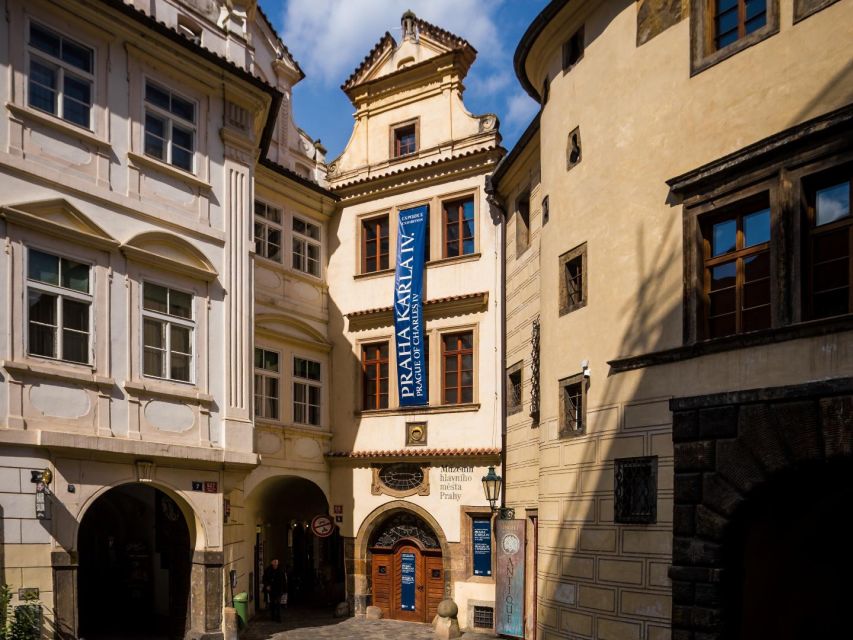
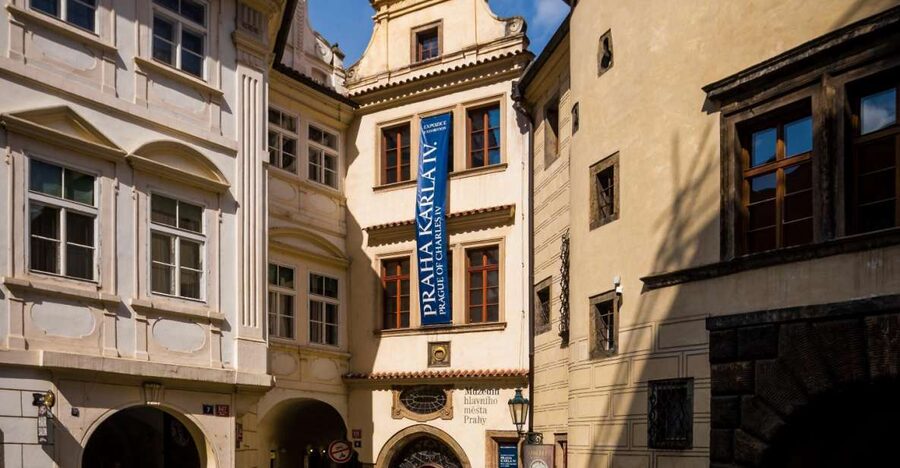
- House at the Golden Ring building focus: admire the historic house while you learn the stories tied to its era
- Interactive digital costume exhibition: try the digital, costume-style experience that makes daily life feel tangible
- Archaeological finds and original objects: you get more than screens, including items tied to everyday life
Further turnstile admissions we bought
- Prague: Castle Tour with Local Guide and Entry Ticket★ 4.6 · 10,422 reviews
- Prague Castle 2.5-Hour Tour Including Admission Ticket★ 4.7 · 8,927 reviews
- Prague: Old Town Hall Tower Entry Ticket★ 4.5 · 6,749 reviews
- Prague: Entry ticket to Ice Pub Prague with Nightclub Option★ 4.1 · 5,273 reviews
House at the Golden Ring: why this ticket is such good value
For $8 per person, this is one of those Prague tickets that punches above its weight. The museum is built around story plus visuals, and you are getting multiple themed sections in one visit, so it does not feel like a single-gallery stop.
This matters because Prague can be overwhelming. Walking the streets is great, but it is easy to miss the “why” behind what you see. Here, you start with what rulers changed, what buildings meant, and how the city functioned, then you can look at the real city with sharper eyes.
Also, the tone is family-friendly in a practical way. Several people call it immersive for the number of formats you get, including artifacts and video displays, not just text. If you want something that feels active without being exhausting, this fits.
Entering the medieval story: what you’ll see first
The main flow is built around the Medieval Town concept, and it is designed to help you picture a city that is no longer here in exactly the same form. You will see virtual and physical models of buildings associated with Charles IV, plus ways Prague’s urban area developed under the House of Luxembourg.
A big advantage of starting this way is that it gives you a map for the rest of your day in Prague. When you later glance at the skyline, you can remember that certain places had religious and state roles, and that some parts of the metropolis were shaped by rulers and governance, not just “time passing.”
One note for your planning: one review said you should count about 1 hour 30 minutes for the whole visit. Another person reported about 2 hours. If you like to read, watch, and rewatch short segments, aim closer to two hours.
Medieval Prague in models: Charles IV’s Prague, place by place
One of the most convincing parts of this experience is how it uses scale. You will witness models that show the appearance of a metropolis influenced by Charles IV and other Luxembourg rulers, including the city’s development across an urban agglomeration and major components like the stone bridge.
You are not stuck with one generic “medieval city.” The exhibits reference specific landmarks such as:
- Vyšehrad
- Prague Castle
- St Vitus Cathedral
These sites were used for religious and state purposes in Charles IV’s time, and that detail is important. You start to see them not just as famous buildings, but as power infrastructure.
There’s also a clear focus on “how the city changed,” not only what it looked like. You get virtual presentations that show town administration systems and medieval bridge construction. Even if you do not geek out on medieval governance, this makes the city feel lived-in and organized, not random.

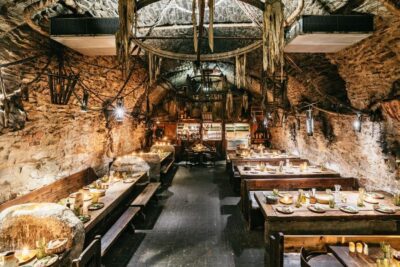
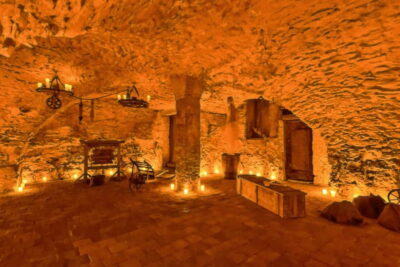

Dramatic stops: the story beats you’re likely to remember
The museum builds in dramatic pauses that aim to evoke the atmosphere of the town and specific events. You’ll encounter moments tied to Charles IV’s life, including his birth, his arrival to Prague in 1333, his coronation, and his burial.
That sequence is a smart teaching tool. Instead of treating history as a spreadsheet of dates, you get a narrative that you can connect to places. And once you associate a ruler with a timeline, Prague outside starts to make more sense.
If you like storytelling in museums, this part can be the difference between a quick pass-through and a real “oh, I get it” moment. It also helps younger visitors follow along, because the story gives structure.
Video mapping and Charles Square: turning the model into a real feeling
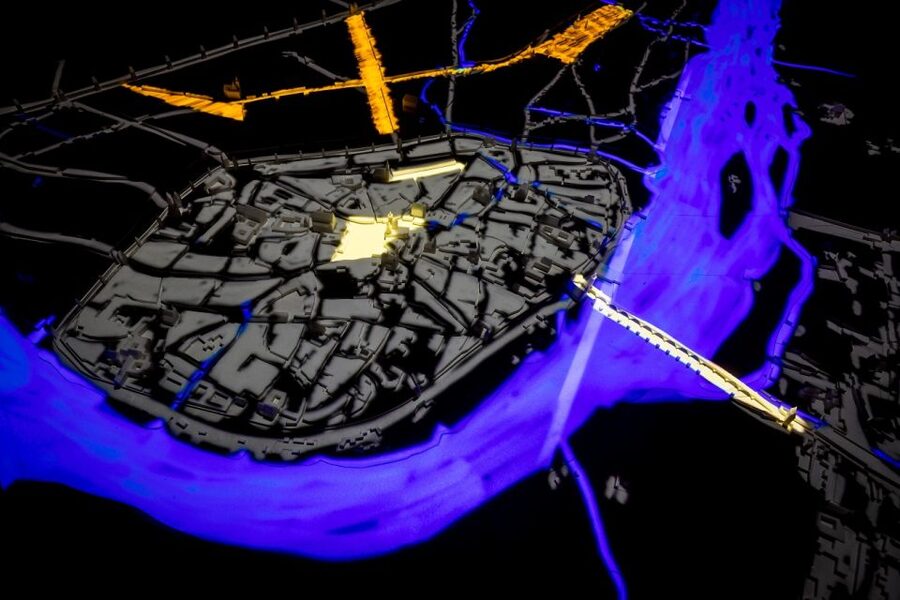
One of the standout techniques here is video mapping of the Prague conurbation model. The exhibit highlights Charles Square and its vicinity, showing the building and urban development of the town during the 14th century.
This is where the “static museum problem” fades. A model alone can be tricky, because you might not know what to look for. Mapping helps you see changes and relationships in a way that reads like motion and growth, not just scale.
If your goal is to leave with a mental picture of where things were and what mattered, spend extra time here. Watch the segment fully, then take a minute to stand back and connect what you saw to the real city streets you’ll walk later.
Archaeology and objects: evidence you can point to
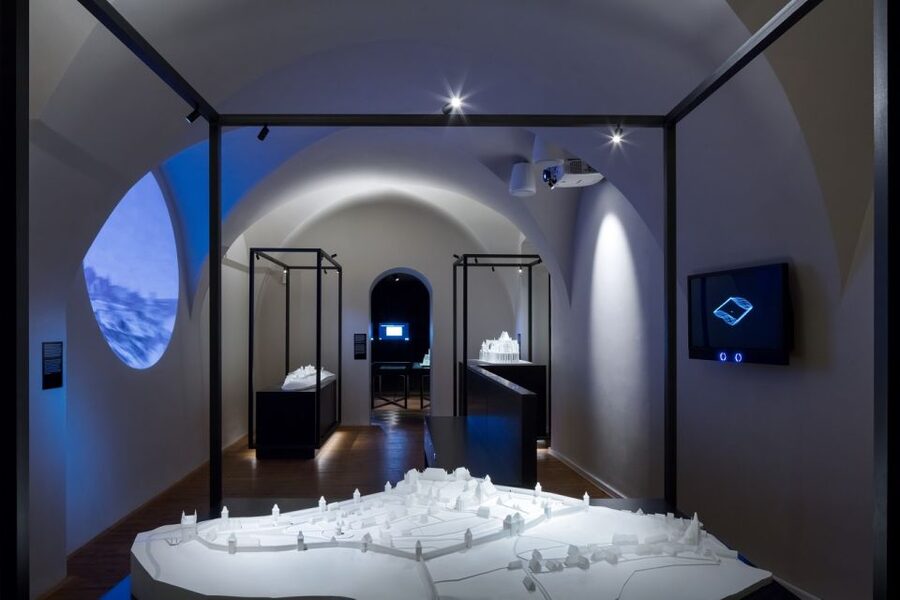
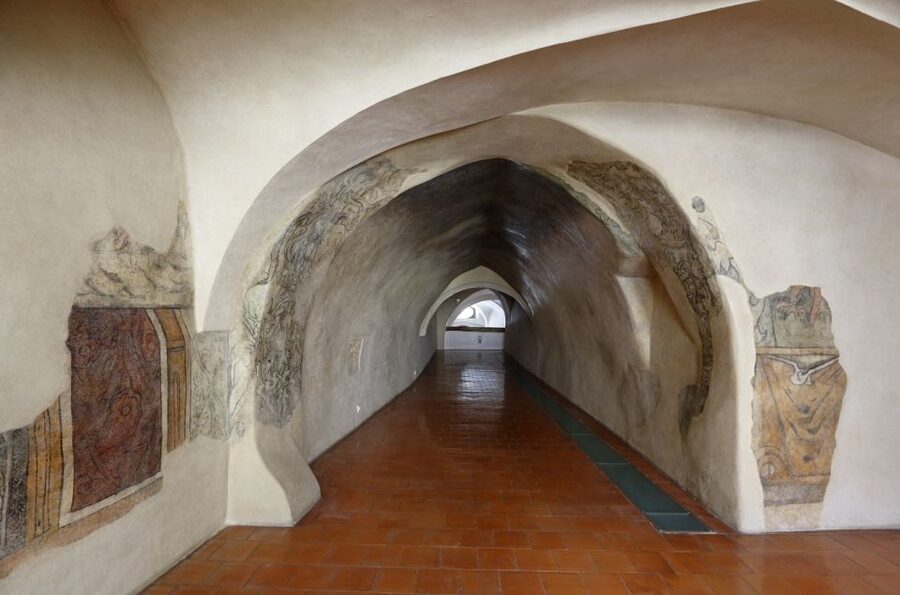
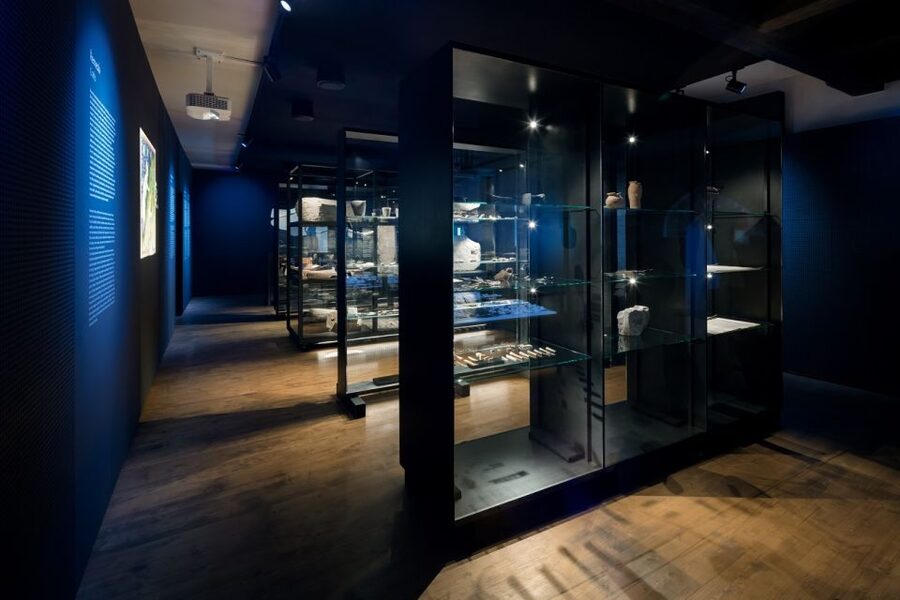
Not everything is screen-based. The exhibits include unique archaeological findings and original objects drawn from collections connected to the Prague City Museum and the National Heritage Institute in Prague, plus other institutions.
Why you should care: objects slow you down in a good way. When you see an artifact beside a digital explanation, it becomes easier to trust what you are learning. It also turns the museum into something you can enjoy even if you are not fluent in medieval history terms.
If you are the type who likes proof, this section is a strong reason to book. It helps the experience feel grounded, not like a theme-park slideshow.
Rudolf II, crowds, and a nine-metre animation
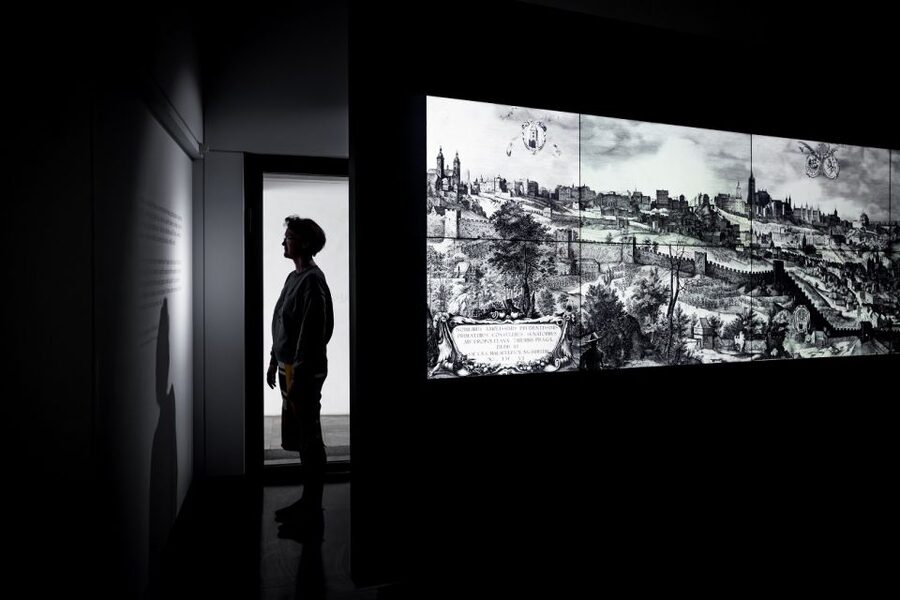
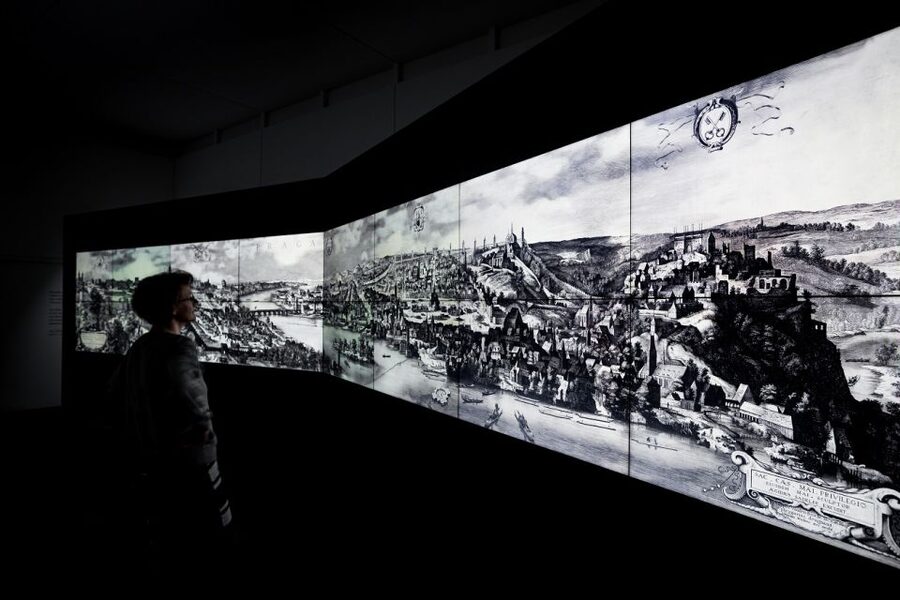
After the Charles IV track, the museum shifts into the Rudolf II era with the Multimedia View of Prague During the Rule of Rudolf II. The headline feature is a nine-metre animation that shows life in Prague during the Rudolfine period.
This is one of the most praised elements in the overall concept, because it turns an era into a scene. You get a sense of energy, daily activity, and the emotional texture of the city.
There is also a “Sadeler Prospect” element described as an outcome of joint efforts between historians and modern technology specialists. It is an image of the city swarming with people, capturing the Rudolfine era through a crowd full of joys and worries. Even if you only catch part of it in the moment, it leaves you with a visual you can carry outside the museum.
Interactive digital costume exhibition: why it’s more than a gimmick
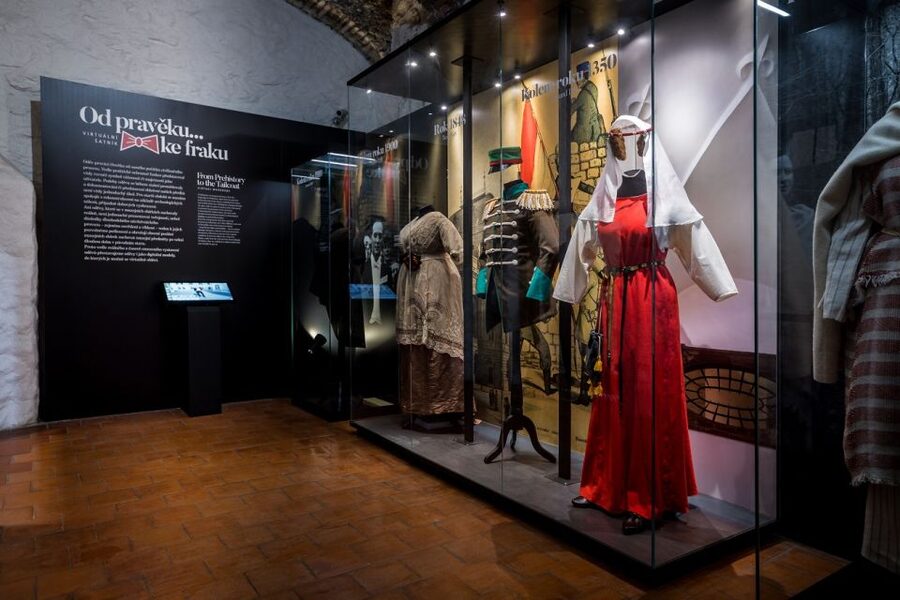
One review praised the museum’s range of formats, and that is partly because of the interactive digital costume exhibition. Instead of only looking at history, you can engage with it in a more personal, experiential way.
You might treat this as the “break” section in your visit, but it still supports the bigger story. Costumes are a shortcut to everyday life: how people looked, how identity showed up in public spaces, and how an era could feel different even to the people living in it.
If you are traveling with kids or teens, this is a practical win. If you are traveling solo, it still helps your brain remember the era because you participate, even briefly.
From Prehistory to the Tailcoat: how far back the museum goes
Included in the ticket is an exhibition called From Prehistory to the Tailcoat. That title hints at the museum’s method: it is not strictly about one ruler or one century, it is about how Prague life developed over time.
You’ll likely find this section useful if you want contrast. Rudolf II and Charles IV can feel like two different worlds, so a longer historical frame helps you see Prague as a continuum rather than a collection of landmark eras.
In short: if you’re the kind of traveler who likes to connect the dots, this added context makes the visit feel like more than a single event.
How this fits into your Prague day
This ticket is ideal as a “smart indoor anchor” during colder hours or when your feet need a pause. Since it is a 1-day entry, you can place it early to set your mental map, or later as a way to consolidate what you saw outside.
If you have only a day in Prague, this can save you from the most common Prague mistake: wandering from photo spot to photo spot without understanding what changed, why it changed, and what power centers looked like in different eras.
If you have more time, use it as a lens. After you learn about Charles IV’s administration and the way bridge construction shaped the city, your later walks around historic areas will feel less random.
Price check: $8 is the kind of cheap that feels earned
At $8 per person, this ticket is priced for broad access, and the content density helps justify it. You get multiple exhibitions included, plus multimedia elements like video mapping, animations, and interactive digital experiences.
The value angle is simple: you are paying for learning through multiple senses, not for a single poster wall. That is why visitors who spend around 1.5 to 2 hours tend to leave feeling satisfied.
A balanced reality check: one review called part of the museum boring and said it is better if you are really into history. That is fair. If you want mainly art or mainly hands-on science gadgets, this might not be your vibe. But if you like visuals tied to real places and rulers, it is a strong buy.
Practical things to know before you go
Here’s what matters most for a smooth visit, based on the information you have:
- The experience is presented with English language content, and dialogue is in English.
- You can reasonably plan for about 1.5 to 2 hours depending on how much you watch and reread.
- It is designed to cover multiple eras and formats, so going in with curiosity pays off.
Also, if you are the sort who dislikes staring at screens for long stretches, you’ll still get artifacts and physical objects. If you like visuals, you have plenty, including 3D-style displays, large animations, and video mapping.
Who should book this ticket?
I’d book it if you want:
- A low-cost museum stop that still feels substantial
- A clear story about Prague under Charles IV and Rudolf II
- Visual learning, including models, mapping, animations, and interactive costume elements
- A break from walking that helps your outdoor sightseeing make sense
You might skip it if you only want casual sightseeing and you hate anything history-heavy, especially when the content is in English only. If that is you, consider picking a different museum where the vibe matches your expectations more closely.
Should you book the House at the Golden Ring entry ticket?
Yes, if your goal is to understand Prague fast, for little money, in a format that mixes objects with modern tech. The strongest reasons to go are the multimedia Charles IV and Rudolf II presentations, the visual explanation of town development, and the large animation that makes the Rudolfine era feel present.
If you have 90 minutes to 2 hours and you do not mind English-language dialogue, this is an easy recommendation. Treat it like a primer for the city, and you’ll get more out of your time outside, too.
FAQ
How much does the Prague House at the Golden Ring entry ticket cost?
The price is listed as $8 per person.
How long is the experience?
The activity is valid for 1 day, and visitors report spending about 1 hour 30 minutes to 2 hours depending on pace.
What languages are available?
The content is available in English, and the instructor language is English.
What is included with the ticket?
Included items are the Medieval Town exhibition, the Multimedia View of Prague During the Rule of Rudolf II exhibition, and the From Prehistory to the Tailcoat exhibition.
What special exhibits or features should I look for?
You can expect multimedia and visual displays, including models of buildings and a nine-metre animation for the Rudolf II era. There is also an interactive digital costume exhibition.
Is there free cancellation?
Yes, free cancellation is available up to 24 hours in advance for a full refund.
Can I reserve without paying right away?
Yes, there is a reserve now and pay later option, where you can book your spot and pay nothing today.
Turnstile Admissions Worth It





More Tour Reviews in Prague


Freshly written up in Prague
- World War II 4WD Tour from Prague with Lunch
★ 4.4 · 3 reviews - World War II History Tour of Prague’s Old Town
★ 5.0 · 3 reviews - Welcome to Prague – Private Tour with Licensed Guide
★ 5.0 · 3 reviews - Gourmet Brunch with Chef: Unlimited Drinks & Stunning River Views
★ 5.0 · 3 reviews - VIP Prague Segway Tour Around Monastic Breweries
★ 4.0 · 3 reviews
Tickets, compared.
 ★ 4.6Castle Tour with Local Guide and Entry TicketFrom $6110,422 reviews
 ★ 4.7Prague Castle 2.5-Hour Tour Including Admission TicketFrom $578,927 reviews
 ★ 4.5Old Town Hall Tower Entry TicketFrom $216,749 reviews
 ★ 4.1Entry ticket to Ice Pub Prague with Nightclub OptionFrom $145,273 reviews
 ★ 4.4Prague Castle and Lobkowicz Palace Entry TicketsFrom $385,066 reviews
 ★ 4.7Entry Ticket Classical Concert at the Mirror ChapelFrom $344,636 reviews
 ★ 4.3Museum of Fantastic Illusions Entry TicketFrom $174,337 reviews
 ★ 4.7Jewish Quarter Walking Tour with Admission TicketsFrom $763,729 reviews