
REVIEW · PRAGUE ESCAPE GAMES & VR
Prague: Immersive History Walking Tour and VR
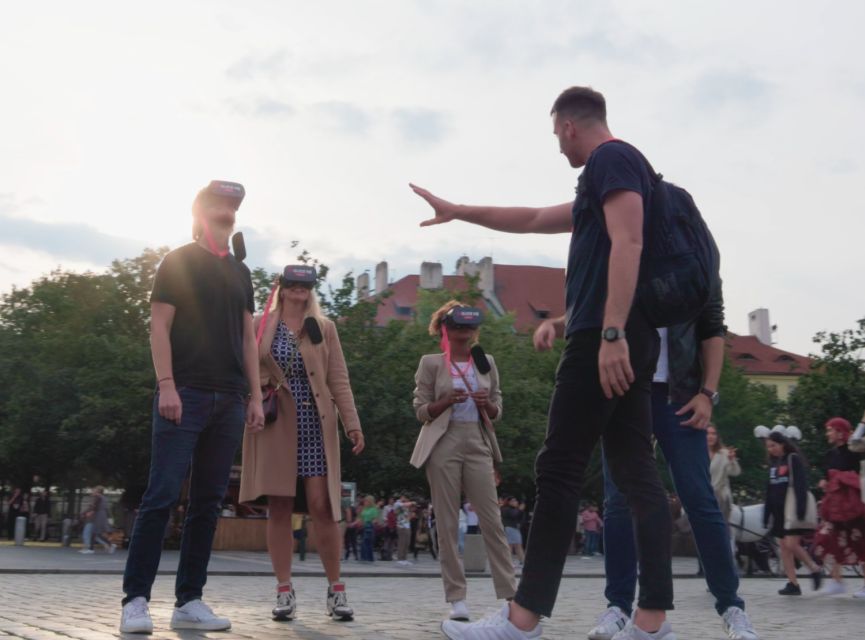
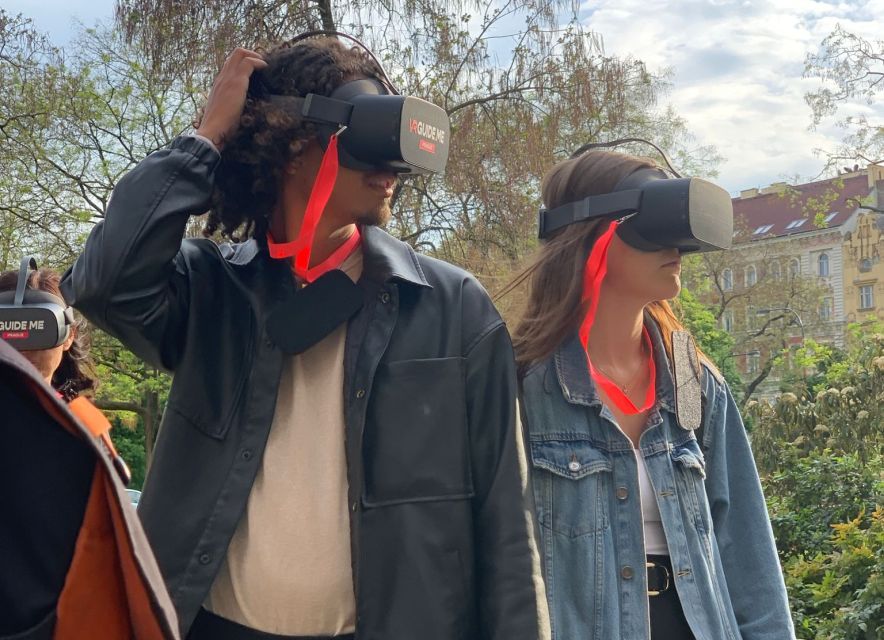
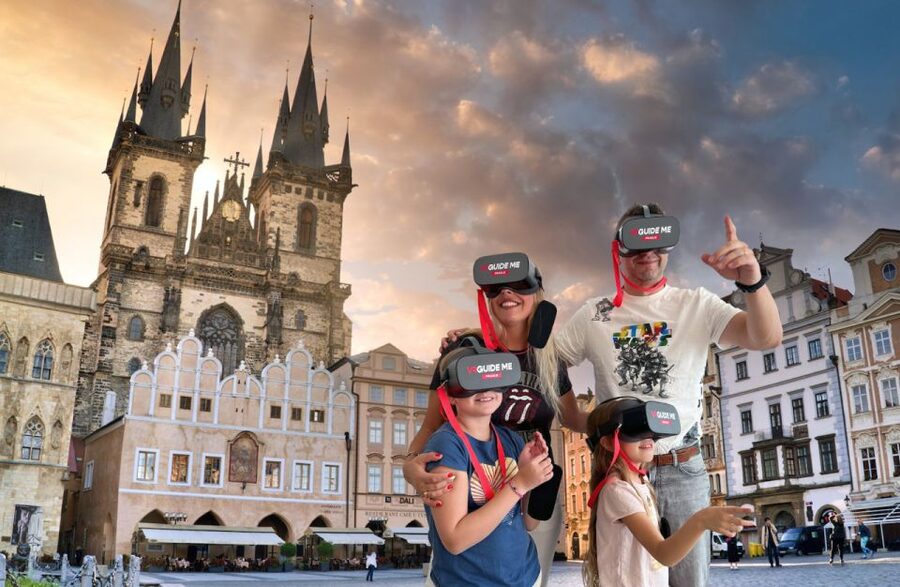
VR goggles turn Prague streets into a time machine. In this 2-hour walk, you compare today’s buildings with key Czech moments, using VR headsets at six locations along the way.
I especially like the tight storytelling led by an English-speaking guide, with events that go far beyond the usual postcard facts. I also like the route itself, because it links Old Town Square to the Dancing House by the Vltava River, so the history lands right in the city you’re seeing.
One consideration: the VR experience is mostly visual, so it is not a full physical, action-heavy roleplay. If you are sensitive to heat or wearing a headset, give yourself a moment to settle in before the scenes start.
In This Review
- Key things I’d mark on your mental map
- Where the tech fits: history you can see from street level
- Price and value: $33 for a guided walk plus six VR scenes
- Starting at Panská 1: why the meeting point makes sense
- Old Town Square: where you learn to read the space
- Wenceslas Square: turning a landmark into a story
- Prague National Museum: learning the “why,” not just the “what”
- New Town Hall: the contrast stop that makes everything click
- Saints Cyril and Methodius Cathedral: a pause for context
- Dancing House and the Vltava promenade: ending with perspective
- Guides, pacing, and small touches that change the feel
- Who this tour fits best (and who might want a different style)
- Should you book Prague: Immersive History Walking Tour and VR?
- FAQ
- How long is the Prague Immersive History Walking Tour and VR?
- Where do I meet the guide?
- Is the tour guided in English?
- How many VR scenes are included?
- Can people who wear glasses take part?
- How much does the tour cost?
- Is free cancellation available?
Key things I’d mark on your mental map
- Six VR scenes triggered at real places you can look up from afterward
- A 2-hour format that covers both Old Town and New Town highlights without dragging
- English live guiding with optional audio support in multiple languages
- A direct compare of past vs present once you take the headset off
- A satisfying finish near the Vltava at the iconic Dancing House
Further sealed rooms and headset rigs to burn an hour in
- Prague: Petřín Tower and Mirror Maze Entry Ticket★ 4.3 · 2,294 reviews
- Prague: Glow Golf Mini Golf Game by UV Light★ 4.5 · 2,254 reviews
- Prague Wizard Experience Magic School Escape Game★ 5.0 · 746 reviews
- Magic School: Episode II Escape Game in Prague★ 5.0 · 304 reviews
Where the tech fits: history you can see from street level
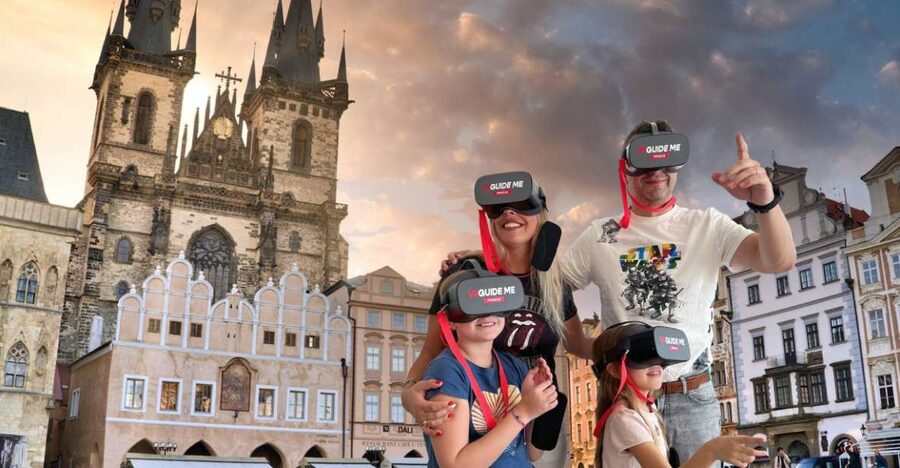
Prague history can feel abstract in a museum room. This tour fixes that by putting the story in the exact street setting where it happened, then layering VR scenes over what you see now.
What makes it work is timing. Your guide walks you to each stop, explains what you’re about to experience, then you put on the headset for a short slice of the past. When you remove the goggles, you’re left with a powerful contrast, the same angles of streets and squares, just with a different era sitting where your eyes are pointing.
The standout promise here is not just seeing famous landmarks. It’s understanding what the landmarks meant in specific moments, like why Middle Ages conflicts escalated, how the Prague Spring period is remembered, and how a mission like Operation Anthropoid fits into the larger story. That kind of cause and effect is what helps history stick.
Price and value: $33 for a guided walk plus six VR scenes
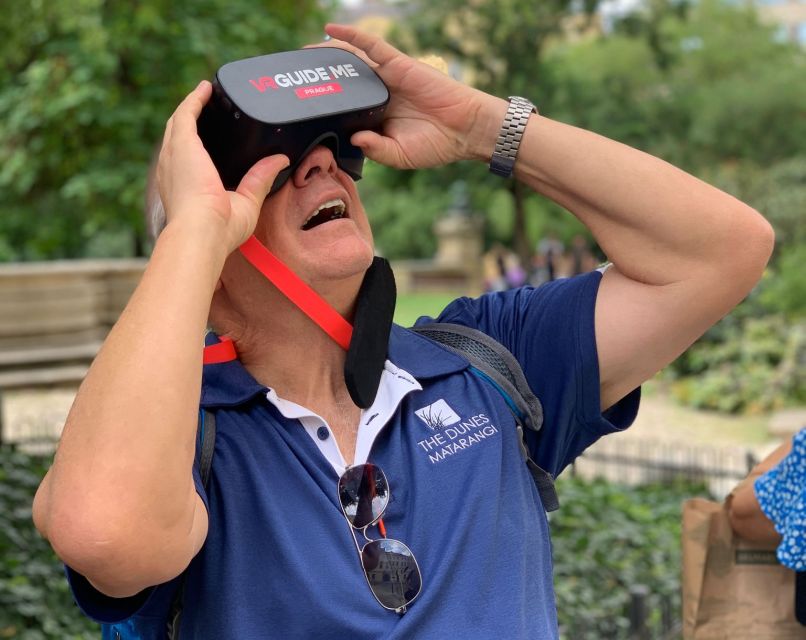
At about $33 per person for two hours, you are paying for more than a standard guided stroll. You are also paying for the equipment and the tech-based storytelling component, including a professional tour guide plus VR headsets for the sequence of scenes.
For me, the value comes from the combination. A typical walking tour gives you context. A typical VR experience gives you visuals. Here, you get both, and you also get the city itself as the “screen,” which is hard to replicate on your own.
If you’re the type of traveler who enjoys history but does not want to spend half a day reading labels, this format is efficient. You’ll still cover major sights, but with a reason attached to each place instead of a list of facts.
Starting at Panská 1: why the meeting point makes sense
You meet at Panská 1, right by Hamleys. That matters because it anchors you in the central part of the city where you can walk to Old Town and New Town without constantly recalculating directions.
This is also the kind of start that helps with the tech. Since the VR headsets come into play during the walk, you want the meeting point to be easy to find and straightforward to transition from street walking to headset time. This one does that job.
Further routes we laced boots for
Old Town Square: where you learn to read the space
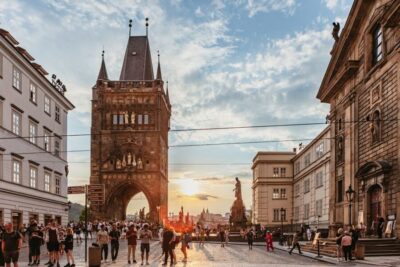
Your walk begins in and around the most famous showpiece area, Old Town Square. This is where the tour uses its first big trick: you see what the square looked like around 120 years ago, then you look at the square again with the modern view in front of you.
I like this stop because it trains your eyes. Old Town Square can look like a museum of buildings at first glance, but VR gives you timing and scale, so you notice how a place changes without fully disappearing. Your guide also helps you connect the visual differences to the historical story, not just the architectural style.
A practical note: Old Town Square is a busy zone. Give yourself a second to listen before you put on the headset, then be ready for the brief shift from street noise to scene audio. The audio on the VR is a plus here, with people pointing out that the sound design feels well done.
Wenceslas Square: turning a landmark into a story
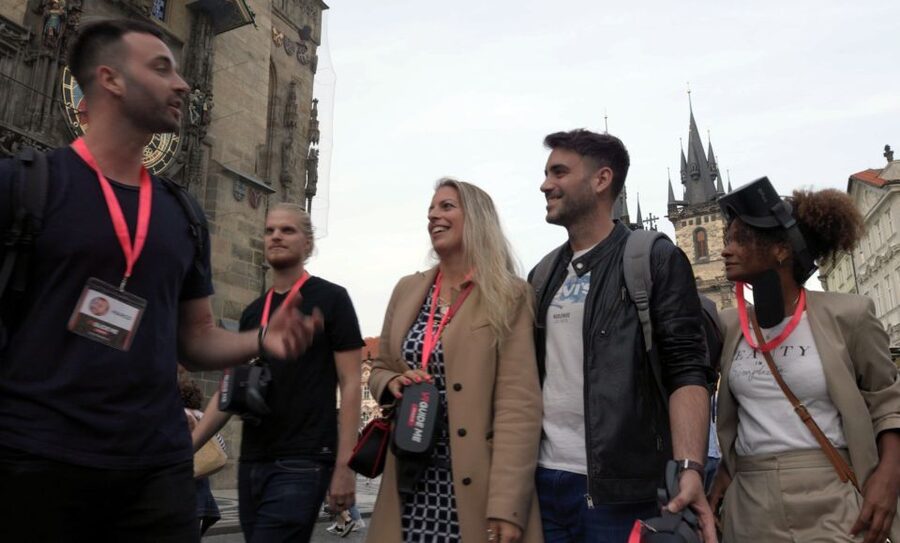
Next is Wenceslas Square, one of Prague’s central arteries. On its own, it can be just another major boulevard. With the tour’s VR moments, it becomes a setting for the kind of events that shaped 20th-century Czech life.
One of the VR scenes focuses on the Prague Spring, including a moment where Soviet tanks enter the city. Standing in a real public square while that scene plays is a stark way to understand how political events can invade everyday spaces, not just news headlines.
I also like Wenceslas Square because it helps you compare eras quickly. You are not only watching history. You are walking between two realities, then letting your guide connect what you see with what it meant.
Prague National Museum: learning the “why,” not just the “what”
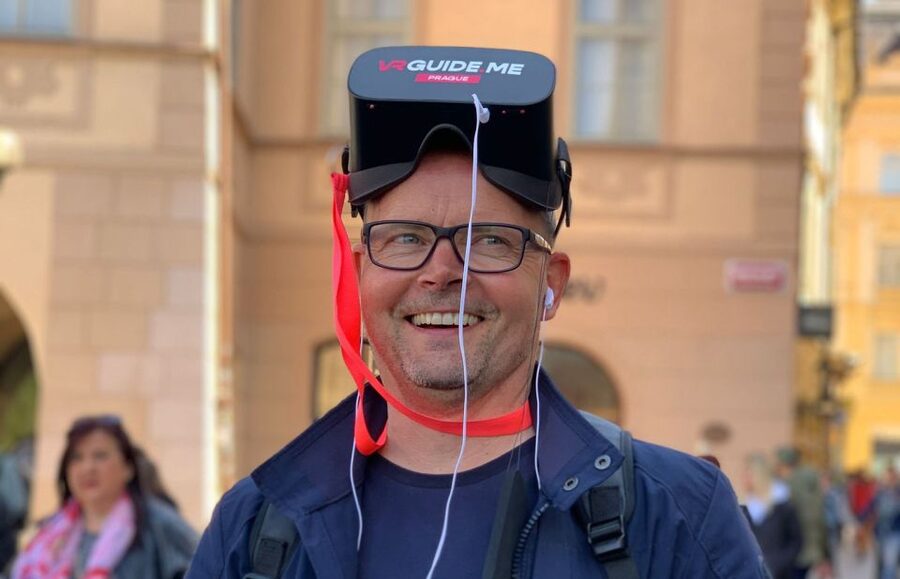
The tour brings you to Prague National Museum. Even if you have no interest in stepping inside, the stop is useful because it gives your guide a big visual anchor for explaining wider historical pressures that shaped Czech identity.
One of the VR pieces on the walk addresses the causes of great wars in the Middle Ages. I like that approach because it’s easy to remember dates, but harder to understand triggers. When you get that cause-and-effect story while you’re standing in a meaningful urban spot, the narrative feels less like a lecture.
This is also where the best guides work the pacing. Good tour energy matters when there are headset moments. From the feel of the guides’ delivery, the goal is to keep the story moving so the tech does not interrupt the flow.
New Town Hall: the contrast stop that makes everything click
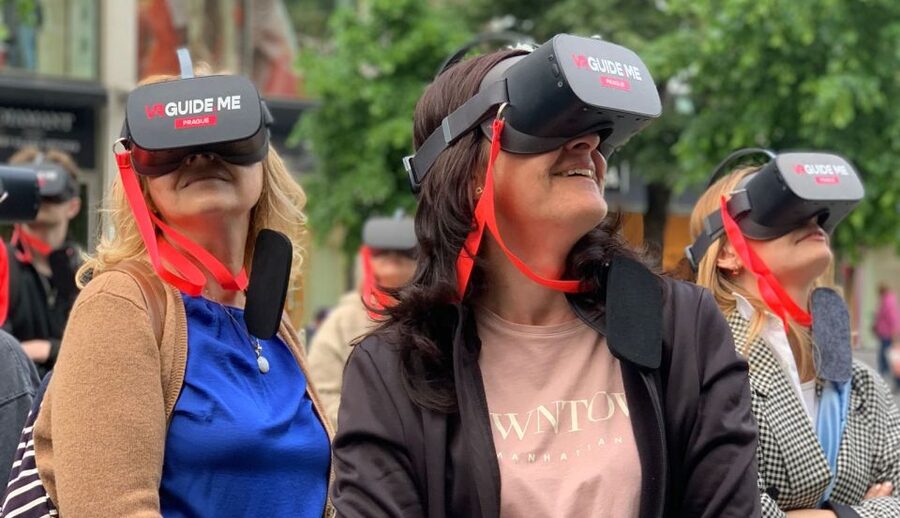
You then head to New Town Hall. This part of the walk is valuable because it keeps the contrast going, Old Town to New Town, then past to present again.
The tour’s structure encourages that comparison. Each stop is not just a photo opportunity. It is a prompt for your guide to talk about what changed over time, then to show you a past version through VR, then to let you take your eyes back to today.
If you’ve ever had trouble understanding how a city’s political story connects to its layout, this is where you start getting it. New Town Hall adds context that the older squares alone cannot, because it helps you see the city as something that kept evolving.
Saints Cyril and Methodius Cathedral: a pause for context
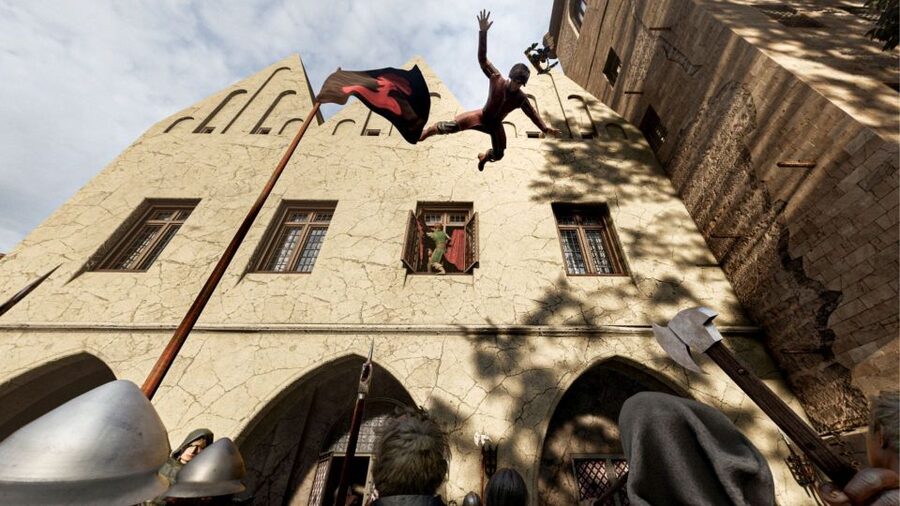
After New Town Hall, the route includes Saints Cyril and Methodius Cathedral. Even without getting too technical about architecture, this stop helps slow the pace in a good way.
This is where VR moments help you connect the cultural and historical layers. One of the major VR highlights on the tour is Operation Anthropoid, a key event in Czech wartime history. Your guide uses the headset sequence to make the mission feel grounded in place, not floating in a textbook.
I’m glad this tour includes a cathedral stop because it gives you a different kind of atmosphere than the squares. When the story is heavy, having a calmer visual setting helps your brain process instead of rushing to the next dramatic scene.
Dancing House and the Vltava promenade: ending with perspective
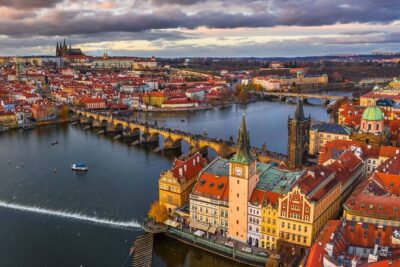
The tour finishes near the Dancing House, by a beautiful stretch of the Vltava River promenade. This ending is smart because it’s a visual “reset button.” After history scenes play in VR and you’ve compared eras at multiple stops, you land in a modern architectural icon with the river open around you.
That final contrast is part of why the tour works as well as it does. You leave with memories of what changed and what stayed readable in the city’s bones. Then, instead of ending in a random dead-end, you end in a scenic area where you naturally want to keep walking and orient yourself for the rest of your Prague days.
If you like architecture and river views, this finish is a good match. If you just want a practical conclusion after two hours, it still feels like a proper wrap.
Guides, pacing, and small touches that change the feel
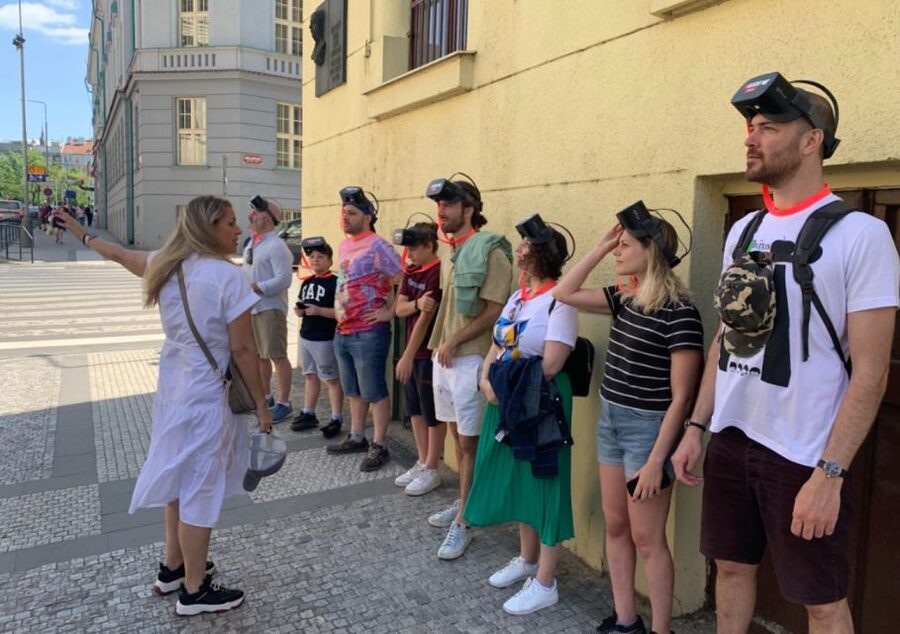
The tour runs with an English-speaking local guide, and optional audio support is available in multiple languages. You get the live narration plus extra audio if you want it.
I also appreciate that guides seem to bring personality to the storytelling. Guides such as Marco and Gaby are repeatedly praised for being kind, well-informed, and energetic, with a clear rhythm and even humor. That matters because VR moments are attention-demanding. If the guide’s pacing is solid, you feel carried, not rushed.
One extra detail: some guides may take candid photos while people are focused on the VR. If you like the idea of a souvenir that captures the moment you are looking at the past, it’s worth keeping an eye out.
Who this tour fits best (and who might want a different style)
This experience is for you if you:
- Want to cover a lot of central Prague in two hours
- Like history but prefer story-based context you can connect to real places
- Enjoy tech that helps you visualize what you would otherwise struggle to picture
It’s also suitable for all ages, and people who wear glasses can participate. That reduces a common headache with headsets.
This might be less ideal if you want nonstop action or lots of physical movement. One consideration people note is that the VR experience is more about what you see than what you do. Think of it as guided time-travel viewing, not a full interactive game.
Should you book Prague: Immersive History Walking Tour and VR?
Yes, I’d book it if you want a smart use of limited time. $33 for two hours is not a casual add-on when it includes a professional guide plus VR headsets and six VR scenes tied to real Prague landmarks.
I’d especially recommend it if you have already seen Prague’s basics and want the next layer, the why behind what you’re staring at. The Old Town Square start, the Wenceslas Square center, the New Town stops, and the finish at the Dancing House by the Vltava work together into a tour that feels like a guided story through the city.
If you are sensitive to wearing a headset for short periods, just plan to take your time with the first VR setup and settle in. With that small mindset, this is one of the more memorable ways to understand Czech history without turning your trip into a lecture marathon.
FAQ
How long is the Prague Immersive History Walking Tour and VR?
The tour lasts 2 hours.
Where do I meet the guide?
You meet at Panská 1, next to Hamleys.
Is the tour guided in English?
Yes. The tour has a live guide in English. Optional audio support is also included in multiple languages.
How many VR scenes are included?
The experience includes six different VR scenes.
Can people who wear glasses take part?
Yes. The activity is suitable for people who wear glasses.
How much does the tour cost?
The price is $33 per person.
Is free cancellation available?
Yes, you can cancel up to 24 hours in advance for a full refund.
More Tours in Prague

More Tour Reviews in Prague

Sealed Rooms and Headsets


Freshly written up in Prague
- World War II 4WD Tour from Prague with Lunch
★ 4.4 · 3 reviews - World War II History Tour of Prague’s Old Town
★ 5.0 · 3 reviews - Welcome to Prague – Private Tour with Licensed Guide
★ 5.0 · 3 reviews - Gourmet Brunch with Chef: Unlimited Drinks & Stunning River Views
★ 5.0 · 3 reviews - VIP Prague Segway Tour Around Monastic Breweries
★ 4.0 · 3 reviews
Prague Escape Games & VR, compared.
 ★ 4.3Petřín Tower and Mirror Maze Entry TicketFrom $142,294 reviews
 ★ 4.5Glow Golf Mini Golf Game by UV LightFrom $122,254 reviews
 ★ 5.0Prague Wizard Experience Magic School Escape GameFrom $47746 reviews
 ★ 5.0Apocalypse Zombie 2213 Escape Game in PragueFrom $47383 reviews
 ★ 5.0Magic School: Episode II Escape Game in PragueFrom $47304 reviews
 ★ 5.0Star Element Escape Game in PragueFrom $47275 reviews
 ★ 5.0Prague Immersive Tour: Travel back in time with virtual realityFrom $18248 reviews
 ★ 5.0Moriarty’s Phantom Trap Escape Game in PragueFrom $47140 reviews
Browse the lists this tour appears in