
REVIEW · JEWISH QUARTER & SYNAGOGUE TOURS
Prague: Jewish Quarter Premium Tour
Prague’s synagogues tell a painful, practical story. You start by seeing the Old-New Synagogue exterior, still active and often described as Europe’s oldest north of the Alps. I also really like the emotional clarity of the Pinkas Synagogue museum, especially the drawings made by children from the Terezin Ghetto.
You’ll also walk through layered places where religion, community life, and survival history overlap. One catch to plan for: Old-New Synagogue admission is not included, so this tour is mainly about the exterior there, not guaranteed entry.
Expect a 3-hour walking route with a live guide in Czech or English, plus an audio guide in many other languages. If you’re visiting on a Saturday, know that tours do not run then because the Jewish Museum is closed.
In This Review
- Key highlights worth prioritizing
- Meeting at Golem Café, then walking into the Jewish Quarter
- Old-New Synagogue exterior: what you’re really seeing
- Pinkas Synagogue: the Terezin Ghetto drawings hit hardest
- Klausen Synagogue and the Maharal of Prague angle
- Maisel Synagogue Judaica: small details, big meaning
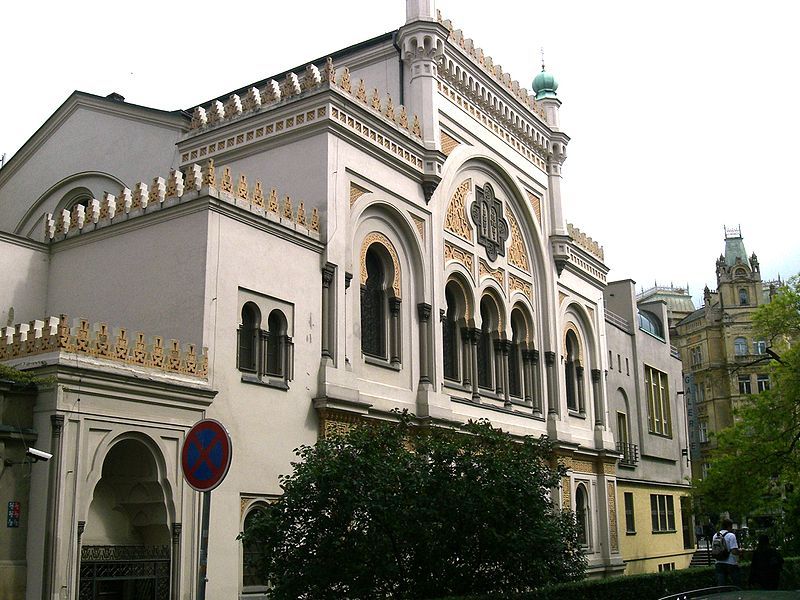
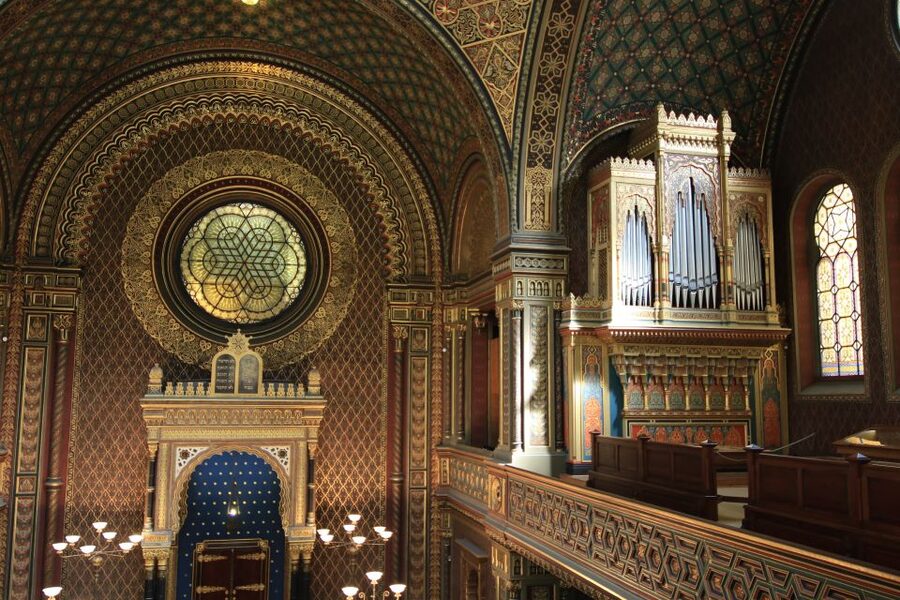
- The Spanish Synagogue and a Moorish-inspired finish
- Burial Society ceremonial hall and the cemetery’s up-to-12-layers reality
- Guides, group feel, and why hearing the story matters
- Price and value: what $117 buys you in real life
- Who this tour suits best
- Should you book the Prague Jewish Quarter Premium Tour?
- FAQ
- Where is the meeting point?
- How long is the walking tour?
- Which synagogues have admission included?
- Is admission to the Old-New Synagogue included?
- Do tours run on Saturdays?
- What languages are available for the tour?
Key highlights worth prioritizing
- Four former active synagogues in one focused day: Pinkas, Klausen, Maisel, Spanish, plus the Old-New exterior
- Terezin Ghetto children’s drawings at Pinkas Synagogue: some of the most affecting museum material in Prague’s Jewish sites
- Klausen Synagogue’s Maharal of Prague connection: religious thought and local Jewish scholarship
- Old Jewish Cemetery grave layers, reported up to 12 levels deep: a physical reminder of centuries of burial practices
- Moorish-inspired Spanish Synagogue: a beautiful contrast after heavier stops
- Live guiding plus audio support in many languages: helpful if your group needs different language options
Josefov write-ups that go a layer deeper
- Prague: Jewish Quarter Walking Tour with Admission Tickets★ 4.7 · 3,729 reviews
- Prague: Old Town and Jewish Quarter Guided Tour in German★ 4.8 · 3,143 reviews
- Prague: Old Town and Jewish Quarter Guided Walking Tour★ 4.6 · 2,847 reviews
- Prague: Classical Concert in the Spanish Synagogue★ 4.7 · 1,104 reviews
Meeting at Golem Café, then walking into the Jewish Quarter
Your day starts in the city center at Golem Café in the Information Centre of the Jewish Museum. From there, you do a steady walking route that links several sites in Prague’s historic Jewish Quarter, designed for context, not speed.
This is a tour where the order of stops matters. You begin with a synagogue that still functions today, then you move into memorial spaces, and you end with the cemetery and burial history. If you take notes on your phone as you go, you’ll thank yourself later, because the material is dense even when the pace is good.
Also pack comfort into the day. You’ll want comfortable shoes and clothing that fits the weather, because it is a walking tour.
Old-New Synagogue exterior: what you’re really seeing
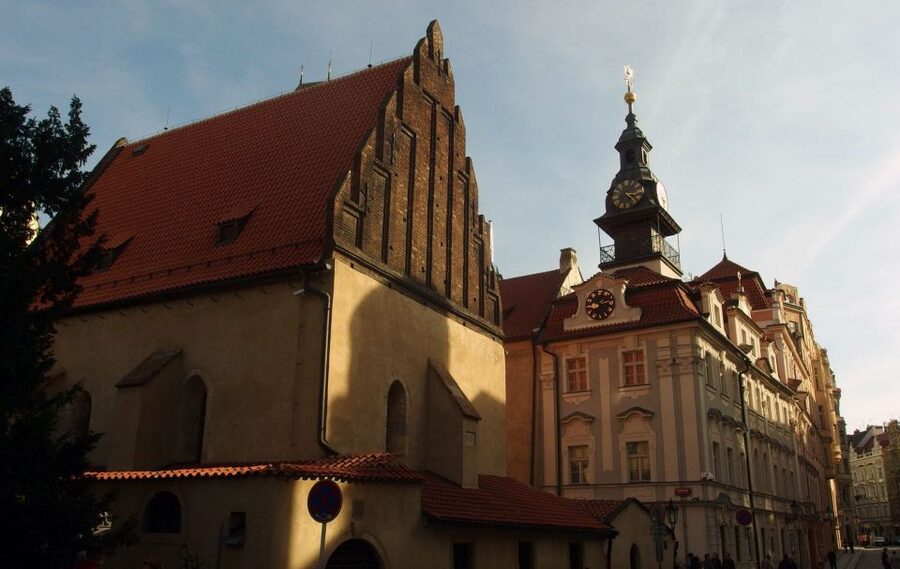
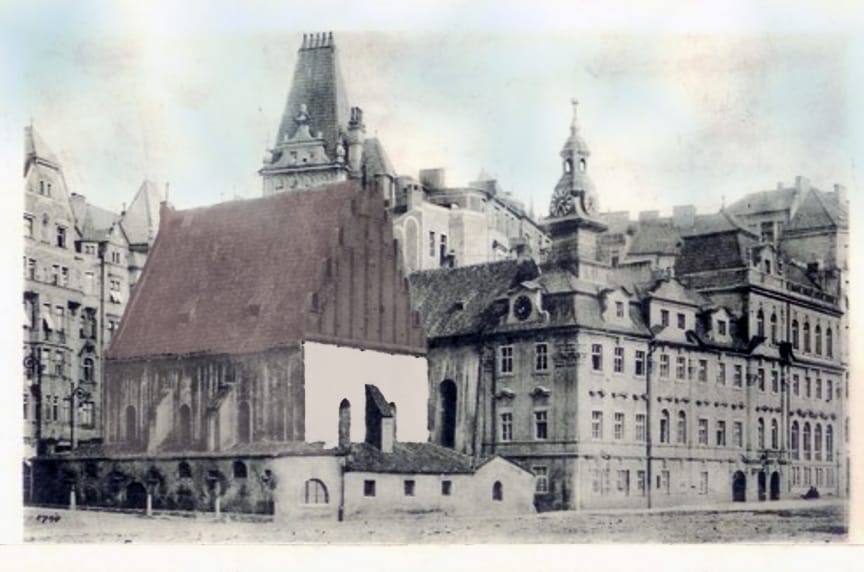
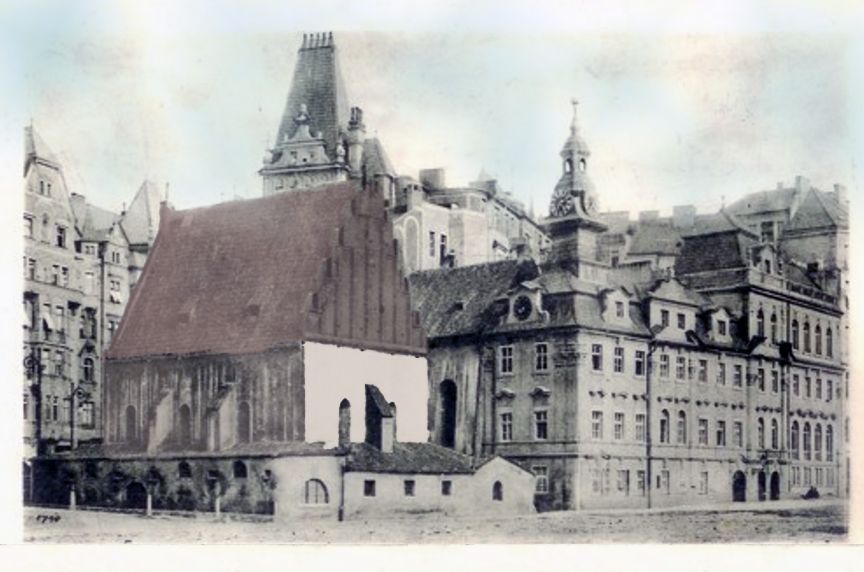
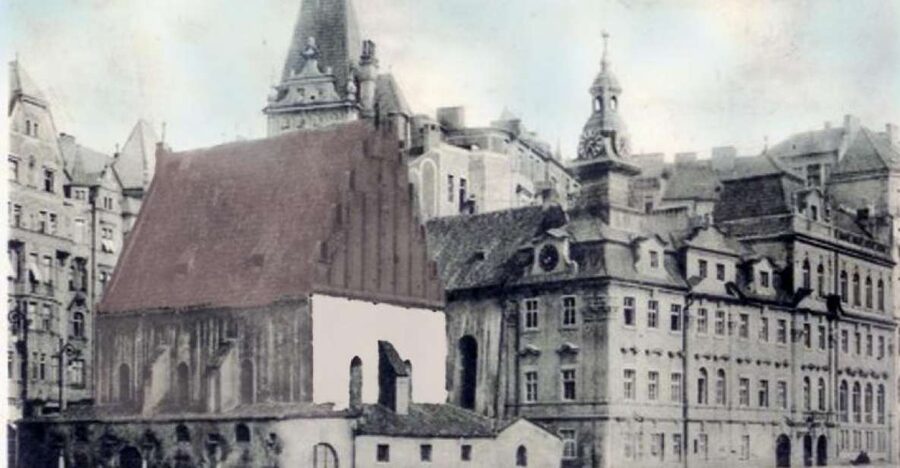
The first major landmark on the route is the 13th-century Old-New Synagogue, where you admire the exterior of the still-active building. It’s often described as Europe’s oldest north of the Alps, and that claim helps you grasp why this place is more than an architectural stop.
Why the exterior-first approach works: you get an immediate sense of the site’s ongoing presence before you move into museums and memorial exhibitions. It sets a tone of continuity, meaning you’re not only looking at relics from the past, you’re seeing a living thread through Prague’s Jewish story.
If you specifically want to go inside the Old-New Synagogue, plan ahead. Admission to the Old-New Synagogue is not included on this tour, so you should expect to focus on the outside here.
Pinkas Synagogue: the Terezin Ghetto drawings hit hardest
Next comes the Pinkas Synagogue, which functions as a museum dedicated to Czech victims of the Holocaust. This is where the tour shifts from architectural and cultural overview into direct remembrance.
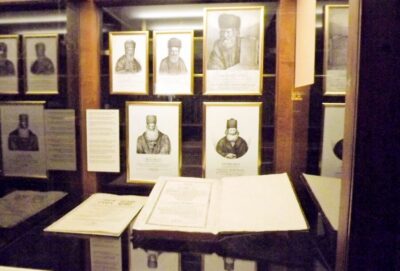
The standout part is a heart-wrenching exhibition of drawings by children from the Terezin Ghetto. Even if you know some Holocaust history already, the impact here tends to be personal and immediate, because children’s artwork carries a different kind of evidence than documents do.
A practical note: this is an emotional stop. Give yourself a little mental space before you enter, then slow down while you look. The drawings are not just images on walls, they’re part of a larger story the guide ties together with the community history of Prague’s Jews.

Klausen Synagogue and the Maharal of Prague angle
After Pinkas, you visit the Klausen Synagogue. Here, you’ll see a permanent collection connected to the Maharal of Prague, along with exhibits that relate to everyday Jewish life and rituals.
I like this stop because it pulls you away from only tragedy. The tour makes room for how Jewish religious thought and daily practice shaped community life. If you’ve ever wondered what rituals looked like in real life, this is the part where it becomes more concrete.
You also get a sense of local intellectual heritage. The Maharal connection grounds the story in Prague, not just in larger European events, which helps the whole day feel less like a generic museum circuit and more like a place-based understanding.
Maisel Synagogue Judaica: small details, big meaning
At the Maisel Synagogue, you’ll spend time with a strong collection of Judaica. These objects matter because they show how tradition works through material culture, not only through ideas.
This stop is a good counterweight to the heavier content earlier. You’re still in a historically significant synagogue, but your attention shifts to artifacts and the everyday shape of Jewish life and ritual. If you like museum stops where you can linger and read at your own speed, Maisel is a satisfying mid-route pause.
One strategy: choose one or two objects that catch your eye and focus on them longer than you think you should. The guide’s explanations can connect those objects to the bigger narrative you’re building across the day.
The Spanish Synagogue and a Moorish-inspired finish
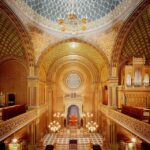
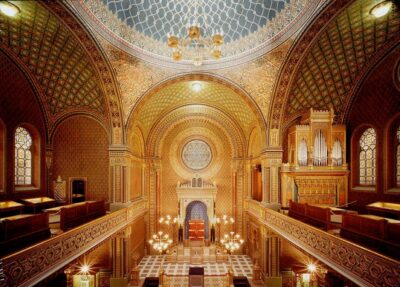
You end at the Spanish Synagogue, newly restored and Moorish-inspired in style. This design shift is not accidental. After memorial and burial-site content, the Spanish Synagogue feels like a breath of light and beauty.
I find these tonal changes important. They prevent the day from becoming only heavy viewing. They also remind you that synagogues were built to serve community, not just to function as monuments.
If you tend to get emotional fast on historical sites, this ending can help you land on your feet. It’s also a place where you can slow down and take in the architecture without feeling like you have to rush to the next room.
Burial Society ceremonial hall and the cemetery’s up-to-12-layers reality
Two additional stops bring the story down to earth, literally. You’ll visit the Ceremonial Hall of the Prague Burial Society at the Chevrah Kaddisha building. You’ll also see the Old Jewish Cemetery, where graves are densely packed, sometimes described as stacked in layers up to 12 levels deep.
This is the part of the day that can feel physically unsettling because it turns history into something you can almost picture in three dimensions. The layered cemetery isn’t just a fact to note, it reflects how communities handled burial over centuries in a place with limited space.
In a tour like this, the guide’s pacing matters a lot. You want enough time to look at the cemetery area without feeling rushed, and you want enough context to understand why the site looks the way it does.
If you’re visiting with kids or teens, this is also where good explanations help. One positive example from past groups was that the tour worked especially well for an 11-year-old, mainly because the guide managed to connect difficult topics to clear, age-appropriate understanding.
Guides, group feel, and why hearing the story matters
The tour includes a live guide in Czech and English, plus an audio guide with options in German, French, Hebrew, Spanish, Portuguese, Polish, Dutch, Italian, Chinese, Czech, Russian.
This combination is useful, because it gives you flexibility. If your live language match is imperfect, you can still follow along with the audio in your preferred language. Just keep in mind that the live guide is limited to Czech and English, so you should use the audio if you need Hebrew or another language in real time.
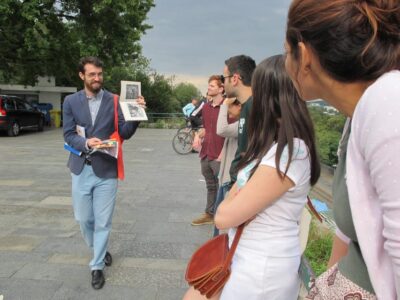
The best version of this tour is the one where you can hear the guide clearly and ask questions without feeling shut down. Some past groups described the value of a smaller group size for that reason, and that makes sense for a walking format where you’re moving between locations.
One caution: if your group is crowded or the pace is quick, you may struggle to keep up or hear everything. Since you’ll be on foot, you’ll want to stay close to the front and take short pauses when something grabs your attention.
Price and value: what $117 buys you in real life
The price is $117 per person for a 1-day experience built around about 3 hours of walking. What you get for that money is not just a route through buildings, but guided interpretation plus paid entry into several major spaces.
Included admissions cover the Pinkas Synagogue, Klausen Synagogue, Maisel Synagogue, and the Spanish Synagogue. The Old-New Synagogue is specifically called out as not included for admission, which means you should treat that stop as an exterior-focused moment unless you’re buying a separate ticket elsewhere.
So is it good value? In my view, it is when you care about context. If you simply want photos of buildings, you could do it on your own at a lower cost. But if you want the day to make sense, with the guide tying together Prague’s Jewish community history, Holocaust remembrance, ritual life, and burial practices, the structure justifies the price.
Also, the emotional content is not optional fluff. The Pinkas Synagogue memorial and the cemetery layers are the kind of stops where a guide can turn raw information into something you can process. That is the value you’re paying for.
Who this tour suits best
This tour fits best if you want a focused walking route with multiple synagogues and museums in one go, not a long day of transit between far-apart sites.
It also suits you if you like history that includes both:
- how people practiced religion and community life, and
- how communities were affected by the Holocaust and later remembrance.
It may be harder if you dislike walking tours or if you expect a relaxed pace with no crowding issues. It’s also a heavy subject day, so if you’re looking for a light, carefree sightseeing plan, this won’t match that mood.
Should you book the Prague Jewish Quarter Premium Tour?
Book it if you want a tightly linked, guide-led route that covers four synagogues with paid entry, plus the ceremonial hall and the Old Jewish Cemetery. You’ll get a clear storyline from living synagogue heritage to memorial spaces to burial history, with audio support in many languages.
Skip or think twice if you need the Old-New Synagogue interior included, because admission there is not part of this tour. Also consider pace and crowds. If you’re sensitive to that, arrive ready to keep moving, wear solid shoes, and stay close enough to hear the guide.
Finally, if you’re deciding based on language, remember the live guide is Czech or English. If you want Hebrew or another language live, rely on the audio guide options listed for the tour.
FAQ
Where is the meeting point?
Meet at Golem Café in the Information Centre of the Jewish Museum.
How long is the walking tour?
The experience runs as a 1-day activity, with a 3-hour walking tour.
Which synagogues have admission included?
Admission is included for the Pinkas Synagogue, Klausen Synagogue, Maisel Synagogue, and the Spanish Synagogue.
Is admission to the Old-New Synagogue included?
No. Admission to the Old-New Synagogue is not included.
Do tours run on Saturdays?
No. Tours do not operate on Saturdays because the Jewish Museum is closed.
What languages are available for the tour?
You get a live guide in Czech and English, plus an audio guide in German, French, Hebrew, Spanish, Portuguese, Polish, Dutch, Italian, Chinese, Czech, Russian.
More Tours in Prague

More Tour Reviews in Prague

Josefov, Layer by Layer

Freshly written up in Prague
- World War II 4WD Tour from Prague with Lunch
★ 4.4 · 3 reviews - World War II History Tour of Prague’s Old Town
★ 5.0 · 3 reviews - Welcome to Prague – Private Tour with Licensed Guide
★ 5.0 · 3 reviews - Gourmet Brunch with Chef: Unlimited Drinks & Stunning River Views
★ 5.0 · 3 reviews - VIP Prague Segway Tour Around Monastic Breweries
★ 4.0 · 3 reviews
Jewish Quarter & Synagogue Tours, compared.
 ★ 4.7Jewish Quarter Walking Tour with Admission TicketsFrom $763,729 reviews
 ★ 4.8Old Town and Jewish Quarter Guided Tour in GermanFrom $293,143 reviews
 ★ 4.6Old Town and Jewish Quarter Guided Walking TourFrom $222,847 reviews
 ★ 4.4Jewish Quarter Ticket with optional Audio GuideFrom $551,107 reviews
 ★ 4.7Classical Concert in the Spanish SynagogueFrom $501,104 reviews
 ★ 5.0Prague’s TOP Sights – Old Town, Jewish Quarter, Charles Bridge (Tip-based tour)From $3843 reviews
 ★ 5.0Prague Old Town New Town and Jewish Quarter Morning TourFrom $32757 reviews
 ★ 4.2Old Town, Jewish Quarter & Astro Clock Walking TourFrom $22552 reviews
Browse the lists this tour appears in