
REVIEW · JEWISH QUARTER & SYNAGOGUE TOURS
Prague Old Town and Jewish Quarter Walking Tour
Prague clicks into place on this walk. This 2-hour Old Town and Jewish Quarter tour uses a local guide to connect the famous sights with what they meant, and it starts at an easy-to-find meeting spot near Týnská 627/7.
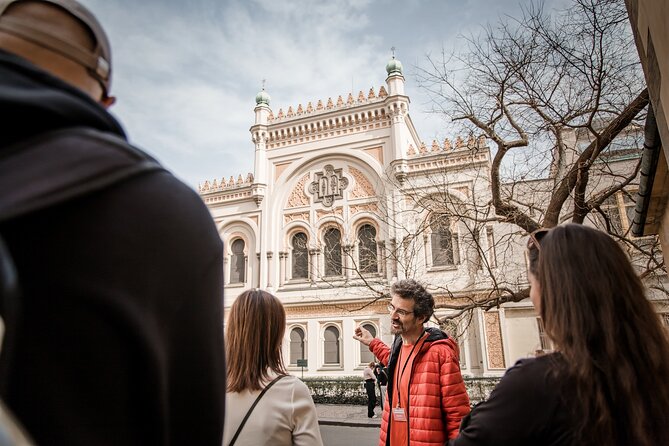
I love the tight pacing, so you get a quick orientation around Old Town Square and the Astronomical Clock, then move into Jewish Prague without it dragging. One possible drawback: you mostly see synagogues and other Jewish sites from the outside, and the Spanish Synagogue stop can be closed on Jewish holidays.
In This Review
- Key highlights to expect
- Entering Prague at Týnská 627/7, then straight into the story
- Old Town Square: the orientation stop that pays off all week
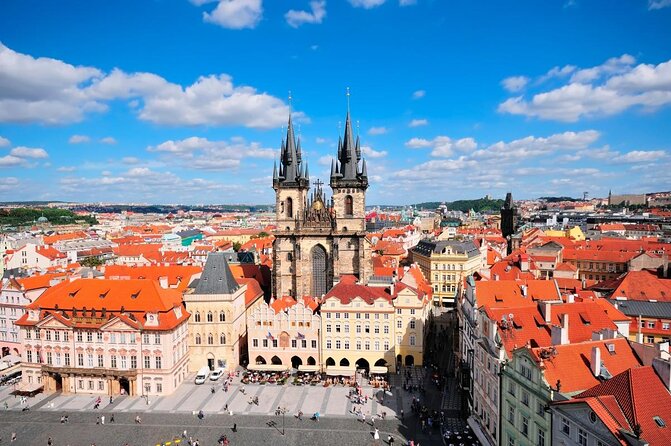
- Church of Our Lady before Tyn: one quick stop, lots of meaning
- A palace on the square: exterior-only, but still useful
- Stone Bell House: Gothic power with a Charles IV connection
- Jan Hus and the Astronomical Clock: reform, science, and propaganda in one walk
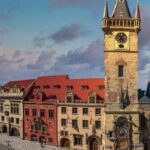
- Old Town Hall and the Astronomical Clock
- Karolinum and Theatre des Etats: Prague’s learning and arts side
- The House of the Black Madonna: Prague’s cubist oddball
- Church of St. James: Gothic, fire damage, and baroque rebuild
- Týnský Yard at Ungelt: a hidden courtyard that explains commerce
- Maisel Synagogue: the Jewish Quarter’s visible landmark
- Old Jewish Cemetery: layered gravestones you can’t unsee
- Klausen Synagogue and burial customs: how the guide makes it coherent
- The Old-New Synagogue: a medieval survivor with Jerusalem-stone lore
- Spanish Synagogue and what happens when it’s closed
- Kafka statue: the last stop with a wink and a warning
- Who this tour fits best (and who might want something else)
- Price and value: why $24.19 can actually make sense
- Guide style: expect stories, humor, and questions
- Timing and walking pace: doable for most people, but wear good shoes
- So, should you book it?
Key highlights to expect
- Small-group feel (it can be just a few people, depending on bookings)
- Old Town Square orientation with context that guidebooks often skip
- Astronomical Clock explained with how the system works, not just what it is
- Jewish Quarter route flow that strings courtyards, cemeteries, and synagogues together
- Photo and legend storytelling that keeps the walk lively (and sometimes a bit creepy)
Old Town listings, lane by lane
- Prague: Oldtown, Medieval Underground & Dungeon History Tour★ 4.2 · 8,244 reviews
- Prague: Old Town Hall Tower Entry Ticket★ 4.5 · 6,749 reviews
- Prague: 3-Hour Walking Tour of Old Town & Prague Castle★ 4.7 · 5,696 reviews
- Prague: 3-Hour Old Town and Prague Castle Tour in German★ 4.8 · 5,671 reviews
Entering Prague at Týnská 627/7, then straight into the story
You meet at Týnská 627/7 in Staré Město, right by the Old Town core. From there, the tour wastes no time. Instead of starting with generic background, you’re pushed quickly into the parts of Prague you’ll still be looking at later, so everything starts to make sense faster.
This is the kind of tour that helps on day one, especially if you already plan to wander on your own afterward. You’ll get “where am I” answers and also “why does this place look the way it does” answers, which is what makes Prague feel navigable instead of overwhelming.
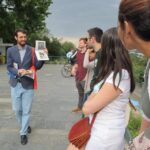
If you’re worried about group size, you’re in good shape. The cap is 30, but the route often runs smaller. Reviews mention guides leading groups of just 3 to 5 people at times, which makes it easier to hear and ask questions.
Old Town Square: the orientation stop that pays off all week
Your walk begins around Old Town Square, and that’s a smart move. This is the geographic and historical heart of Prague’s Old Town, and seeing it first lets the rest of the route click into place.
From here, you’ll get a guided introduction to Czech history and the main threads you’ll keep encountering while sightseeing. You also get the kind of commentary that makes landmarks feel less like postcards and more like political and cultural checkpoints.
Church of Our Lady before Tyn: one quick stop, lots of meaning
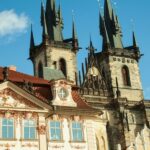
Next comes the Church of Our Lady before Týn. It’s brief, but it’s not filler. The guide uses it to point at broader Czech historical themes, so you’re not just staring at Gothic shapes for two minutes and moving on.
Josefov write-ups that go a layer deeper
A palace on the square: exterior-only, but still useful
You also get an exterior look at a famous palace right on Old Town Square. Even if you are not going inside, an exterior stop like this is useful for learning how to read the square. Prague has layers, and your guide helps you notice them.
Stone Bell House: Gothic power with a Charles IV connection
Then it’s the Stone Bell House, flagged as one of Prague’s important Gothic buildings. You’ll hear the story tied to Charles IV, including the idea that it’s connected to his birth. Whether every detail is debated or tightened over time, the practical value for you is simple: you start to see why certain buildings get attached to big names.
Jan Hus and the Astronomical Clock: reform, science, and propaganda in one walk
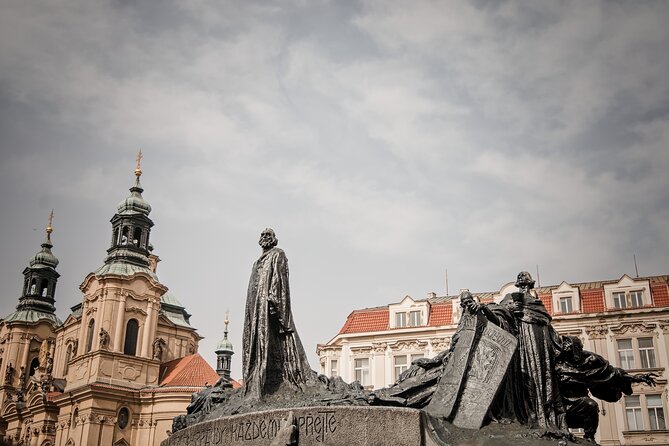
You’ll pass the Jan Hus Monument, with a short history of Jan Hus and why he’s remembered. The framing matters here. The guide links Hus to the larger theme of religious reform in the Czech lands, including the comparison to Martin Luther and the fact that Hus’s story ends with execution. It’s heavy material, but it lands in a way that helps you understand why Prague celebrates some figures and mourns others.
Old Town Hall and the Astronomical Clock
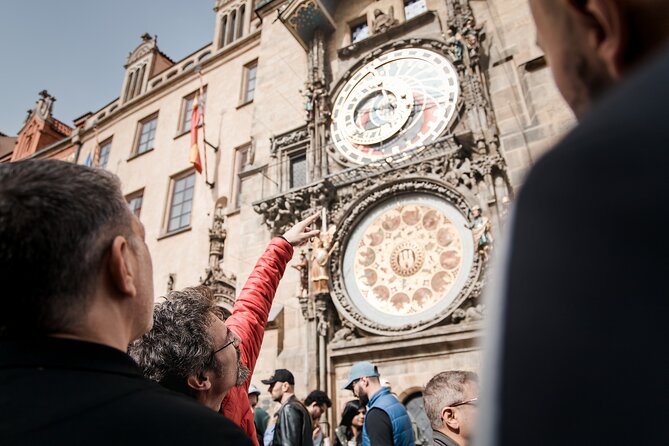
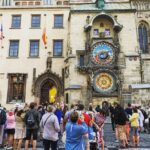
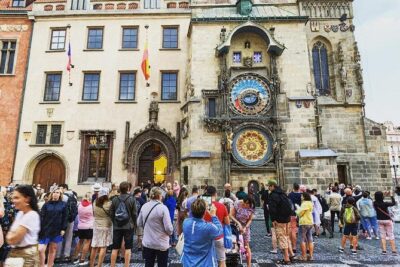
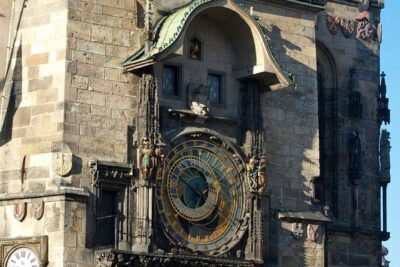
One of the core moments is the Old Town Hall and Astronomical Clock. This isn’t just, Look at the clock, then move on. You get the history and the mechanics behind it, including the idea of multiple time-measurement systems playing together, plus the positions of stars, Moon, and Sun.
If you’ve ever felt intimidated by the Astronomical Clock, this is your fix. When someone explains what you’re seeing in plain terms, the whole thing stops feeling like a locked-up mystery and starts feeling like a medieval “smart display.”
Karolinum and Theatre des Etats: Prague’s learning and arts side
After Old Town intensity, the tour shifts tone. You’ll see Karolinum, the historic building tied to the first university in Central Europe. Even as an exterior stop, it gives you context for why Prague became a hub for education and debate, not just architecture and beer halls.
Then you’ll also pass Theatre des Etats, where the guide connects the building with Mozart’s Don Giovanni premiere. Again, you may not be going in, but the story gives the facade a timeline. If you’ve been thinking Prague is only about medieval churches, this part quietly corrects that.
The House of the Black Madonna: Prague’s cubist oddball
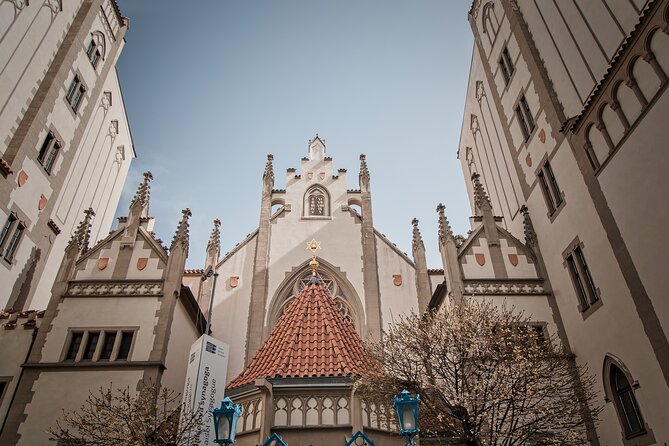
Next is the House of the Black Madonna, described as the only pure cubistic building in Prague. The guide frames it as a flagship of cubism associated with Czech lands, which is a fun change of pace after so many Gothic stops.
For me, this is where Prague walking tours become more than sightseeing. A tour that includes a cubist building helps you realize Prague isn’t frozen in one era. It keeps changing, and style changes show up on the street corners.
Church of St. James: Gothic, fire damage, and baroque rebuild
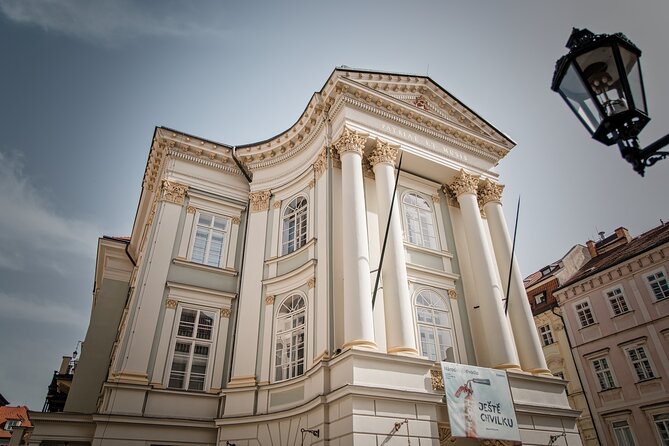
Church of St. James is another quick but meaningful stop. You’ll get the story of how it was founded in Gothic style, then was burned out, rebuilt in baroque style, and how the interior includes a legend element, including a hand hung from the ceiling on the right side near the main entrance.
You might not have time to soak in every detail, but even a brief explanation changes what you notice. Suddenly, the building looks like a timeline instead of a single style.
Týnský Yard at Ungelt: a hidden courtyard that explains commerce
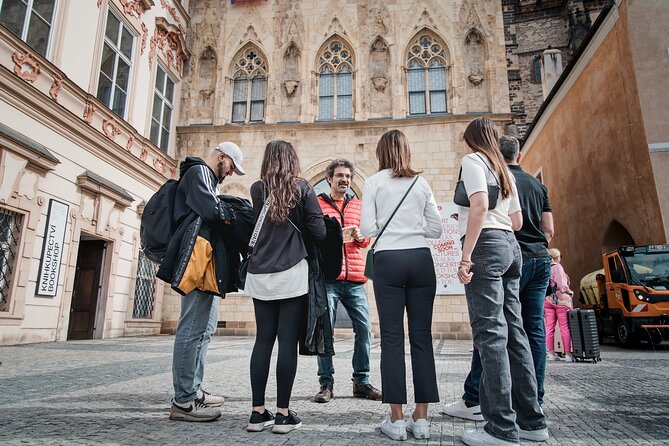
Then you hit Týn Yard in Ungelt, described as a unique medieval courtyard hidden in the center of Prague. This stop is where you get a change from monuments to daily function.
The guide explains it as a former customs place where foreign merchants paid for goods brought into Prague. That one detail helps you understand why Prague grew rich. It wasn’t just kings and churches. It was trade, taxation, and movement of people and materials.
Maisel Synagogue: the Jewish Quarter’s visible landmark
You’ll reach the Maisel Synagogue area next. You get an exterior view of this neo-gothic synagogue and learn key facts about Jewish history in the Czech lands.
This part is valuable because it gives you a framework before you step into the cemetery and older synagogue sites. Without that, the Jewish Quarter can feel like a set of separate attractions. With it, the route feels like one long story.
Old Jewish Cemetery: layered gravestones you can’t unsee
The Old Jewish Cemetery is where the tone turns serious. It’s short in time, but it’s powerful in impact, with its layers and gravestones described as a jewel of Prague’s Jewish history.
Important practical note: the cemetery admission is listed as not included. So if you plan to spend time here, check what you’ll need for entry and budget a little extra.
Even without lingering for ages, the cemetery stop gives you perspective. Prague’s Old Town can look like a glossy museum from a distance. Cemeteries bring the human scale back immediately.
Klausen Synagogue and burial customs: how the guide makes it coherent
Next is the Klausen Synagogue, described as the largest synagogue in the former Prague Jewish ghetto. Here, the guide doesn’t just point at architecture. You also hear about Jewish customs and burial ceremonies.
That blend is what makes this route feel more complete than a pure architecture walk. You’re learning how traditions shaped buildings and how buildings shaped community life.
The Old-New Synagogue: a medieval survivor with Jerusalem-stone lore
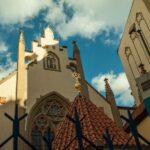
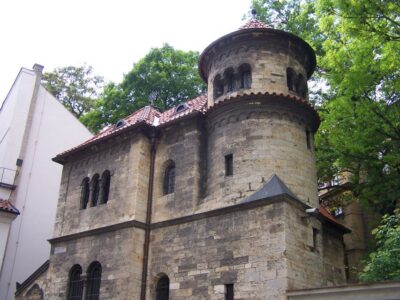
Then comes the Old-New Synagogue, framed as one of the first Gothic buildings in Prague and the oldest surviving medieval synagogue of twin-nave design. The guide also shares an especially memorable legend-like claim, that it was allegedly built from stones from Solomon Temple in Jerusalem.
Whether you treat that as literal or symbolic, the point is the same for you: people built meaning into places, and the guide helps you notice how those stories keep getting repeated because they matter.
Spanish Synagogue and what happens when it’s closed
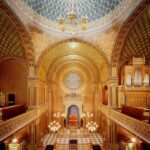
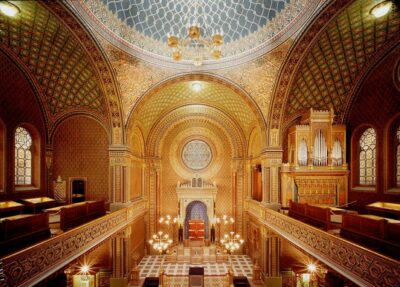
The route includes the Spanish Synagogue, described as the most recent synagogue in Prague’s Jewish Town, with a Moorish interior design influenced by the Alhambra. That matters, because it shows another side of Prague Jewish culture, one expressed through design tastes that connect across Europe and beyond.
One real-world consideration: you may not be able to go inside. A review notes the Spanish Synagogue was closed on Jewish holidays, and the guide still covered the tour well. So your expectations should be flexible. Even if you get limited access, you still get the story and the exterior context.
Kafka statue: the last stop with a wink and a warning
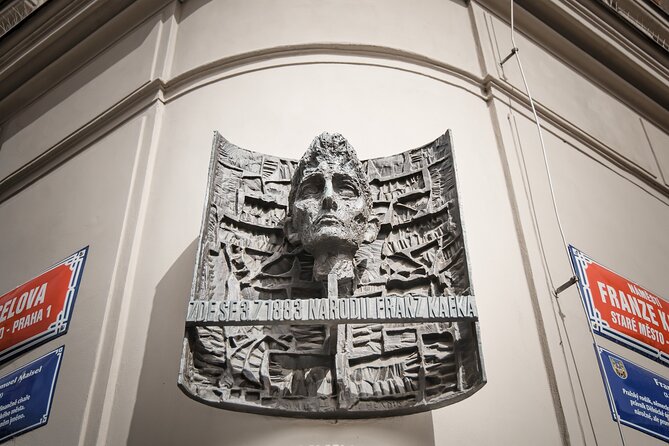
At the end, you’ll find a Franz Kafka statue by Jaroslav Rona. The tour ties it to Kafka’s writing, with a tongue-in-cheek note about depression if you read his books. It’s a lighter moment that also closes the loop: Prague is full of thinkers, rebels, and storytellers, not just builders.
Who this tour fits best (and who might want something else)
This is a great choice if you:
- Want a guided 2-hour overview without committing to a half-day or full-day schedule
- Like walking tours that teach you how to read a city, not just where to stand for photos
- Prefer exterior views paired with context over spending most of your time in ticket lines
- Plan to explore more of Prague afterward and want a strong mental map
It might not be ideal if you:
- Only want major synagogue interiors and are set on seeing specific ones regardless of holiday closures
- Want a light, casual walk with minimal background
Price and value: why $24.19 can actually make sense
At $24.19 per person for about two hours, the value hinges on two things: the guide and the stop density. You get a local guide, and you also hit a high number of major landmarks in one compact loop.
Even though some items are exterior views, most of the stops are tied to admission-free segments, with one clear exception noted: the Old Jewish Cemetery is not included. So you’re paying mainly for interpretation and orientation, not for a stack of entry tickets.
For short-schedule visitors, this is one of the more practical ways to get “the city in one layer” without burning your entire day.
Guide style: expect stories, humor, and questions
The guides on this route vary, but a pattern shows up in the way they teach. People mention guides like Allen, Richard, Vojta, Radek, Maxim, Richard, and Radek bringing strong engagement, humor, and a lot of historical context. Some even share funny stories or legendary details that make Prague feel like a living place instead of a list of dates.
Also, because the group can be small, it’s easier to ask questions. If you’re the type who likes to clarify what something means, this format usually supports that.
Timing and walking pace: doable for most people, but wear good shoes
This is about 2 hours on foot, and the tour ends back at the meeting point. That means you can plan the rest of your day without a long transfer.
The walk is designed for most travelers. Still, it’s an Old Town route with streets and stairs. If you have mobility limits or a medical concern, take that seriously. One review notes stairs can be part of the experience, so it’s worth thinking about that before you commit.
So, should you book it?
If you’re in Prague for a short stay or you want a first-day orientation that connects Old Town and the Jewish Quarter, I’d book this. It’s a well-priced, guided walk that helps you understand why the landmarks matter, not just what they look like.
If you specifically care about synagogue interiors and timing around closures, treat this as a context-building tour first, then plan a second visit to places like the Spanish Synagogue when hours are predictable.
Either way, show up on time, bring comfortable shoes, and come ready for a walk where the city talks back.
More Tour Reviews in Prague


Josefov, Layer by Layer
Old Town, Lane by Lane
Freshly written up in Prague
- World War II 4WD Tour from Prague with Lunch
★ 4.4 · 3 reviews - World War II History Tour of Prague’s Old Town
★ 5.0 · 3 reviews - Welcome to Prague – Private Tour with Licensed Guide
★ 5.0 · 3 reviews - Gourmet Brunch with Chef: Unlimited Drinks & Stunning River Views
★ 5.0 · 3 reviews - VIP Prague Segway Tour Around Monastic Breweries
★ 4.0 · 3 reviews
Jewish Quarter & Synagogue Tours, compared.
 ★ 4.7Jewish Quarter Walking Tour with Admission TicketsFrom $763,729 reviews
 ★ 4.8Old Town and Jewish Quarter Guided Tour in GermanFrom $293,143 reviews
 ★ 4.6Old Town and Jewish Quarter Guided Walking TourFrom $222,847 reviews
 ★ 4.4Jewish Quarter Ticket with optional Audio GuideFrom $551,107 reviews
 ★ 4.7Classical Concert in the Spanish SynagogueFrom $501,104 reviews
 ★ 5.0Prague’s TOP Sights – Old Town, Jewish Quarter, Charles Bridge (Tip-based tour)From $3843 reviews
 ★ 5.0Prague Old Town New Town and Jewish Quarter Morning TourFrom $32757 reviews
 ★ 4.2Old Town, Jewish Quarter & Astro Clock Walking TourFrom $22552 reviews
Browse the lists this tour appears in