
REVIEW · WALKING TOURS
Prague Renaissance and Baroque Gardens Walking Tour
Prague gardens speak in stone and water. This 3-hour walk connects Emperor Ferdinand I’s Italian Renaissance influence with the later Baroque theater you see at Wallenstein and Vrtba. I especially love the story of the Singing Fountain and the Garden planting that brought plants like tulips to Prague, and I really like how the tour builds to the Wallenstein Garden with albino peacocks and mythical fountains.
One thing to plan for, though: this route includes lots of stairs, and some are narrow or steep. If you have mobility limits, a private tour is the smart move so the guide can tailor the pace and skip what you cannot do.
In This Review
- Key garden moments you will remember
- Why Ferdinand I’s garden vision feels political, not just pretty
- Starting in Malostranska, and how the 3-hour rhythm stays realistic
- Emperor Ferdinand I’s Prague Castle gardens, from Belvedere to bell-bronze water
- Fig House and Orangery, where citrus and fruit meant status
- South Gardens terraces, the Garden of Paradise, and the myth of walking downhill
- Wallenstein Garden: albino peacocks, grotto walls, and Baroque mythmaking
- Vrtba Garden in Mala Strana, the 1720 walled Baroque retreat
- Price and value for a $123, 3-hour historian-led garden walk
- Should you book the Prague Renaissance and Baroque Gardens Walking Tour?
- FAQ
- How long is the tour?
- Where do I meet the guide?
- Is the tour offered in English?
- Is the Prague Castle Gardens admission fee included?
- Is Vrtba Garden admission included?
- Will I be walking on stairs?
- What mobility options are suggested if stairs are difficult?
- What is the cancellation policy?
Key garden moments you will remember
- Italian landscapers arrive under Emperor Ferdinand I, shaping Prague Castle gardens north of the Alps
- Belvedere Summer Palace and its reliefs, including Ferdinand presenting a flower to Queen Anne
- Fig House and Orangery, where figs, almonds, oranges, and lemons were grown in early Central Europe
- The Singing Fountain in bell bronze, cast in 1564 so the falling water resonates
- Wallenstein Garden’s mix of odd and grand, albino peacocks, grottos, and myth-inspired fountains
- Vrtba Garden from 1720, a walled Baroque garden with a marine grotto and major city views
Further routes we laced boots for
- Prague: 3-Hour Walking Tour of Old Town & Prague Castle★ 4.7 · 5,696 reviews
- Prague: Ghost Walking Tour Where Legends Come To Life★ 4.4 · 5,253 reviews
- Prague: Jewish Quarter Walking Tour with Admission Tickets★ 4.7 · 3,729 reviews
- Prague Guided Walking Tour and Cruise with Authentic Czech Lunch★ 5.0 · 3,627 reviews
Why Ferdinand I’s garden vision feels political, not just pretty
Prague’s gardens are not background scenery. They are public ideas in plant form. In the Renaissance, garden design leaned toward order, symmetry, and classic references that signaled taste and power. Later, the Baroque approach turned the garden into a stage for wonder, surprise sightlines, and dramatic symbolism.
That is why this tour works so well. You are not only looking at greenery. You are learning how rulers used gardens to project identity. You start with Emperor Ferdinand I, who was especially taken with lush Mediterranean gardens tied to the Italian Renaissance. The shift from “ornamental” to “political messaging” becomes clear as the walk moves from the Castle’s carefully composed spaces toward Wallenstein’s more theatrical world.
You also get a sense of continuity across centuries. Early medieval gardens were mainly for cultivating herbs for medicinal or culinary use, and those survival stories are rarer. You will also hear how vineyards on Prague’s hills go back before Charles IV. Then the idea of a large palace garden only really took off in the 1500s, which is when Ferdinand’s imported team mattered most.
Starting in Malostranska, and how the 3-hour rhythm stays realistic
You meet at the door of Bagel Lounge Malostranska. That puts you in the right neighborhood mindset from the start: you are in Lesser Town territory, close to the Castle but not stuck in the middle of tourist ticket lines.
The tour itself is 3 hours, with a live English historian guide. In practice, that usually means you get the right amount of context without being stuck listening for an entire afternoon. You will move from the Castle gardens down toward larger Baroque spaces and then finish at Vrtba Garden.
Timing matters here because the route includes steps and changes in elevation. Even if you are a confident walker, plan for short climbs and descents. If you know you tire quickly, consider booking the private option so the guide can leave out some sites and adjust the pace to your rhythm.
Emperor Ferdinand I’s Prague Castle gardens, from Belvedere to bell-bronze water
The morning anchor of this tour is the Castle Gardens story tied to Ferdinand I and his Italian influence. The “why” is straightforward: Ferdinand introduced classicism north of the Alps, and he brought over a serious team of Italian gardeners and architects to do it. You will hear how that decision reshaped what people expected a royal garden should look like.
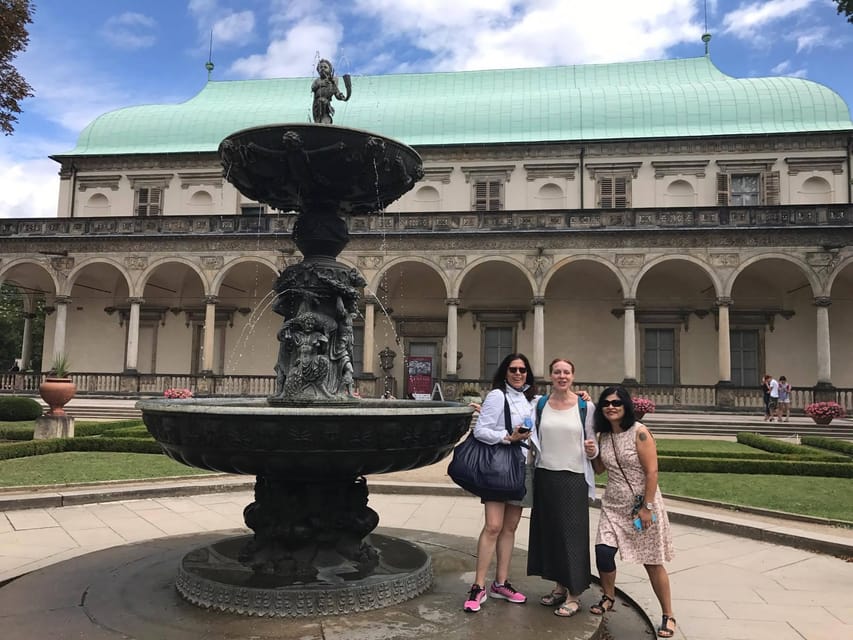
A highlight is the Belvedere Summer Palace, commissioned by Ferdinand I as a gift for his wife, Queen Anne. She did not live to see it completed, but the palace remains one of the best examples of that Renaissance pleasure-building mentality. Look for the relief where Ferdinand is shown gallantly presenting his wife with a flower from the Royal Gardens.
The palace was designed by Paola della Stella. If you like your art history with specific names, this one is worth keeping in your mental notebook. Before you even get to the broader garden walk, you learn how the smaller details were treated with the same importance as the main architecture.
Then comes the Giardinetto and the so-called Singing Fountain. The fountain was cast in 1564 in bell bronze. The effect is mechanical and poetic at the same time: when water drops into the bowl, it creates a resonant sound that gives the fountain its name. It is the kind of detail you might miss on your own, because it is not the big marble sculpture you instinctively search for. On this tour, you are guided to notice it.


Fig House and Orangery, where citrus and fruit meant status
After the Renaissance pleasure-palace core, the tour shifts into the practical and surprisingly ambitious side of Ferdinand’s garden program: fruit cultivation. You will tour the Fig House and the Orangery, where figs, almonds, oranges, and lemons were grown for the first time in Central Europe.
That detail matters because it connects beauty with science, climate control, and power. An orangery was not just a plant room. It was a statement that the court could control nature, keep winter in check, and import tastes from the Mediterranean world. Even if you do not care about botany, you will enjoy seeing how the garden design served the plants and the image at the same time.
As you approach the western end of the garden, you hear a story about tulips. Tulips had been unknown in Europe, and they were introduced to the Royal gardens as an exotic gift from the Sultan of Constantinople. That kind of connection makes the garden feel international. Prague is often pictured as a single city, but this is a reminder that its elites were plugged into trade networks, diplomacy, and fashionable collections.
One small drawback to keep in mind: because this part of the tour is tied to specific garden structures, you may spend time close to enclosed spaces. If you hate moving through narrow corridors or want lots of open-air rest breaks, ask your guide for a pace that still gives you the stories without feeling rushed.
South Gardens terraces, the Garden of Paradise, and the myth of walking downhill
Once you cross the castle courtyard and pass the stag moat, you move onto the Bull Stairs and descend toward the South Gardens. Stairs are part of the whole experience here, not an optional add-on. The good news is that each descent feels like a narrative step, not just a physical transfer.
In the South Gardens, you will explore the Garden of Paradise and the Garden on the Bulwark, then continue down through a series of terraced gardens below the Castle. The “terraced” design is more than decoration. It controls how you see. Each level changes the viewpoint, which is exactly what Renaissance and Baroque planners wanted, because sightlines guide your attention the way music guides a listener.
This is also where the cultural transition becomes more visible. Renaissance classicism aims for clarity and balance. The Baroque taste leans more toward emotion, theatrical effects, and surprise. The guide helps you connect that shift to what you are seeing in layout, decoration, and what the garden is trying to make you feel.
If you like structure in your sightseeing, you will enjoy how the route is shaped around these named garden spaces. If you prefer total freedom to wander, it helps to accept that you are trading some spontaneity for a stronger story thread.
Wallenstein Garden: albino peacocks, grotto walls, and Baroque mythmaking
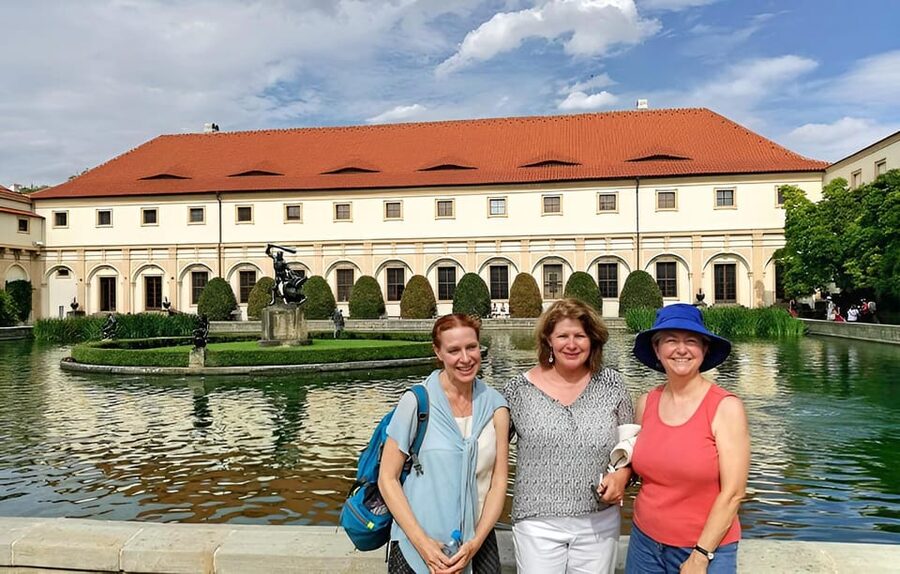
Then you get to the big payoff: Wallenstein Garden. This is where the tour’s theme, Renaissance to Baroque, stops being abstract and starts feeling real.
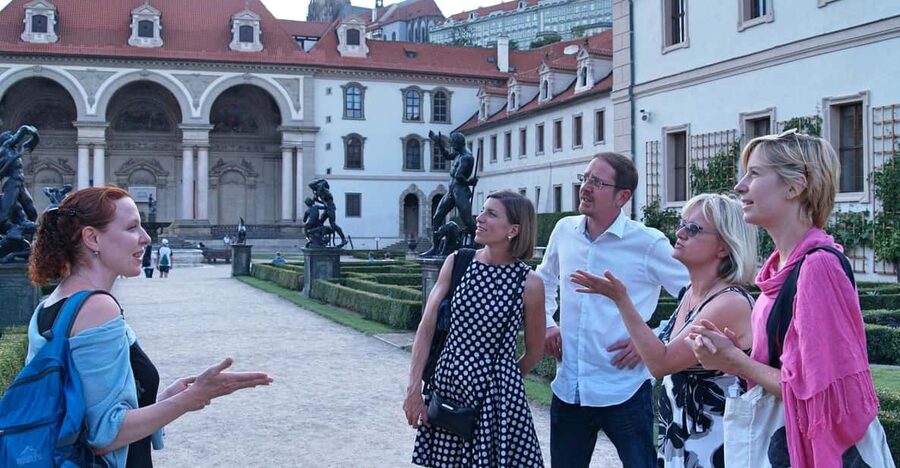
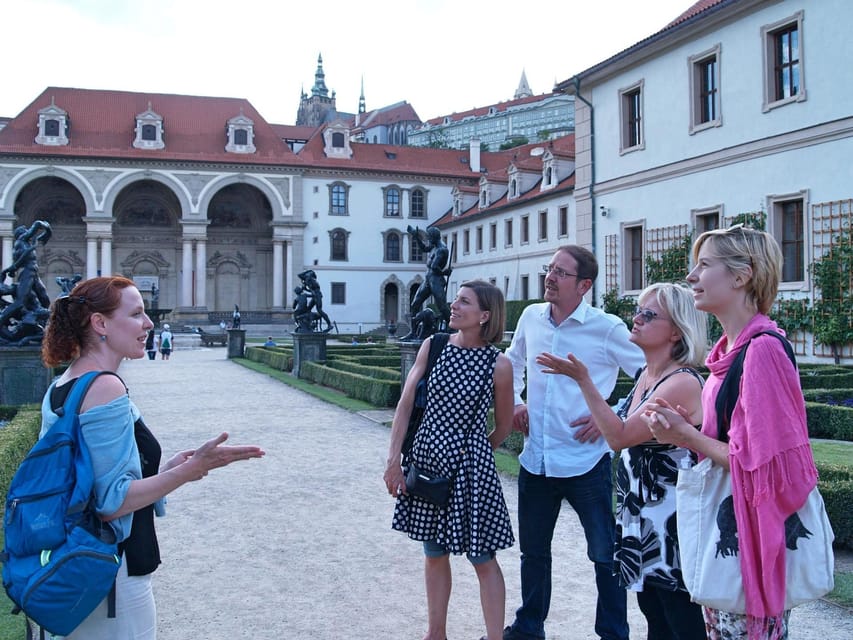
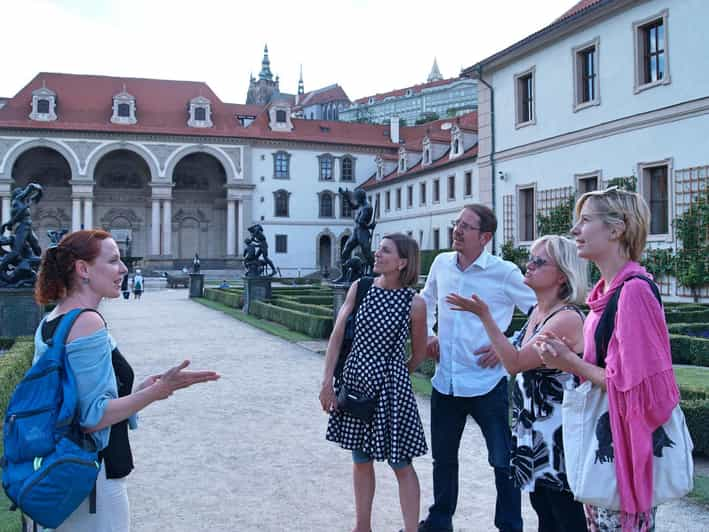
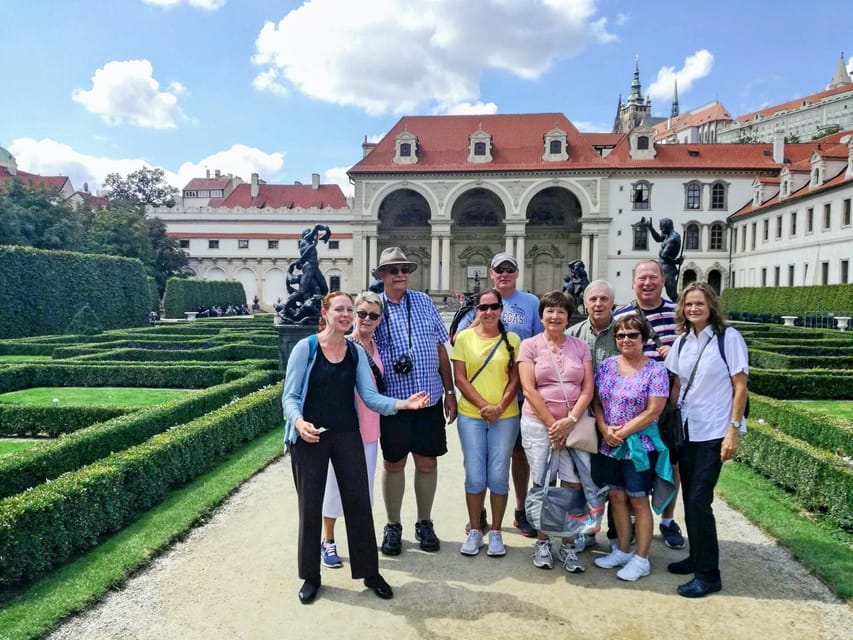
Wallenstein Garden is grand and full of character. You will see albino peacocks, Mannerist statues, a grotto wall, and mythical fountains. Some gardens impress you with size. This one impresses you with personality. You can almost feel how the garden’s commissioner, Albrecht von Wallenstein, wanted it to work as a world of its own.
The guide also connects the design to Baroque philosophy, including the dramatic life of Wallenstein. That context matters because the garden is not neutral. It was built to communicate status and taste, and it does it with symbols, sculpture, and the kind of theatrical water features that feel half religious and half fantasy.
A practical note: you will likely want to slow down at fountain moments. The “mythical fountains” are the kind of detail that rewards a few seconds of stillness. If you keep walking too fast, you miss the textures and the way water interacts with the surrounding walls and statues.
Accessibility again deserves a straight answer. Because this garden sequence involves stairs and shifts in level, comfortable shoes are essential. If you know you will struggle, the private tour option is the way to go, so the guide can focus you on the parts you can actually enjoy.
Vrtba Garden in Mala Strana, the 1720 walled Baroque retreat
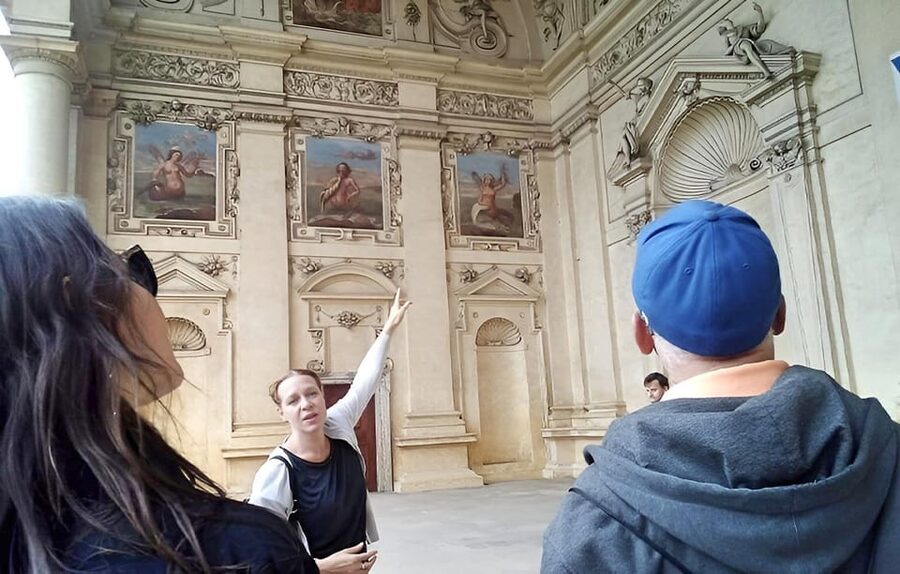
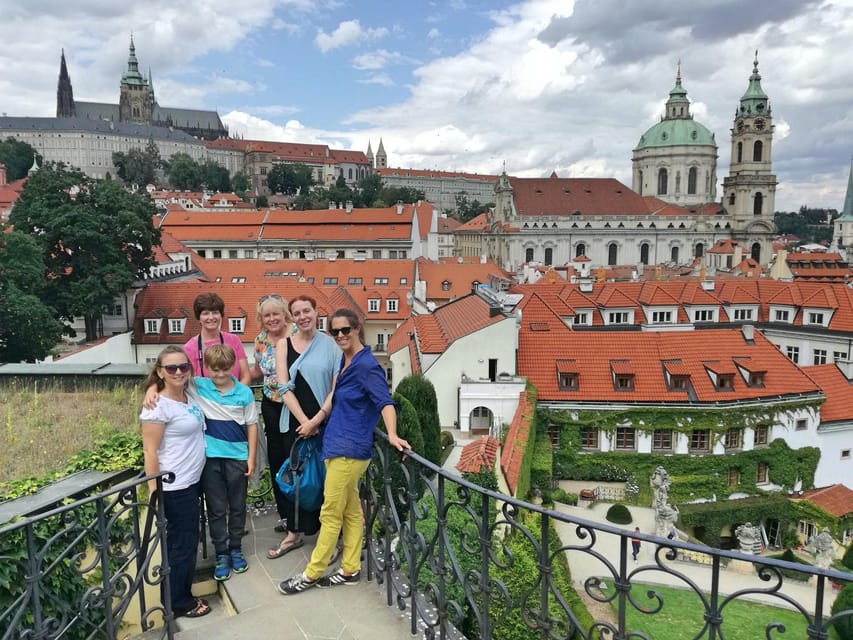
The tour ends with Vrtba Garden, located in Lesser Town, Mala Strana. It dates from 1720 and it is a walled Baroque garden that many people miss because it is not on every simple walking route.
This is a great ending, because it changes the garden tempo. You get a more intimate sense of noble life in the 18th century, with Baroque landscaping that feels designed for curated viewing rather than casual roaming.
One of the most memorable elements is the marine-themed grotto you reach at the very top courtyard. It is also where you get a reward view over Prague’s cityscape. The timing is nice because you are finishing with a perspective moment, not finishing by staring at an entrance gate.
If you are choosing between a quick Castle-only visit and a garden-focused afternoon, this is the argument in favor of the tour. You leave with a spread of styles and eras, and you end with a space that feels like you stepped into a quieter layer of Prague.
Price and value for a $123, 3-hour historian-led garden walk
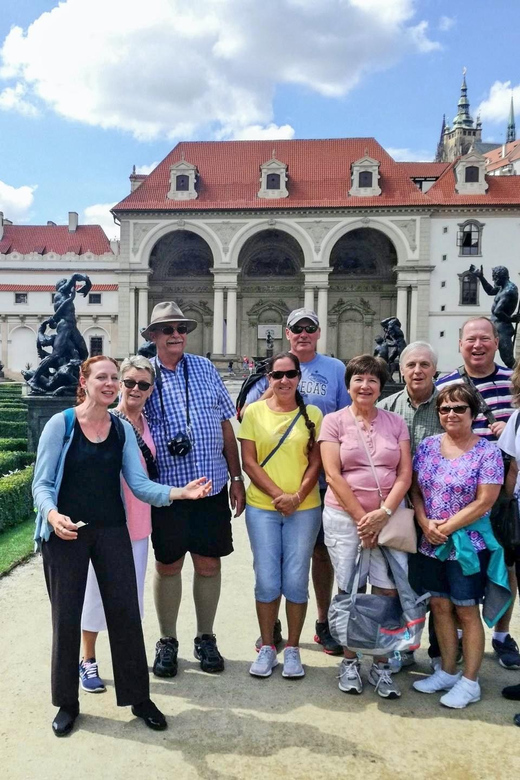
At $123 per person, this is not a budget stroll. But it is also not just a garden checklist. You are paying for three things that usually cost extra in Prague when you try to stitch them together on your own: a live English historian guide, a structured route through multiple garden worlds, and built-in interpretation that helps the details land.
You should know what is not included. Gardens under Prague Castle admission fee are separate, and Vrtba Garden admission fee is separate. So your final out-of-pocket will be a bit higher once you factor those ticket costs. Still, the value comes from saving time and getting the “what to look for” education so you do not waste your paid garden entry just wandering around without a framework.
Who gets good value from this? If you like art history but want it delivered through places, not lectures, you are the target audience. If you care more about scenery than context, you might still enjoy the fountains and peacocks, but you will get more from the guide’s explanations of symbolism, patronage, and design logic.
Groups are private or small-group options, which can help with pacing. In gardens, that matters, because one fast walker can ruin the best photo moments and the best listening moments.
Should you book the Prague Renaissance and Baroque Gardens Walking Tour?
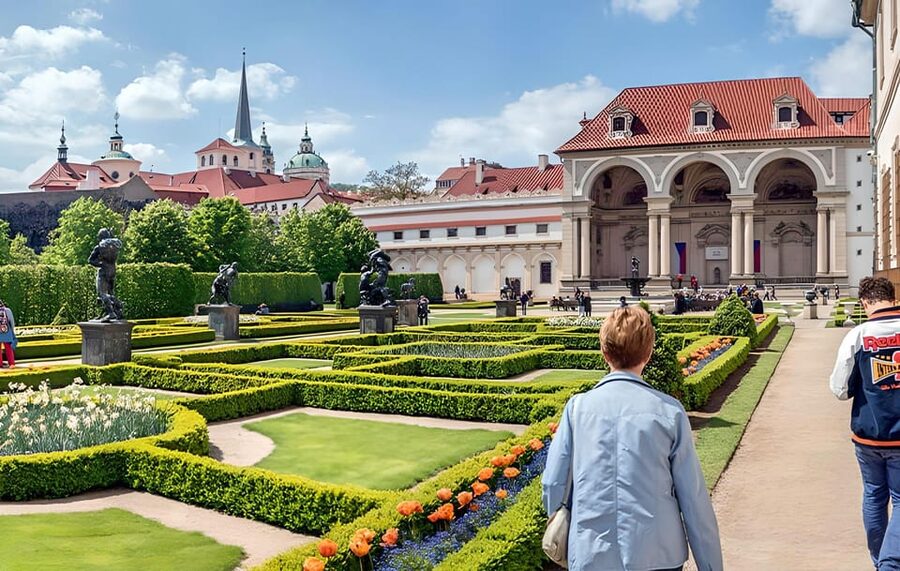
Book it if you want your Prague sightseeing to include garden design with serious context, from Ferdinand I’s Italian Renaissance influence through the Baroque drama of Wallenstein, and then a finish at Vrtba Garden’s 1720 walled world. I think you will especially like it if you are the type who stops when you see a specific detail, like the Singing Fountain or the relief at Belvedere.
Skip it, or at least consider a private version, if stairs are a dealbreaker for you. This tour regularly involves narrow or steep stairs, and the route is built around descending and climbing between garden levels.
If you do book, wear shoes you trust on uneven ground and go in ready to notice water, sculpture, and small garden architecture details, not just plants.
FAQ
How long is the tour?
The Prague Renaissance and Baroque Gardens Walking Tour lasts 3 hours.
Where do I meet the guide?
Meet at the door of Bagel Lounge Malostranska.
Is the tour offered in English?
Yes, the tour guide is English.
Is the Prague Castle Gardens admission fee included?
No. Gardens under Prague Castle admission fee is not included.
Is Vrtba Garden admission included?
No. Vrtba Garden admission fee is not included.
Will I be walking on stairs?
Yes. The tour includes walking up and down stairs that are sometimes very narrow and/or steep.
What mobility options are suggested if stairs are difficult?
If you expect difficulties, the tour suggests booking a private tour so the guide can tailor the route, leaving out some sites and adjusting your pace.
What is the cancellation policy?
You can cancel up to 24 hours in advance for a full refund.
Prague on Laced Boots





More Tours in Prague



More Tour Reviews in Prague


Freshly written up in Prague
- World War II 4WD Tour from Prague with Lunch
★ 4.4 · 3 reviews - World War II History Tour of Prague’s Old Town
★ 5.0 · 3 reviews - Welcome to Prague – Private Tour with Licensed Guide
★ 5.0 · 3 reviews - Gourmet Brunch with Chef: Unlimited Drinks & Stunning River Views
★ 5.0 · 3 reviews - VIP Prague Segway Tour Around Monastic Breweries
★ 4.0 · 3 reviews
Walking Tours, compared.
 ★ 4.73-Hour Walking Tour of Old Town & Prague CastleFrom $305,696 reviews
 ★ 4.4Ghost Walking Tour Where Legends Come To LifeFrom $275,253 reviews
 ★ 4.7Jewish Quarter Walking Tour with Admission TicketsFrom $763,729 reviews
 ★ 5.0Prague Guided Walking Tour and Cruise with Authentic Czech LunchFrom $1023,627 reviews
 ★ 4.6Old Town and Jewish Quarter Guided Walking TourFrom $222,847 reviews
 ★ 4.5Prague Ghost and Legend of Old Town Walking TourFrom $212,630 reviews
 ★ 5.0Prague 3-hour Afternoon Walking Tour including Prague CastleFrom $531,899 reviews
 ★ 4.7Ghosts and Legends Nighttime Guided Walking TourFrom $221,462 reviews
Browse the lists this tour appears in