
REVIEW · WALKING TOURS
Private Prague Art Nouveau and Cubism Walking Tour
Prague’s turn-of-the-century architecture is a time machine, and this private walk helps you read it like a story. I like how the route zooms in on specific Art Nouveau features and how Cubism shows up in Prague in places you might walk past without noticing. I also like that the guide connects the buildings to real Czech optimism around 1900, including references like the Lucerna area ties to Vaclav Havel’s family. A real consideration: it’s a 3-hour walking tour, so wear good shoes and expect a lot of time on your feet.
This tour is built for people who enjoy details, from ornate light fixtures and curvy typography on signs to symbolism like gingko biloba leaves and their oriental influences. You’ll also get the practical advantage of free admission at every stop listed, plus a mobile ticket and the option to choose morning or afternoon.
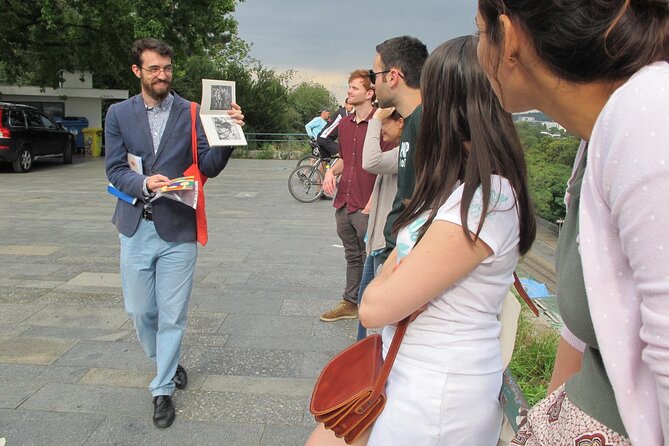
Because it’s private, you’re not sharing the experience with strangers, and your group of up to 10 can set the pace with your historian guide. Guides such as Robert Wesley (Czech born, with a Nigerian father) bring energy and personal storytelling that makes the architecture stick, while another guide like Bonita brings an organized blend of history, culture, and design.
In This Review
- Key Things That Make This Tour Worth Your Time
- Why Prague’s Art Nouveau and Cubism Feel Like a Time Machine
- Worth the Price: What a Private Historian Guide Actually Adds
- Walking Route Overview, Timing, and How to Prepare
- Stop 1, House of the Black Madonna and the Cubist Surprise
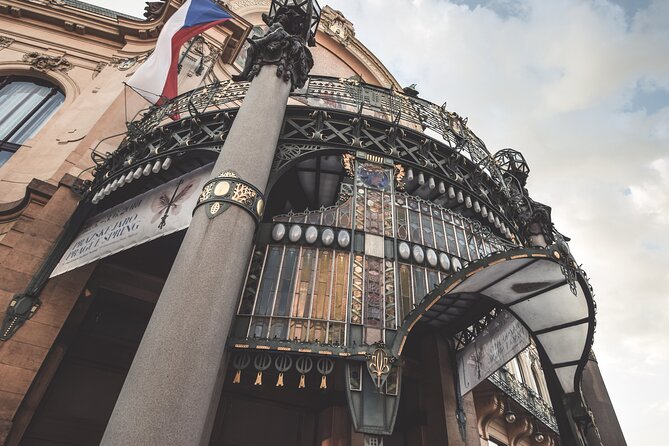
- Stop 2, Obecní dům and the Iconic Face of Prague Art Nouveau
- Stop 3, K+K Hotel Central Prague, the First Art Nouveau Note
- Stop 4, Café Imperial and the Interior That Changes Your Eye
- Stop 5, Czechoslovak Legion Bank and Cubism With Purpose
- Stop 6, Prague Main Train Station’s Art Nouveau Dome Moment
- Stop 7, Wenceslas Square and the Art Nouveau to Art Deco Connection
- Stop 8, Lucerna Arcade and Prague’s Art Nouveau Passageway Feel
- Stop 9, Upside-Down Statue of King Wenceslas and National Revival Symbolism
- The Detail-Lover’s Checklist, What to Watch for While You Walk
- Who This Tour Fits Best
- Should You Book This Prague Art Nouveau and Cubism Tour?
- FAQ
- How long is the private Prague Art Nouveau and Cubism walking tour?
- What group size is this tour for?
- What language is the tour offered in?
- What is included, and do stop admissions cost extra?
- Where do we meet if there is no hotel pickup?
- Can I cancel for a full refund?
Key Things That Make This Tour Worth Your Time
- Private group pace (up to 10), so you can ask follow-up questions as you go
- Art Nouveau and Cubism side-by-side, which makes Prague’s 1900s feel coherent instead of random
- Every scheduled stop has free admission, so you are not paying extra at each façade
- Symbol reading, not just sightseeing, from oriental-influenced plant motifs to Czech National Revival symbolism
- Lucerna area context, including the kind of modern optimism tied to the Havel family story
- A major interior moment at Prague Main Train Station, with the Art Nouveau dome as a highlight
Further routes we laced boots for
- Prague: 3-Hour Walking Tour of Old Town & Prague Castle★ 4.7 · 5,696 reviews
- Prague: Ghost Walking Tour Where Legends Come To Life★ 4.4 · 5,253 reviews
- Prague: Jewish Quarter Walking Tour with Admission Tickets★ 4.7 · 3,729 reviews
- Prague Guided Walking Tour and Cruise with Authentic Czech Lunch★ 5.0 · 3,627 reviews
Why Prague’s Art Nouveau and Cubism Feel Like a Time Machine
Most first-time Prague walks focus on Gothic spires, Charles Bridge views, and Renaissance streets. This tour shifts the spotlight forward a few hundred years into a Prague that wanted to be modern, stylish, and connected to Europe’s avant-garde energy.
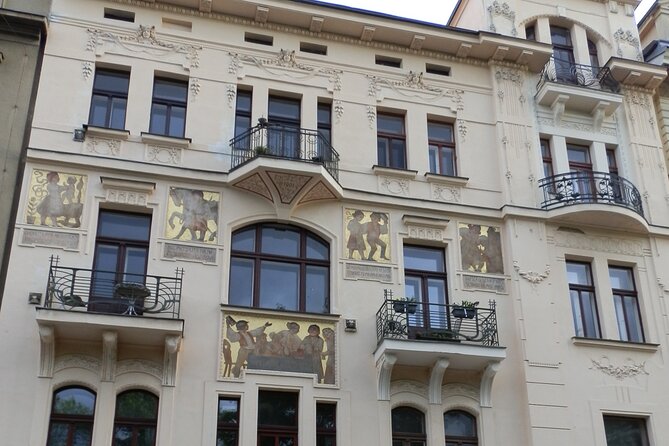
Art Nouveau in Prague is not just decorative. It is a design language with rules you can learn fast. Your guide helps you spot those rules in the real world: the flowing lines, the way typography and signage echoes posters from the era, and the smaller details that make a building look like it has a personality instead of just a façade. When you start noticing that, Prague stops feeling like a museum and starts feeling like a lived-in conversation across generations.
Cubism adds a different kind of thrill. Instead of curves and floral motion, Cubism breaks forms into angles and blocks. You see it in building shapes and how the structure wants to be read from multiple directions. That contrast is a big reason this walk works: you are not just learning two styles, you are learning how Prague interpreted modern art in stone, glass, and iron.
Worth the Price: What a Private Historian Guide Actually Adds
This tour costs $396.46 per group (up to 10) for about 3 hours. That number looks high until you break it down by group size.
- If you come as 2 people, you are paying roughly $198 per person.
- If you come as 6, you are paying about $66 per person.
- If you fill the max of 10, it drops to around $40 per person.
So the value depends on who you travel with. Where the money really goes is in the way the guide turns architecture into meaning. You get a historian guide who can explain why specific elements appear where they do, and how Czech designers and institutions were thinking about identity, progress, and style at the turn of the 20th century. That is tough to do on your own if you are just reading plaques.
Also, you get free admission at every listed stop, which matters. You can spend time at the buildings without constantly checking costs or deciding whether it is worth paying to go inside. That saves energy, and it keeps the walk focused.
Walking Route Overview, Timing, and How to Prepare
Expect a smooth, city-center route that mixes short exterior looks with a few interior moments. The stop times are short on purpose, usually 5 to 15 minutes, which means you get variety without turning the tour into a marathon.
Because the schedule is tight, the best prep is simple:
- Wear comfortable shoes. This is a walking-heavy format.
- Bring a light layer. Interiors like cafés and stations can feel cooler than the street.
- Have your phone ready, but do not spend the whole tour filming. Look first, then shoot after your guide points out the specific detail.
Pickup may be offered, but if you do not have hotel pickup arranged, you meet your guide 15 minutes early at the default meeting point: Grand Cafe Orient, Ovocný trh 19, Prague 1. You will be near public transport, which is handy if your lodging is not directly on the pickup route.
Further solo-group bookings covering identical streets


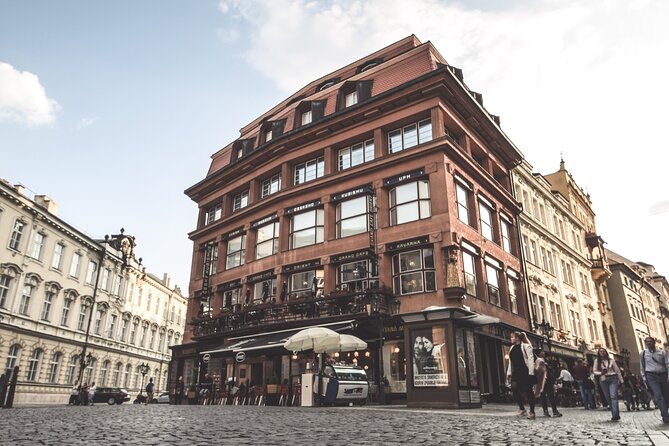
Stop 1, House of the Black Madonna and the Cubist Surprise
Your first stop, the House of the Black Madonna, sets the tone by showing how Cubism can feel both bold and strangely elegant in real city streets. With Cubism, you often expect the style to look severe or abstract, but this kind of building helps you understand how the structure itself becomes the art.
The time here is brief (about 10 minutes), so your guide is likely to focus on the key features you can see quickly: the form, how surfaces are treated, and what makes the composition feel modern for its era. If you only glance at the façade, you might miss the “why.” If you take a moment to look at angles from different sides, Cubism starts to make sense fast.
Stop 2, Obecní dům and the Iconic Face of Prague Art Nouveau
Next is Obecní dům, one of Prague’s best known Art Nouveau icons. This is where you start learning the language of Prague Art Nouveau in full sentences.
With about 15 minutes here, you have enough time to notice larger design elements and then catch smaller details that make the building feel alive. Your guide’s explanation helps you connect style choices to the period’s optimism, the same push toward modern European trends that Czech designers were eager to join.
A small drawback: because it is iconic, you may see crowds nearby. The good news is a guide can help you move to the best sightlines so you are not fighting for space just to understand the architecture.
Stop 3, K+K Hotel Central Prague, the First Art Nouveau Note
The K+K Hotel Central Prague stop is short (about 10 minutes) but meaningful. This is described as the first Art Nouveau building in Prague, and that fact alone gives the style context. You are not just seeing Art Nouveau, you are seeing it arriving and taking hold.
This kind of early landmark is a perfect place for your brain to switch gears. Instead of treating the look as decoration, you can think about why certain choices would matter to an emerging design culture. The guide’s job here is to point out what feels “new” for that moment in time.
If you are the type who likes photos with a clear subject, take a minute here to frame your shots from one angle first, then move slightly for a second angle. Art Nouveau can change its personality depending on where you stand.
Stop 4, Café Imperial and the Interior That Changes Your Eye
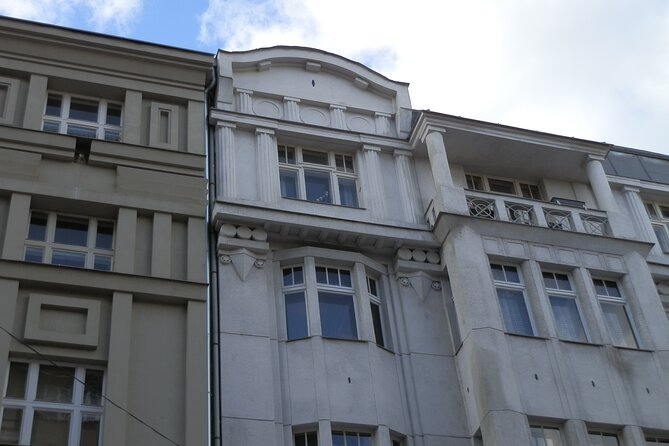
At Café Imperial, you are in for a short interior stop (about 5 minutes), focused on what Art Nouveau looks like from the inside. This is where you learn that the style is not only on façades. It also shapes how spaces feel.
Even a quick stop can pay off if you pay attention to the transitions: how light reflects on surfaces, how furniture and décor match the architectural mood, and how ornamental design helps the room feel both polished and personal.
Because the time is limited, the best strategy is to pause in one spot instead of wandering constantly. Let your guide direct your attention to one or two features, then take your photos. That tends to produce better results than trying to capture everything at once.
Stop 5, Czechoslovak Legion Bank and Cubism With Purpose
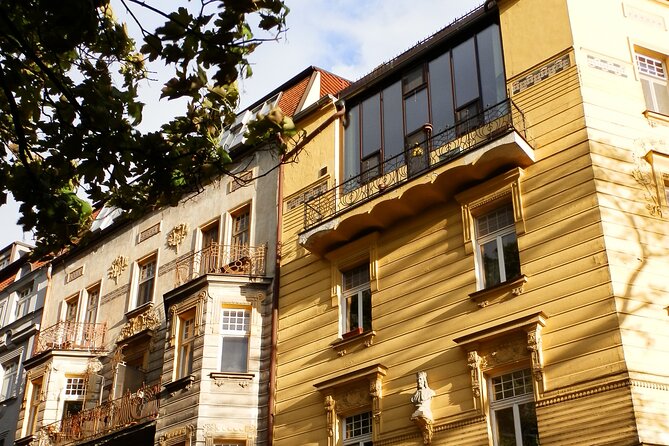
The Czechoslovak Legion Bank stop combines architecture with meaning, and it includes a focus on the interior dedicated to the Czechoslovak Legion of the First World War. This is Cubism with a job to do: it supports memory and identity.
With about 10 minutes here, you can still do two things well: understand the building’s visual logic and connect it to the story it is meant to tell. The key value is that you are not learning Cubism as a trend only. You are seeing it used to represent a national narrative.
If you are visiting during a busy period, take care to stay with your guide rather than drifting. War memorial spaces can get crowded, and you want to catch the explanation at the right moment.
Stop 6, Prague Main Train Station’s Art Nouveau Dome Moment
Prague Main Train Station, Praha hlavní nadrazi, is a highlight because it turns a transit space into an interior architectural experience. The tour includes about 15 minutes, which is exactly enough time to appreciate the dome and understand why it matters in the story of Art Nouveau’s presence in Prague.
The value here is simple: stations can feel overwhelming when you walk through them on your own. Guided, you know where to look, what details to notice, and how to interpret the scale. The Art Nouveau dome is not just a ceiling. It is a symbol of modernity built into daily life.
If you time your photos poorly, you can lose the effect to harsh light or too many people in frame. Try to take photos during a lull, then focus on the dome’s shape and how the structure pulls your gaze upward.
Stop 7, Wenceslas Square and the Art Nouveau to Art Deco Connection
At Wenceslas Square, the guide ties together Art Nouveau and Art Deco architecture. This stop is about 15 minutes and works well if you like seeing design trends evolve rather than staying frozen in time.
Wenceslas Square is the kind of place where it is easy to treat everything like background. Guided, you start noticing differences in lines, ornament, and style transitions. The lesson is useful beyond this one square. Once you see the shift between movements, you start recognizing it in other cities too.
One caution: this area can be active. Keep your attention on the architecture your guide points out, and if the crowd thickens, ask for the best viewing spot rather than forcing yourself to stand still in the middle.
Stop 8, Lucerna Arcade and Prague’s Art Nouveau Passageway Feel
Lucerna Arcade is where Prague’s Art Nouveau energy becomes intimate. You are not just looking at a single building moment. You are moving through a space meant to feel special.
The tour allocates about 10 minutes here, enough to understand the arcade’s interior style and why arcades mattered as social and commercial spaces. Your guide also connects this area to the broader cultural story, including the Lucerna Bar link tied to Vaclav Havel’s family, which adds a layer beyond pure aesthetics.
If you are the kind of person who shops or browses during travel, this stop is a good time to slow down afterward on your own. But keep your place in the group first, then explore if you have time.
Stop 9, Upside-Down Statue of King Wenceslas and National Revival Symbolism
The final stop, the Upside-Down Statue of King Wenceslas Riding a Dead Horse, is about symbolism. It is not there for decoration. It is there to provoke thought about Czech history and the Czech National Revival.
With about 10 minutes, your guide helps you connect modern sculpture to older cultural identity themes. This is a great closing move because it shows that Prague’s design and art continue to talk to each other across centuries. You start at turn-of-the-century design and end with how later generations reinterpret meaning.
A practical note: sculptures are often surrounded by people taking photos. You might need to step a little to see the angles your guide wants you to notice. If you do not get it on the first pass, ask for one more look from the recommended side.
The Detail-Lover’s Checklist, What to Watch for While You Walk
This tour shines when you do a little “homework” with your eyes. Here are the specific things worth watching for as you go:
- Signage typography and signage curves, because Art Nouveau often echoes poster design from its era
- Ornamental light fixtures and metalwork, which show the style’s mindset about beauty in everyday objects
- Façade plant motifs like gingko biloba leaves, since these can point to oriental influences
- Cubist angles and surface logic, so you see the structure’s thinking rather than only the shape
- Interior design harmony, especially at café spaces and the train station dome, where the architecture shapes the mood
- Symbolic meaning, especially at the final statue stop where art and history intersect
If you want one extra boost, keep one question in your mind: what would someone in Prague have felt when these buildings first appeared? Your guide’s explanations are built to help you answer that, at least in part.
Who This Tour Fits Best
This private Art Nouveau and Cubism walking tour is a strong match if:
- You enjoy architecture more than landmarks in general
- You like learning the “why” behind design choices, not just snapping photos
- You travel with a group of 3 to 10, since the per-person value improves fast
- You want a structured, historian-led way to understand turn-of-the-century Prague
It may be a weaker fit if you have mobility limitations or you need long seated breaks, since the format is a walk and the time at each stop is mostly on your feet.
Should You Book This Prague Art Nouveau and Cubism Tour?
I think this is an excellent booking choice if you want Prague to feel new, not replayed. The private format, the historian guide, the focus on Art Nouveau and Cubism as a paired story, and the free admission at stops all point to good value, especially when your group includes more than two people.
Book it if you love details, symbolism, and the shift from older Prague eras toward the city’s modern-art moment. Skip it if you want a slow, low-walking experience or if you only care about the biggest medieval icons. For the right visitor, this is a walk that makes the city’s style history click.
FAQ
How long is the private Prague Art Nouveau and Cubism walking tour?
The tour lasts about 3 hours.
What group size is this tour for?
It is a private tour with up to 10 people per group.
What language is the tour offered in?
The tour is offered in English.
What is included, and do stop admissions cost extra?
The tour includes a historian guide. The listed stops have free admission ticket entries, and food and drinks are not included unless specified.
Where do we meet if there is no hotel pickup?
If you do not arrange hotel pickup, meet your guide 15 minutes before the start time at Grand Cafe Orient, Ovocný trh 19 Prague 1.
Can I cancel for a full refund?
Yes. You can cancel up to 24 hours in advance for a full refund. If you cancel less than 24 hours before the start time, the amount you paid will not be refunded.
Prague on Laced Boots



More Tours in Prague

More Tour Reviews in Prague

Freshly written up in Prague
- World War II 4WD Tour from Prague with Lunch
★ 4.4 · 3 reviews - World War II History Tour of Prague’s Old Town
★ 5.0 · 3 reviews - Welcome to Prague – Private Tour with Licensed Guide
★ 5.0 · 3 reviews - Gourmet Brunch with Chef: Unlimited Drinks & Stunning River Views
★ 5.0 · 3 reviews - VIP Prague Segway Tour Around Monastic Breweries
★ 4.0 · 3 reviews
Walking Tours, compared.
 ★ 4.73-Hour Walking Tour of Old Town & Prague CastleFrom $305,696 reviews
 ★ 4.4Ghost Walking Tour Where Legends Come To LifeFrom $275,253 reviews
 ★ 4.7Jewish Quarter Walking Tour with Admission TicketsFrom $763,729 reviews
 ★ 5.0Prague Guided Walking Tour and Cruise with Authentic Czech LunchFrom $1023,627 reviews
 ★ 4.6Old Town and Jewish Quarter Guided Walking TourFrom $222,847 reviews
 ★ 4.5Prague Ghost and Legend of Old Town Walking TourFrom $212,630 reviews
 ★ 5.0Prague 3-hour Afternoon Walking Tour including Prague CastleFrom $531,899 reviews
 ★ 4.7Ghosts and Legends Nighttime Guided Walking TourFrom $221,462 reviews
Browse the lists this tour appears in