
REVIEW · WALKING TOURS
Private Prague Introduction Walking Tour
Old Town, New Town, one smart route. This private Prague introduction is interesting because you get a historian guide and the freedom to tailor questions while you walk. I especially like the morning or afternoon departure options, and I like that it focuses on how places connect across centuries. One possible drawback: you are paying a per-group price, so it can be pricey if you are traveling solo and cannot share.
This is built for orientation, not just sightseeing. You start near Malá Strana, meet your guide at a local café close to Old Town Square, then move through major landmarks, religious turning points, and the Jewish Quarter’s story. Most stops are marked as free to enter for viewing purposes, and you get a mobile ticket to keep things simple.
In This Review
- Quick Hits: What Makes This Private Prague Walk Work
- Meeting Point in Malá Strana, Then Straight Into Old Town Square
- Why You’ll Like the Private Guide Format (Especially in Prague)
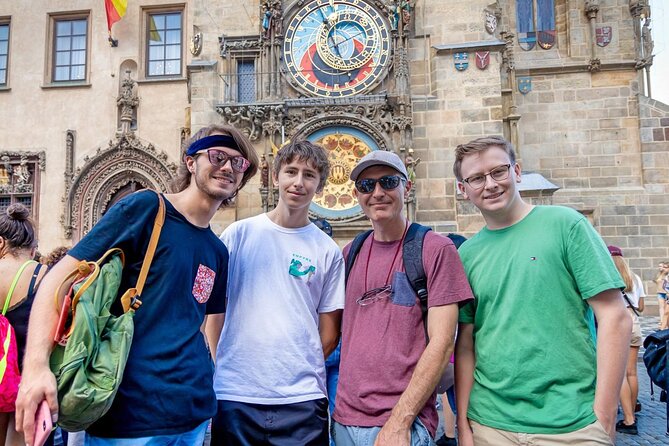
- Old Town Hall and the Astronomical Clock: Symbol First, Then Meaning
- Church of Our Lady before Týn: Gothic Drama in Plain Sight
- Old Town Square: The 1000-Year Logic Behind a Market Center
- Charles Bridge: A 600+ Year Story of Crossings and Saints
- Bethlehem Chapel and Jan Hus: When Reform Ideas Turned Loud
- St. Giles Church: Baroque Inside a Gothic Shell
- New Town and the Power Link to the Holy Roman Empire
- Václavské náměstí and Theatre Des Etats: Politics, Mozart, and Enlightenment
- St. Nicholas Church and Jan Hus Monument: Architecture Meets Czech Identity
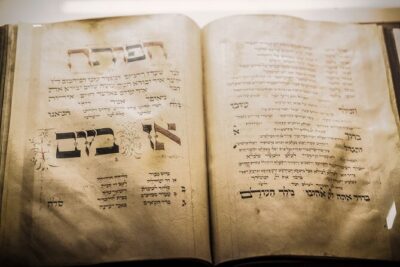
- Parizska Street and the Jewish Quarter Story: What Changes, What’s Lost
- Kafka’s Kinetic Statue Stop: A Modern Prague Button at the End
- The Timing, Pace, and Logistics That Actually Matter
- How Good Is the Value for $367.61 Per Group?
- Who Should Book This Tour, and Who Might Skip It
- Should You Book It? My Practical Verdict
- FAQ
- How long is the Private Prague Introduction Walking Tour?
- Where do we meet at the start of the tour?
- Where does the tour end?
- Is this tour private, and how many people can be in the group?
- What is included, and what costs extra?
- Are there tickets or entry fees for the stops?
- Can I choose a morning or afternoon departure?
Quick Hits: What Makes This Private Prague Walk Work
- Historian guide, not a script: the tour is designed for explanation and Q&A, not a rapid recital.
- Old Town, New Town, and Jewish Quarter themes: you connect architecture, politics, and faith shifts into one storyline.
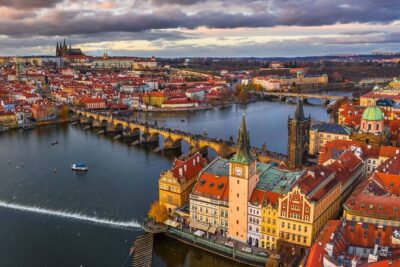
- Photo-friendly Prague Castle views: you end with Vltava-area photo moments in mind.
- Astronomical Clock and Gothic landmarks: you hit the big symbols plus the details that make them make sense.
- Includes a special stop: the Franz Kafka kinetic statue stop is included.
- Private format up to 10: you get flexibility that group tours usually cannot offer.
Further routes we laced boots for
- Prague: 3-Hour Walking Tour of Old Town & Prague Castle★ 4.7 · 5,696 reviews
- Prague: Ghost Walking Tour Where Legends Come To Life★ 4.4 · 5,253 reviews
- Prague: Jewish Quarter Walking Tour with Admission Tickets★ 4.7 · 3,729 reviews
- Prague Guided Walking Tour and Cruise with Authentic Czech Lunch★ 5.0 · 3,627 reviews
Meeting Point in Malá Strana, Then Straight Into Old Town Square
Your day starts at MONDIEUM, Maltézské nám. 480, in Malá Strana. If you take the morning slot, the start time listed is 10:00 am, and there is also an afternoon option if you prefer a later start. The tour ends at Václavské nám. 772/2, which is a convenient central location for afterward plans.
What matters here is the flow. You are not beginning deep in the tourist bottleneck and then doubling back. Instead, the route is set up to move through the historic heart, then gradually expand outward, so Prague’s layout starts to feel logical. That is the real value of an introduction walk like this: you leave with a mental map, plus a few stories that make the city click.
Pickup is listed as offered, but hotel pickup and drop-off are not included, so I’d treat pickup as something to confirm for your exact location. Bring comfortable walking shoes, since even a “short” city tour means repeated climbs of steps and long stretches on uneven pavement.
Why You’ll Like the Private Guide Format (Especially in Prague)
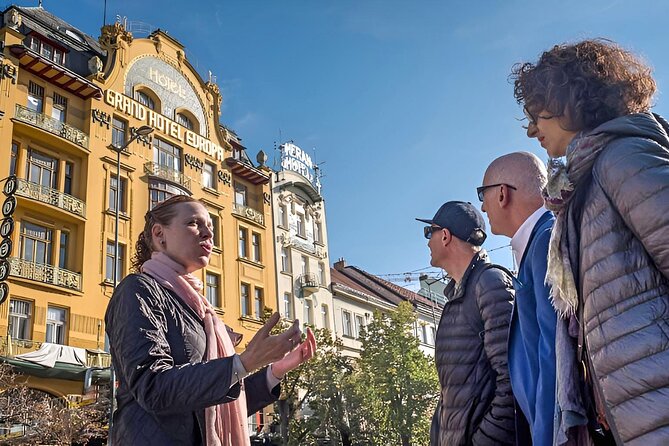
This is a private experience for your group, capped at up to 10 people. That setup matters in Prague because so many sights are visually stunning but historically layered. A guide who can answer follow-up questions helps you avoid the classic tourist trap: seeing something beautiful, then moving on with no idea what you just looked at.
The tour is led by an historian guide, and the style is described as in-depth and question-friendly. In the past, guides like Bonita and Vadim have been praised for blending the famous with the more interpretive details, and for sharing local context rather than just listing dates. If you are the type who wants to understand why a clock, a church facade, or a square matters, this format fits you.
If you are traveling as a couple or family, private also means pacing. You can linger at the spots that catch your eye. If your group has mixed interests, private helps too, because the guide can steer the focus slightly without forcing everyone to tolerate an identical script.
Old Town Hall and the Astronomical Clock: Symbol First, Then Meaning
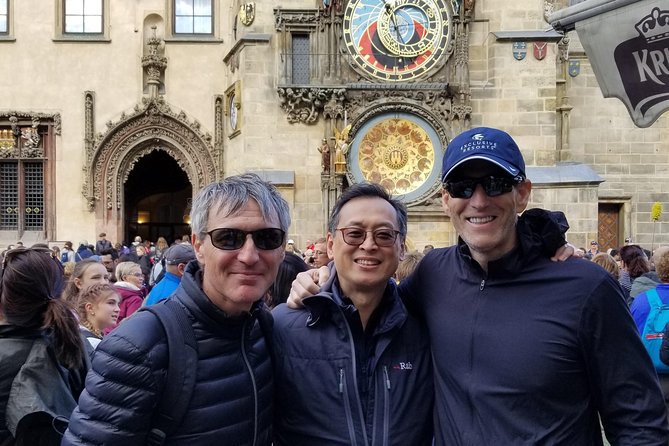
The first stop is the Old Town Hall with the Astronomical Clock. Even if you have seen photos, seeing it in context changes the story. The guide explains both the history of the hall itself and the symbolism tied to the clock.
Here’s what you should look for while you’re standing there: treat it like a medieval broadcast system. It was never just decoration. It was a public statement about order, time, and what mattered to the city at that moment. Your guide’s job is to connect the clock to Prague’s civic life, so it becomes more than a tourist stop.
The stop is listed with free admission for this experience, which is nice. You can focus on the explanation without feeling like you are burning your budget at the very first landmark. In about 15 minutes, you should have enough context to see the rest of Old Town with better eyes.
Further solo-group bookings covering identical streets


Church of Our Lady before Týn: Gothic Drama in Plain Sight
Next up is the Church of Our Lady before Týn. This is one of those Prague buildings where the exterior alone tells you there is a lot going on. The guide talks about the Gothic characteristics of the church and contrasts it with St. Nicholas’ church across the square.
That contrast is useful. Prague’s church architecture can look similar if you skim it, but there are real differences in style and intent. Your guide helps you notice how Gothic design makes a church feel angular and upward-reaching, while other styles express different eras and priorities.
This stop is also listed as free for this experience, so it is a low-cost way to learn how to “read” architecture. Ten minutes is short, but it’s enough for a focused comparison rather than a wandering photo session.
Old Town Square: The 1000-Year Logic Behind a Market Center
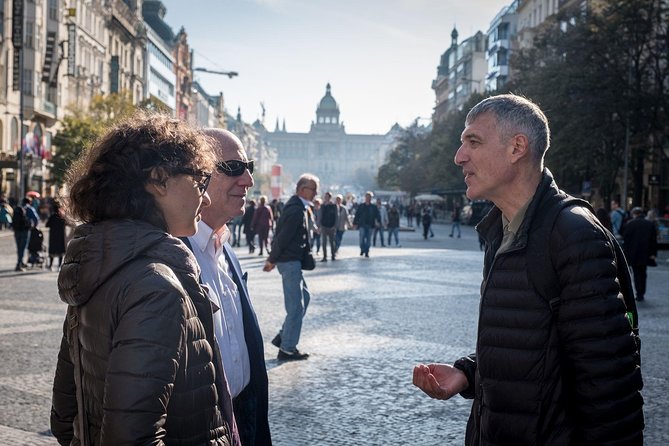
Old Town Square is the kind of place where it is easy to think, it’s just pretty. Your guide will push you to see it as a civic machine. The tour uses the square to discuss 1000-year-old history, including politics and architecture tied to its medieval marketplace beginnings.
The big takeaway here is that squares in Old Town are not random open space. They were built for gathering, trade, power displays, and public life. Prague’s Old Town Square shows that layered civic function in stone and layout.
This stop is planned for about 15 minutes. That is a good length because it gives you time to orient while keeping the walk moving. If you want to linger, you can, but don’t skip the guide’s framing. Without it, the square can feel like a postcard. With it, you start noticing why certain streets funnel into specific views.
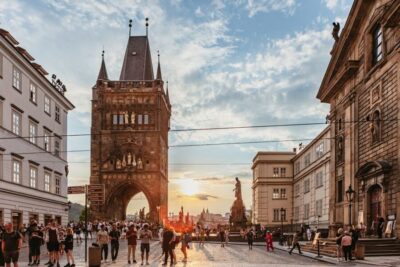
Charles Bridge: A 600+ Year Story of Crossings and Saints
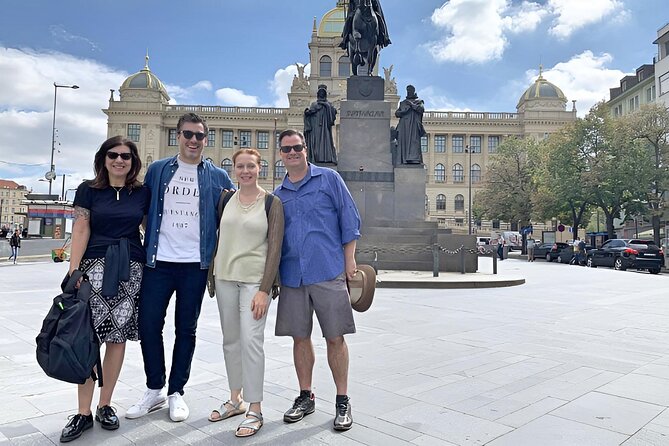
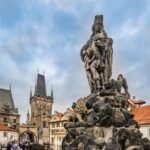
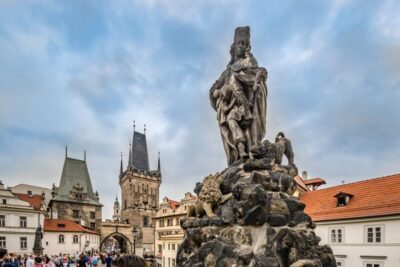
Charles Bridge is next, and the focus is its long history plus the role it played in Prague’s development. You also get the explanation of the Baroque statues lining the bridge and how they shaped the bridge’s identity over time.
If you have walked famous bridges elsewhere, you know how quickly bridges become a blur. Prague’s bridge works differently because it is not only a crossing. It is an outdoor gallery tied to religious symbolism and civic pride. The guide’s job is to connect the statues to the city’s evolving story, so you understand why saints appear where they do.
This stop is planned for about 15 minutes and is listed as free for this experience. The practical tip: if you are sensitive to crowds, your best move is to trust your guide’s timing and move with the group rather than trying to freeze your spot for perfect photos.
Bethlehem Chapel and Jan Hus: When Reform Ideas Turned Loud
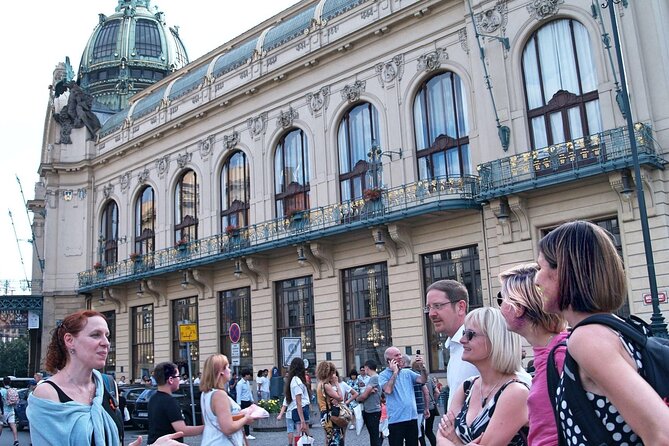
Bethlehem Chapel is where the tour shifts from architecture to ideas. The guide discusses Jan Hus and his role in the reformation of the Catholic church and the wider Protestant Reformation.
This is the kind of stop that can feel heavy if you rush past it. But with a guided explanation, it turns into a clear, understandable turning point. You are learning how religious debates shaped public life, not just theology.
The stop is around 10 minutes and listed as free for this experience. That short timing works if you are ready to listen. If you are the type who likes to ask questions, ask them here. You will hear connections later at other religious sites, and it helps to have the basic thread in your head.
St. Giles Church: Baroque Inside a Gothic Shell
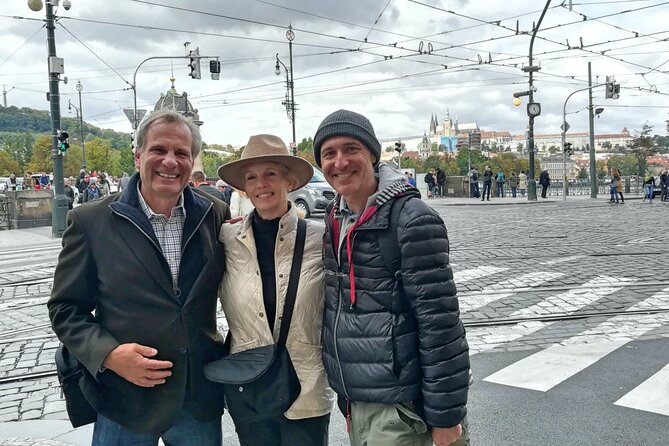
St. Giles Church is planned as a 10-minute stop, with a focus on Czech religious wars, the Reformation, and the Counter-Reformation. The key is how it shows up in the Baroque interior decoration within a Gothic church.
This is a fascinating Prague lesson in contradiction. Prague buildings often preserve old shells while later eras layer new meanings into the interiors. Your guide points out how decoration becomes messaging, and how political and religious changes can be felt even when the walls remain.
Because the stop is listed as free for this experience, you can afford to slow down a bit mentally, even if you are moving physically. Listen for the guide’s explanation of what changed, why it changed, and how it affected daily belief and public presentation.
New Town and the Power Link to the Holy Roman Empire
The tour then reaches Nove MEsto, discussed as a 600+ year-old area and tied to Prague becoming the capital of the Holy Roman Empire. This is one of those transitions where Prague stops feeling like only a medieval tourist zone and starts feeling like a political center.
Even if you know Prague’s modern reputation as a cultural capital, this part helps you understand the earlier engine behind that label. The guide connects how new districts and institutions reflected power structures. That makes New Town feel different from Old Town, not just another set of pretty streets.
This stop is listed for about 15 minutes and marked as free. You’ll likely appreciate it most if you like seeing how cities expand when they gain status.
Václavské náměstí and Theatre Des Etats: Politics, Mozart, and Enlightenment
Václavské náměstí is next, about 15 minutes, with a discussion of the square’s history in the context of Prague and Czech Republic events. After that is Theatre Des Etats for about 10 minutes, where the guide covers Mozart’s relationship to Prague and the Age of Enlightenment.
These stops help you jump from medieval and early-modern identity to the worlds of cultural performance and intellectual shifts. It’s also practical for orientation. Václavské náměstí is central, and once you understand its role, planning the rest of your trip gets easier.
These are listed as free for this experience. The downside risk is that you might treat them as photo stops because they look like classic city squares. Let your guide’s explanation anchor you, or you will miss the connections the tour is trying to teach.
St. Nicholas Church and Jan Hus Monument: Architecture Meets Czech Identity
St. Nicholas Church follows, again with a focus on Czech religious reversals and how Baroque and Gothic architecture show those changes. Then you visit the Jan Hus Monument for about 10 minutes, with the guide framing Jan Hus as a revolutionary figure in the development of European Christianity and within the history of the Czech lands.
This pairing is smart. One stop deals with buildings and style as evidence. The other deals with a person and memory as evidence. Together, they show that Prague’s story lives in both stone and symbolism.
If your group has different interests, this is a good section. Architecture lovers get plenty to notice, and history lovers get a human anchor.
Parizska Street and the Jewish Quarter Story: What Changes, What’s Lost
Parizska Street is used for a key Jewish Quarter theme. The guide discusses the history and destruction of the Jewish Ghetto of Prague.
Even if you know Prague has Jewish history, this stop is where the walking tour format becomes more than entertainment. You are moving through areas tied to displacement and change, and the guide’s framing helps you understand the stakes. Expect a reflective tone here, even if you keep walking.
This stop is planned for about 10 minutes and listed as free for this experience. If your group has interest in Jewish history, I’d ask at least one question during this segment so you leave with clarity, not just a brief mention.
Kafka’s Kinetic Statue Stop: A Modern Prague Button at the End
The final named stop is the Franz Kafka Statue, a revolving kinetic statue resembling Kafka’s bust by Czech artist David Černý. This stop is listed as included.
This is a good way to end, because Prague is not only medieval walls and Gothic towers. Kafka represents 20th-century Prague, and the kinetic design makes it feel alive rather than museum-still. It’s also a small but memorable payoff after a long sequence of historical stops.
This segment is short, around 5 minutes. Don’t overplan here, just enjoy it. If your mind is tired from history, this final stop gives you a chance to reset.
The Timing, Pace, and Logistics That Actually Matter
The tour runs about 3 hours. That timing is practical for a first trip to Prague because it gives you enough ground coverage to feel oriented, without burning your whole day.
Because it is a private group experience, the pacing is likely smoother than big group tours. Still, you should plan for a lot of street walking and some standing time at key sights. Water helps. Snacks are up to you, since food and drinks are not included unless specified.
Pickup is offered, but hotel pickup and drop-off are not included. The most reliable approach is to plan to meet at the listed starting point and end at Václavské náměstí. Then you can continue on foot or with public transport.
A mobile ticket is included. That matters because it reduces friction on the day, especially at busy landmarks where paper tickets can slow everything down.
How Good Is the Value for $367.61 Per Group?
The price is listed at $367.61 per group, up to 10 people, for about 3 hours. That can sound high until you do the math.
If you are a small group of two or three, the per-person cost will depend on your comfort level with paying for private interpretation. If you are a family or friend group closer to 6 to 10 people, the value becomes more compelling because you are spreading the cost across the group while still getting private attention.
What you are really paying for is not access to one extra ticket. It’s the historian guide who connects Old Town symbols like the Astronomical Clock to later religious conflicts, political changes, and the Jewish Quarter story. For many visitors, that interpretive layer is what makes Prague feel intelligible instead of overwhelming.
Who Should Book This Tour, and Who Might Skip It
I think this private Prague introduction fits best if you:
- want a guided historical storyline, not only photos
- enjoy asking questions and getting direct answers
- prefer a private format where pacing can match your group
- like the idea of mixing iconic sights with the meaning behind them
I’d consider skipping or switching to something else if you:
- only want brief stops and minimal walking
- dislike history-focused tours
- are traveling solo and your main goal is low-cost sightseeing, since private pricing can raise your per-person total
Should You Book It? My Practical Verdict
Book it if you want Prague to make sense quickly. The mix of Old Town symbols, New Town political connections, and the Jewish Quarter theme tied to Parizska Street gives you a framework you can use for the rest of your trip. The guide quality also seems to be a major strength, with names like Bonita and Vadim showing up in past experiences, especially for depth and Q&A.
Skip it if your idea of a great Prague day is mainly wandering and snack stops with no structured interpretation. In that case, you can still do Prague on your own, but you would miss the “why” that turns landmarks into a coherent story.
FAQ
How long is the Private Prague Introduction Walking Tour?
The tour lasts about 3 hours.
Where do we meet at the start of the tour?
You meet at MONDIEUM, Maltézské nám. 480, Malá Strana, 118 00 Praha-Praha 1, Czechia.
Where does the tour end?
The tour ends at Václavské nám. 772/2, 110 00 Praha 1-Můstek, Czechia.
Is this tour private, and how many people can be in the group?
Yes. It is a private tour/activity, and the group size is up to 10 people.
What is included, and what costs extra?
Included: a historian guide. Not included: food and drinks unless specified, and hotel pickup and drop-off.
Are there tickets or entry fees for the stops?
The itinerary lists free admission for many stops, and the Franz Kafka statue stop is included. The tour information does not list paid entry fees in the provided details.
Can I choose a morning or afternoon departure?
Yes, you can choose from morning or afternoon departure. Please advise at the time of booking.
Prague on Laced Boots


More Tours in Prague
More Tour Reviews in Prague

Freshly written up in Prague
- World War II 4WD Tour from Prague with Lunch
★ 4.4 · 3 reviews - World War II History Tour of Prague’s Old Town
★ 5.0 · 3 reviews - Welcome to Prague – Private Tour with Licensed Guide
★ 5.0 · 3 reviews - Gourmet Brunch with Chef: Unlimited Drinks & Stunning River Views
★ 5.0 · 3 reviews - VIP Prague Segway Tour Around Monastic Breweries
★ 4.0 · 3 reviews
Walking Tours, compared.
 ★ 4.73-Hour Walking Tour of Old Town & Prague CastleFrom $305,696 reviews
 ★ 4.4Ghost Walking Tour Where Legends Come To LifeFrom $275,253 reviews
 ★ 4.7Jewish Quarter Walking Tour with Admission TicketsFrom $763,729 reviews
 ★ 5.0Prague Guided Walking Tour and Cruise with Authentic Czech LunchFrom $1023,627 reviews
 ★ 4.6Old Town and Jewish Quarter Guided Walking TourFrom $222,847 reviews
 ★ 4.5Prague Ghost and Legend of Old Town Walking TourFrom $212,630 reviews
 ★ 5.0Prague 3-hour Afternoon Walking Tour including Prague CastleFrom $531,899 reviews
 ★ 4.7Ghosts and Legends Nighttime Guided Walking TourFrom $221,462 reviews
Browse the lists this tour appears in