
REVIEW · OLD TOWN & ASTRONOMICAL CLOCK TOURS
Secrets of Prague Old Town: Self-Guided Puzzle Walk
Prague gets easier when you stop just staring. This self-guided puzzle walk turns major Old Town landmarks into a simple game, with mobile clues that keep you moving while you learn what you are looking at. I especially liked the freedom to pause for shopping or a drink, and the smart way the route strings together highlights without feeling like a checklist.
You also get big value from the price, since almost every stop is free to enter, and the whole thing runs about 2 hours with quick segments.
One possible drawback: the story layer is light, and some of the fun is in answering the next clue fast. If you want deep, scene-by-scene storytelling, you might feel the game is a bit matter-of-fact at times. Also plan for walking, this route can easily add up to around 9,000 steps depending on how long you linger.
In This Review
- Why This Puzzle Walk Works in Prague Old Town
- Key Things I’d Highlight Before You Go
- Price and Value: $7.21 for 2 Hours of Prague Essentials
- How the Game Runs: Mobile Clues, Short Challenges, Big Payoff
- Wenceslas Square: The Boulevard With Czech History in Its Footsteps
- Church of Our Lady of the Snows: A 34-Meter Vault and a Garden View
- Church of Our Lady before Tyn: Twin Towers, a Madonna Statue, and an Organ Worth Noticing
- St. Giles Church: Mozart and Constanze in a Romanesque-to-Gothic Blend
- St. Martin in the Wall: Communion in Two Kinds and a Wall-Triggered Name
- Iron Knight: The Legend Stops You and Makes You Look Closer
- Vlašská Kaple and the Clementinum: An Italian Chapel Inside a Jesuit World
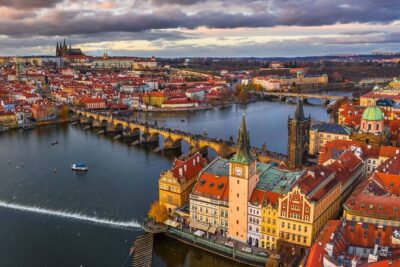
- Old Town Bridge Tower: Coronations, Defense, and Gothic Stonework
- St Nicholas Church: Jesuit Grandeur and a Quick Lesson in Kafka Land
- Prague Castle Finish: Wrestling Titans and Hourly Guard Changes
- Old Town Hall and the Astronomical Clock: Where the Ticket Note Matters
- Lesser Town Bridge Tower: Ravens, a Missing Stone, and a Knight’s Fate
- How to Pace It: Steps, Timing, and Getting What You Want
- Who This Is Perfect For
- Should You Book This Puzzle Walk in Prague?
Why This Puzzle Walk Works in Prague Old Town
Prague is packed, and Old Town can feel like sensory overload. This experience fixes that with a straightforward structure: each stop is short, you get a clue, you solve a puzzle, then you are guided to the next location. It is designed for an easy pace, and you can start whenever the area is open, then take breaks and resume later.
I like that it avoids the usual group-travel friction. You are not waiting for a guide to catch up, you are not squeezed into a crowd to hear one line of commentary. It is private, so it is really your group plus the city.
And since it is offered in English with a mobile ticket, it is a good fit if you want the historical context without booking yet another guided tour.
Old Town listings, lane by lane
- Prague: Oldtown, Medieval Underground & Dungeon History Tour★ 4.2 · 8,244 reviews
- Prague: Old Town Hall Tower Entry Ticket★ 4.5 · 6,749 reviews
- Prague: 3-Hour Walking Tour of Old Town & Prague Castle★ 4.7 · 5,696 reviews
- Prague: 3-Hour Old Town and Prague Castle Tour in German★ 4.8 · 5,671 reviews
Key Things I’d Highlight Before You Go
- Offline game play so you can keep walking without worrying about data or signal.
- Private, no human contact format, which makes this a low-stress way to see Prague when crowds are thick.
- Quick, tight stops (mostly about 5 minutes each) that help you cover a lot without burnout.
- Most entries free, so you spend money mainly on what you choose, like the Astronomical Clock.
- You control pacing, pause for photos, coffee, or a browse, then jump back in.
Price and Value: $7.21 for 2 Hours of Prague Essentials
At $7.21 per person, you are not paying for access to a big museum complex. You are paying for a smart walking route plus the prompts that make you notice details you would otherwise miss. The value is strongest because nearly every stop you reach is listed as free admission, including major churches and viewpoints around Old Town and nearby areas.
Then there is the one clear extra cost to note: the Astronomical Clock stop is marked as admission not included. If you want time at the Old Town Hall and the clock experience, budget for that separately.
In plain terms, this is excellent when you:
- want a guided-feeling walk without committing to a fixed tour time,
- like learning through small tasks,
- and plan to spend most of your day on the streets anyway.
How the Game Runs: Mobile Clues, Short Challenges, Big Payoff
This is a mobile-first experience with a mobile ticket, and the game runs so you can play offline. You start at Wenceslas Square and finish around Prague Castle, and you do the whole route in about 2 hours.
The key rhythm is the same at each stop:
- you arrive and look for the clue area,
- you solve a puzzle or answer a question tied to what you are seeing,
- the game gives you indications for your next location.
That format matters because it turns your attention outward. Instead of just walking past churches and towers, you keep checking small, specific features like a commemorative plaque on a boulevard, a vault height, or what a famous building is known for.
Further routes we laced boots for
Wenceslas Square: The Boulevard With Czech History in Its Footsteps
Wenceslas Square is not a square in the tight, postcard sense. It is a long boulevard, about 750 meters, connecting Old Town and New Town. It used to be a horse market centuries ago, and it has also been a stage for modern Czech events, including the 1968 Soviet invasion and the protests of 1989.
What I love here is the view-and-detail combo. If you climb the steps to the National Museum, you get a strong look down the boulevard. And near the St. Wenceslas statue, you can find plaques on the ground for victims of the communist regime, including one dedicated to Jan Palach, who set himself on fire in protest.
In the game, you get a starting indication once you are there, then you move on. Even if you do not spend long, you get an orientation moment, because Wenceslas Square is the kind of place that anchors how Prague’s districts relate.
Tip: Wear comfortable shoes and plan a quick look at the museum steps if you want that top-down perspective. It helps you understand the layout before you start threading through smaller streets.
Church of Our Lady of the Snows: A 34-Meter Vault and a Garden View
Next comes the Church of Our Lady of the Snows, connected to a larger story of ambition, interruption, and reuse. King Charles IV planned a Gothic, three-aisle church that would have been among the biggest structures in Prague. The Hussite Wars derailed those plans, but the church still has a vault of 34 meters, noted as the highest vault in Prague.
The early 1600s brought another shift. Franciscan monks took over an abandoned site under Emperor Rudolph II and built the surrounding monastery and library in Baroque style. Even if the church is incomplete in the grand original plan, the space it creates is still worth your attention.
Outside the main complex, the Franciscan Gardens give you a view over the church’s Gothic vaulting. In puzzle terms, this stop is a classic example of the game paying off: you solve, you learn a key fact, then you keep going.
Possible drawback: Because this stop is quick, you might want to give yourself a little extra time if you are the type who likes to study vault lines or Baroque facades longer than a camera check.
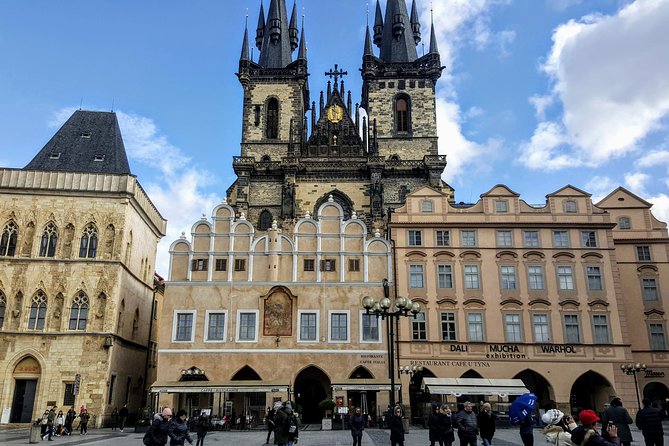
Church of Our Lady before Tyn: Twin Towers, a Madonna Statue, and an Organ Worth Noticing
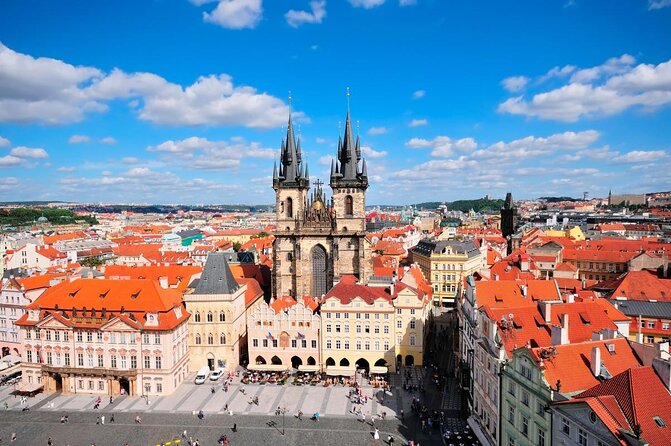
The Church of Our Lady before Tyn is a gothic powerhouse with twin towers and a Madonna statue between them. One tower is a bit more solid than the other, a difference explained as a symbolic nod to family strength.
The church has survived major historical shocks, including the Hussite Wars, and it still works as a monument you can look at from several angles. Inside, the highlights you should watch for include the most valued organ from the second half of the 17th century. You can also stroll between medieval, gothic, and Baroque tombstones.
The puzzle at this stop is especially satisfying because it pushes you toward a specific person: an astronomer from the court of Emperor Rudolf II is buried near the main altar. You find his name by solving the challenge.
If you like details, this is one of the most rewarding stops. You are not just admiring architecture, you are tracking a name tied to the room.
St. Giles Church: Mozart and Constanze in a Romanesque-to-Gothic Blend
St. Giles Church is part of the Dominican monastery complex in Prague’s Old Town. The building mix is part of the charm: it is Romanesque in origins, later rebuilt in Gothic style.
The standout fact tied to this stop is that Mozart and his beloved Constanze were married here. If you know that already, it makes the church feel personal. If you do not, it is a great surprise that makes the place feel alive, not just old.
Inside you can look for rich stucco decorations and frescoes on the vaults. The Altar of the Painful Virgin Mary is another focal point, and there are statues of apostles by Ferdinand Maxmilian Brokoff, a name worth remembering if you enjoy Czech sculptural work.
You might also find classical and religious music concerts, so if you happen to time it right during your day, this church can become more than a quick puzzle stop.
St. Martin in the Wall: Communion in Two Kinds and a Wall-Triggered Name
St. Martin in the Wall Church has a cool backstory hidden in its name. It began in the Romanesque settlement of Ujezd and was rebuilt in Gothic architecture during Charles IV’s reign.
The church is linked to a major change in religious practice. In 1414, for the first time ever, the sacrament was given in two kinds, bread and wine in a cup. Before that, it belonged only to priests, so this shift matters in the church’s timeline.
Later, the church was canceled in the 18th century and turned into apartments and shops. That kind of reuse is a reminder that Prague buildings have long lives, not just one era.
The naming legend is fun, but the reality is more straightforward: the church wall touched the south fortification wall, so it became St. Martin Church in the wall.
For your visit style, this is a flexible stop. You may attend Sunday worship or a classical concert, depending on the timing during your walk.
Iron Knight: The Legend Stops You and Makes You Look Closer
This is where the puzzle walk turns a little more mythic. Iron Knight is tied to a cursed knight statue associated with Prague City Hall. The legend says he killed his lover in rage and was turned to stone as punishment.
The story adds a romantic twist: the knight is believed to have a chance of being freed by a woman with pure love. The catch is brutal, it can supposedly happen only once every hundred years.
The game’s clue here is built around the legend, so you are effectively hunting for the right answer using what you are told and what you notice at the site.
If you want a break from churches and towers, this stop is your mood reset. It gives you a pause point that feels like a story you could tell later.
Vlašská Kaple and the Clementinum: An Italian Chapel Inside a Jesuit World
The Vlašská kaple Nanebevzetí Panny Marie is an Italian Chapel at the Clementinum. The chapel, also known as the Italian Chapel of the Assumption of the Virgin Mary, was built in the late 16th century for the early Italians living in Prague.
Its oval plan is unusual for Bohemia, which makes it a standout architectural curiosity. Next to it, you can also spot the Cathedral of St. Clement, a Baroque church built in the 18th century, with an elaborate interior.
The Clementinum itself is the bigger draw. It is a huge Jesuit complex spread across two hectares, functioning as a center of education and culture. It is described as the second biggest building complex in Prague after Prague Castle.
For the puzzle walk, this stop adds a different flavor than the church sequence in the Old Town core. You get a sense of Prague as a place where communities and institutions shaped the city fabric.
Old Town Bridge Tower: Coronations, Defense, and Gothic Stonework
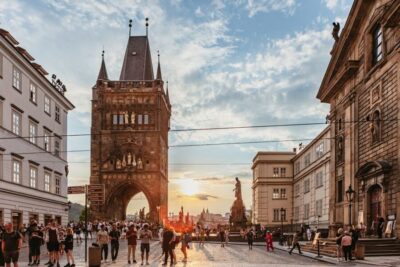
Old Town Bridge Tower is one of those Prague landmarks that looks inevitable once you see it, but you also realize it had a job beyond looks. It is a standout Gothic structure that once served as a triumphal arch for the kings of Bohemia.
In coronation processions, the kings crossed it on a route called The Royal Way, which started from Old Town and led up to St. Vitus Cathedral at Prague Castle. The tower also had a defensive purpose, as part of the city’s system to protect Old Town against northern invaders.
Construction details add credibility to the legend. Around one hundred stonemasons took part in the complete construction and decoration of the bridge tower.
This stop is short in time, but it works because it gives you a reason to care about the tower. It was a gateway for power and protection, not just a photo spot.
St Nicholas Church: Jesuit Grandeur and a Quick Lesson in Kafka Land
St Nicholas Church was founded by the Jesuits and is now part of the Czechoslovak Hussite Church. It is one of the largest churches in Prague, and it comes with a neat geographical bonus: a house next to the church marks the birthplace of writer Franz Kafka.
If you climb the 215 steps, you get splendid sights over the Lesser Town and across the Vltava River to the Old Town. And at night, Old Town Square is lighted by lanterns, so the view can feel extra atmospheric.
Timing matters here. The interior can be visited every day except Sundays, when Holy Mass is usually held. Since your puzzle walk runs across a window from early morning through the evening, you can choose a day and hour that fits how you want to see inside.
For a puzzle-based walk, this stop shines because it combines architecture with a literal climb. You get your reward for effort.
Prague Castle Finish: Wrestling Titans and Hourly Guard Changes
Prague Castle is where the route lands, and it is hard not to feel the scale shift when you get there. You will notice two gigantic outdoor sculptures called the Wrestling Titans, also known as Fighting Giants, located at the Matthias Gate leading to the first courtyard.
The castle once served as the seat of the Kings of Bohemia and it is also where they were buried. Today, the president of the Czech Republic has offices here.
One of the easiest things to plan around is the changing of the presidential guards. You can watch it every hour at the three main entrances to the Castle.
For most people, this stop does two things at once. It closes the loop on your walk with a big visual landmark, and it gives you a real schedule-based moment without needing a ticket-heavy plan.
Old Town Hall and the Astronomical Clock: Where the Ticket Note Matters
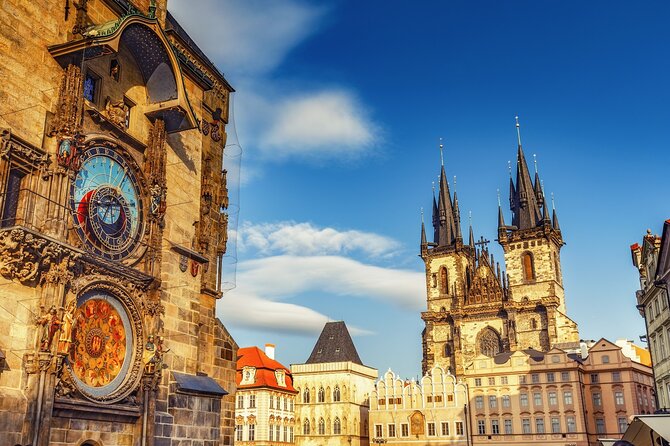
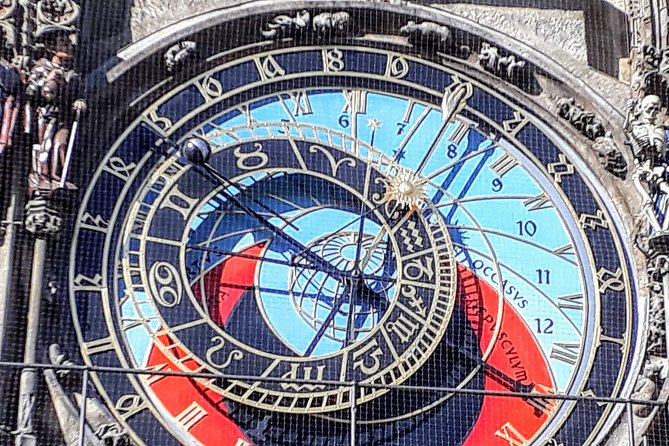
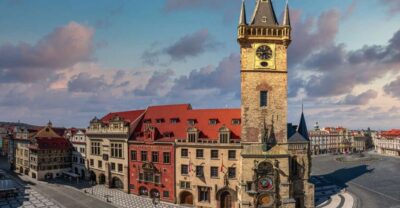
The Old Town Hall stop brings you to the Astronomical Clock, the Orloj, described as the third-oldest astronomical clock in the world. It is one of Prague’s most recognizable features, and there is even a legend tied to what happens if the clock were to break beyond repair.
The Orloj is fascinating because it does more than tell time. It displays astronomical information too, including the position of the Sun and Moon and zodiacal information.
A practical note is built into the experience details: the admission for this stop is not included. So if this is a must-see for you, plan a bit of extra time and budget for the ticket, then keep the rest of your schedule flexible.
Lesser Town Bridge Tower: Ravens, a Missing Stone, and a Knight’s Fate
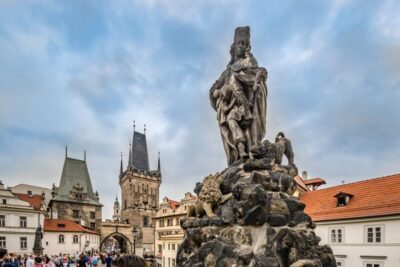
At the end of Charles Bridge on the Malá Strana side, you reach the Lesser Town Bridge Towers. Unlike the Old Town Bridge Tower, these two are never decorated, but they include Romanesque reliefs inside.
They were part of the fortification system in the days of Judith Bridge, and the legend is the kind that sticks in your memory. It says there is an empty spot where a stone is missing, and chroniclers blame the ravens. The ravens supposedly sat on that stone and caused it to land on King Václav’s favorite knight.
The king did not replace the stone to honor his legacy. It is a small story with a big city feel, because it explains a physical detail through myth.
Even with the stop being brief, it is worth giving yourself a moment to look at the tower location and connect it to the story you just solved.
How to Pace It: Steps, Timing, and Getting What You Want
This walk is built for short segments, which is great, but it still adds up. In my experience, it can land around 9,000 steps, depending on how much you detour for photos or sit down for a drink.
Here is how you get the best day out of it:
- Start when you want the city mood, early for calmer streets, later for more nightlife energy around Wenceslas Square.
- Don’t rush answers. A puzzle works best when you are actually looking at the feature it points to.
- Bring a charged phone. Offline play removes the data worry, but you still need battery for the game.
- If the Astronomical Clock is your priority, plan that as your paid highlight and keep the rest as your free structure.
One more small mindset shift: you are not trying to see everything. You are trying to see the details the route points you to. That is what makes a puzzle walk feel like learning, not just moving.
Who This Is Perfect For
This experience is a strong fit if you:
- want to cover Old Town highlights quickly on foot,
- enjoy history but do not want a full guided lecture,
- travel with people who like solving clues (or you want them to take the lead),
- and prefer a format with no human contact and minimal crowd friction.
It is also useful if you are traveling solo or as a couple who wants to control the pace. Because it is private, you are not negotiating group timing.
Should You Book This Puzzle Walk in Prague?
Yes, if you want a practical way to see a lot of Prague without locking yourself into a guide’s schedule. At $7.21, and with most stops free, you are buying an efficient route plus thoughtful prompts that make you notice real features, from church vaults to commemorative plaques to bridge-tower legends.
Skip it or approach with caution if your top priority is deep, immersive storytelling with lots of time in each building. The game is designed to move, and the stops are intentionally short. You will get facts and cues, but not long-form guided interpretation.
If your ideal Prague day is walking, looking, and learning in small bites, this puzzle walk is a smart, low-cost way to do it.
Prague on Laced Boots




More Tour Reviews in Prague


Old Town, Lane by Lane

Freshly written up in Prague
- World War II 4WD Tour from Prague with Lunch
★ 4.4 · 3 reviews - World War II History Tour of Prague’s Old Town
★ 5.0 · 3 reviews - Welcome to Prague – Private Tour with Licensed Guide
★ 5.0 · 3 reviews - Gourmet Brunch with Chef: Unlimited Drinks & Stunning River Views
★ 5.0 · 3 reviews - VIP Prague Segway Tour Around Monastic Breweries
★ 4.0 · 3 reviews
Old Town & Astronomical Clock Tours, compared.
 ★ 4.2Oldtown, Medieval Underground & Dungeon History TourFrom $308,244 reviews
 ★ 4.5Old Town Hall Tower Entry TicketFrom $216,749 reviews
 ★ 4.73-Hour Walking Tour of Old Town & Prague CastleFrom $305,696 reviews
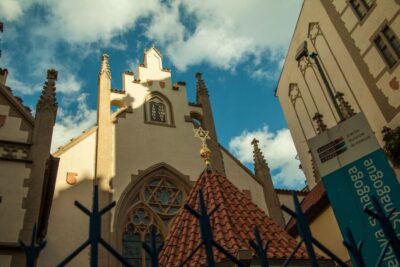 ★ 4.83-Hour Old Town and Prague Castle Tour in GermanFrom $365,671 reviews
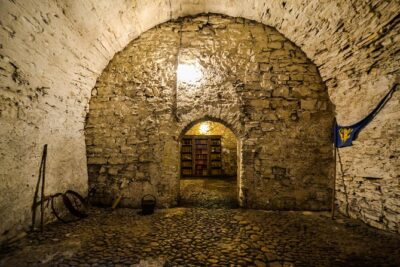 ★ 4.5Prague Old Town, Medieval Underground and Dungeon Historical TourFrom $323,227 reviews
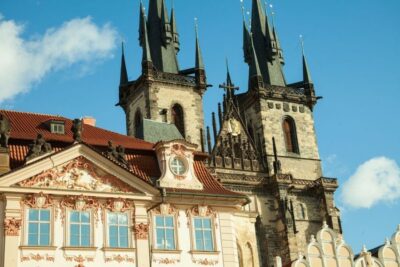 ★ 4.8Old Town and Jewish Quarter Guided Tour in GermanFrom $293,143 reviews
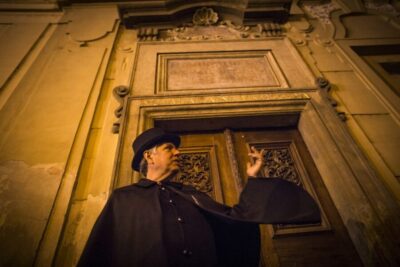 ★ 4.5Ghosts and Legends of the Old Town Evening TourFrom $213,091 reviews
 ★ 4.6Old Town and Jewish Quarter Guided Walking TourFrom $222,847 reviews
Browse the lists this tour appears in