
REVIEW · CZECHIA
The Plague Doctor of Prague
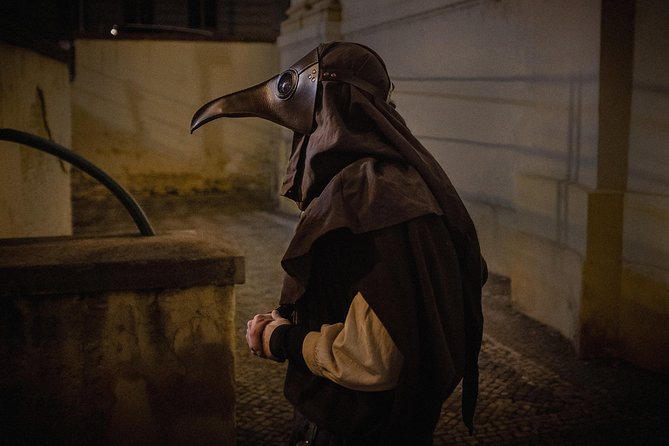
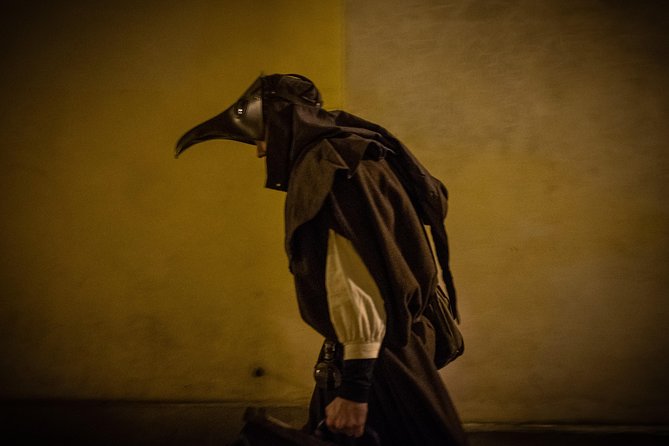
Prague turns creepy after dark. This walking tour uses in-character plague doctor storytelling to make you rethink familiar landmarks through the lens of 1715 fear, faith, and medicine. You get a tight loop through central Prague sites, tied together by one grim question, why people believed the plague was happening and how they tried to survive it.
Two things I really like: the tour is built for a small group (maximum 10), so you are not lost in the crowd, and the guide style is playful without sugarcoating the subject. You also end with a group photo, which gives the whole night a fun, memorable finish.
One heads-up: if you want only architecture and big-art stops, this is not that kind of tour. The focus stays on how plague affected daily life, healing, and community stories.
In This Review
- Key things you will notice
- Why a plague doctor tour works so well in Prague
- Price and logistics: what 26.61 gets you
- Stop 1 at Aurus Hotel Prague: the Golden Well and 1715 plague beliefs
- Klementinum and the quarantine mindset
- Old Town Square: merchants, the Hussite Church, and the 30-years-war thread
- Kafka, La Peste, and the Jewish Quarter story
- Na Frantisku hospital: healing methods and medical “unknown heroes”
- St. Agnes of Bohemia at the National Gallery Prague finale
- Who should book, and who might want a different style
- Should you book the Plague Doctor of Prague tour?
- FAQ
- How long is The Plague Doctor of Prague tour?
- Where does the tour start?
- Is the tour offered in English?
- How many people are in each group?
- What kind of ticket do I get?
- Do we need good weather?
- What happens if it is canceled due to poor weather?
- Is free cancellation available?
Key things you will notice
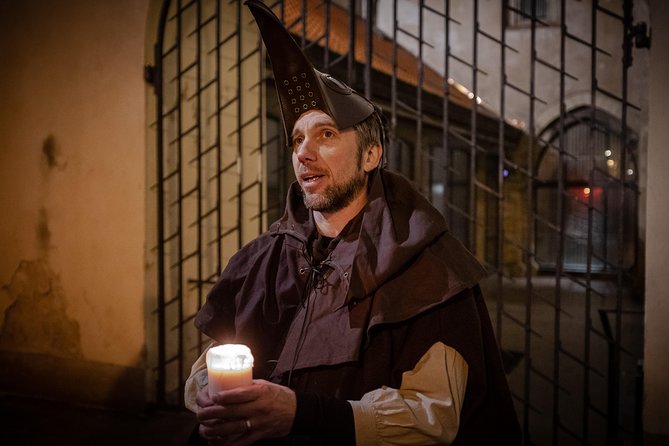
- The plague doctor character frames each stop, from saints to quarantine life
- Tight route in 90 minutes, with frequent, short moments at each location
- Jewish Quarter focus, including the impact on Jewish communities during plague years
- Medical history with real stakes, including older treatments used in Prague hospitals
- Press-recognized experience, with mentions from The New York Times, Vogue, and Forbes
- Finish with a group photo, so you leave with something concrete and fun
Undecided so far? These Prague write-ups land nearest this one.
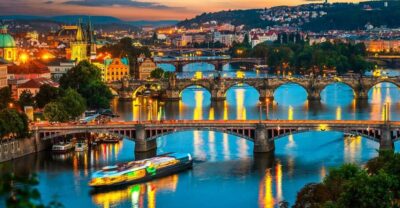
- Prague: 50-Minute Sightseeing Evening Cruise★ 4.2 · 33,780 reviews
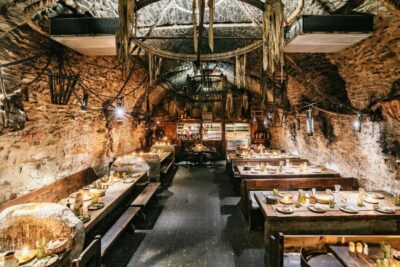
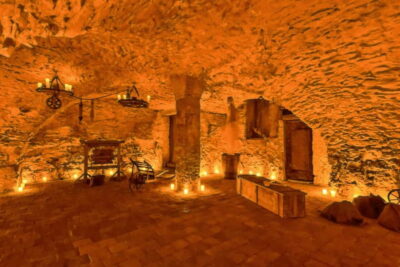
- Prague: Medieval Dinner with Unlimited Drinks★ 4.4 · 19,847 reviews
- Prague: Castle Tour with Local Guide and Entry Ticket★ 4.6 · 10,422 reviews
- Prague Castle 2.5-Hour Tour Including Admission Ticket★ 4.7 · 8,927 reviews
Why a plague doctor tour works so well in Prague
Prague can feel like a dream city. This tour flips that feeling. It takes the same streets, churches, and city-center squares you see in daylight and re-reads them as places where fear moved through crowds, rumors traveled fast, and families made hard choices.
What makes it work is the structure. You are not watching plague as a distant textbook topic. You are getting it as people would have experienced it, from what they thought caused disease to the roles saints played in daily comfort. And you get the human side, too, with special attention to how plague affected Jewish communities in Prague and across Europe.
Another big win is the night-time pacing. The walk is short enough to feel lively, not exhausting, and each stop is sized for attention. That means you leave feeling like you learned something, without feeling dragged from place to place. It is the kind of tour that pairs well with a full day of sightseeing, or as a later evening activity to keep your trip from feeling repetitive.
Price and logistics: what 26.61 gets you
At $26.61 per person for about 1 hour 30 minutes, the value here is the experience design, not just access to a few points on a map. You are paying for guided storytelling, a small group setting (maximum 10 travelers), and a route built around linked themes, plague beliefs, quarantine life, daily market survival, and medicine.
You also get practical convenience. Tickets are mobile, and the tour is offered in English. The start is easy to find in central Prague, and the route stays within walking distance of major sites.
One more practical note: the tour requires good weather. Prague evenings can turn damp, so if you are booking near a rainy stretch, bring a light rain layer. Some of the best atmosphere comes when the streets feel a bit moodier, but you still want to stay comfortable enough to hear the guide clearly.
Stop 1 at Aurus Hotel Prague: the Golden Well and 1715 plague beliefs
You start at Aurus Hotel Prague on Karlova Street. Right away, the guide introduces the plague doctor of Prague, Alexander Schamsky, and you jump to the year 1715. That quick time shift matters. Instead of treating plague as something that happened long ago, you are put into the mindset of a city trying to explain a crisis using the tools and beliefs it had.
The building is also part of the story. You hear about the house known as the House of the Golden Well, and you get saints tied directly to plague protection, St. Sebastian and St. Rochus. This is not just name-dropping. The tour explains how people connected religious figures to disease outbreaks and why those beliefs made sense to them at the time.
You also hear about the root causes people believed were behind plague. That is one of the most useful parts of the whole night because it teaches you how early explanations shaped behavior. When you understand that, you start spotting the logic behind quarantine ideas, market changes, and fear-driven choices later on.
Klementinum and the quarantine mindset
Next up is New Town Hall, with the story stretching back to the old monastery Klementinum, plus the new library and the new town hall. This stop is where the tour moves from beliefs into how daily life got constrained.
You learn about different types of Black Death as people understood them, and the guide also separates experiences by social class. That contrast is important in Prague history. Wealth could sometimes mean better access to escape routes or safer living arrangements. Common people had fewer options, and the city felt the pressure in very immediate ways.
Then comes quarantine life. You do not just hear the word quarantine. You get a feel for what it meant in practice, how it changed movement, how people managed fear, and why “staying put” was both protection and punishment. If you like history that connects to human behavior, this is a strong section.
One more nice point: the stop is short enough to keep you moving, but it sets up what you will see in the Old Town Square market story later.
Old Town Square: merchants, the Hussite Church, and the 30-years-war thread
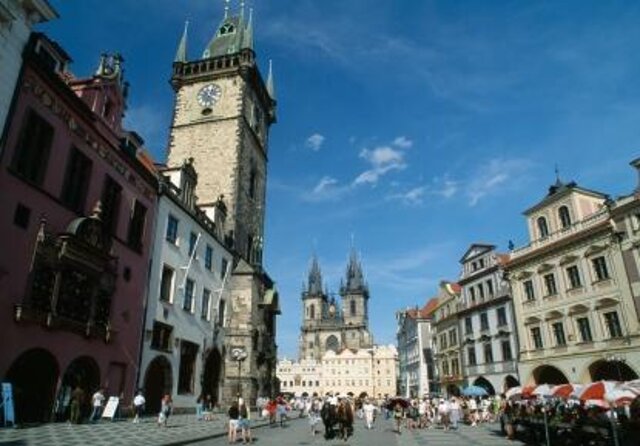
Staroměstské náměstí, Old Town Square, is a perfect stage for plague storytelling. You cover the Hussite Church, Týn Church, and the Old Town Hall area, and the guide turns the square into a place where commerce and fear collided.
The focus here is merchants during plague times. Markets were not just about buying and selling. They were where information spread, where rules got tested, and where people had to decide whether to show up and risk exposure or stay away and lose income.
You also get an excursion into the 30-years-war thread. That connection matters because plague was not happening in a vacuum. Cities faced repeated stressors, and war conditions can worsen outbreaks by disrupting movement, housing, and normal supplies.
If you are used to tours that race past squares for photos, this one slows down. You get to look at the same buildings with different questions in your head, which makes the whole evening feel sharper and more memorable.
Kafka, La Peste, and the Jewish Quarter story
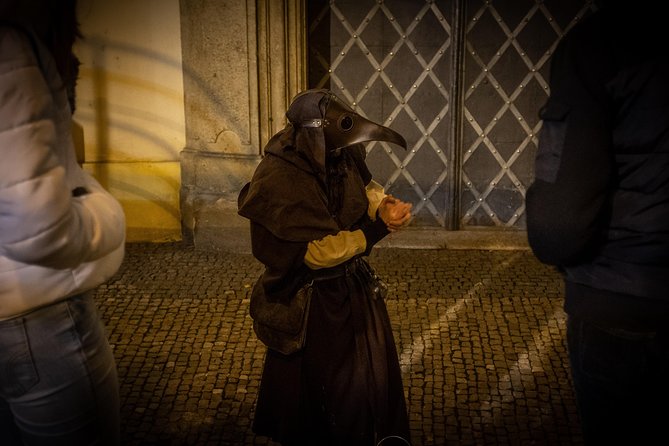
At the Franz Kafka Statue stop, the tour shifts tone in a smart way. You get an intro to Franz Kafka, and then the story steps into Jewish history in plague years. The guide brings in the Jewish Quarter and focuses on how plague affected Jewish communities in Prague and beyond.
You also hear about Albert Camus and the novel La Peste. That literary connection helps you understand plague as a theme, not just an event. It is a reminder that even later writers kept returning to plague because it exposes human routines under stress, how people grieve, and how communities keep going when normal life stops working.
This stop is also one of the most emotionally grounded moments of the walk. The tour does not treat Jewish history as an accessory. It gives it center stage, and it helps you connect the past to the kind of community impact you still see in outbreaks today.
For me, the value is that you leave with more context for how Prague’s Jewish heritage shaped the city’s survival story. You are not just collecting facts. You are building a mental map of cause, fear, and social impact.
Na Frantisku hospital: healing methods and medical “unknown heroes”
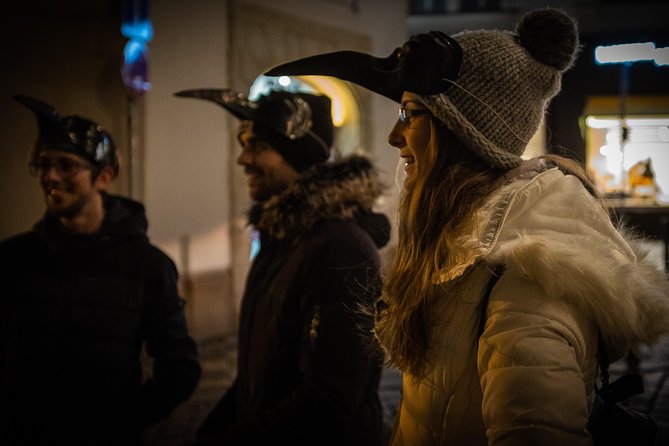
The Church of Saint Simon and Jude stop leads you toward the old hospital known as Na Frantisku. This is where the tour gets its medical spine.
You explore plague in Prague through healing methods and medical background of a disease that, the guide notes, killed approximately 200 million people worldwide. That global scale is jarring, but it helps keep Prague from feeling like a small, local story.
Then you hear about lesser-known people tied to care at the hospital, described as unknown heroes of medicine who worked there. That choice is deliberate. It shifts attention away from the myth of one miracle cure and toward the reality of caregivers trying to help with what they had.
If you are the kind of traveler who likes public health history, this stop tends to land hard in a good way. It gives you practical context for why old treatments were what they were, and why “medicine” in those years included both observation and belief.
It is also a great midpoint in the tour because you can start connecting earlier themes. Religious ideas and quarantine rules start to make more sense once you see what doctors and hospital workers faced on the ground.
St. Agnes of Bohemia at the National Gallery Prague finale
The tour finishes at the National Gallery Prague, Convent of St. Agnes. This is a calmer ending point, even though the subject matter stays heavy.
You meet St. Agnes of Bohemia through her life and work, and the guide wraps the story back into a broader summary of plague times in Prague and in Europe. The closing beats matter because they help you connect all the earlier stops into one narrative, beliefs, community experience, and the evolution of medical thinking.
You also hear interesting facts about the current status of the disease. The tour does not turn into modern science class, but it gives a sense of continuity, why plague remains part of the public health conversation.
Finally, you end with a group picture with the plague doctor. It is a small thing, but it makes the whole experience feel complete. You do not just shuffle away with notes you might forget.
Who should book, and who might want a different style
This is a good fit if you want a lively evening walk that still teaches you real details. It also suits families and mixed ages, because the guide keeps the tone entertaining and easy to follow while still giving plague a respectful seriousness.
I would especially recommend it if you care about public health, the history of medicine, or how communities respond to outbreaks. The route naturally covers the human side of crisis, not only buildings and dates.
You might want a different kind of tour if your priority is architecture-first Prague. One drawback some people feel is that the focus stays on everyday life and plague experience, not on longer architectural explanations. In other words, this is not a cathedral lecture. It is a story walk built around plague.
Should you book the Plague Doctor of Prague tour?
If you want a memorable evening that mixes history, medicine, and story-driven Prague street scenes, this is an easy yes. The price is modest for a 90-minute guided experience, and the small group cap keeps it personal. The route is built around clear themes, and you walk away with a stronger understanding of plague beliefs and how Jewish communities were impacted.
Use this tour as a way to see central Prague with fresh questions. Bring comfortable shoes, aim for good weather, and be ready for a guide who stays in character. Guides mentioned in past tours include Thomas, Oskar, David, and Maddie, and the common thread is humor that keeps learning light without losing seriousness.
FAQ
How long is The Plague Doctor of Prague tour?
It runs about 1 hour 30 minutes.
Where does the tour start?
The meeting point is Aurus Hotel Prague, Karlova 3, 110 00 Praha 1-Staré Město, Czechia.
Is the tour offered in English?
Yes. It is offered in English.
How many people are in each group?
The tour has a maximum of 10 travelers.
What kind of ticket do I get?
You receive a mobile ticket.
Do we need good weather?
Yes, the experience requires good weather.
What happens if it is canceled due to poor weather?
If it is canceled because of poor weather, you will be offered a different date or a full refund.
Is free cancellation available?
Yes. You can cancel up to 24 hours in advance for a full refund. If you cancel less than 24 hours before the start time, you will not receive a refund.
More Tour Reviews in Prague
Freshly written up in Prague
- World War II 4WD Tour from Prague with Lunch
★ 4.4 · 3 reviews - World War II History Tour of Prague’s Old Town
★ 5.0 · 3 reviews - Welcome to Prague – Private Tour with Licensed Guide
★ 5.0 · 3 reviews - Gourmet Brunch with Chef: Unlimited Drinks & Stunning River Views
★ 5.0 · 3 reviews - VIP Prague Segway Tour Around Monastic Breweries
★ 4.0 · 3 reviews