
REVIEW · PRAGUE MUSEUMS & GALLERIES
Museum Story of Prague
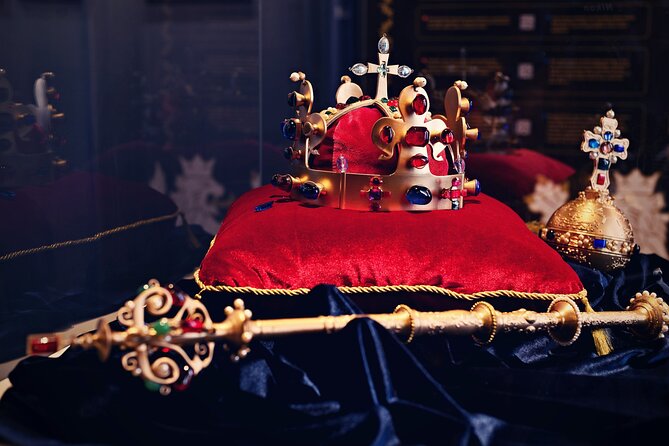
Czech history turns cinematic here. In about 1 hour 30 minutes, the Story of Prague Museum lines up interactive multimedia with a clear three-floor timeline, so you get context without needing to study first. You move through dim, story-driven rooms covering medieval Prague, 20th century occupations, and the Czech story after the Velvet Revolution.
I especially like how the museum mixes big events with specific Prague landmarks. You’ll also see folklore made physical, including the towering Golem figure in darker halls. One drawback to plan for is the heavy use of QR codes, which can feel repetitive if you’d rather just read and watch than keep scanning.
In This Review
- Key takeaways before you go
- Story of Prague Museum in Prague: a multimedia history circuit
- Stepping into the first floor: knights, Hussites, and Prague’s turning points
- Old Town Hall, Astronomical Clock, and the story behind the scenery
- The Golem moment: folklore you can stand in front of
- Second floor reality check: Nazi occupation, bombings, and Soviet control
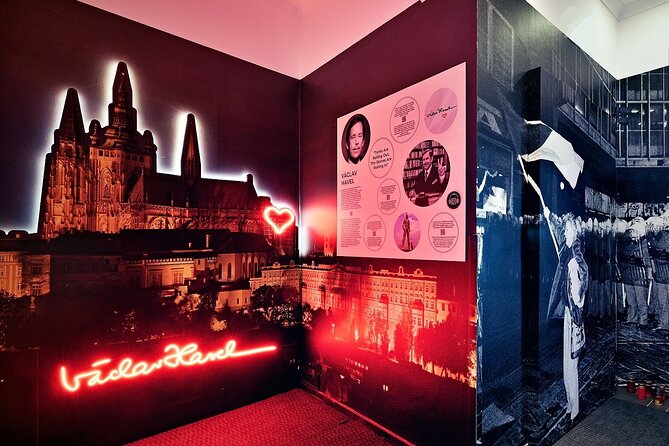
- Third floor reset: Velvet Revolution and Czech achievements
- Hidden room and interactive exhibits: how to make it feel worth your time
- QR codes and self-paced scanning: the one thing to watch
- Price and timing: value for $19.27 and a 10:00 am start
- Who should book the Story of Prague Museum
- Should you book the Story of Prague Museum?
- FAQ
- Where is the Story of Prague Museum located?
- How long is the museum experience?
- How much does it cost?
- What time does the experience start?
- Is the admission ticket included?
- What type of ticket do I get?
- Will I get confirmation after booking?
- What is the cancellation policy?
Key takeaways before you go
- A tight 90-minute format that covers Prague’s key turning points without dragging.
- Three floors, clearly organized, from medieval times to modern Czech milestones.
- Golem folklore and Prague landmarks like the Old Town Hall and Astronomical Clock appear in the story.
- Mixed reality plus film and audio elements keep it from being a dry museum loop.
- A hidden room and unique exhibits you are unlikely to spot from photos alone.
Wet-weather picks, roofs included
- Prague: Museum of Fantastic Illusions Entry Ticket★ 4.3 · 4,337 reviews
- Prague: Madame Tussauds Entry Ticket★ 4.1 · 1,766 reviews
- IAM Illusion Art Museum Entry Ticket★ 4.2 · 1,664 reviews
- Prague: Museum of Senses Admission Ticket★ 4.0 · 1,445 reviews
Story of Prague Museum in Prague: a multimedia history circuit
If you want a structured introduction to Prague that does not feel like homework, this is a strong option. The Story of Prague Museum is designed as a moving story, built around film installations, audio elements, and interactive displays. Instead of only glass cases and labels, you get scenes you can follow, in a dark and atmospheric setting.
The whole experience runs about 1 hour 30 minutes, which matters in a city where you can burn half a day just walking between viewpoints. At $19.27 per person with the admission ticket included, it is also a pretty direct value play if you want a history primer you can finish before lunch plans go sideways.
And because it is a mobile ticket and the site is near public transportation, it is easy to fit into a day even if your schedule is not perfect.
Stepping into the first floor: knights, Hussites, and Prague’s turning points
The museum’s first floor sets you up with the Prague of kings, knights, and famous conflicts. Expect the era of knights and kings, then a focus on Jan Žižka and the Hussites, framed in a way that aims to keep you moving. This is not a slow museum where you spend 40 minutes trying to figure out what matters most.
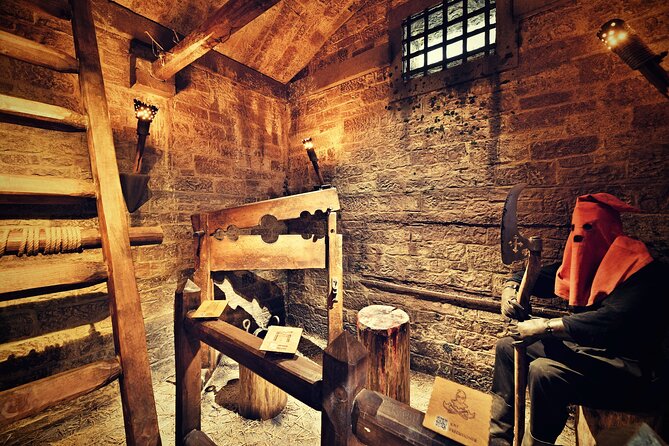
You also get medieval Prague through the lens of spectacle and survival. The museum includes medieval torture, but it is presented in a way that is described as without practical demonstrations, so you are not walking into a staged gore show. For me, that approach helps the museum do something hard, it acknowledges brutal history without turning the space into a shock attraction.
The story then connects the timeline to Prague’s built environment. You’ll revisit the construction of the Old Town Hall and the Astronomical Clock, tying folklore and architecture together in the same chain of events.
And then, in the dim halls, you meet one of the museum’s emotional anchors. The Golem stands silently, a physical presence that turns a well-known legend into something you experience in person, not just read about later. It is one of those details that makes the whole museum feel like a narrative, not a spreadsheet of dates.
Old Town Hall, Astronomical Clock, and the story behind the scenery
Prague’s landmarks are already photogenic. The museum adds the missing middle: why they belong to the same story. Seeing the Old Town Hall and Astronomical Clock discussed as part of Prague’s historical momentum makes them more than nice backdrops for your camera.
This matters because, on your first day in Prague, you often bounce between views. You see the Clock Tower, you take a photo, and you might still not understand why people cared so much at the time. Here, the museum’s approach is to place landmarks inside cause-and-effect.
One practical thing: go in with the expectation that you will be looking at a mix of formats. You are not only reading labels. You are watching and listening, and some of it is delivered through interactive elements. If you are the type who likes to skim, you can still do that, but the payoff comes when you let the story pace you for a bit.
Bookings around Prague our notes circle repeatedly

The Golem moment: folklore you can stand in front of
The Golem is not treated like trivia. It is presented as a lasting symbol of Prague mysticism and folklore, and you experience that with the museum’s dark, story-driven presentation. Even if you already know the legend, seeing the figure in person changes the emotional weight.
I like this kind of museum moment because it gives your brain a break. After medieval conflicts and landmark construction, a silent, looming presence acts like a pause button. It also creates a natural memory hook, which can make the rest of the timeline easier to hold onto later.
If you are traveling with kids or anyone who struggles with long historical explanations, this is the kind of visual anchor that can keep attention from drifting. You might not get a whole lesson in one look, but you get a feeling and a reference point.
Second floor reality check: Nazi occupation, bombings, and Soviet control
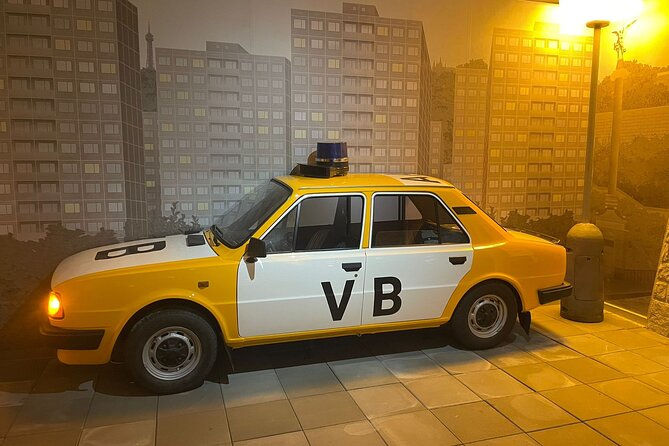
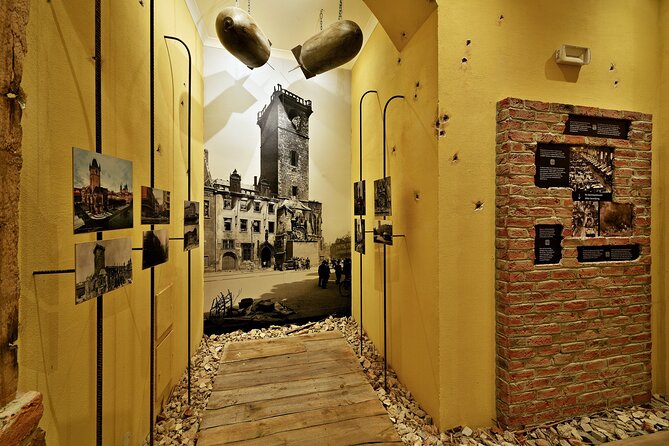
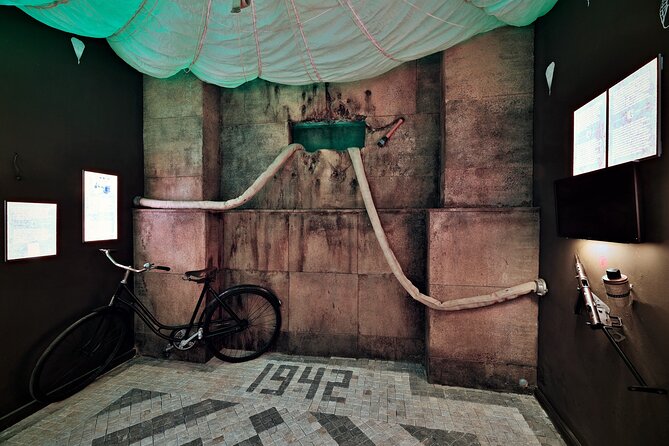
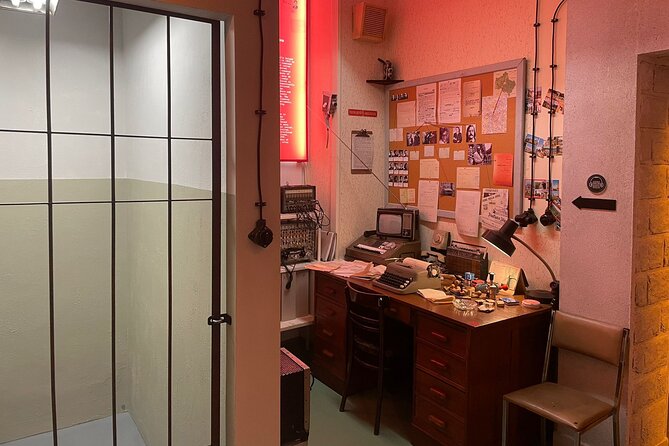
The second floor takes the story into darker territory. You revisit the Nazi occupation, the bombing of Prague, and the Soviet occupation. The museum’s aim here is not just to name events, but to reconnect them to the people and the pressure around Prague during those decades.
This is where you should adjust expectations. The first floor can feel like you are moving through dramatic eras and famous characters. The second floor is more about historical weight. Plan to slow down a bit mentally, because the material is heavier and the story moves you from one pressure point to another.
The museum keeps the experience structured, so you are not left with random facts. You move through a timeline that builds, so each room sets up what comes next. That is valuable because history education often fails when you only get isolated chapters.
Third floor reset: Velvet Revolution and Czech achievements
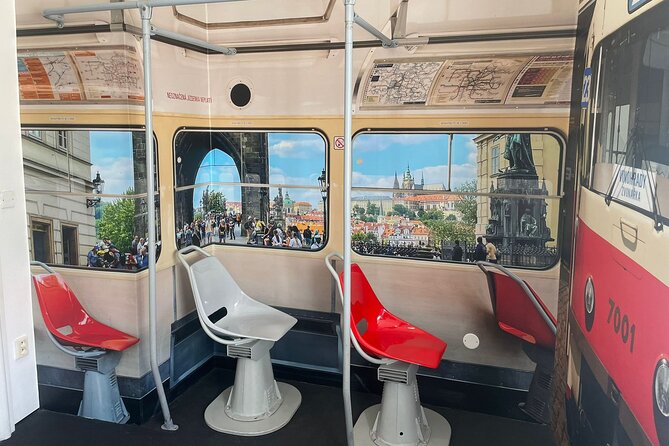
Upstairs, the tone shifts. The third floor is where the museum celebrates the Velvet Revolution and Czech global achievements. That change matters more than it might sound at first.
Good museum storytelling does not only teach tragedy. It also gives you a sense of where people went next. Ending with the Velvet Revolution and achievements helps the overall arc feel complete, and it gives you a more useful takeaway for your Prague days after the museum. You walk out understanding not only what broke, but what changed.
If you are the type who likes a clear arc, this ending is satisfying. If you are the type who prefers museums to stop right at the last major war or occupation, you might feel the final rooms are more uplifting than you expected. But for most people, it makes the visit leave you oriented rather than crushed.
Hidden room and interactive exhibits: how to make it feel worth your time
One reason this museum gets attention is that it does not rely solely on static displays. The museum includes interactive displays rather than purely dry exhibits, and you get mixed media storytelling through film installations and audio elements. In practice, that means you are not stuck squinting at tiny text the entire time.
There is also a hidden room, plus unique exhibits not seen in photographs. That is a big deal if you are the kind of traveler who checks Google Images before going. Even if you have seen promotional pictures, you should still expect surprises inside.
A practical tip: set yourself a mindset of active watching. If you treat it like a slideshow, you will miss details that connect the floors. If you treat it like a checklist, you might not notice what the museum is trying to do emotionally. The museum works best when you let it guide your pacing for a bit.
QR codes and self-paced scanning: the one thing to watch
The museum uses QR codes, and there can be a lot of them. If you are fine with scanning in short bursts, you’ll probably handle it easily. If you know you dislike stopping often to scan and then refocus, you may get annoyed before the end.
My advice is simple: do not assume each QR code is going to be a whole new podcast episode. Expect repeat patterns, and use them when they add something. If you notice the scanning feels like busywork, you can switch to the visuals and audio elements and give the QR bits a lighter touch.
This is the main potential mismatch between style of visitor and museum format.
Price and timing: value for $19.27 and a 10:00 am start
At $19.27 per person, the museum is priced like a focused add-on, not a long pricey attraction. Since the admission ticket is included, you are not hit with surprise add-ons at the door. For a visit around 1 hour 30 minutes, it is also a good use of time if you want a compact history overview.
The experience begins at 10:00 am and is near public transportation. That helps if you want to start your day with something indoors and story-based, before you spend your afternoon outside climbing stairs to views.
It is also booked in advance, with an average booking window of around 12 days. That does not mean you must book months ahead, but it is a gentle sign that planning beats waiting. If you have a tight itinerary, lock in your time early.
And if your schedule changes, free cancellation is offered up to 24 hours before the start time for a full refund. That flexibility is worth something in Prague, where weather and fatigue can change your plans fast.
Who should book the Story of Prague Museum
This museum is a smart fit for:
- First-time visitors who want a structured Prague history intro before they start chasing neighborhoods and landmarks.
- People who prefer story-driven exhibits over plain text panels.
- Travelers who like mixed formats, since you get film installations, audio elements, and interactive displays.
It is also good if you want a history experience that feels like an active walk-through. You are not stuck in one spot. You move room to room through the eras, so the visit stays “on.”
I would skip it if you strongly dislike scanning QR codes or if you want a museum that is mostly traditional reading and objects. The format here is meant to be tech-forward, even if the physical setting is classic.
Should you book the Story of Prague Museum?
Yes, if you want a compact, multimedia history experience that connects Prague landmarks and big historical events into one coherent run. The three-floor timeline, the Golem folklore moment, and the way the museum uses film and audio make it feel more like a guided story than a passive stop.
Hold off if QR code scanning will annoy you, or if you only want traditional exhibits. In that case, you might find the interactive rhythm distracting.
If you like the idea of finishing in about 90 minutes with a clearer sense of Prague’s past and why the city looks the way it does, this is an easy book.
FAQ
Where is the Story of Prague Museum located?
It takes place in Prague, Czech Republic.
How long is the museum experience?
The duration is approximately 1 hour 30 minutes.
How much does it cost?
It costs $19.27 per person.
What time does the experience start?
The start time is 10:00 am.
Is the admission ticket included?
Yes, the admission ticket is included.
What type of ticket do I get?
You receive a mobile ticket.
Will I get confirmation after booking?
Yes, confirmation is received at the time of booking.
What is the cancellation policy?
You can cancel for a full refund up to 24 hours before the experience starts. If you cancel less than 24 hours before, the amount you paid is not refunded.
More Museums in Prague





More Tour Reviews in Prague



Roofed Options in Prague

Freshly written up in Prague
- World War II 4WD Tour from Prague with Lunch
★ 4.4 · 3 reviews - World War II History Tour of Prague’s Old Town
★ 5.0 · 3 reviews - Welcome to Prague – Private Tour with Licensed Guide
★ 5.0 · 3 reviews - Gourmet Brunch with Chef: Unlimited Drinks & Stunning River Views
★ 5.0 · 3 reviews - VIP Prague Segway Tour Around Monastic Breweries
★ 4.0 · 3 reviews
Prague Museums & Galleries, compared.
 ★ 4.3Museum of Fantastic Illusions Entry TicketFrom $174,337 reviews
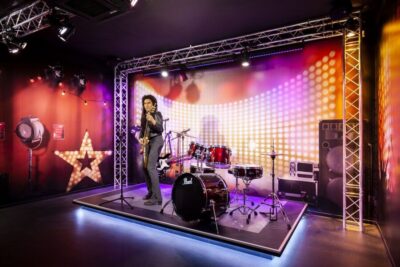 ★ 4.1Madame Tussauds Entry TicketFrom $171,766 reviews
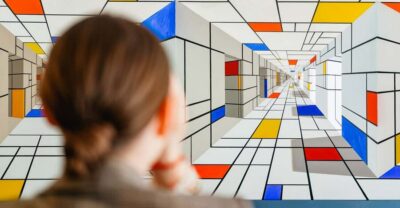 ★ 4.2IAM Illusion Art Museum Entry TicketFrom $161,664 reviews
 ★ 4.0Museum of Senses Admission TicketFrom $181,445 reviews
 ★ 5.0IAM Illusion Art Museum Prague Fast Pass TicketFrom $13957 reviews
 ★ 4.2Papilonia Butterfly HouseFrom $9917 reviews
 ★ 4.5Admission Ticket to Museum of Senses in PragueFrom $19861 reviews
 ★ 4.2Museum of Bricks Entry TicketFrom $14851 reviews
Browse the lists this tour appears in