
REVIEW · JEWISH QUARTER & SYNAGOGUE TOURS
Small-Group Tour through the History of Jewish Prague
Four synagogues, one moving story of Prague. I love the way the tour brings the Golem of Prague legend to life at the Old-New Synagogue, and then makes the Shoah period clear at Pinkas Synagogue. The only real drawback is the time is tight, so you will not linger like you might on a longer museum visit.
This is a small-group tour, capped at 10 people, in English, with a mobile ticket for an easy start. It runs about 1 hour 30 minutes, and it is a popular choice, often booked far ahead (on average, 85 days).
You start near Pařížská and finish at the Spanish Synagogue, so it works nicely for a day-plan shift into exploring the Jewish quarter after. The stops are listed as admission ticket free, which keeps the experience focused and avoids last-minute ticket stress.
In This Review
- Key highlights at a glance
- Why this 90-minute Jewish Prague tour feels worth it
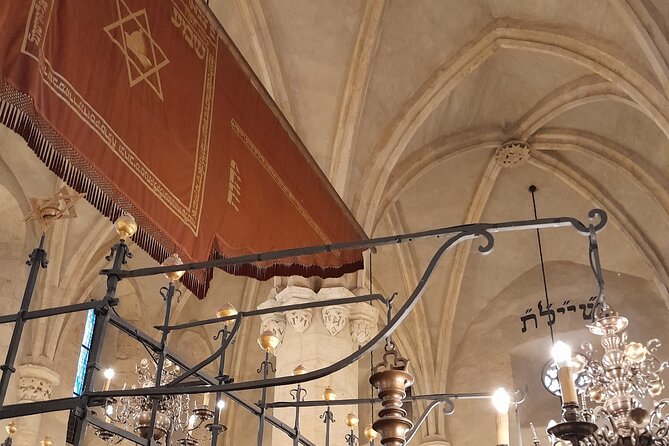
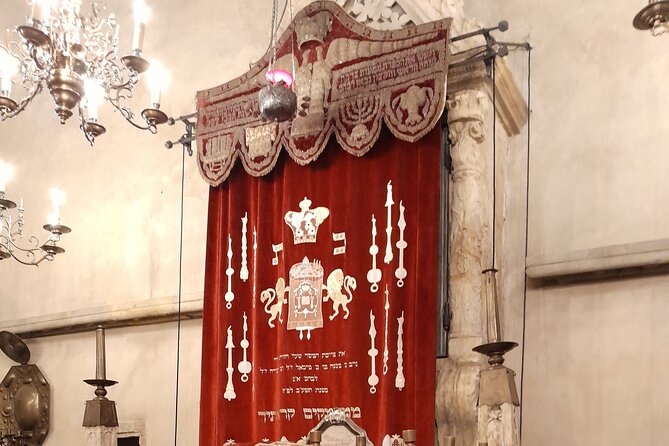
- Stop 1, Old-New Synagogue and the Golem of Prague legend
- Stop 2, Maisel Synagogue and the long arc of Bohemian Jewish life
- Stop 3, Pinkas Synagogue and what the Shoah period means
- Stop 4, Spanish Synagogue and the shift after Joseph II to post-WWII
- Meeting point, timing, and how to make the route easy
- What kind of traveler this tour fits best
- Practical tips for a better experience
- Should you book this Jewish Prague small-group tour?
Key highlights at a glance
- Old-New Synagogue storytelling, including the Golem of Prague legend
- Maisel Synagogue context on Jewish life in Bohemia from early centuries to emancipation
- Pinkas Synagogue attention to the Shoah era, 1939 to 1945
- Spanish Synagogue wrap-up that connects Joseph II reforms to post-WWII changes
- Maximum 10 travelers for a more conversational pace
- English guide plus mobile ticket for smoother logistics
Josefov write-ups that go a layer deeper
- Prague: Jewish Quarter Walking Tour with Admission Tickets★ 4.7 · 3,729 reviews
- Prague: Old Town and Jewish Quarter Guided Tour in German★ 4.8 · 3,143 reviews
- Prague: Old Town and Jewish Quarter Guided Walking Tour★ 4.6 · 2,847 reviews
- Prague: Classical Concert in the Spanish Synagogue★ 4.7 · 1,104 reviews
Why this 90-minute Jewish Prague tour feels worth it
Prague can overwhelm you with options, especially around the Jewish quarter. This tour is built to be a fast, clear orientation, not a marathon. In about 90 minutes, you cover four of the key synagogues, in sequence, with a guide tying the themes together.
The price, $23.83 per person, makes sense for what you get: guided interpretation, a small group, and a tight route through some of the most important surviving sites. You are not paying for a long bus ride or a half-day plan. You are paying for story, pacing, and local context.
I also like that the tour is designed for first-time visitors. If you arrive in Prague with limited time, this is the kind of outing that helps you later make sense of what you see on your own. You leave with names, dates, and a sense of how Jewish life changed across centuries.
One more practical advantage: the tour ends at the Spanish Synagogue, which means you are not walking back to your starting point. It can be a smart “day 1” move because you get bearings early, then you can explore deeper at your own pace.
Stop 1, Old-New Synagogue and the Golem of Prague legend
The Old-New Synagogue is the tour’s opening act, and it has two layers that work at the same time. First, it is widely known as the oldest synagogue in Europe. Second, it is where the tour’s most famous story often starts: the Golem of Prague.
That legend matters even if you are not a folklore person. Why? Because it gives you an easy hook into the bigger question of how communities lived, imagined protection, and explained fear in times they did not control. A guide can connect that myth to the broader mood of Prague’s Jewish history without turning it into a gimmick.
Plan for about 25 minutes here. That is enough time to appreciate the setting and catch the key points, but it is not enough to slow-walk every corner. If you are someone who always wants extra time inside places of worship, consider pairing this tour with at least one longer independent visit later.
Also, the tour info lists admission ticket free for this stop. That is a small detail, but it helps in practice. You can spend your mental energy on the guide’s story instead of juggling ticket rules.
Stop 2, Maisel Synagogue and the long arc of Bohemian Jewish life
Next comes the Maisel Synagogue, with a focus on how Jewish life developed in Bohemia over a very long timeline. You cover the Jewish community in the Bohemian lands from the 10th century onward, then move toward the first emancipation of Jews in the 18th century.
This is where the tour becomes more than a “see the building” experience. Emancipation is not just a single event. It is a shift in legal standing, social position, and day-to-day realities. A good guide will help you understand what those changes might mean for families, work, and community structure.
You spend about 20 minutes at Maisel Synagogue, which is short but purposeful. Think of it as a guided timeline stop. You are not trying to master everything in one visit, you are gathering enough context so the later stops (especially the modern-era ones) land with weight.
If you like history that feels human, this part is often the most satisfying. The stories are not only about persecution or politics. They include the lived continuity of a community across centuries.
Like the other stops, the tour information lists admission ticket free here too. That helps the pacing stay smooth, so you move on before the route loses its momentum.
Further history, angled differently
Stop 3, Pinkas Synagogue and what the Shoah period means
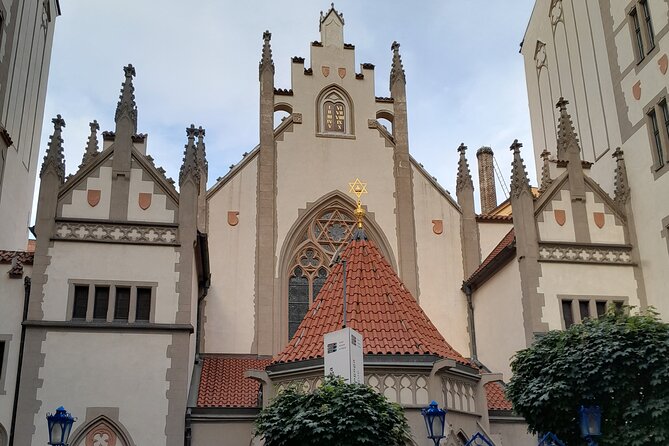
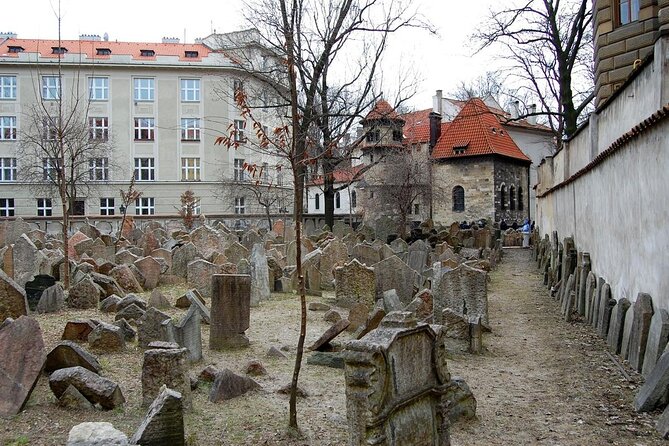
Pinkas Synagogue is the emotional center of the route. The tour frames it as the second oldest preserved synagogue in Prague, but the big takeaway is what your guide tells you about the Shoah during the Nazi occupation of the Bohemian lands from 1939 to 1945.
This is not the type of stop where you want to rush. Even with a set visit length of about 25 minutes, you will need a moment to let the place and the message settle in. A guide’s job here is not just to recite dates, but to explain why this period changed everything and how communities faced the unthinkable.
The benefit of hearing it in a guided sequence is that it makes the later Spanish Synagogue stop feel connected, not like a random add-on. You see the contrast between centuries of community life and the brutal interruption of the 20th century.
A possible consideration: if you prefer lighter, more scenic stops, this one will feel heavier. That does not mean you should skip it. It just means you should go in with respect for the subject. Take your time, listen closely, and do not treat it like a quick photo stop.
The tour again lists admission ticket free for this stop. With that handled, the focus stays where it should be, on understanding the period and the significance of the synagogue in memory.
Stop 4, Spanish Synagogue and the shift after Joseph II to post-WWII
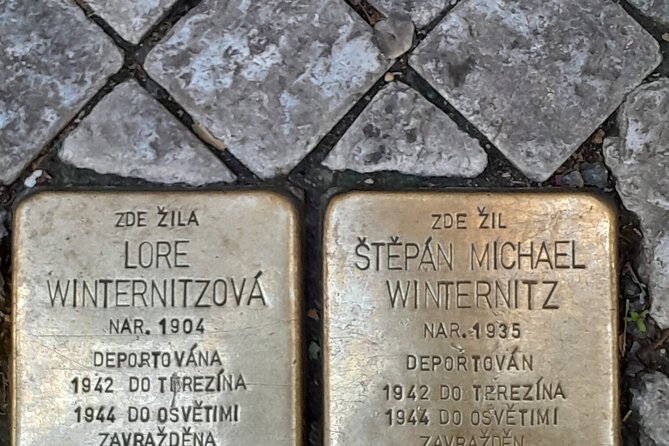
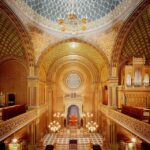
The last stop is the Spanish Synagogue, and the tour ends right there. It is described as the newest synagogue in the so-called Jewish Town area, which makes it a strong closing point: you start with the oldest, then you end with a marker of later changes.
Your guide brings you from the reforms of Joseph II at the end of the 18th century, then forward to the period after World War II. This is where the tour helps you connect past policy and social shifts to what happens when history takes another devastating turn.
The Spanish Synagogue also houses the Jewish Museum in Prague, so you are closing the loop with a place designed to interpret and preserve. Even if the visit length is about 20 minutes, the guide can still help you understand what kind of story the museum tells and why it matters to how people understand Jewish Prague today.
This is often a good “breather” moment after Pinkas. Not because the topics are easy, but because you move from memorial weight into questions of survival, rebuilding, and continuity. The guide can help you see how community identity persisted and transformed rather than disappearing into a single tragic chapter.
One more practical win: because this is also the end point, you can simply step out and keep exploring nearby streets. That makes the tour useful for real travel days, not just for ticking off attractions.
Meeting point, timing, and how to make the route easy
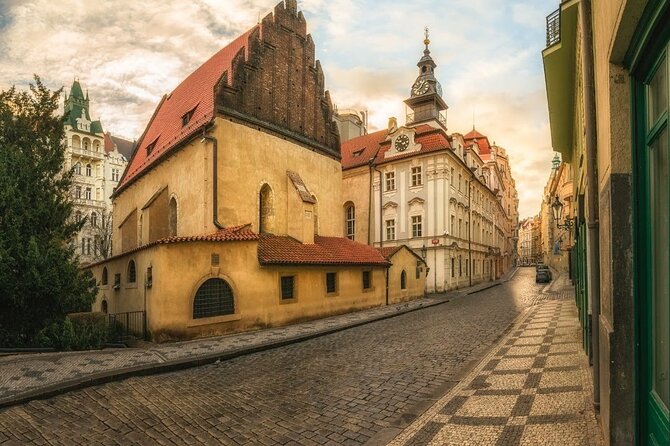
The tour start is listed at Pařížská 934/2, 110 00, Prague 1 (Staré Město). It starts at 2:00 pm and runs about 1 hour 30 minutes.
Because it is near public transportation and you use a mobile ticket, the logistics are usually simple. Still, I recommend arriving a few minutes early. Small-group tours run smoothly when everyone is ready to go at the start.
A maximum of 10 travelers is a big deal here. It tends to mean you get clearer explanations and a guide who can keep track of questions. If you like interactive tours but do not want a huge crowd, this format is a sweet spot.
You also get confirmation at booking time, which reduces uncertainty. And if you travel with a service animal, the tour allows service animals.
If you are planning your day, treat this as a core orientation block. I like putting it early enough that you can build on it later with independent walking. With a start at 2:00 pm, you can pair it with a morning activity in Prague, then let the afternoon set your Jewish-quarter context.
Price-wise, the value equation is strong if you want guided interpretation but you do not want to spend hours. You get four key locations, connected by narrative, for a single price and a short time commitment.
What kind of traveler this tour fits best
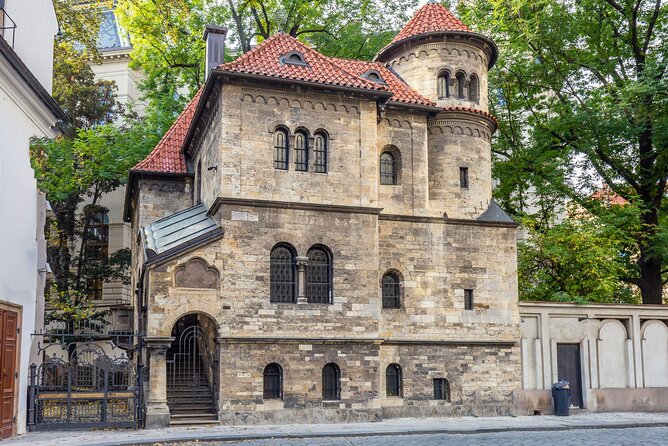
This tour is a good match if you:
- Are visiting Prague for the first time and want a fast way to understand Jewish landmarks
- Care about how stories link across time, from early community life through the 20th century
- Prefer small groups and an English-speaking guide
- Have limited time but still want the essential context
It can be less ideal if you:
- Want deep museum time at one location, not short stop-by-stop visits
- Are strongly focused on only one era, like World War II only, since the itinerary spans earlier centuries too
- Need a lot of quiet inside buildings, since guided pacing will keep you moving along the route
Guides matter a lot in this format. One of the strongest signals from prior visitors is how friendly and engaging the guides are, with Inna specifically mentioned as a standout for being so informative while still keeping things interesting. That is exactly what you want on a short 90-minute route, where every minute has to count.
Practical tips for a better experience
A few things can make your visit smoother and more meaningful:
- Wear comfortable shoes. You are moving between four sites in a compact timeframe.
- Pay attention to names and dates as the guide speaks. The tour’s power is the timeline connection.
- Keep your phone ready, but do not let photos steal every moment. If the subject turns serious, switch off the camera instinct and just listen.
- If you plan to explore after the tour, glance at a map while you are still in the area so you can continue your route naturally.
Also, if you are deciding whether to book right now: free cancellation is listed as available up to 24 hours in advance for a full refund. That gives you some flexibility if weather or schedule changes.
Should you book this Jewish Prague small-group tour?
If you want a focused introduction to Jewish Prague, I would book it. For the money, you get four major synagogues with guided interpretation, and the small-group size keeps the experience human. The route also does something valuable, it connects the legend and the memory, so you understand the “why” behind what you are seeing.
I would especially book this if it is your first day in Prague or your first time in the Jewish quarter. You will leave with the right vocabulary to explore on your own, and you will understand how the community changed across centuries, including the Shoah period.
If you are a slow traveler who wants long stays inside one museum, consider adding extra independent time elsewhere. But for a short, guided, story-driven overview, this is a strong choice.
More Tours in Prague

More Tour Reviews in Prague


Josefov, Layer by Layer
Freshly written up in Prague
- World War II 4WD Tour from Prague with Lunch
★ 4.4 · 3 reviews - World War II History Tour of Prague’s Old Town
★ 5.0 · 3 reviews - Welcome to Prague – Private Tour with Licensed Guide
★ 5.0 · 3 reviews - Gourmet Brunch with Chef: Unlimited Drinks & Stunning River Views
★ 5.0 · 3 reviews - VIP Prague Segway Tour Around Monastic Breweries
★ 4.0 · 3 reviews
Jewish Quarter & Synagogue Tours, compared.
 ★ 4.7Jewish Quarter Walking Tour with Admission TicketsFrom $763,729 reviews
 ★ 4.8Old Town and Jewish Quarter Guided Tour in GermanFrom $293,143 reviews
 ★ 4.6Old Town and Jewish Quarter Guided Walking TourFrom $222,847 reviews
 ★ 4.4Jewish Quarter Ticket with optional Audio GuideFrom $551,107 reviews
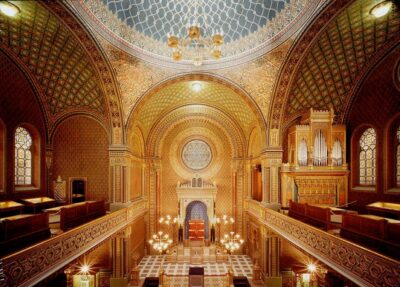 ★ 4.7Classical Concert in the Spanish SynagogueFrom $501,104 reviews
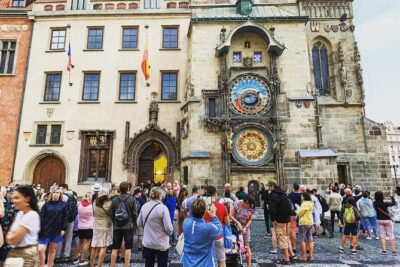 ★ 5.0Prague’s TOP Sights – Old Town, Jewish Quarter, Charles Bridge (Tip-based tour)From $3843 reviews
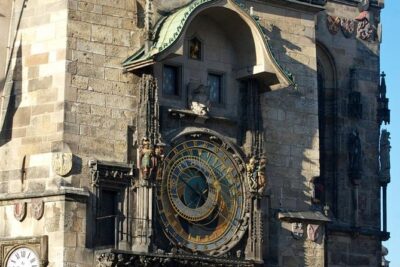 ★ 5.0Prague Old Town New Town and Jewish Quarter Morning TourFrom $32757 reviews
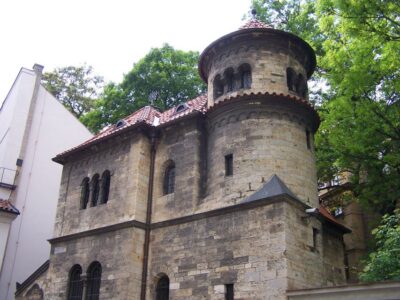 ★ 4.2Old Town, Jewish Quarter & Astro Clock Walking TourFrom $22552 reviews
Browse the lists this tour appears in