
REVIEW · TEREZIN MEMORIAL TOURS
Terezin Concentration Camp – A town of rich and painful history
Six hours, one heavy story. Terezin takes you beyond slogans into the real machinery of WWII, and this private tour from Prague focuses on the key places tied to the Jewish ghetto and the prisons that followed. I especially like that Tatiana guides the experience in English, with hotel pickup and drop-off included, so you spend less time figuring out logistics and more time learning what matters.
This is a somber day trip. You’ll be standing in sites tied to suffering, forced waiting, and mass deportation, and the fortress setting can mean steady walking and uneven ground, so plan for a moderate effort and big emotions.
You’ll also get needed context as you go. Terezin was not an extermination camp like Auschwitz. It functioned as a transit setup, and that difference changes how you should understand the horror. With time spent at major points such as the Gestapo prison, the Crematorium, and the Magdeburg Barracks, you come away with a clearer picture of what everyday life felt like there and why the system operated the way it did.
In This Review
- Key things to know before you go
- Terezin From Prague: The real purpose of this 6-hour outing
- Meeting Tatiana and driver Victor: why this setup feels better
- Fortress to ghetto to prison: the history you’ll need before the sites
- Main Fortress stops: what you learn from the ghetto and its layout
- Gestapo prison focus: why the Small Fortress hit so hard
- Crematorium and barracks: daily life, forced waiting, and loss
- Transportation, timing, and the real value of hotel pickup
- Price and value: when $236.59 per group makes sense
- What to do before and after the tour (so it lands, not just hits)
- Who should book this Terezin day trip?
- Should you book Terezin with Prague Tours by Tatiana?
- FAQ
- What time does the Terezin tour start?
- How long is the tour?
- Is the tour private?
- What is included in the price?
- What language is the tour offered in?
- What physical fitness level do I need?
- What is the cancellation policy?
Key things to know before you go
- Small private group (up to 3) keeps the pace human and your questions welcome
- Tatiana’s explanations make the history easier to follow without sugarcoating it
- Stops at the Gestapo prison, Crematorium, and Magdeburg Barracks focus on the most important sites
- Hotel pickup and drop-off from Prague removes the usual day-trip headache
- Fortress walking and emotional weight are part of the experience, so wear solid shoes and go gently
Further escorted visits to Terezin and its memorial grounds
- From Prague: Terezin Concentration Camp Guided Tour w/ Audio★ 4.5 · 1,959 reviews
- Terezin Concentration Camp Day Tour from Prague★ 4.0 · 1,007 reviews
- From Prague: Terezín and Ghetto Museum Guided Tour★ 4.3 · 571 reviews
- Terezin & Bohemian Switzerland from Prague: Bastei, Narnia & Café★ 5.0 · 445 reviews
Terezin From Prague: The real purpose of this 6-hour outing
Terezin, outside Prague, is one of those places where the name itself carries meaning. During WWII, the Nazis used it as a Jewish ghetto and imprisonment site, holding people in desperate conditions while many were later deported further east to death camps. Many people died in Terezin itself, including children.
This tour is built around understanding that structure. You are not just touring buildings. You are learning how a fortress system turned into an engineered prison setup, and how that affected daily life inside. That focus is one reason this feels more useful than a generic half-day sightseeing ride.
At about 6 hours, it’s long enough to do more than skim the surface, but not so long that you’re trapped for the whole day. The start time is 9:00 am, which helps you keep momentum and gives you daylight for moving between sites.
Meeting Tatiana and driver Victor: why this setup feels better
This is a private experience, and that changes everything about how you can process what you see. When the group stays small, you can ask direct questions without feeling rushed, and the guide can adjust the pace if a topic takes more time to digest.
In the experience described here, Tatiana is the guide, and Victor is the driver. People have praised them for showing up on time and handling the day with an easy calm. That matters in a place like Terezin, where you want steadiness, not chaos.
There’s also a practical bonus: hotel pickup and drop-off. Instead of dealing with public transport, timing, and multiple transfers, you get a direct plan. For a serious historical outing, that reduces friction. Less stress helps you stay focused.
And yes, it’s offered in English, so you can follow the explanations clearly without guessing from partial translations.
Fortress to ghetto to prison: the history you’ll need before the sites
One of the most useful things a good guide can do here is give you the framework. Terezin did not exist from day one as a WWII ghetto and concentration camp system. It evolved.
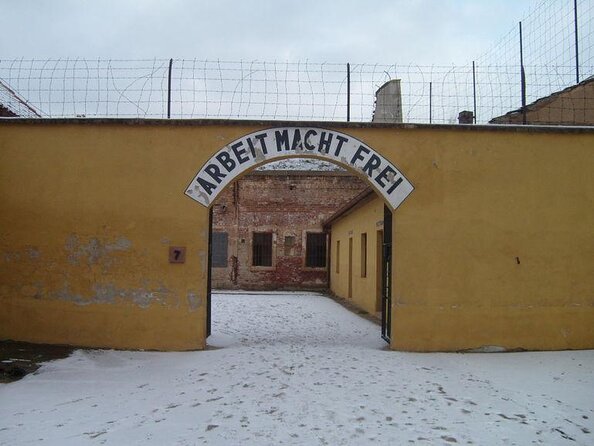
First, it was a fortress associated with Maria Theresa, later becoming less useful as a fortress. After that, it shifted roles, including as a garrison town and then a prison during World War I. When the Nazis took over, they repurposed the fortress area into a Jewish ghetto in the main fortress complex, and they used the smaller fortress as a cruel prison for the regime’s secret police, the Gestapo.
That is the core story to keep in mind. Terezin is part of the Holocaust system, but it’s also a story about administration and control. The Nazis used structures that already existed, then layered on a new purpose, new rules, and new suffering.
Understanding that evolution helps the sites make more sense. When you see the prison spaces, the barracks, and the places tied to the “special” ghetto system, you can connect what you’re looking at to the way the system was built to manage people.
Further history, angled differently
Main Fortress stops: what you learn from the ghetto and its layout
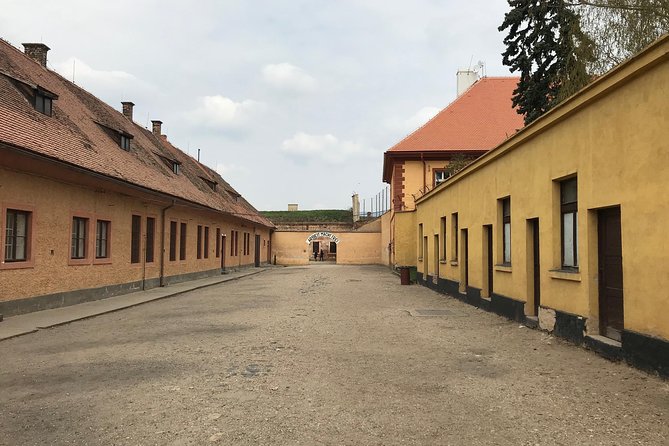
The tour focuses on the most significant sites, and the Main Fortress context matters because it’s where the Jewish ghetto system took shape.
At the Main Fortress sites, you’ll be learning what it meant to be held inside an engineered “ghetto” environment. The emphasis is on why Terezin existed in the Nazi plan and how it functioned as a holding and transit site rather than an extermination site. That detail matters because it changes what the place was designed to do. It wasn’t only about killing inside. It was about processing, controlling, and transporting people onward.
This is also where the idea of time becomes central. Many people were held for long stretches in desperate conditions, awaiting transport further east. And because Terezin also held children, the history is not only about adults and camps. It’s about families, daily routines that were forced into survival modes, and the crushing uncertainty of waiting for orders.
If you care about Holocaust history in a grounded way, this is the part that can feel most clarifying. It helps you see how the Nazi system worked on a bureaucratic level, not just on a battlefield or in a headline.
Practical note: fortress grounds can be tough on your legs. Even if your day is only about 6 hours, you’re likely to spend enough time standing and moving to feel it. Wear shoes that can handle uneven surfaces.
Gestapo prison focus: why the Small Fortress hit so hard
The Small Fortress, tied to the Gestapo, is one of the hardest parts of this day trip for obvious reasons. The secret police prison stands for terror, interrogation, and punishment, not “processing” in some distant sense, but deliberate control over human lives.
What makes this stop valuable in a guided format is how it fits into the bigger picture. You can look at walls, cells, and prison-related spaces and feel a vague sense of dread. With a guide like Tatiana, the experience becomes more structured. You learn what the prison represented within the regime, and how the system used different parts of Terezin for different functions.
This is where questions matter. If you want to understand how a place could function in multiple roles at once, ask. If you want clarity on how people were moved or held, ask. People have praised Tatiana for handling tough questions patiently, including when families joined the tour with children.
If you’re the type who needs mental pacing, you might want to take small breaks when the emotions start stacking up. The tour is somber, and it’s okay to slow your breathing and let yourself absorb.
Crematorium and barracks: daily life, forced waiting, and loss
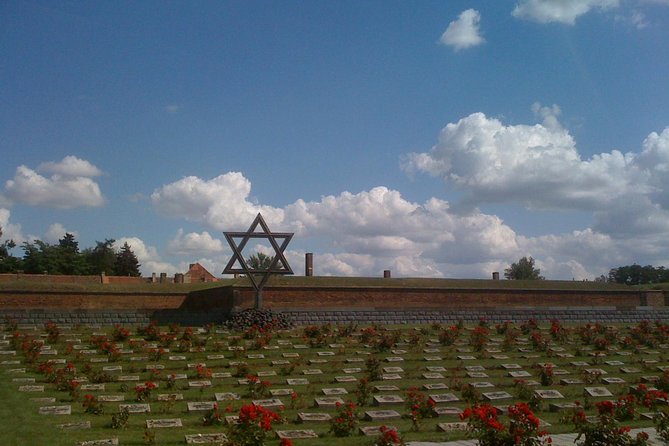
The tour includes stops tied to the Crematorium and the Magdeburg Barracks. These sites push the history from “place” into “process.” They help you understand how the camp environment operated beyond just imprisonment, and how suffering was built into routine.
The Crematorium stop, in particular, doesn’t just represent death. It represents the brutal reality of mass suffering, and it helps you understand what imprisonment meant when survival was not guaranteed. It’s the kind of site where you’ll likely find it hard to keep your thoughts moving. That’s normal. Let the guide’s explanations do the heavy lifting.
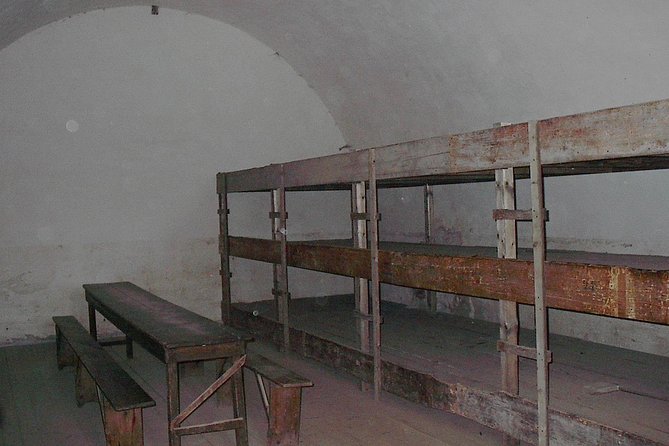
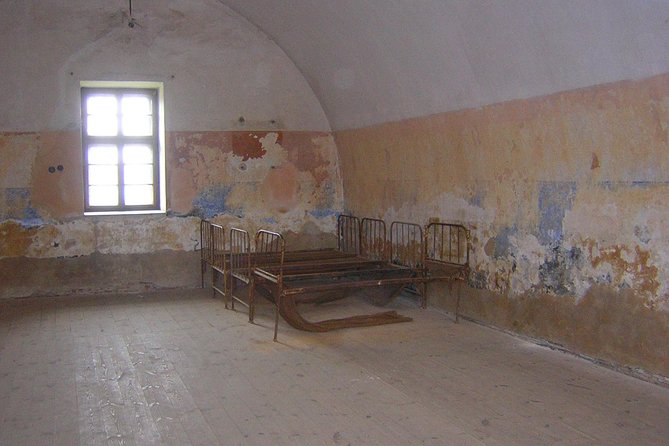
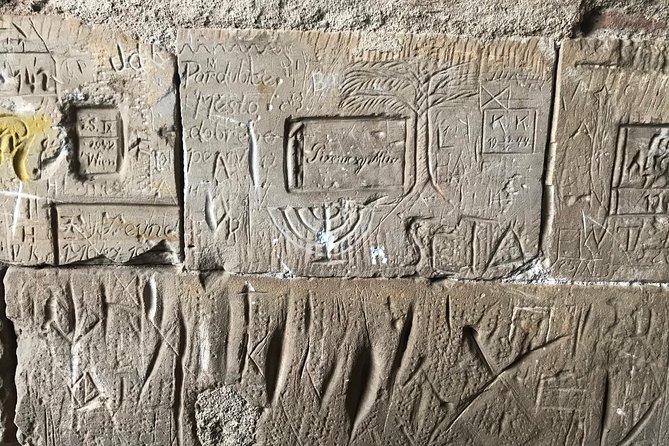
Then the Magdeburg Barracks connect you to what held people day to day: confinement, overcrowding, deprivation, and the grind of life reduced to survival. Barracks spaces have a way of making history physical. You’re not reading about conditions, you’re seeing the geometry of confinement and imagining daily routines under pressure.
This part of the tour can be intense, especially if you’re visiting with kids. But the reviews linked to this experience highlight that Tatiana can keep explanations clear and age-appropriate when questions come up. If you bring children, I’d suggest using the guide’s calm focus as your anchor, and letting your family ask what they’re ready to ask.
Transportation, timing, and the real value of hotel pickup
Here’s what makes this tour easier than many alternatives. Hotel pickup and drop-off means you start at the registration desk of your hotel, meet your team, and leave on private transportation. For a town with serious sites, that matters because you don’t want travel stress to steal attention from learning.
The tour starts at 9:00 am, and it’s about 6 hours total. That timing is a sweet spot. You get enough time to cover the major sites, and you return to Prague before the evening turns into a full second day.
The small group size also matters for logistics. A group up to 3 can move and pause without turning the day into a race. In a place where you may need a moment to process something, that slower feel can help.
What’s included:
- private guide plus pickup and drop-off at your hotel
- private transportation
- hotel pickup and drop-off
What’s not included:
- all fees and taxes
Also, service animals are allowed. And the tour calls for travelers with moderate physical fitness. That’s a good way to think about it: you don’t need to train for a marathon, but you should be comfortable walking and standing for extended periods.
Price and value: when $236.59 per group makes sense
The price is $236.59 per group, up to 3 people. On paper, that can look high until you break it down.
If you’re a pair, you share the cost, and the per-person rate is much lower than it would be with a typical large-group tour that still requires your own transport to reach Terezin. If you can fill the group, the value improves further, because what you’re paying for is not just “a ride,” it’s a guided, private, English-language explanation of some of the most significant Holocaust-related sites in the Terezin area.
You also get the convenience of hotel pickup and drop-off. In Prague, that alone can save time and hassle, which is not a small thing when the tour content is emotionally heavy.
One caution: all fees and taxes are not included. The base price is a solid starting point, but your final total may vary depending on local charges.
What to do before and after the tour (so it lands, not just hits)
This is not a day trip for multitasking. If you want the experience to feel more useful, come prepared to pay attention.
Before you go:
- wear comfortable, sturdy shoes
- bring water if allowed in your comfort level, and plan for a long, quiet day
- decide ahead of time how much you want to talk with your group about the history during transit, because the drive period is also part of the experience
After you return, give yourself time. Terezin can leave you thinking for days. If you plan dinner right away, keep expectations realistic. You might prefer quiet time first.
Also, if you’re the type who likes to connect history to present-day reality, consider reading up briefly on Terezin and its role as a transit setup before the tour. You’ll understand the guide’s explanations faster and feel less lost at the start.
Who should book this Terezin day trip?
Book it if you want:
- a private format rather than a noisy bus tour
- a guide who can explain the transformation of the fortress into a ghetto and prisons in clear English
- focused stops at the places that most directly explain Terezin’s WWII role, including the Gestapo prison, Crematorium, and Magdeburg Barracks
- pickup and drop-off convenience from your Prague hotel
It’s also a good fit for families, but only if you can handle the day’s subject matter together. The experience shared here includes families with children, and Tatiana’s explanations are described as patient and practical. Still, it’s wise to judge your kids’ readiness. This is not gentle history.
If you want “fun,” plan something else in Prague that day. This tour is for learning, remembrance, and understanding.
Should you book Terezin with Prague Tours by Tatiana?
I think you should book this tour if you value a calm private guide, clear English explanations, and you want your time focused on the most important Terezin sites. The combination of hotel pickup, small group size, and Tatiana’s ability to handle tough questions makes it a strong choice for anyone who wants more than a quick stop.
Avoid booking it if you:
- don’t want a somber, emotionally heavy experience
- struggle with moderate walking and standing
- need a light, casual schedule
If your goal is to understand how Terezin worked in the Nazi system, and to visit the key places that help explain ghetto life and prison terror, this is a very sensible way to do it from Prague.
FAQ
What time does the Terezin tour start?
The tour starts at 9:00 am.
How long is the tour?
The duration is approximately 6 hours.
Is the tour private?
Yes. It is a private tour or activity, and only your group will participate.
What is included in the price?
Included are the services of a private tour guide, private transportation, and hotel pickup and drop-off. Pickup and drop-off are also included at the guest’s hotel.
What language is the tour offered in?
The tour is offered in English.
What physical fitness level do I need?
Travelers should have a moderate physical fitness level.
What is the cancellation policy?
Free cancellation is available. You can cancel up to 24 hours in advance for a full refund. If you cancel less than 24 hours before the experience starts, the amount you paid will not be refunded. The tour also requires good weather, and if it is canceled due to poor weather, you will be offered a different date or a full refund.
Angled History in Prague

More Tour Reviews in Prague


Terezin and Its Memorial Sites


Freshly written up in Prague
- World War II 4WD Tour from Prague with Lunch
★ 4.4 · 3 reviews - World War II History Tour of Prague’s Old Town
★ 5.0 · 3 reviews - Welcome to Prague – Private Tour with Licensed Guide
★ 5.0 · 3 reviews - Gourmet Brunch with Chef: Unlimited Drinks & Stunning River Views
★ 5.0 · 3 reviews - VIP Prague Segway Tour Around Monastic Breweries
★ 4.0 · 3 reviews
Terezin Memorial Tours, compared.
 ★ 4.5From Prague: Terezin Concentration Camp Guided Tour w/ AudioFrom $671,959 reviews
 ★ 4.4From Prague: Tour of Terezin Concentration CampFrom $661,269 reviews
 ★ 4.0Terezin Concentration Camp Day Tour from PragueFrom $781,007 reviews
 ★ 3.7From Prague: Terezin Concentration Camp TourFrom $53573 reviews
 ★ 4.3From Prague: Terezín and Ghetto Museum Guided TourFrom $86571 reviews
 ★ 5.0Terezin & Bohemian Switzerland from Prague: Bastei, Narnia & CaféFrom $145445 reviews
 ★ 4.5Terezin Concentration Camp Day Tour Including Admission From PragueFrom $96179 reviews
 ★ 5.0Terezin In-Depth Holocaust Tour From Prague’s Center (max 7 pax)From $145170 reviews
Browse the lists this tour appears in