
REVIEW · HISTORICAL TOURS
Prague: Top Sights and Historic Center Introduction Tour
Prague makes sense when someone points. I like this 3-hour tour because it links the big postcard sights with the small story behind them, led by certified local guides who explain what you are looking at, not just where it is. You also get a practical Astronomical Clock lesson that helps the whole city feel more readable.
Two things I love: the walking route through Old Town and the Jewish Quarter, and the way the guide turns landmarks into clues you can remember later. Guides like Lucie, David, Hana, and Jay show up in the feedback for doing exactly that, mixing humor with clear explanations and lots of street-level context.
One consideration: this is 3 kilometers of walking, and it runs rain or shine. It is not suitable for wheelchair users or people with mobility impairments, so plan around the pace and the uneven historic streets.
In This Review
- Key highlights that make this tour worth your time
- First stop: Powder Gate meeting point and the Powder Tower’s real job
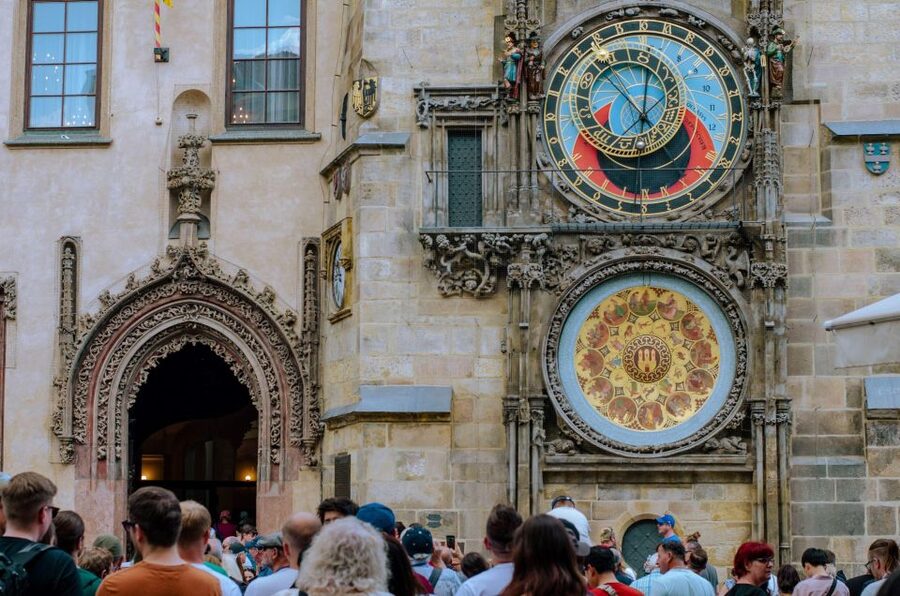
- Old Town Square and the Astronomical Clock, learning to read the show
- Charles University doorstep, Mozart’s Don Giovanni, and a few Czech words that stick
- Powder Tower streets to cubist Prague: Black Madonna and the Estates Theatre
- Coffee and restroom break, and how to avoid the small frustration
- Franz Kafka, Pařížská Street, and resetting the vibe before the Jewish Quarter
- Jewish Quarter stops: synagogues you see from the outside and stories you remember
- Charles Bridge and Lennon Wall, ending with two kinds of Prague photos
- Price and value: how $20 works when your guide actually teaches
- Who this tour suits best (and who should skip it)
- Should you book this Prague top sights and historic center tour?
- FAQ
- How long is the Prague Top Sights and Historic Center Introduction Tour?
- Where does the tour start and how do I find the guide?
- What language is the tour conducted in?
- Is the tour walking-heavy, and how much will I walk?
- Does the tour run in good weather only?
- What is included in the tour price?
- Are the synagogue interiors included?
- Is this tour suitable for wheelchair users or mobility impairments?
Key highlights that make this tour worth your time
- Astronomical Clock coaching that tells you what each moving detail means
- Old Town wall and Powder Tower context so the area clicks into place
- Jewish Quarter storytelling including the Golem, plus guidance for synagogue tickets
- Photo-friendly beats at key viewpoints like Charles Bridge and the Lennon Wall
- A genuinely local guide vibe you can feel in the pacing and Q&A style
Further history, angled differently
- Prague: Oldtown, Medieval Underground & Dungeon History Tour★ 4.2 · 8,244 reviews
- Prague Old Town, Medieval Underground and Dungeon Historical Tour★ 4.5 · 3,227 reviews
- Prague: Communism History and Nuclear Bunker Guided Tour★ 4.7 · 2,417 reviews
- Prague: Historic City Center Bus Tour with Top Sights★ 4.4 · 2,360 reviews
First stop: Powder Gate meeting point and the Powder Tower’s real job
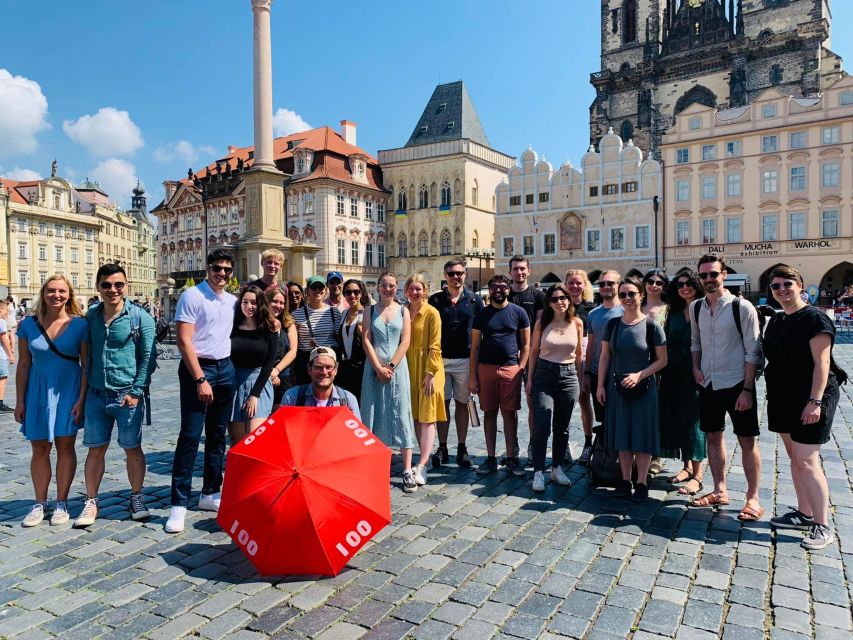
I like starting right where the story begins, at Prašná Brána (Powder Gate). Meeting there with a guide holding a red opened umbrella with a white 100 logo is easy, and it puts you in the part of Prague where defense and city life once overlapped.
From here you move to the Powder Tower area, and the guide explains the significance of the site, including where the original defensive wall of Old Town and its moat used to be. That detail matters because it changes how you view the streets around you. Instead of treating buildings like isolated monuments, you start to see a protective system, gates, and movement lines.
Even if you have seen photos of Old Town Square and Charles Bridge, this early context helps. You start noticing angles, entry points, and why certain towers and walls show up where they do. It is the kind of orientation that makes your later self-guided walks faster and less confusing.
Old Town Square and the Astronomical Clock, learning to read the show
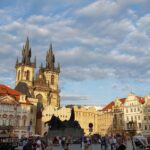
The walk brings you to Old Town Square, then into the area of the Prague Astronomical Clock. This is one of those sights people look at for five seconds and forget. The tour’s payoff is that you get instruction on how to read it, not just admire it.
Here is what I recommend you do as you listen: slow down and watch the moving parts like the guide is narrating them. The clock is busy by design, with multiple layers of meaning packed into one mechanism. When someone explains what you are seeing, the clock stops feeling like random decoration and starts feeling like a smart, engineered display.
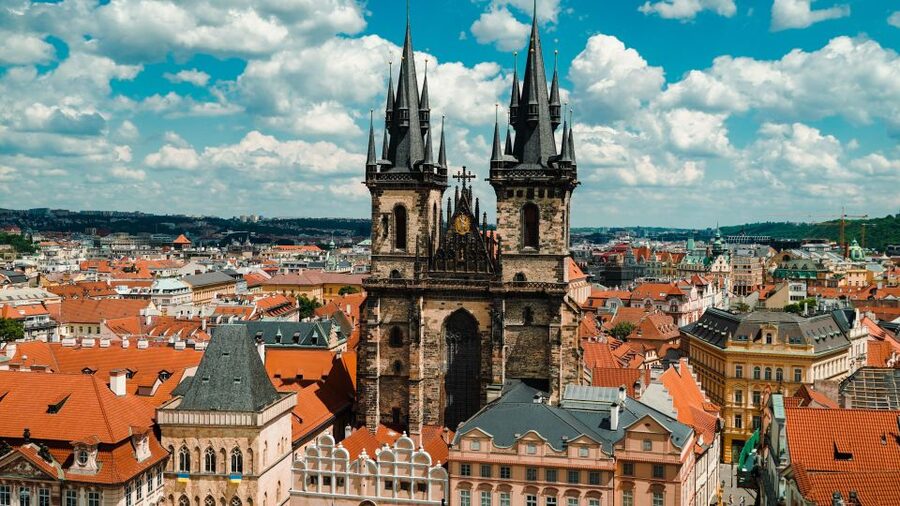
The itinerary also includes Church of Our Lady before Týn, and that timing helps. Once you understand the clock area a bit, the church facade is easier to interpret as part of the same civic and religious statement in the square.
Then you move toward the Jan Hus Monument. Hus is a key name in Prague, and a good guide uses that stop to connect the present-day city to the religious and political tensions that shaped it. Even if you are not a history buff, monuments like this give you anchors. You remember them later when you see related streets and names on signs.
Charles University doorstep, Mozart’s Don Giovanni, and a few Czech words that stick
One of my favorite parts of the route is the brief teaching moment near the doorstep of Charles University. The tour doesn’t just point at buildings. It uses that spot to teach you how to read the city in layers.
You will also get a small language push, some Czech, which is more useful than it sounds. A few words can help you ask for directions, order a coffee, or get a quick smile when you are navigating dense streets.
And there’s a story connection here that makes the buildings feel alive: the guide points out where Mozart premiered Don Giovanni. Whether or not you are a hardcore opera fan, this kind of detail changes how you walk past theaters and institutional buildings. You stop seeing them as scenery and start treating them like stage sets from the past.
Just as important, the guide uses this section to keep the tour moving at a pace that still feels conversational. The best city walks are not marathons. They are steady, with time to ask questions when curiosity hits.


Powder Tower streets to cubist Prague: Black Madonna and the Estates Theatre
Before you reach the densest historic blocks, you pass by the House at the Black Madonna, which is known as the most famous cubist house in the world. It is the kind of stop that works well early in the tour because it reminds you Prague is not only medieval stone.
You also see the Estates Theatre. The guide links these stops to the broader cultural story of Prague, including music. This is where the tour does something that self-guided wandering often can’t. A good guide creates connections between places that are physically close but mentally separated in many visitors’ minds.
If you like architecture, this is your chance to train your eyes. Notice how Prague can shift from civic and Gothic weight to art movements and performance culture, all in one compact walk. And because the group is moving as a unit, you get photo chances without having to guess where the best angles are.
Coffee and restroom break, and how to avoid the small frustration
The itinerary builds in a 15-minute coffee and restroom break at a local café. This is one of those “small” inclusions that makes the whole tour feel manageable, especially on days when Prague feels colder or the streets are slick.
One practical tip: if you might need the restroom, go quickly when the group arrives. Some tours are so popular that the line can grow fast. The goal is to avoid the moment where you are stuck waiting while everyone else moves on.
Also, do not treat this break like downtime to disappear. This tour relies on staying together, and the guide will time the next section to keep you from getting lost in crowds.
Franz Kafka, Pařížská Street, and resetting the vibe before the Jewish Quarter
After the main Old Town focus, the route shifts toward other cultural landmarks. You see the Franz Kafka Monument, then continue along Pařížská Street.
I like this segment because it feels like a transition. You go from the thick medieval center into a more modern Prague rhythm. Even the street names start to feel like they belong to specific eras and identities.
Kafka is a good bridge figure. If you have read even a little, his Prague connects literature to place. A guide can also use him to explain why the city became a magnet for writers, artists, and thinkers.
From here, the pace sets you up for what comes next.
Jewish Quarter stops: synagogues you see from the outside and stories you remember
The tour heads into the Jewish Quarter after the break. You will see the Old-New Synagogue, the Old Jewish Cemetery, and the Jewish Town Hall. You also hear the story of the Golem, one of Prague’s best-known legendary creatures.
Important detail: the tour does not visit the interiors of the synagogues because of ticket requirements. Instead, the guide explains what you can expect inside and gives guidance on how to get tickets for later visits.
For me, that is a smart way to keep the tour flowing. Synagogues are often managed with specific entry rules, and queues can derail a walking itinerary. By handling it this way, you still get the cultural and historical meaning without losing the rest of the route.
At the Old Jewish Cemetery, the atmosphere does the work. Even without entering anything, you get a sense of how deeply layered Prague’s history is. This stop also pairs well with the golem story, because folklore is often a way communities processed fear, hope, and identity.
If you plan to return, take note of what the guide points out. Then your later synagogue tickets will feel more targeted, not like walking into a room full of unknown names.
Charles Bridge and Lennon Wall, ending with two kinds of Prague photos
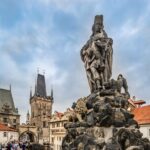
The last big walk beat is Charles Bridge, with time for sightseeing. The itinerary allows for a meaningful pause here, which is good, because this bridge is one of those places where the best photos depend on timing. A guide also helps you avoid wasting the precious minutes you have when the crowds shift.
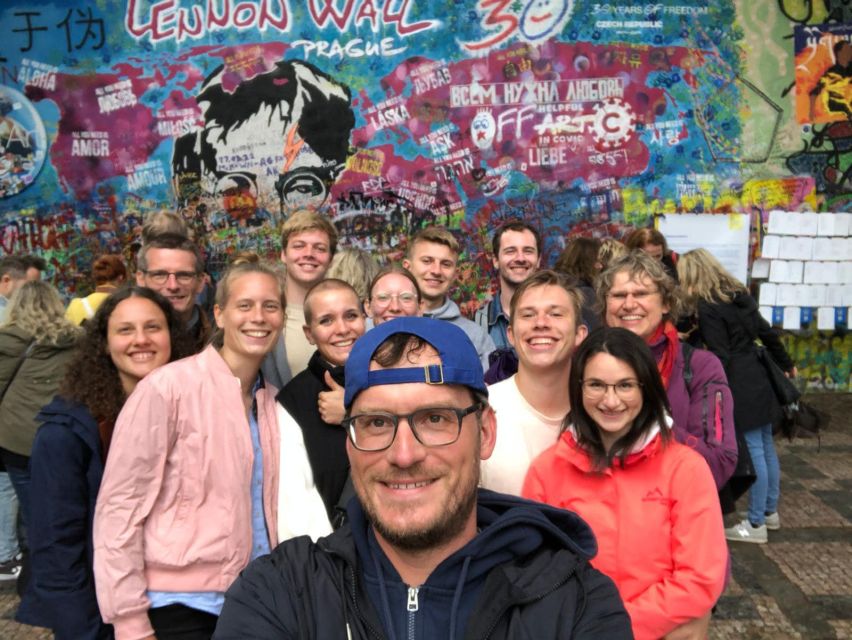
After the bridge, the tour concludes at the John Lennon Wall. This is a finishing point that feels right for many first-timers because it is visually memorable and emotionally modern, compared with the cemetery and medieval lanes you saw earlier.
It also gives you a clean way to wrap up the day. You can head off on your own right after, armed with more context and better instincts for where to go next.
Many guides also leave you with recommendations for attractions and museums during the final wrap-up, and the strongest guide styles in the feedback stand out for that kind of practical help. People named Hana and David in the feedback are praised for giving clear, useful suggestions for what to do next.
Price and value: how $20 works when your guide actually teaches
At $20 per person for a 3-hour walk, this tour is priced like a budget-friendly orientation, but it does not feel thin. The value comes from a few specific things that are hard to replicate on your own.
First, you are getting certified local guidance and a route that stitches together Old Town, the Jewish Quarter, and the bridge area in one stretch. That saves you time. You are not spending hours piecing together a sensible plan from maps and scattered blog posts.
Second, you get instruction that changes how you experience major stops, especially the Astronomical Clock. That is the kind of difference that makes the price feel fair.
Third, you get a timed break for coffee and restrooms. It is not glamorous, but it is real comfort, and comfort keeps you engaged instead of impatient.
Finally, this is a tip-based tour, but the listing offers it as a pre-paid option. The important point for you is that the majority of your payment goes directly to the guide, with no extra fees required. That structure often aligns incentives. A guide who can deliver a great experience will, and the feedback pattern supports that.
The only “cost” outside the price is what you may choose to do later, like visiting synagogue interiors on your own with tickets.
Who this tour suits best (and who should skip it)
This tour is a strong fit if you want:
- A fast, coherent first look at Prague’s most important historic areas
- A guide-led explanation of the Astronomical Clock
- A structured way to see Old Town and the Jewish Quarter without getting overwhelmed by details
- A route that ends at Charles Bridge and the Lennon Wall, so you can keep exploring right after
I would be cautious if you:
- Need wheelchair access or mobility support, because the tour is not suitable for wheelchair users
- Have trouble with sustained walking on uneven historic streets
- Hate crowds, since Old Town Square and the clock area can get busy
Should you book this Prague top sights and historic center tour?
If it is your first or second day in Prague, and you want to get your bearings fast, I think this is an easy yes. You will walk away with more than photos. You will know how to read the clock, you will understand why the Powder Tower matters, and you will connect Prague’s Jewish Quarter to stories like the golem.
Book it if you like explanations and you want a plan that keeps you moving without rushing. Skip it if your mobility needs more support than a 3-kilometer, rain-or-shine walking route can offer, or if you only want full interior visits, since synagogue interiors are not included here.
FAQ
How long is the Prague Top Sights and Historic Center Introduction Tour?
The tour lasts 3 hours.
Where does the tour start and how do I find the guide?
Meet your guide in front of the Powder Gate (Prašná Brána). The guide will have a red opened umbrella with a white 100 logo on it.
What language is the tour conducted in?
The tour is conducted in English only.
Is the tour walking-heavy, and how much will I walk?
You will walk about 3 kilometers during the tour, and comfortable shoes are recommended.
Does the tour run in good weather only?
No, it takes place rain or shine.
What is included in the tour price?
A certified guide is included, plus a 15-minute break for coffee and toilets.
Are the synagogue interiors included?
No. The tour will not visit the interiors of the synagogues due to ticket requirements, but the guide explains what you can expect inside and can advise on getting tickets for later visits.
Is this tour suitable for wheelchair users or mobility impairments?
No. It is not suitable for people with mobility impairments, including wheelchair users.
Angled History in Prague
More Tours in Prague

More Tour Reviews in Prague

Freshly written up in Prague
- World War II 4WD Tour from Prague with Lunch
★ 4.4 · 3 reviews - World War II History Tour of Prague’s Old Town
★ 5.0 · 3 reviews - Welcome to Prague – Private Tour with Licensed Guide
★ 5.0 · 3 reviews - Gourmet Brunch with Chef: Unlimited Drinks & Stunning River Views
★ 5.0 · 3 reviews - VIP Prague Segway Tour Around Monastic Breweries
★ 4.0 · 3 reviews
Historical Tours, compared.
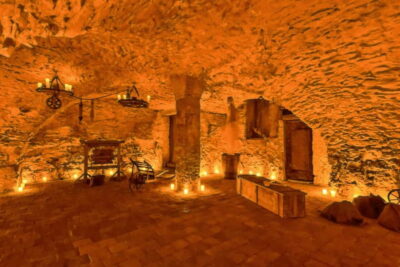 ★ 4.2Oldtown, Medieval Underground & Dungeon History TourFrom $308,244 reviews
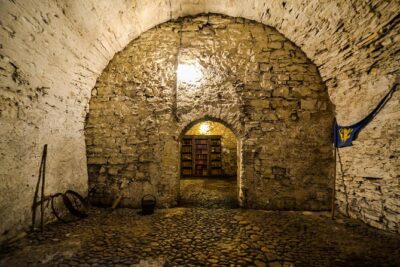 ★ 4.5Prague Old Town, Medieval Underground and Dungeon Historical TourFrom $323,227 reviews
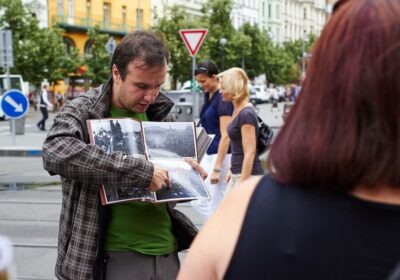 ★ 4.7Communism History and Nuclear Bunker Guided TourFrom $442,417 reviews
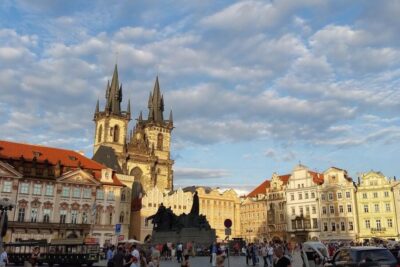 ★ 4.4Historic City Center Bus Tour with Top SightsFrom $202,360 reviews
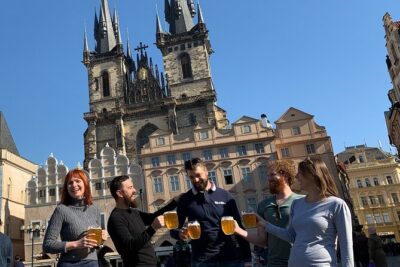 ★ 5.0Prague Historic Pub Tour with Drinks IncludedFrom $652,084 reviews
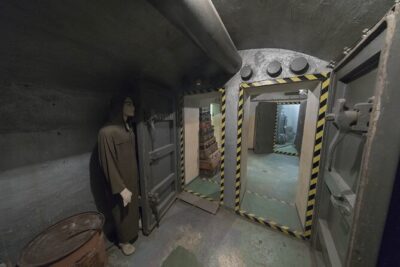 ★ 5.0Prague Communism History and Nuclear Bunker TourFrom $451,742 reviews
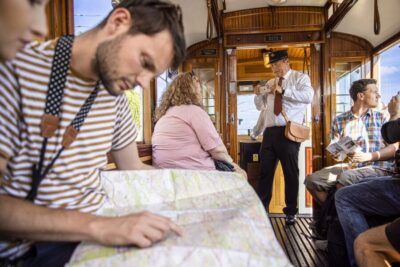 ★ 4.1Hop-on Hop-Off Historical Tram Ticket for Line 42From $201,702 reviews
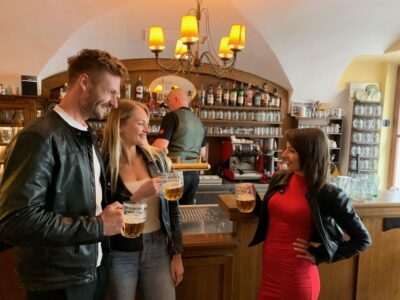 ★ 4.9Historic Pubs Tour with DrinksFrom $64411 reviews
Browse the lists this tour appears in