
REVIEW · HISTORICAL TOURS
Prague Literary & Historical Tours – Literature Route
Prague gets literary in two hours. This route turns Prague streets into a storyline of Czech literature, guided in English by Fergus, moving step by step back through time. I love how the guide links each stop to authors and ideas, and how the pace stays friendly so you keep looking around. One possible drawback: with a 2-hour schedule and multiple quick stops, you may want extra time afterward if you like to linger.
You start at Mariánské nám. 2/2 in Staré Město and finish at Charles Square near the New Town Hall and the river promenades, which makes it easy to connect to the rest of your day. I like the mobile ticket and the fact that entry at each listed stop is free, so the price goes mostly to the guiding and storytelling. The group stays small, with a maximum of 25 people, so questions and conversation feel more natural.
The route is built around big literary and historical shifts you can actually picture in your head. You hit interwar avant garde energy at Slovansky Ostrov-Zofin, then move into the early 1900s around the birth of the First Republic at Pštrossova, and end near Karlovo náměstí where important 19th century writers lived. Expect facts, humor, and some eyebrow-raising drama as the guide connects people to what they wrote.
In This Review
- Key things that make this Literature Route special
- A literary walk that moves backward through time
- Price and timing: what $21.66 buys you
- Start at Mariánské náměstí, finish at Charles Square
- Stop 1: U Zlateho tygra and the Old Town opener
- Stop 2: Bartolomějská, where the guide keeps the secret
- Stop 3: Slovansky Ostrov-Zofin and the interwar avant garde
- Stop 4: Pštrossova and the birth of the First Republic
- Stop 5: Karlovo náměstí, then Charles Square for 19th century writers
- Why the guide’s storytelling style is the real centerpiece
- Good shoes, good expectations, and how to get the most
- Who this tour suits best, and who might skip it
- Should you book the Prague Literature Route?
- FAQ
- FAQ
- How long is the Prague Literary & Historical Tours Literature Route?
- Is the tour offered in English?
- Where do I meet the guide?
- Where does the tour end?
- Do I need to pay admission at the stops?
- How big is the group?
- Do I get a mobile ticket?
- Are service animals allowed?
- When will I receive confirmation after booking?
- What is the cancellation window for a full refund?
Key things that make this Literature Route special
- A backward-moving timeline that helps you feel Czech literature changing across eras
- Fergus in English, with stories that mix literary names, history, and real-life intrigue
- Free admission at every listed stop, so you are not surprised by add-on costs
- Interwar Prague at Slovansky Ostrov-Zofin, focused on the avant garde
- First Republic context near Pštrossova, when multiple ethnicities shaped the city
- A finish at Charles Square, right where you can keep walking through greener Prague
Further history, angled differently
- Prague: Oldtown, Medieval Underground & Dungeon History Tour★ 4.2 · 8,244 reviews
- Prague Old Town, Medieval Underground and Dungeon Historical Tour★ 4.5 · 3,227 reviews
- Prague: Communism History and Nuclear Bunker Guided Tour★ 4.7 · 2,417 reviews
- Prague: Historic City Center Bus Tour with Top Sights★ 4.4 · 2,360 reviews
A literary walk that moves backward through time
This tour works because it has a clear rhythm. You do not just “see places,” you move through a timeline the guide sets up like chapters in a book. That matters in Prague because the city is layered. Buildings survive, streets remain, and the same view can hold different centuries depending on what you know to look for.
I like that the route begins in the Old Town area and then gradually shifts backward through time. Early Prague literature is easier to grasp when you are physically leaving the busiest streets and stepping into the guide’s story logic. You will probably feel that the guide is steering you toward the meaning of small details, not only big monuments.
The humor is part of the value too. When a guide can make literature feel human, you remember it longer. And when you are talking about writers and movements, that is half the battle. A quick, sharp story helps names stop being random and start being connected to real places and real tensions.
Price and timing: what $21.66 buys you
At $21.66 per person for about 2 hours, this is priced like an efficient, city-focused walk rather than a full museum day. That can be a good thing in Prague, where you want variety without spending half your trip seated indoors.
The biggest practical advantage is the “Admission Ticket Free” note across the listed stops. In other words, you are not paying extra entry fees just to get the most out of the route. For a short tour, that keeps the total cost predictable.
Timing also matters. Two hours sounds short, but the route is built around distinct “story chapters,” not wandering for its own sake. You end at Charles Square, which is a natural springboard into the rest of your day. If you hate being locked into a long schedule, this fits better than you might expect.
The small group size, capped at 25 people, is another value point. You are more likely to get the kind of back-and-forth that makes the tour feel personal rather than broadcast.
Start at Mariánské náměstí, finish at Charles Square
The start location puts you in a walkable, central zone in Staré Město, at Mariánské nám. 2/2. That helps if you are already staying nearby or plan to use public transport without a long transfer.
Where you end is a big deal. The tour finishes at the historic Charles Square area, near the New Town Hall and close to the river promenades. That means you can keep moving immediately, grab a drink or snack, and still have the walk feel cohesive. It also gives you a satisfying “out” from the tour experience. You get to close the story in a pleasant, open-feeling place instead of returning to the exact spot you started.
One small consideration: since the end point is different from the start, plan for an easy continuation afterward. Charles Square and the nearby river paths are great for that, but you will want to know where you are headed once the 2 hours are done.
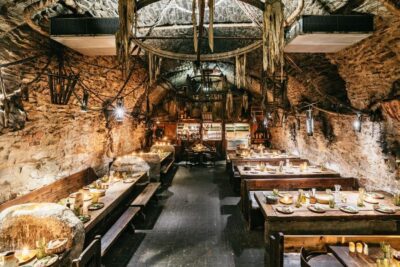
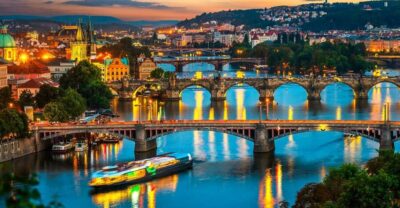
Stop 1: U Zlateho tygra and the Old Town opener
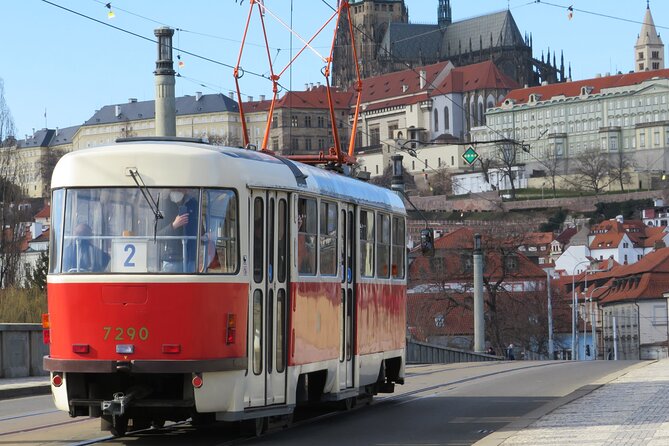
You begin at U Zlateho tygra, and the guide sets expectations right away. Each stop is framed as a chapter in a story about Czech literature, with the tour gradually moving backward through time. Starting here is useful because it anchors the route in the Old Town atmosphere, where history feels close even before you start learning specific names.
This is a “get the map in your head” moment. Before the tour becomes more era-specific, you learn how the guide thinks about Czech literature. That makes the later stops easier to follow because you already know what to listen for: the way culture, politics, and city life shape what gets written and what gets remembered.
The listed admission is free here, which is helpful. You can focus on the talk without spending your time scanning ticket lines or timing entry.
A practical tip: arrive ready to pay attention for the first few minutes. The tour’s storytelling method relies on you picking up the guide’s framing early, not after the tour has already moved on.
Stop 2: Bartolomějská, where the guide keeps the secret
Bartolomějská is the “you have to watch closely” stop. The guide signals that they will not give everything away. That sounds vague on purpose, and it works well for people who enjoy getting surprised by what they notice in the street scene.
So what can you expect, practically? You can expect to move with curiosity. This is the segment where you will likely look at the city differently than you would on a standard sightseeing loop. Instead of treating the street as a route from A to B, you treat it as a clue. The guide uses that setup to steer you toward what matters for Czech literature and history in that moment.
Admission is free at this stop too, so there is no financial friction to slow down and take in what the guide points out. Just be ready for the guide to hold back a few details until the right beat.
If you prefer very straightforward tours with no suspense at all, you might find this part slightly playful rather than purely informational. But if you like being led to a realization, it is a fun way to keep the experience from feeling like a lecture.
Stop 3: Slovansky Ostrov-Zofin and the interwar avant garde
Then you reach Slovansky Ostrov-Zofin, down on an island. This is where the tour stretches the imagination. The focus shifts to the Prague interwar avant garde, which is a specific time and attitude, not just a vague “old Prague” vibe.
Why this stop is powerful is the contrast. An island location naturally changes the way the city feels. It gives you a mental break from the density of Old Town. And when the guide talks about interwar creativity and experimentation, the setting helps the ideas feel less abstract.
You get about 40 minutes here, longer than most other stops on the route. That extra time suggests the guide wants you to understand the movement, not just memorize a few names. If you are curious about how art and writing react to political and social shifts, this is one of the most rewarding parts.
Admission is listed as free, so again you are not spending time on tickets. You are using your time well by staying with the guide’s story long enough to notice the patterns connecting literature to the city’s mood during that interwar period.
If you are the type who likes seeing how major writers fit into movements, this segment is a good bet.
Stop 4: Pštrossova and the birth of the First Republic
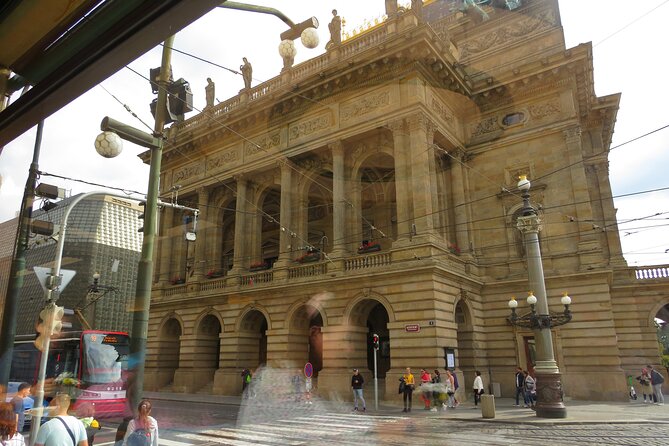
By the time you reach Pštrossova, you are in the early 1900s, near the birth of the First Republic. This stop comes with a key idea: multiple ethnicities jostled in the city.
That detail matters because literature does not come out of a vacuum. When a city includes different languages, communities, and cultural priorities, you get tension and cross-pollination. The guide uses this stop to make the setting feel political and social, not just aesthetic.
You get about 20 minutes here, so you will want to follow the thread the guide provides. This part is less about lingering in silence and more about making the historical context click. If you like your literature connected to real-world change, you will probably enjoy how the guide frames the era through the city’s mix.
Since admission is free, this segment is low-friction. You can stay focused on the talk and on whatever street details the guide brings into the story.
A note for your planning: if you want time to take photos, keep your pace steady. This is a quick, talk-driven stop, not a long photo opportunity.
Stop 5: Karlovo náměstí, then Charles Square for 19th century writers
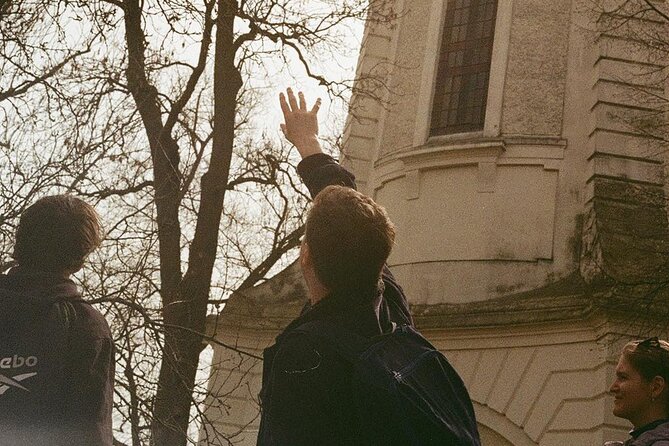
The tour finishes around Charles Square, near Karlovo náměstí. This is the last “chapter,” and it shifts the focus toward the 19th century, with the note that important writers of that era lived nearby.
Ending in a greener, more open-feeling place gives the story a calmer landing. You are moving from the intensity of earlier eras into a part of Prague where you can look around and imagine what daily life might have been like for those writers.
The practical payoff is that your ending point is also your next opportunity. Charles Square is not only scenic, it is easy to keep exploring. The New Town Hall area and the nearby river promenades make it simple to stretch the walk after the guide’s final notes.
You get about 20 minutes at Karlovo náměstí within the overall schedule, and then the tour’s end is effectively in the Charles Square area. That means you are finishing right where a lot of other casual wandering works well.
Why the guide’s storytelling style is the real centerpiece
The guide, Fergus, is a big reason this tour earns such strong ratings. The strongest theme is how he connects literature with history in a way that feels logical, not like name-dropping. You get the sense that the stories are well researched, but also shaped for walking and listening.
I also like that his approach does not assume you already know the topic. If you are interested in authors like Kafka or Milan Kundera, you will probably recognize the conversation points. If you are newer to Czech literature, you still get the framework you need to follow why each place matters.
Several people highlight the range of the talk: literary figures, historical shifts, and the occasional scandal or intrigue. That balance is exactly what makes a short walking tour feel worth it. You are not only learning dates. You are learning motivations, social pressure, and why certain ideas caught on.
There is also a clear sense of pace control. The tour moves efficiently from stop to stop without feeling rushed, and the guide seems to know when to keep it succinct and when to slow down. That matters on a route like this, where the schedule is tight and the goal is understanding, not speed.
If you care about where literature lives in the real city, this kind of guide is the difference between a tour that passes through Prague and one that changes how you see it.
Good shoes, good expectations, and how to get the most
This is a walking experience through central Prague over roughly two hours. You will cover several spots, and most stops are about 20 minutes, except for Slovansky Ostrov-Zofin with around 40. That means your best strategy is to come with comfortable shoes and a willingness to listen without constantly checking your phone.
Also, treat it like a story you are following, not a checklist. The tour is designed to make the timeline feel coherent, moving backward through time. If you lose the thread, it is harder to enjoy. So when the guide offers a framing idea, grab it.
Finally, bring curiosity. This route has moments where the guide keeps details back, especially around Bartolomějská. If you like being nudged to notice what you might have otherwise missed, you are going to have a better time.
Who this tour suits best, and who might skip it
You should strongly consider this tour if you like literature, history, and the idea of connecting authors to the places they were shaped by. It is also ideal if you enjoy walking tours but want something more human than stone-and-sculpture sightseeing.
It is a good fit if you want a light but smart introduction to Czech literary movements, including the interwar avant garde and the early First Republic context. If you already know a few writers, the tour can add context and bring them back down to earth.
You might skip it if you want a slower, deeper museum-style experience with lots of indoor time and reading materials. This is a guided walk, and the schedule is built for movement and story delivery. It is not a substitute for sitting down with a book afterward, but it can make that reading more meaningful.
Should you book the Prague Literature Route?
Yes, if you want Prague to make sense through Czech literature and you like a guide who can connect big historical change to the people who wrote through it. The combination of a small group size, English language delivery, free admission at the listed stops, and an ending near Charles Square makes the value feel practical, not gimmicky.
Book it especially if you appreciate story-driven history. Fergus’s style is built for walking, and the route’s backward timeline gives you a satisfying way to understand how ideas evolved in the city. If you only have a short time in Prague, this is one of the smarter ways to spend it.
FAQ
FAQ
How long is the Prague Literary & Historical Tours Literature Route?
The tour lasts about 2 hours.
Is the tour offered in English?
Yes, the tour is offered in English.
Where do I meet the guide?
You meet at Mariánské nám. 2/2, 110 00 Praha 1-Staré Město, Czechia.
Where does the tour end?
The tour ends at the historic Charles Square area near the New Town Hall and beautiful river promenades, at Karlovo nám. 550/35, 120 00 Praha 2, Czechia.
Do I need to pay admission at the stops?
The stops listed on the route show admission ticket free, so there is no admission fee indicated for these points.
How big is the group?
This tour has a maximum of 25 people.
Do I get a mobile ticket?
Yes, the tour includes a mobile ticket.
Are service animals allowed?
Yes, service animals are allowed.
When will I receive confirmation after booking?
Confirmation is received at the time of booking.
What is the cancellation window for a full refund?
You can cancel for a full refund up to 24 hours in advance of the start time. Cancellation less than 24 hours before the start time is not refunded, and cut-off times use the local time.
Angled History in Prague

More Tours in Prague

More Tour Reviews in Prague

Freshly written up in Prague
- World War II 4WD Tour from Prague with Lunch
★ 4.4 · 3 reviews - World War II History Tour of Prague’s Old Town
★ 5.0 · 3 reviews - Welcome to Prague – Private Tour with Licensed Guide
★ 5.0 · 3 reviews - Gourmet Brunch with Chef: Unlimited Drinks & Stunning River Views
★ 5.0 · 3 reviews - VIP Prague Segway Tour Around Monastic Breweries
★ 4.0 · 3 reviews
Historical Tours, compared.
 ★ 4.2Oldtown, Medieval Underground & Dungeon History TourFrom $308,244 reviews
 ★ 4.5Prague Old Town, Medieval Underground and Dungeon Historical TourFrom $323,227 reviews
 ★ 4.7Communism History and Nuclear Bunker Guided TourFrom $442,417 reviews
 ★ 4.4Historic City Center Bus Tour with Top SightsFrom $202,360 reviews
 ★ 5.0Prague Historic Pub Tour with Drinks IncludedFrom $652,084 reviews
 ★ 5.0Prague Communism History and Nuclear Bunker TourFrom $451,742 reviews
 ★ 4.1Hop-on Hop-Off Historical Tram Ticket for Line 42From $201,702 reviews
 ★ 4.9Top Sights and Historic Center Introduction TourFrom $201,181 reviews
Browse the lists this tour appears in