
REVIEW · WWII & OPERATION ANTHROPOID TOURS
Prague: WWII Tour with Local Historian SMALL GROUP
Prague gets darker when you know the WWII facts. This small-group tour uses real landmarks to tell a tight WWII story, from the shadow of Nazi occupation to the spark of Czech resistance. I like that it is small group focused, and I also like that the guide is a local historian who explains why each place matters, not just what happened there.
Two things I really appreciate: you start in a central, easy-to-find spot near Václavské náměstí, and you move through Prague at a human pace with context that connects the big events to what you can actually see. In particular, the assassination plot around Reinhard Heydrich and the later rescue story of Nicholas Winton are handled with care, so you understand both the horror and the hope.
One possible drawback: this is heavy WWII material, and the tour is not designed for everyone. It is listed as not suitable for children under 10, pregnant women, and people with mobility issues, so if you want a light, casual stroll, this one may feel too intense.
In This Review
- Key takeaways before you go
- A 2.5-hour WWII story told street-by-street
- From Václavské náměstí to the Dancing House: how the route makes sense
- Heydrich’s Prague: fear, occupation, and the former Gestapo headquarters
- Operation Anthropoid at the Paratroopers Church and its bullet holes
- 1945 Prague: uprising, bombing, and the endgame you can feel
- Nicholas Winton and the Kindertransports: hope inside the horror
- Prague history, told by Gerry or Jiri, with survivor-sourced care
- What you actually get for $61, and why it can be good value
- Who should book this WWII Prague small group tour
- Should you book this Prague WWII tour?
- FAQ
- How long is the Prague WWII tour?
- What is the group size for this tour?
- What language is the tour guide speaking?
- Where do I meet the guide?
- Where does the tour end?
- What is included in the ticket price?
- Do I get to skip the ticket line?
- Is the tour wheelchair accessible?
- Who is the tour not suitable for?
- What is the cancellation policy?
Key takeaways before you go
- Small group capped at 7 means you get a more personal pace and more time for questions
- A local historian guide like Gerry or Jiri keeps the narrative clear and human
- Operation Anthropoid stops include the Paratroopers Church and its famous bullet holes
- Heydrich and resistance history are tied to specific locations you can stand in
- Nicholas Winton’s Kindertransport rescue story adds a strong thread of survival and action
- Public transport ticket plus water are included, so you can focus on the walk
Further wartime ground covered in Prague
- Prague: WWII Guided Tour & The Crypt of Operation Anthropoid★ 4.7 · 1,030 reviews
- WWII in Prague Tour & The Crypt of Operation Anthropoid★ 5.0 · 817 reviews
- Small-Group World War 2 & Operation Anthropoid Tour in Prague★ 5.0 · 231 reviews
- Prague: World War 2 and Operation Anthropoid Walking Tour★ 4.8 · 193 reviews
A 2.5-hour WWII story told street-by-street
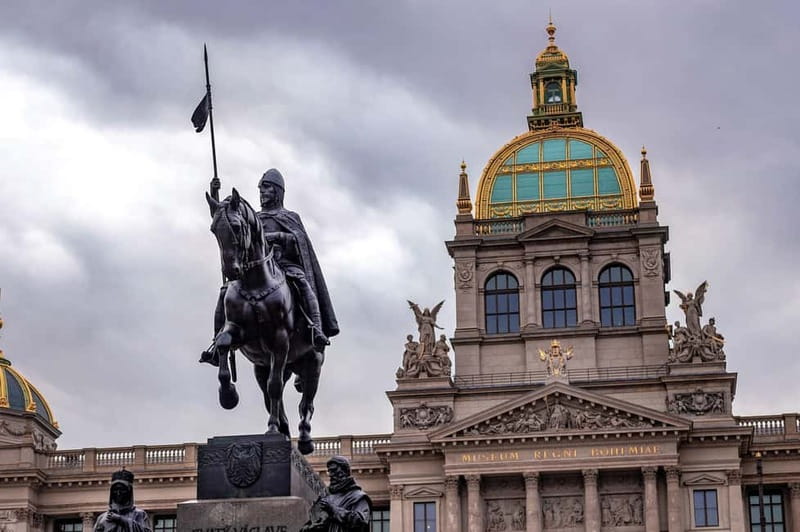
This tour is built like a guided film, but you are walking through it. You start at the Statue of Saint Wenceslas at Václavské náměstí, then spend your time moving through Prague’s key WWII settings with a historian who narrates the events as a chain of cause and effect.
You can expect the guide to connect three things in particular:
1) how Nazi leadership reshaped daily life and fear across Prague,
2) how resistance showed up in actions, hiding places, and planning,
3) how the war ended in the streets with the Prague uprising in 1945 and the bombing that preceded it.
It helps that the guide keeps the focus on the moments that changed the direction of the war. You are not trying to cram in every single museum-worthy fact. Instead, you leave with a clearer sense of why these specific events are remembered, and how Prague became both a target and a battleground.
The pacing is also practical. Two and a half hours is long enough to feel like you learned something real, but short enough that you can still enjoy the rest of your day afterward, whether you head back for a classic lunch or continue exploring on your own.
From Václavské náměstí to the Dancing House: how the route makes sense
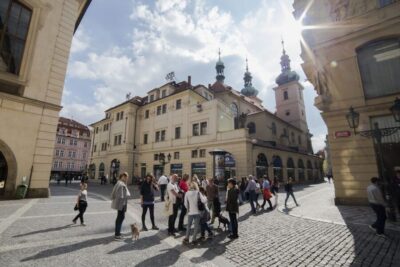
You meet at the Statue of Saint Wenceslas at Václavské náměstí, right by the National Museum area. The instructions note it is easy to spot, with a McDonald’s nearby as a helpful landmark.
That matters more than it sounds. A lot of Prague history tours start in complicated corners. This one begins where you can orient fast, then it gets you into the city fabric without losing time.
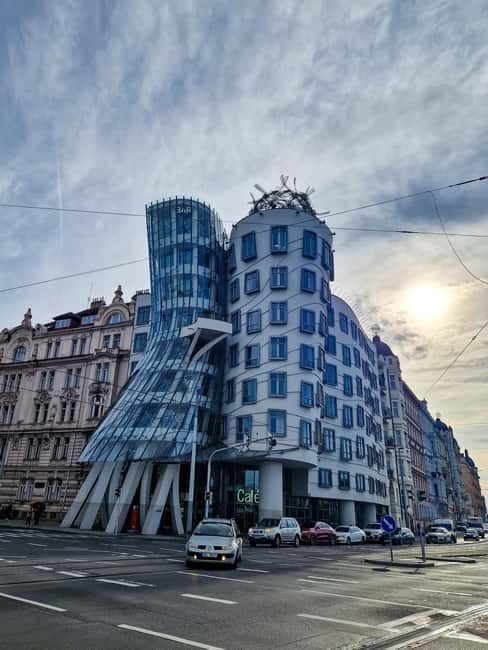
By the end, you finish near the Dancing House area. The tour information indicates it ends back near the meeting point area as well, so don’t panic if you feel like you are already near where you started. The point is to end in a place that keeps your day workable.
What I like about this kind of route is that it gives you a before-and-after feeling. You see Prague as it exists today, but the guide reframes what you are looking at. A street, a building type, even a church becomes more than a backdrop. It becomes part of the WWII map in your mind.
Heydrich’s Prague: fear, occupation, and the former Gestapo headquarters
One of the tour’s strongest threads is the reign of Reinhard Heydrich, often referred to as the Butcher of Prague. The guide frames him as a high-level architect of Nazi oppression and death, and then you move through the city with that lens.
This is where the tour feels most “you are standing in history.” The name Heydrich gets heavy quickly, and the guide’s job is to make it make sense, not just repeat a label. You hear how the Nazis tightened control and how Prague’s landscape reflected that reality.
A major stop in this portion is the former Gestapo headquarters. Even without going inside a museum, the location itself brings the story into focus. You are not just learning that people were hunted. You are hearing how that kind of system changes how everyone behaves, who is afraid to talk, and how resistance had to plan differently.
If you prefer WWII stories that focus on leadership and retaliation, this section will land well. If you only want battle-field action, you might still find it worthwhile, but the tone here is about terror and how occupation works day to day.
Operation Anthropoid at the Paratroopers Church and its bullet holes
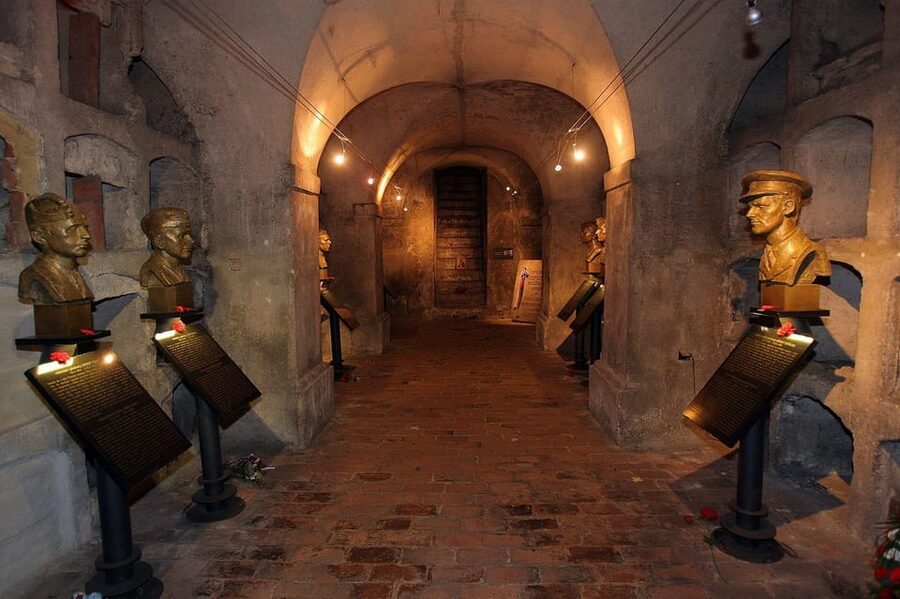
Then you reach the heart of resistance: Operation Anthropoid, the daring assassination attempt targeting Heydrich. The tour emphasizes this as a peak moment of Czech resistance against tyranny.
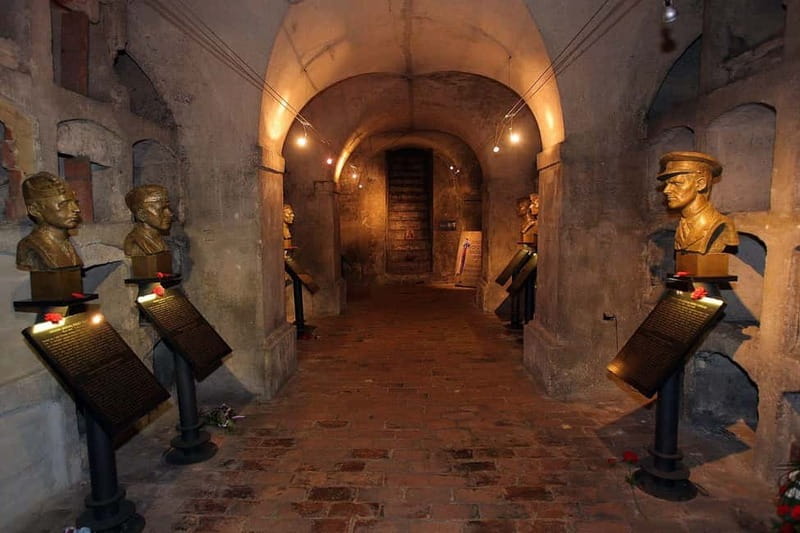
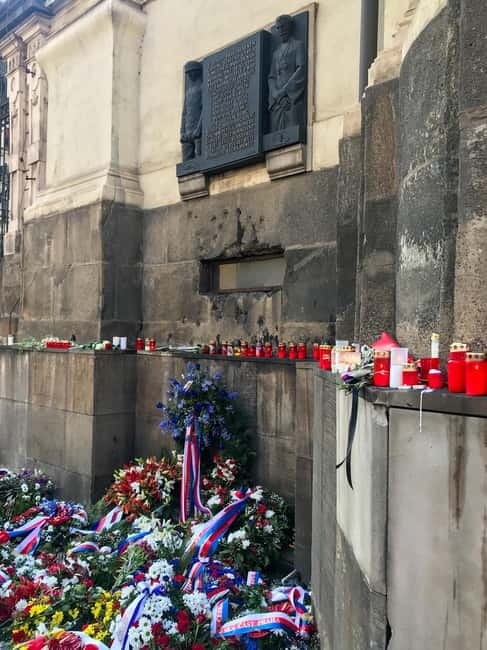
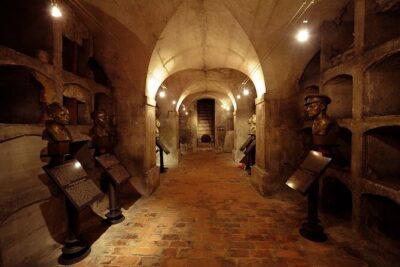
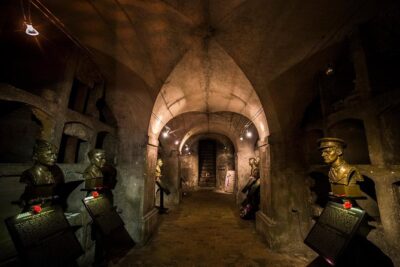
The standout site in this storyline is the Paratroopers Church. You get entrance included, and the tour highlights the church’s visible evidence, including the famous bullet holes. You are not just hearing that violence happened. You are looking at marks that survived.
This stop is powerful because it connects three layers:
- the planning and risk of resistance,
- the brutal response that followed,
- the way communities preserved physical proof of what occurred.
It is also a good place to slow down. People tend to speak more quietly here, partly because the story is so specific and partly because the bullet holes make the timeline feel immediate. Even if you have read about these events before, seeing the evidence in place helps tighten your memory.
Practical note: churches mean you might be adjusting your posture for photos and walking angles. Wear shoes you can stand in comfortably, because the story gets told as you look around, not at a speed-run.
1945 Prague: uprising, bombing, and the endgame you can feel
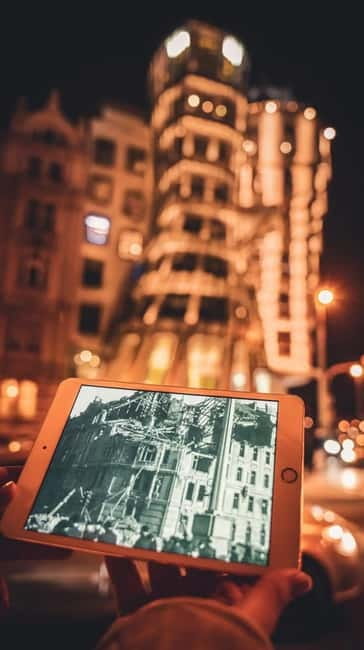
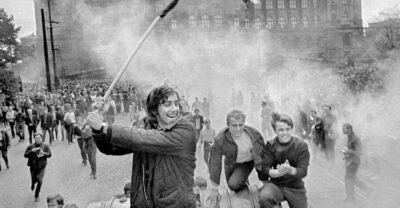
The tour does not stop at 1945 turning points as abstract dates. It addresses the Prague uprising in 1945 and the dramatic American bombing of Prague in 1945.
You will also hear how these events fit together, and why the city’s final months mattered so much. Prague did not simply “wait” for liberation. It fought, suffered, and endured a final wave of violence that shaped what came after.
I like that the guide keeps the focus on consequences. You learn what was at stake for civilians and why resistance and military actions overlapped in messy, painful ways. This kind of explanation is exactly what turns names and dates into something you can picture.
If you are the kind of traveler who likes to know what led to the last chapter of a war, you will get that here. If you mainly care about one famous assassination or one famous hero, you might still enjoy the 1945 section because it shows what “success” looked like in a city already scarred.
Nicholas Winton and the Kindertransports: hope inside the horror
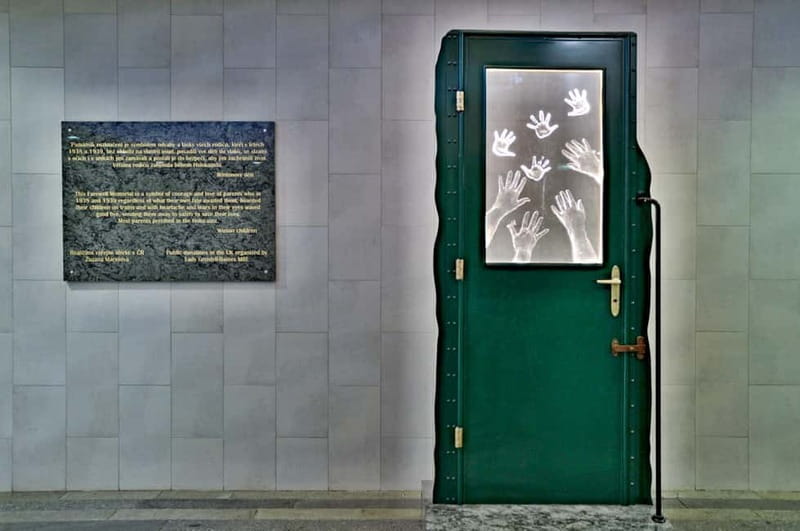
Here is the emotional pivot that gives this tour balance. You hear the story of Nicholas Winton saving 669 Jewish children through the Kindertransports. If you have seen the Hollywood film One Life, the tour lines up with that well-known narrative.
This part of the tour matters because it shifts the question from who had power to who created rescue. It is one thing to learn about how Nazi policies destroyed lives. It is another to see how people organized to save children, and how fast action had to happen before opportunities closed.
The guide’s approach keeps the focus on the scale of the rescue, the pressure of timing, and the fact that these were real children with real futures at stake. Even if you have heard this story before, hearing it placed inside the wider context of Prague’s WWII years makes it feel more grounded, not like a separate feel-good sidebar.
If you are worried about a purely dark tone, this is where you get a meaningful counterweight.
Prague history, told by Gerry or Jiri, with survivor-sourced care
The tour stands out for one specific reason: the guides in this program are described as experts who tell the story naturally. In particular, Gerry and Jiri come up in the feedback as standout performers who make the city and its sights come alive in a personal way.
What I find useful about a historian-led tour is that you get both the storyline and the careful framing. They explain the why behind the headlines and they connect the events to the physical places you see.
One more detail that boosts confidence: the feedback highlights that the guide’s approach can incorporate stories shared by war survivors themselves, when those stories are available. That kind of sourcing adds weight, because it is not just about “what happened,” it is also about what it felt like and what people wanted later generations to remember.
What you actually get for $61, and why it can be good value
At $61 per person for about 2.5 hours, the value depends on what you want. If you plan to see only one or two of these WWII sites on your own, you could spend the time piecing together tickets, routes, and context. This tour bundles the human interpretation and includes several practical items.
Included benefits you should care about:
- Prague public transport ticket (so you are not stuck figuring out transit on the fly)
- Entrance to the Paratroopers Church (so you do not have to handle that on your own)
- All fees and taxes
- Water
- Skip the ticket line
Also, you are not dealing with a crowd. Limited to 7 participants means the guide can keep pace with questions and can tailor explanations to what people are reacting to.
If your travel style is “I want meaning, not just monuments,” this price is easier to justify. You are paying for interpretation at WWII depth, plus the convenience of included access and transit.
Who should book this WWII Prague small group tour
This is a strong fit if you:
- want a focused WWII narrative rather than a scattershot list of landmarks,
- enjoy story-driven tours led by a local historian,
- care about both resistance efforts and the rescue story of Nicholas Winton,
- like walking through Prague with context you can carry back to your hotel and recall later.
It may not be a good fit if you want a purely light or family casual activity. The tour is listed as not suitable for children under 10, pregnant women, and people with mobility impairments, and it also indicates it is not suitable for wheelchair users.
Should you book this Prague WWII tour?
If you want Prague WWII history that feels specific and real, I think this is a smart booking. The route is built around the moments that changed the war’s trajectory, and the Paratroopers Church stop adds a physical, unforgettable detail through its bullet holes. The inclusion of Nicholas Winton’s 669 children Kindertransport rescue gives you a needed counterbalance to the darker parts.
Book it if you are the type of traveler who likes a guided story and values small-group time. Skip it if you are looking for something casual, or if the heavy WWII content would be too much for your comfort level.
If you are deciding between this and a general overview tour, choose this one. The focus is narrower, the context is deeper, and you leave with a clearer mental map of why Prague matters in WWII history.
FAQ
How long is the Prague WWII tour?
It runs for 2.5 hours.
What is the group size for this tour?
The tour is a small group limited to 7 participants.
What language is the tour guide speaking?
The live guide speaks English.
Where do I meet the guide?
You meet at the Statue of Saint Wenceslas at Václavské náměstí, in front of the National Museum area.
Where does the tour end?
The tour finishes near the Dancing House area and the activity ends back at the meeting point area.
What is included in the ticket price?
Included items are a passionate local guide, a Prague public transport ticket, all fees and taxes, entrance to the Paratroopers Church, and water.
Do I get to skip the ticket line?
Yes, you can skip the ticket line.
Is the tour wheelchair accessible?
The tour information lists wheelchair accessible, but it also states it is not suitable for wheelchair users. It is worth checking directly with the operator.
Who is the tour not suitable for?
It is not suitable for children under 10, pregnant women, people with mobility impairments, and wheelchair users.
What is the cancellation policy?
You can cancel up to 24 hours in advance for a full refund.
More Tours in Prague
More Tour Reviews in Prague
Wartime Ground in Prague
Freshly written up in Prague
- World War II 4WD Tour from Prague with Lunch
★ 4.4 · 3 reviews - World War II History Tour of Prague’s Old Town
★ 5.0 · 3 reviews - Welcome to Prague – Private Tour with Licensed Guide
★ 5.0 · 3 reviews - Gourmet Brunch with Chef: Unlimited Drinks & Stunning River Views
★ 5.0 · 3 reviews - VIP Prague Segway Tour Around Monastic Breweries
★ 4.0 · 3 reviews
WWII & Operation Anthropoid Tours, compared.
 ★ 4.7WWII Guided Tour & The Crypt of Operation AnthropoidFrom $421,030 reviews
 ★ 5.0WWII in Prague Tour & The Crypt of Operation AnthropoidFrom $43817 reviews
 ★ 5.0Small-Group World War 2 & Operation Anthropoid Tour in PragueFrom $33231 reviews
 ★ 4.8World War 2 and Operation Anthropoid Walking TourFrom $32193 reviews
 ★ 4.7World War II and Communist History TourFrom $34130 reviews
 ★ 4.7Communists and World War II TourFrom $2988 reviews
 ★ 5.0Half-Day WWII Prague Walking TourFrom $4768 reviews
 ★ 4.93–Hour Communism and World War 2 E-Bike TourFrom $7456 reviews
Browse the lists this tour appears in