
REVIEW · COMMUNIST PRAGUE & COLD WAR HISTORY
Communism and its fall Prague private tour
Prague’s politics live on in the street signs. This Communism and its fall Prague private tour connects major sites from the National Theatre era to the moment the Velvet Revolution ignited, with a guide who brings first-hand context to every stop.
Two things I really liked: the Jana Neubergova storytelling (it feels personal, not textbook), and the smart pace for a 2-hour hit of the most important locations.
One consideration: it is a walking-focused tour and most sites do not include admission tickets, so plan to view several places from the outside and bring extra tickets only if you want entry.
In This Review
- Key highlights at a glance
- Why This Communism Story Works Better as a Walk
- Price and Time: What You Get for $85
- The Hotel Pickup by Foot: Easy, but Know the Limits
- Meeting Point for Czech Intellectuals: Setting the Human Stage
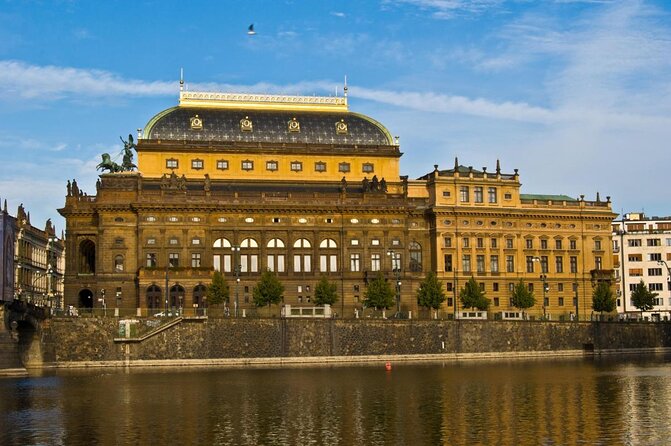
- National Theatre: Culture Under Pressure
- Narodni Street: Where the Velvet Revolution Sparked
- Lucerna Arcade: Vaclav Havel’s Family Legacy
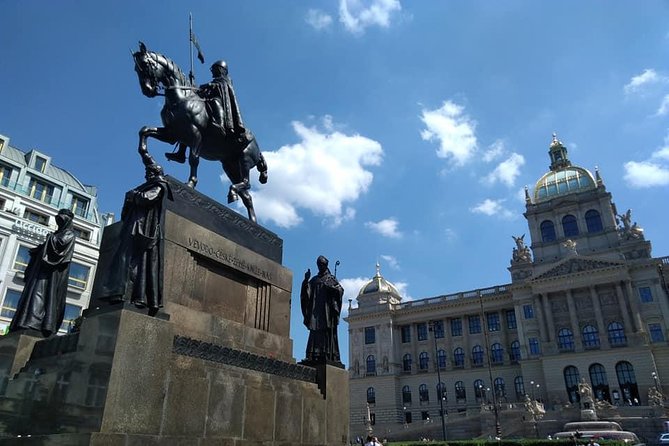
- Wenceslas Monument and Square: The Protest Heart of Prague
- Memorial to the Victims of Communism: Olbram Zoubek’s Message
- Meet Jana Neubergova: Firsthand Ties You Can Feel
- Logistics That Keep This Tour Comfortable
- Price and Value Compared to Museum Time
- Who This Tour Suits Best (and Who Should Skip)
- Quick FAQ
- FAQ
- How long is the Communism and its fall Prague private tour?
- Is hotel pickup included?
- What language is the tour offered in?
- Are admission tickets included for each stop?
- Is this a private tour?
- What is included in the tour price?
- What is the cancellation policy?
- Should You Book It?
Key highlights at a glance
- First-hand Velvet Revolution context from Jana Neubergova, including memories tied to November 1989
- Velvet Revolution starting point on Narodni Street, explained in plain, human terms
- Lucerna Arcade through Vaclav Havel family history, not just a random arcade stop
- Wenceslas Square as a protest stage, with demonstrations still part of the square’s identity
- Memorial to the Victims of Communism by Olbram Zoubek, with free admission
Walking the 1948 to 1989 chapters of Prague
- Prague: Communism History and Nuclear Bunker Guided Tour★ 4.7 · 2,417 reviews
- Communism & Nuclear Bunker Tour + 70s Canteen Lunch (own expense)★ 5.0 · 1,036 reviews
- Prague: Communism and Bunker Tour with 70s Canteen Lunch★ 4.8 · 250 reviews
- Prague: World War II and Communist History Tour★ 4.7 · 130 reviews
Why This Communism Story Works Better as a Walk
Prague is one of those cities where the past is not behind glass. You stand in a real public square, on real streets, and the political story has a physical shape. That is exactly what this tour does well, turning a complicated era into a sequence you can actually remember.
I also like that the tour is focused. You are not trying to see every museum in Prague. You are getting a tight, meaningful route around the communist era’s pressure points, ending with a memorial designed to keep the human cost present.
And yes, it helps that your guide is Jana Neubergova, who has direct ties to the people and events she talks about. Her details are the difference between facts you forget and context you keep.
Price and Time: What You Get for $85
At $85 per person for about 2 hours, you are paying mainly for one thing: a licensed guide who can connect the dots quickly and clearly. That price is fairly typical for a private, expert-led route in central Prague, but the value depends on your priorities.
If you want a fast, high-impact overview of communist Prague and the Velvet Revolution, this is a good buy. You get a free map of Prague, a mobile ticket, and the tour is private, meaning it is only your group, not a big shared cattle-car experience.
The practical downside is that private transportation is not included. The tour starts with hotel pickup on foot, so the experience leans on walking and nearby logistics, not a car. If you need lots of vehicle time or want to minimize walking, you will want to judge how your energy holds up for a 2-hour route.
The Hotel Pickup by Foot: Easy, but Know the Limits
Pickup is offered on foot from all Prague hotels. That sounds simple, and usually it is. You avoid the stress of finding a distant meeting point on your own, and you can just step outside and connect with your guide.
The tradeoff is that you should still plan for walking time at the start and through the stops. The tour notes moderate physical fitness is needed, so come ready for steady city strolling. Service animals are allowed, and the route is described as near public transportation if you need an exit option.
Because the tour is private, you can often keep things smoother for your own group pace. Just remember: it is still a tour built around set stops and time estimates.
Further solo-group bookings covering identical streets


Meeting Point for Czech Intellectuals: Setting the Human Stage
The tour begins at the meeting point described as the meeting of Czech intellectuals. You will feel right away that the story is not only about leaders and laws. It’s about people who thought, wrote, spoke, argued, and then faced the consequences when politics tightened.
This kind of opening matters. Communism in Prague is not just a set of historical events, it is also a social climate. Starting with that intellectual vibe helps you understand why protests looked the way they did and why culture played such a major role.
Expect a quick orientation and context before you move into the first big landmark. This is where you get your bearings fast for the rest of the route.
National Theatre: Culture Under Pressure
Stop one is the National Theatre, a site that played an important role in history. Even if you do not go inside, the theatre location and reputation signal something crucial: culture was never neutral here. Performing arts and public identity were tied to national pride, and national pride was exactly what authoritarian systems try to control.
The timing is short, around 10 minutes, and admission tickets are not included. That means you should treat this stop as a story stop, not a full museum visit. If you want to enter the theatre, you would need a separate ticket, which the tour does not provide.
Still, this is a strong start. It frames the communist era as something that affected everyday life, including how people expressed themselves in public.
Narodni Street: Where the Velvet Revolution Sparked
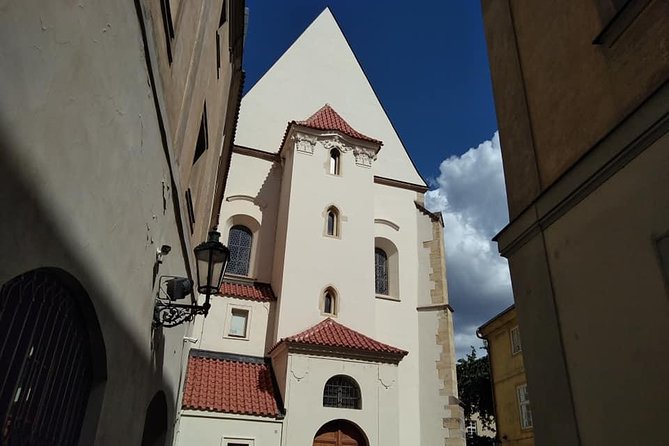
Then you get to one of the key moments: Narodni Street, where the Velvet Revolution started. This is the kind of stop that can easily become a plaque-and-photo stop if you do not have the right guide. You do.
With Jana, the explanation is connected to November 1989 and the courage and stress of that time. One of the standout points from what you can expect is how her perspective brings the events closer than a textbook summary.
The stop is about 15 minutes, and admission tickets are not included. That works fine for Narodni Street because it is about the street itself and the surrounding atmosphere. You are looking at the urban space where things shifted.
My advice: slow down here. Let the guide’s explanation land, then take a moment to notice the surrounding streets. The logic of where crowds could move is part of why a revolution can feel suddenly possible.
Lucerna Arcade: Vaclav Havel’s Family Legacy
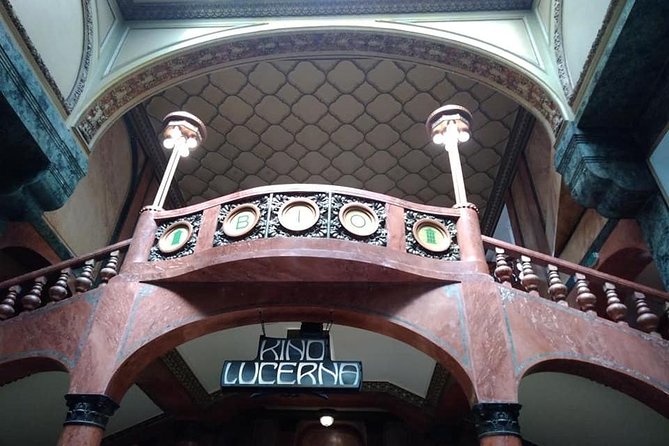
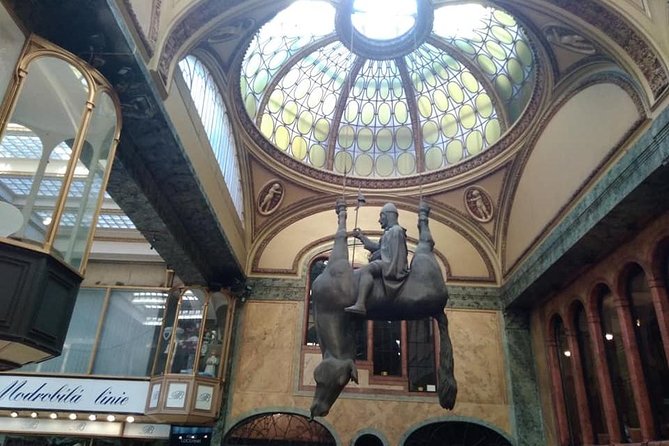
Next is Lucerna Arcade, described as an important culture and social center founded by Vaclav Havel’s family. This is a smart stop because it shows you politics operating not only in government buildings, but also in social places where people met, talked, and built community.
Lucerna is also a useful contrast after the big revolution moment on Narodni Street. You see how Czech public life included cultural and social spaces that shaped how people shared ideas. When a society has venues for conversation, it also has pathways for organizing.
This is about 10 minutes, and admission tickets are not included. So again, treat it as a narrative walk-through. If you later want deeper exploration, you can choose to revisit independently.
I like this stop because it helps you understand how the Velvet Revolution did not fall out of the sky. It came from real human networks, and those networks often lived in places like this.
Wenceslas Monument and Square: The Protest Heart of Prague
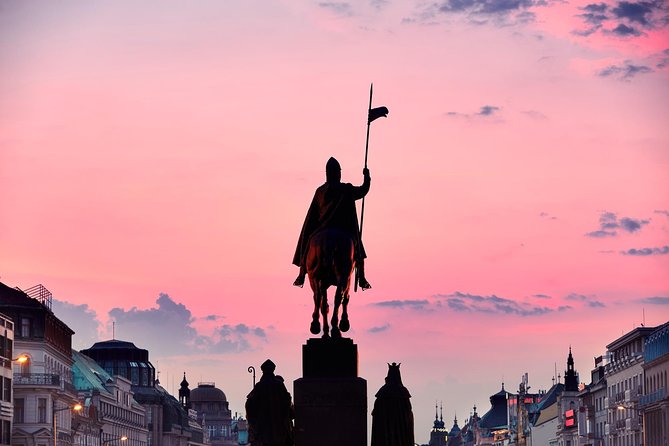
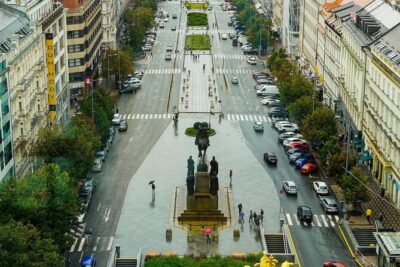
The tour’s next major stop is Wenceslas Monument, tied to Wenceslas Square, described as the heart of Prague and also a place where demonstrations are held. This is where communist-era tensions, post-communist freedoms, and ongoing civic energy all show up in the same view.
You get about 20 minutes here, which is enough time to understand why the square matters and to take in how it functions as a gathering place. Even if you do not enter anything, the scale of the space teaches you something. Big public squares create big public feelings.
No admission ticket is included for this stop. That is usually not a problem because the point is the space itself, not a paid attraction. You are there to feel why people would choose this kind of location to make a political statement.
If you are timing your visit, this is also a good place to do a quick recap with your guide. Ask how the square’s role changed after communism fell. You will likely get an answer that ties directly to what you just saw on Narodni Street and Lucerna Arcade.
Memorial to the Victims of Communism: Olbram Zoubek’s Message
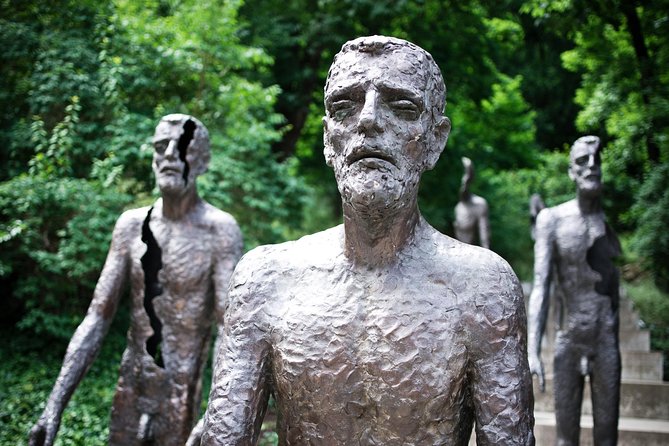
The last stop is the Memorial to the Victims of Communism, created by sculptor Olbram Zoubek. This is the emotional landing pad of the tour, the place where the story shifts from events to people who suffered.
The tour notes this memorial has free admission, which is a welcome detail. With about 15 minutes, you will have time for a respectful look and for your guide to explain what the memorial is trying to communicate.
I value this kind of ending because it prevents the tour from becoming only about drama and famous dates. The communist story is heavy. A memorial helps you hold that weight, not just speed past it.
Meet Jana Neubergova: Firsthand Ties You Can Feel
A big part of why this tour earns top marks is the guide: Jana Neubergova. You are not just getting a licensed guide. You are getting someone who is personally connected to the era and the revolution.
In the guidance she provides, you can sense the difference between learning about a system and living through its pressure. Jana is described as having personal memories from those dark times and as a participant of the Velvet Revolution. She also worked in Vaclav Havel’s office shortly after.
That last detail matters more than it sounds. It places her voice in the bridge period, when old structures were collapsing and new governance was forming. That is often the hardest part to explain clearly, yet it is where understanding really helps.
You will also appreciate how her English is presented as excellent. For me, that matters because the emotional and political nuance can get lost if the language barrier is high. On a topic this serious, clarity is kindness.
Logistics That Keep This Tour Comfortable
This tour is private, so it is only your group participating. That means you can ask questions without feeling rushed or shoved into someone else’s pace. It also helps if your group includes friends who want different emphasis, like politics versus culture.
The tour is offered in English. It is also near public transportation, which is helpful if you are staying close to main lines or if anyone in the group needs to step out briefly during the walk.
You get a mobile ticket, which is handy in a city where you can spend time scanning instead of digging through paper. And you get a free map of Prague, which is practical for getting oriented after the tour while the story is still fresh in your mind.
Price and Value Compared to Museum Time
A lot of history tours in Prague ask you to buy tickets for multiple sites. This one does not, though it does not include admission tickets for most stops either. That is an important value point.
You are essentially buying an expert route through key landmarks, with a narrative plan that uses walking time efficiently. National Theatre, Narodni Street, Lucerna Arcade, and Wenceslas Monument are built into the story even if you do not go inside.
The only stop clearly marked as free admission is the Memorial to the Victims of Communism. So if you want to minimize extra spending, you can. If you want to add indoor time later, you have the option to return on your own after the tour.
For $85, the value is highest if you care about context. If you only want to take photos and move on quickly, the price might feel steep compared to free walking options. But if you want meaning, it is a strong deal.
Who This Tour Suits Best (and Who Should Skip)
This works best for history lovers who want the communist era explained in a human, chronological way. You will also enjoy it if you are interested in the Velvet Revolution, because the route is anchored on places that connect directly to that story.
I also think it is a great choice for visitors who do not have time for a full museum day. Two hours is just long enough to get a clear narrative spine, especially when the guide provides personal links that help you understand why these locations mattered.
You might skip it if you have limited walking ability and you cannot comfortably handle city strolling for about 2 hours. You might also hesitate if you hate political topics and want purely architectural tourism. The route is designed to discuss communism and its fall, so it will take that seriously.
Quick FAQ
FAQ
How long is the Communism and its fall Prague private tour?
It runs for about 2 hours.
Is hotel pickup included?
Yes. Pickup is offered on foot from all Prague hotels.
What language is the tour offered in?
The tour is offered in English.
Are admission tickets included for each stop?
No. Admission tickets are not included for several stops. The Memorial to the Victims of Communism is free, but other stops list admission not included.
Is this a private tour?
Yes. It is private, so only your group will participate.
What is included in the tour price?
You get a professional, fully licensed guide and a free map of Prague.
What is the cancellation policy?
You can cancel for a full refund up to 24 hours in advance. If you cancel less than 24 hours before the start time, the amount paid is not refunded.
Should You Book It?
If you want a focused, high-signal way to understand communist Prague and the Velvet Revolution, I would book this tour. The price buys you a guided story that connects major locations with personal perspective, and Jana Neubergova is the kind of guide you remember long after your photos fade.
Book it if you value context over ticking off attractions, and if you can handle a moderate walking route. Skip it if you are looking for a mainly visual tour or you need lots of private transportation, because the experience is built around walking and landmark stops.
More Tours in Prague
More Tour Reviews in Prague

Between 1948 and 1989
Freshly written up in Prague
- World War II 4WD Tour from Prague with Lunch
★ 4.4 · 3 reviews - World War II History Tour of Prague’s Old Town
★ 5.0 · 3 reviews - Welcome to Prague – Private Tour with Licensed Guide
★ 5.0 · 3 reviews - Gourmet Brunch with Chef: Unlimited Drinks & Stunning River Views
★ 5.0 · 3 reviews - VIP Prague Segway Tour Around Monastic Breweries
★ 4.0 · 3 reviews
Communist Prague & Cold War History, compared.
 ★ 4.7Communism History and Nuclear Bunker Guided TourFrom $442,417 reviews
 ★ 5.0Prague Communism History and Nuclear Bunker TourFrom $451,742 reviews
 ★ 5.0Communism & Nuclear Bunker Tour + 70s Canteen Lunch (own expense)From $351,036 reviews
 ★ 4.8Communism and Bunker Tour with 70s Canteen LunchFrom $33250 reviews
 ★ 4.7World War II and Communist History TourFrom $34130 reviews
 ★ 4.93–Hour Communism and World War 2 E-Bike TourFrom $7456 reviews
 ★ 5.0Second World War & Communism (Tip-based 3 hour tour)From $347 reviews
 ★ 5.0Communism and World War 2 Prague City TourFrom $7833 reviews
Browse the lists this tour appears in