
REVIEW · COMMUNIST PRAGUE & COLD WAR HISTORY
Prague: 2-Hour Back to Communism Walking Tour
Prague can feel like it is still wired to politics. This 2-hour walking tour takes you straight into the places tied to communism in Prague, from former secret police sites to Soviet-era pressure points, with stories delivered by locals who remember the era. I especially like the big-picture setup at the start, which gives you context for what you are seeing, and the on-the-ground storytelling that turns stone and street corners into real-life cause and effect. The main drawback is that if you are sensitive to how a guide’s delivery affects the pace, reviews note that a few tour moments can be thrown off by guide issues or language gaps.
The route is short, but it does not feel like a quick photo loop. You get a guided walk with discussion built in, and you will see multiple layers of the communist era in one compact stretch of central Prague. If your goal is to study communism in general at a deep theoretical level, you might find this tour more focused on the Soviet-influenced reality of Central Europe than on every other interpretation.
In This Review
- Key things I’d watch for before you go
- Why Prague still shows communist pressure on everyday streets
- Getting oriented fast at Na Příkopě 28 or Na Příkopě 864
- The opening lesson: socialism theory to Central Europe spread in one session
- Former secret communist police headquarters, and what that says about control
- The Stalin statue spot and the power of changing symbols
- Communist party seats, and how political power shaped public space
- Protests, demonstrations, rebellions, revolutions, and Soviet occupation
- Cold War daily-life stories: what changed for ordinary people
- Discussion and Q&A: making the tour click for your questions
- Language options and timing: plan for a fast, focused walk
- Wheelchair access and what to bring to make it smooth
- Price and value: is $50 fair for a 2-hour communist-era walk?
- Who should book this, and who should choose a different style
- Should you book the Prague back to communism walking tour?
- FAQ
- How long is the Prague walking tour?
- What does the tour cost?
- Where does the tour start?
- Which languages are available for the live guide?
- What should I bring?
- Is luggage or large bags allowed?
- Is the tour wheelchair accessible?
- Is there a private group option?
- What are the cancellation and payment options?
Key things I’d watch for before you go
- A 19th-century to Cold War framing first, so street stops make sense instead of feeling random
- Cold War lived-in stories, including how daily life worked and what people gained or lost
- Heavy on Prague’s power locations, like communist party seats and security-related sites
- Protests and revolutions included, not just government buildings
- Multiple languages (Czech, English, German), so pick the one that fits your comfort level
- 1 to 2 hours is fast, so come ready with questions and ID
Walking the 1948 to 1989 chapters of Prague
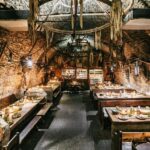
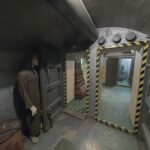
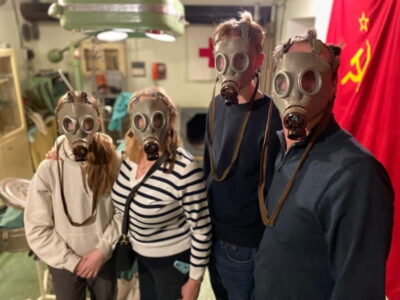
- Prague: Communism History and Nuclear Bunker Guided Tour★ 4.7 · 2,417 reviews
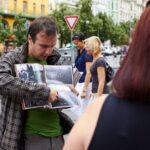
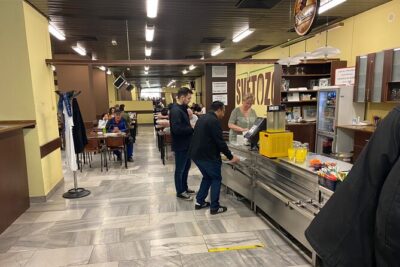
- Communism & Nuclear Bunker Tour + 70s Canteen Lunch (own expense)★ 5.0 · 1,036 reviews
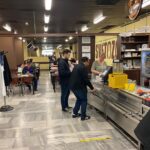
- Prague: Communism and Bunker Tour with 70s Canteen Lunch★ 4.8 · 250 reviews
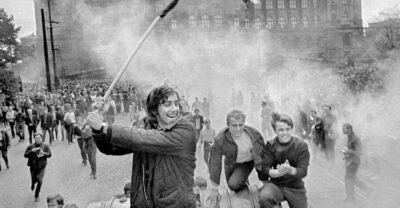
- Prague: World War II and Communist History Tour★ 4.7 · 130 reviews
Why Prague still shows communist pressure on everyday streets
Prague was always a capital in the middle of big, competing ideas, and communism left a visible imprint on how power was organized. This tour leans into that idea: you will walk past locations tied to control, propaganda, resistance, and occupation, and the guide connects them to what people actually experienced.
What I like about this format is that it does not treat communism like a distant topic from a textbook. It frames it as a system that shaped daily decisions, jobs, public speech, and even what could safely be discussed in public. You will also hear that some parts still carry a kind of emotional heaviness, because the era was not abstract to the people living through it.
If you enjoy understanding history through place, this works well. Short walks like this can still feel meaningful when you connect each stop to human consequences, and this tour tries hard to do exactly that.
Getting oriented fast at Na Příkopě 28 or Na Příkopě 864
Your meeting point can vary depending on the option you book, with two possible addresses listed: Na Příkopě 28 or Na Příkopě 864. That matters more than it sounds, because for a 1 to 2 hour walk, getting started on time is half the experience.
I recommend you plan to arrive a bit early and double-check the exact starting location in your confirmation. Also, note that luggage or large bags are not allowed, so travel light. You will want your hands free for maps, photos, and whatever the guide asks you to look for on the sidewalk and façades.
One more practical note: the tour asks for passport or ID card. That is simple, but it is the kind of small requirement that can ruin a good start if you forget.
The opening lesson: socialism theory to Central Europe spread in one session
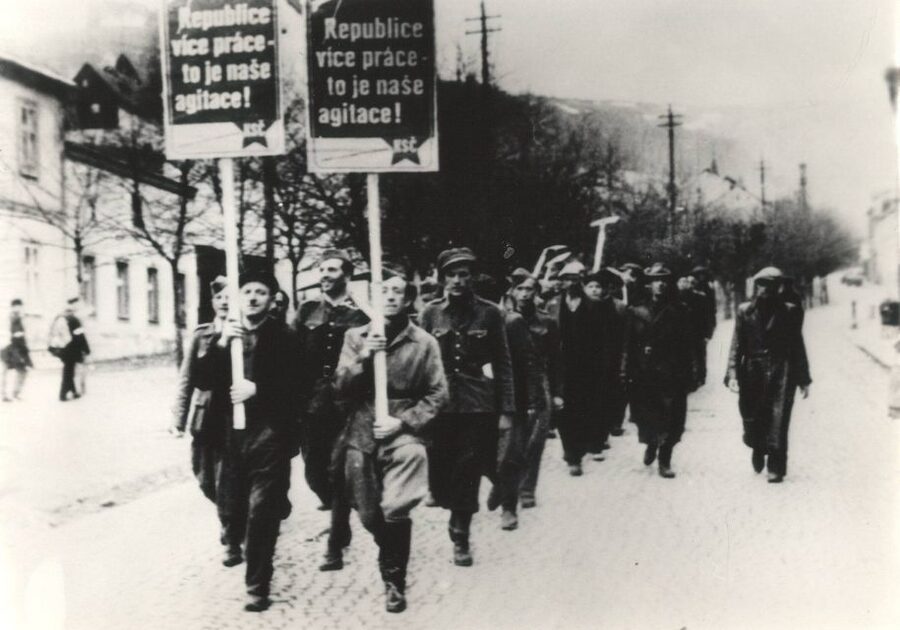
At the beginning, you get a structured history and theory introduction. You start with how socialist and communist ideas rose and developed, then you move into how those ideas spread into Central and Eastern Europe.
This is a smart move for a walking tour, because it turns later stops into evidence instead of isolated landmarks. When you understand the timeline and political logic, the places tied to power, policing, and protests become easier to read. You also get language for what you are seeing, so discussions actually go somewhere.
The tour also welcomes questions, which can be great if you already know a bit and want to test it against what the guide says. The best part is that the guide is not just reciting facts. The Cold War survivor perspective adds a sense of what the system felt like, not only what it was called.
Further routes we laced boots for
Former secret communist police headquarters, and what that says about control
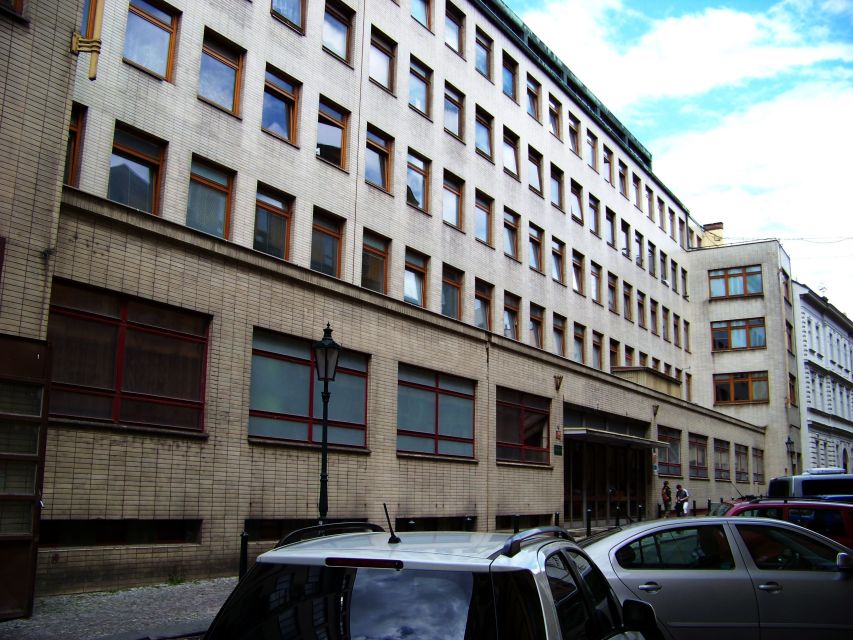
One of the core stops is the former secret communist police headquarters. That kind of location is never just a building. It signals how surveillance and enforcement were built into the system, and how fear could shape daily behavior.
In a tour like this, the value is in the interpretation. You will hear stories that connect security power to everyday life, including what people could do, how they adapted, and what consequences could follow even small actions. The goal is to help you understand that repression is not only violence, it is also procedure, bureaucracy, and constant risk management.
A practical drawback to keep in mind: because this tour depends on a guided narrative, delivery quality matters. One review noted problems with a guide handling organizational issues in real time, including being on the phone, and that can reduce how smoothly the lecture lands. If you are going for a very structured talk, arrival on time and an engaged guide are key.
The Stalin statue spot and the power of changing symbols
You will also see the former spot of a Stalin statue. Even if you only catch the outline of where it stood, the message is clear: communist regimes used public symbols to project authority and normalize their ideology.
I like that the tour includes these symbolic locations because people often remember the big names and slogans, but forget how symbols are used to steer emotions. A statue, a plaque, a renamed street, or an official building can all become propaganda tools, especially when they are tied to state messaging.
The tour then connects symbols to real institutions, including party leadership spaces. Seeing the statue site alongside seats of political power helps you grasp how ideology and administration reinforced each other.
Communist party seats, and how political power shaped public space
You will visit places that were the current and former seat of the Communist party. This is where politics moves from idea into machinery, because party leadership was often the gatekeeper for appointments, messaging, and policy direction.
The tour’s strength here is the balance of pros and cons. You will hear about the advantages as well as disadvantages of the system, not only the cruelty. That does not mean the tour sugarcoats the era, it means the guide treats communism as a functioning system that produced outcomes people noticed day to day.
That balance can be useful if you are trying to understand why some policies attracted support at the time, and why resistance also grew. You are not asked to pick one emotion and stop there. Instead, you learn to see tradeoffs and the way people interpreted those tradeoffs in real life.
Protests, demonstrations, rebellions, revolutions, and Soviet occupation
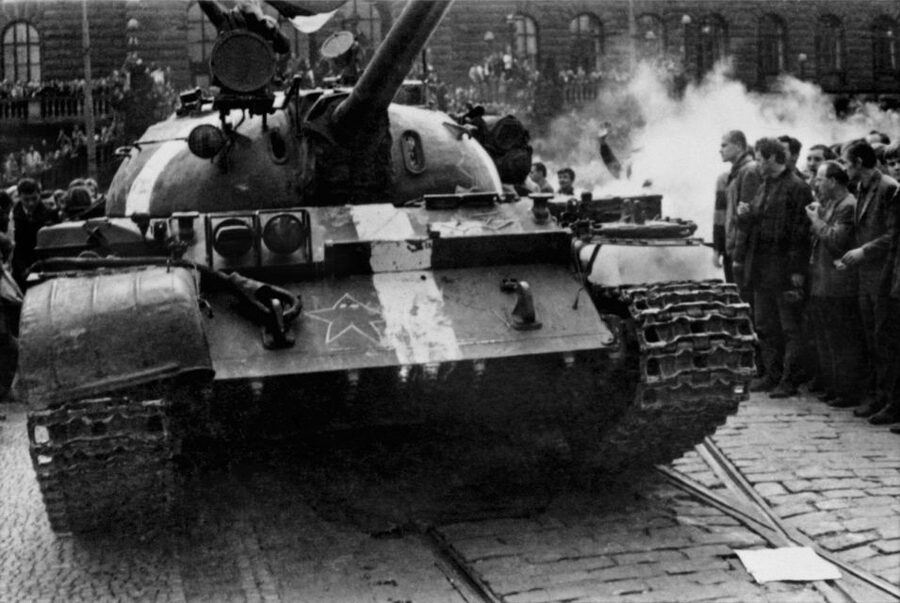
This tour also includes places connected to protests, demonstrations, rebellions, and revolutions. It also covers Soviet occupation, which is essential to understanding why Central Europe’s communist experience often felt different from any purely theoretical model.
These stops matter because they show that history did not move only in one direction. Power got challenged, people pushed back, and changes were forced through tension, negotiations, and sometimes confrontation. The guide helps you connect what you see in the streets to the bigger shifts happening across decades.
You will likely hear about how these events affected how people lived, not only what was officially recorded. That is where the survivor perspective can make a short walking route feel larger than its length.
One caution: a review mentioned that the tour is less suitable if you want to learn about communism outside the Soviet influence. If your goal is to compare many communist systems across different countries or eras, you may need additional reading or another format. But if you want Prague through the lens of Soviet-era pressure and local reactions, this tour is built for that.
Cold War daily-life stories: what changed for ordinary people
The tour does more than point at political buildings. You get details about how common life looked during that era, explained by locals who lived through it. That lived-in angle is what turns the walk into more than a sightseeing stop.
You will hear interesting stories and get deeper knowledge, including how the system shaped routines and public behavior. The guide also discusses advantages and disadvantages, so you get the human scale of tradeoffs rather than only moral slogans.
This is also where you should pay attention to how the guide handles the room. One review praised the guide for arriving on time, giving clear instructions, and telling stories in an engaging way. Another complaint said a guide’s health and delivery issues hurt the talk. In other words, for the best experience, you want to book a time slot where the guide can deliver comfortably and clearly in your language.
Discussion and Q&A: making the tour click for your questions
You are encouraged to ask questions, and that matters because communism can be emotionally charged and full of misinformation online. A live guide can correct your assumptions in the moment and adjust the explanation to what you actually want to know.
I like that the tour explicitly invites discussion. It makes the experience feel like a conversation with context, not a one-way lecture. If you have specific topics in mind, like how protests worked in practice or why Soviet influence hit differently than local ideology, this tour format can help you pin down the answers.
Also, since you are in a walking environment, the guide can point out details as they talk. Even small prompts like where to stand or what to notice on a façade can turn passive listening into active observation.
Language options and timing: plan for a fast, focused walk
The tour is offered in Czech, English, and German, and it runs for 1 to 2 hours. That range is normal for a walking tour with questions, but it also means you should treat it like a compact experience. If you have another activity right afterward, leave a buffer.
Because it is short, you get less time to wander and more time to listen and connect ideas. If you prefer very slow, flexible sightseeing, this might feel tight. But if you want an efficient way to understand communist-era Prague without spending half a day in lectures, it is a good length.
The format also supports private group availability. If your group wants more targeted Q&A, private can help you get exactly the angle you care about. If you prefer a group atmosphere, you can still go and get the main storyline in a guided format.
Wheelchair access and what to bring to make it smooth
The tour is wheelchair accessible, which is a real advantage for an older-city walking route. Still, since you are moving between several key points on foot, bring your best walking-friendly mindset and wear shoes that work on city sidewalks.
For what to bring, the tour asks for passport or ID card. That is straightforward, and it is a good idea to keep it on you in an easy pocket. Also, avoid luggage or large bags, because you will not want to wrestle with carry-on bulk while you are trying to listen.
If you like to take notes, this is one of those tours where you will want to capture names and dates as the guide explains the timeline. A phone note app works well too, since you will be standing outdoors for most of the session.
Price and value: is $50 fair for a 2-hour communist-era walk?
The price is listed at $50 per person, for a duration of 1 to 2 hours. On paper, that is not cheap for a walking tour. But value comes from who is doing the work and what you get with it.
Here, you are paying for professional local guides, locals who can explain the era from lived perspective, and a route that hits major sites tied to communist power and resistance. You are also getting an opening theory context, which reduces the mental overhead of trying to decode political history on your own.
In practice, the guide quality matters a lot. Several positive notes emphasized engaging storytelling and the ability to explain history with interesting details and sharp focus. When that narrative clicks, you walk away with understanding, not just photos. If delivery issues show up, as mentioned in at least one lower-rated review, the value can feel uneven.
So I see this as good value if you like guided explanation and want context quickly. It is less of a bargain if you are hoping for a casual stroll with minimal talk.
Who should book this, and who should choose a different style
I’d point you toward this tour if you want Prague viewed through the communist and Soviet-influenced lens. The stop list is built for that: secret police headquarters, party seats, the former Stalin statue spot, and places tied to protests and occupation. It is also a good match if you like hearing how systems affected ordinary people, not only leaders.
This is also a strong fit if you enjoy asking questions and building understanding in real time. The tour is designed to allow discussion, and that can help you separate propaganda from documented events and clarify how people experienced the era.
It might be less ideal if you want a broad survey of communism that stretches beyond the Soviet orbit in Central Europe. One review suggested the tour is less suitable for people who want communism outside the Soviet jaws, and the route and framing appear geared toward that specific context.
Should you book the Prague back to communism walking tour?
If you want a compact, focused way to understand communist-era Prague, I think this is worth booking. It combines the visuals of power and policing with an explanation of theory and how life worked, then adds protest and revolution for balance.
Book it if you pick the language you feel most confident in, you are ready for a talk-heavy 1 to 2 hours, and you want locals to translate the era into something you can actually picture. Skip it, or add extra reading, if your main goal is general communism far beyond Soviet influence, since this tour is clearly anchored to the Prague and Central European reality.
FAQ
How long is the Prague walking tour?
It lasts 1 to 2 hours.
What does the tour cost?
The price is $50 per person.
Where does the tour start?
You may meet at Na Příkopě 28 or Na Příkopě 864, depending on which starting option you book. The meeting point may vary.
Which languages are available for the live guide?
The tour is offered with a live guide in Czech, English, and German.
What should I bring?
Bring your passport or ID card.
Is luggage or large bags allowed?
No, luggage or large bags are not allowed.
Is the tour wheelchair accessible?
Yes, the tour is wheelchair accessible.
Is there a private group option?
Yes, private group availability is offered.
What are the cancellation and payment options?
You can cancel up to 24 hours in advance for a full refund, and you can reserve now and pay later.
More Tours in Prague
More Tour Reviews in Prague

Between 1948 and 1989
Freshly written up in Prague
- World War II 4WD Tour from Prague with Lunch
★ 4.4 · 3 reviews - World War II History Tour of Prague’s Old Town
★ 5.0 · 3 reviews - Welcome to Prague – Private Tour with Licensed Guide
★ 5.0 · 3 reviews - Gourmet Brunch with Chef: Unlimited Drinks & Stunning River Views
★ 5.0 · 3 reviews - VIP Prague Segway Tour Around Monastic Breweries
★ 4.0 · 3 reviews
Communist Prague & Cold War History, compared.
 ★ 4.7Communism History and Nuclear Bunker Guided TourFrom $442,417 reviews
 ★ 5.0Prague Communism History and Nuclear Bunker TourFrom $451,742 reviews
 ★ 5.0Communism & Nuclear Bunker Tour + 70s Canteen Lunch (own expense)From $351,036 reviews
 ★ 4.8Communism and Bunker Tour with 70s Canteen LunchFrom $33250 reviews
 ★ 4.7World War II and Communist History TourFrom $34130 reviews
 ★ 4.93–Hour Communism and World War 2 E-Bike TourFrom $7456 reviews
 ★ 5.0Second World War & Communism (Tip-based 3 hour tour)From $347 reviews
 ★ 5.0Communism and World War 2 Prague City TourFrom $7833 reviews
Browse the lists this tour appears in