
REVIEW · COMMUNIST PRAGUE & COLD WAR HISTORY
Prague Cold War Walking Tour
Cold War Prague hits your feet. This 3-hour Communist walking tour connects the dots between ideology, propaganda, and street level reality. You start near St. Joseph Church and follow a route that takes in major symbols of Czechoslovakia’s Communist era, then brings you back to the shock of the Velvet Revolution.
I love that you’re not just looking at landmarks. You’re hearing the story from a historian guide, and the small details matter, like the way the guide frames KSC propaganda and politics as everyday power. I also love the small group size, capped at 8 travelers, which makes it easier to ask questions and stay focused.
The main drawback is physical: there’s a steep climb up Vitkov Hill. The monument area includes a 20 to 30 minute uphill trek, so if hills are hard for you, ask about the option that skips that ascent.
In This Review
- Key highlights at a glance
- Why This Cold War Walk Works So Well
- Meeting Up, Getting Oriented, and Using the Included Tram Tickets
- Pedestrian Tunnel Karlin-Zhizhkov, Where the Cold War Still Shows Up
- Vitkov Hill: The Hall of the Soviet Soldier and Klement Gottwald’s Strange Story
- Zizkov TV Tower: A Quick View Break That Changes Your Perspective
- Wenceslas Square, Velvet Revolution Energy, and the 14th Century Thread
- The Upside-Down King Wenceslas and the Lennon Wall: Protest Gets a Shape
- Letna Hill and the Stalin Statue Story: When a Symbol Takes a Human Toll
- Price and Value: Is $126.43 Worth It for 3 Hours?
- Should You Book This Prague Cold War Walking Tour?
- FAQ
- How long is the Prague Cold War Walking Tour?
- Where does the tour start and where does it end?
- What language is the tour offered in?
- How many people are in the group?
- What is included in the price?
- Is there a steep climb during the tour?
- What is the cancellation policy?
Key highlights at a glance
- Historian-led route through Prague’s Communist-era sites, with context that sticks
- Nuclear bomb-shelter corridors you can see access doors for, still maintained
- Vitkov Hill monuments tied to Klement Gottwald and the Hall of the Soviet Soldier
- Brutalist Zizkov TV tower views for a fast, strong perspective shift
- Wenceslas Square and the Velvet Revolution told as a chain of causes and consequences
- Protest in stone, from the John Lennon Wall to the upside-down King Wenceslas statue
Walking the 1948 to 1989 chapters of Prague
- Prague: Communism History and Nuclear Bunker Guided Tour★ 4.7 · 2,417 reviews
- Communism & Nuclear Bunker Tour + 70s Canteen Lunch (own expense)★ 5.0 · 1,036 reviews
- Prague: Communism and Bunker Tour with 70s Canteen Lunch★ 4.8 · 250 reviews
- Prague: World War II and Communist History Tour★ 4.7 · 130 reviews
Why This Cold War Walk Works So Well
Prague makes it easy to see how politics becomes architecture. On a typical city sightseeing loop, the buildings look beautiful, then you move on. On this tour, the point is different. Each stop is a clue, and the guide puts those clues into a timeline so you understand what Communism promised, what it enforced, and how people pushed back.
The route is designed to keep you mentally active. You’re walking between places that were built to shape public life, then ending with the kind of political change people still talk about. By the time you reach Wenceslas Square, the story is not just about 1948 to 1989. It’s about how the Czech lands carried those echoes into later decades, including what you see in the city today.
If you like history that you can touch, this is a strong fit. You’re not staring at a museum label and moving on. You’re seeing statuary, public spaces, and purpose-built structures that were meant to impress, intimidate, or persuade.
Meeting Up, Getting Oriented, and Using the Included Tram Tickets
The tour starts at Náměstí Republiky 1077/2, Nové Město. From there, you’ll head to the starting point for the walk near St. Joseph Church. The tour is offered in English, and you can choose a morning or afternoon departure when you book.
One practical win: the price includes tram tickets. That matters here because Prague has neighborhoods that feel far apart on foot. The tram portion helps you keep the 3-hour pace realistic, so you spend more time at the key sites and less time wandering.
You’ll also get a mobile ticket, which keeps check-in simple. The small group cap at 8 helps too. This kind of tour works best when the guide can slow down for questions, and you don’t get stuck behind a big pack.
Pedestrian Tunnel Karlin-Zhizhkov, Where the Cold War Still Shows Up
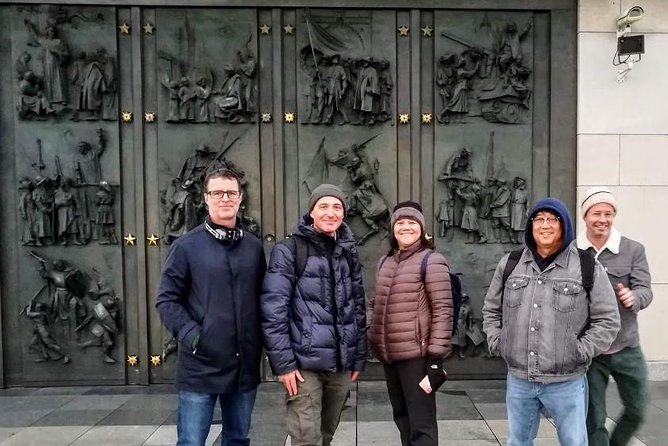
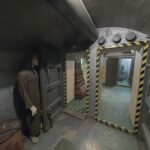
Stop 1 is Pedestrian Tunnel Karlin-Zhizhkov, and it has one of those moments that makes the whole theme click. You walk through a pedestrian tunnel and look at locked doors that lead to nuclear bomb-shelter corridors built during the Cold War. The note that the corridors are still maintained is important. It turns this from pure symbolism into something closer to lived preparedness.
Even if you don’t love grim history, this stop earns its place. Prague is famous for surviving centuries of change, and the Cold War was not just speeches and posters. It was planning, construction, and contingency thinking built into the city’s fabric. A tunnel like this gives you a physical sense of fear and preparation, not just ideology.
Practical tip: wear shoes with good grip. You’re on a walking tour, and tunnels and transitions can be slick or uneven depending on weather.
Further routes we laced boots for
Vitkov Hill: The Hall of the Soviet Soldier and Klement Gottwald’s Strange Story
Vitkov Hill is the emotional center of the tour. You start at the National Monument at Vitkov, and you spend about 1 hour there. This isn’t only one building or one view. It’s a cluster of meaning, mixing WWI commemoration, Soviet-era symbolism, and the cult of personality around Communist leadership.
At Vitkov, you’ll encounter the Hall of the Soviet Soldier. You’ll also go to the former mausoleum tied to Klement Gottwald, the first chairman of the KSC, and see details connected to his display and embalming. The idea that there’s an adjoining laboratory connected to the embalming is one of those facts that sounds almost unreal until you stand in the place and the guide explains the function.
This is where the tour’s historian approach really helps. If you only read about Communist propaganda, you may think it’s all slogans. Here, you see how the regime used objects, spaces, and ritualized presentation to enforce political loyalty. The guide frames how these sites were built after the 1948 power shift, often described as the elegant coup, and how that created a new political order fast.
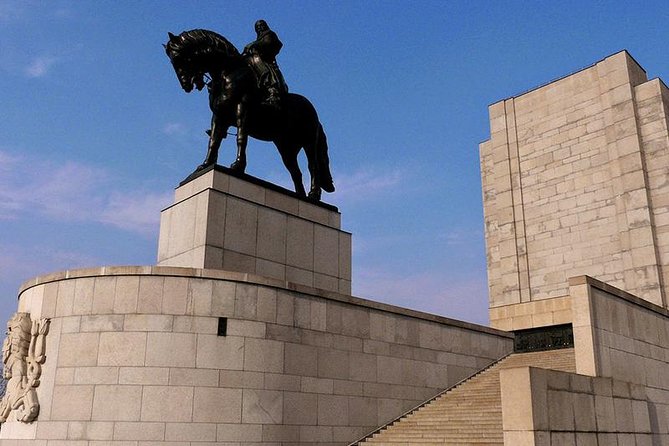
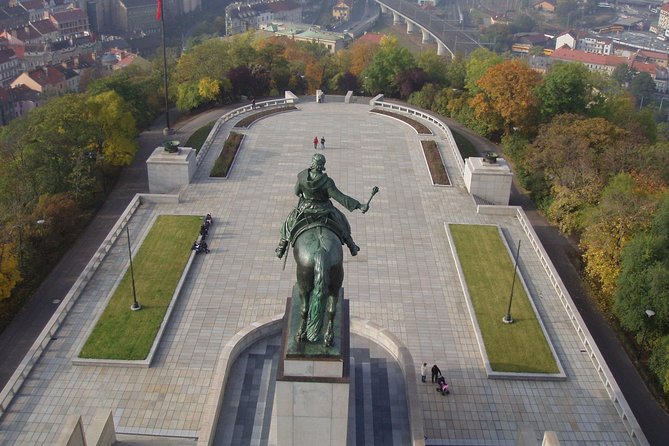
Also, Vitkov isn’t only Soviet-looking. There’s the monument to Jan Zizka and the huge equestrian statue presence. Zizka matters because the guide connects the monument’s scale to Czech nationalism inside Communist rule. That blend is a key concept for this tour: Communism in Czechoslovakia didn’t erase local identity. It often tried to harness it.
The drawback, again, is the climb. Vitkov requires steep uphill walking, and the climb itself takes about 20 to 30 minutes. If you have knee issues, balance problems, or you just know hills drain you, you should ask the provider about a private tour option that leaves out the ascent. That’s the smartest move if mobility is a concern.
Zizkov TV Tower: A Quick View Break That Changes Your Perspective
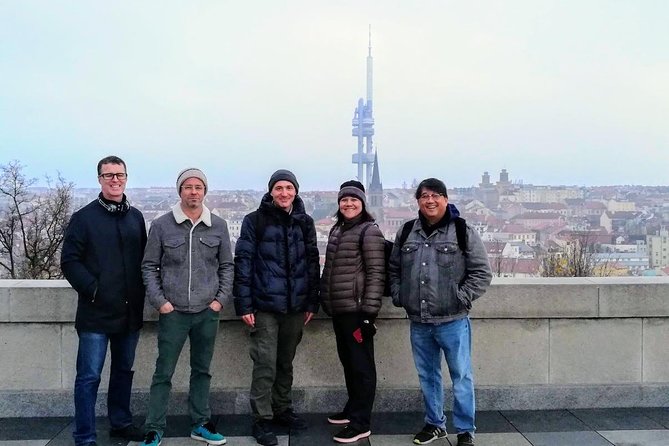
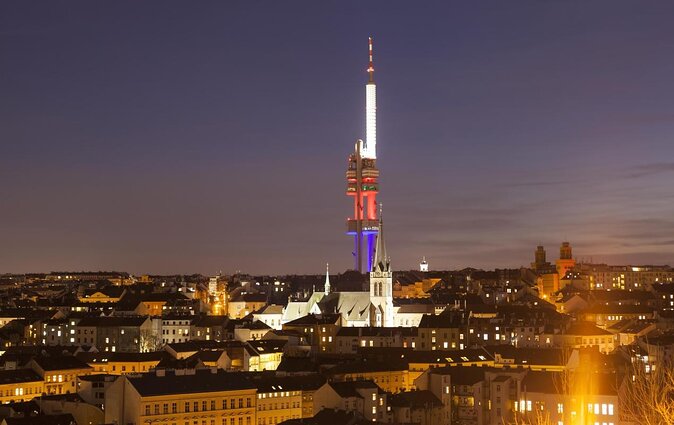
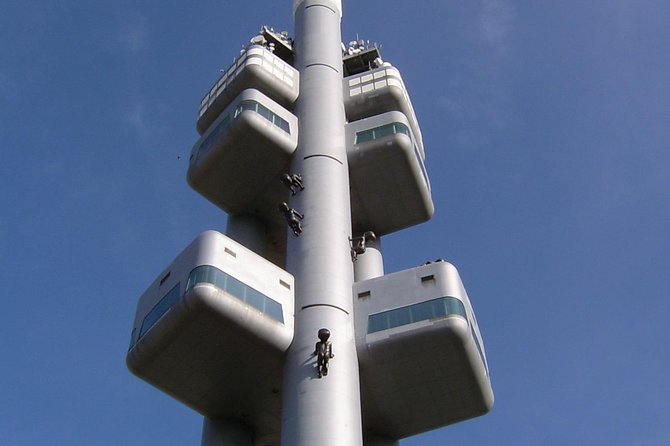
Stop 3 is short but useful: Prague TV tower in Zizkov. You get a best view moment for the Brutalist style of the tower, and it’s a nice reset after the denser, more symbolic monument sites.
Why include this at all in a Cold War tour? Because it helps you see the era’s visual language beyond statues and grand halls. Brutalism is about presence, mass, and blunt modernity. When the guide points out what you’re looking at, you start to connect style to the mindset that built it.
This is also a reminder that the Cold War story in Prague isn’t only about Soviet imagery. It’s about how Communist governance shaped public works, skylines, and what citizens experienced in daily life.
Wenceslas Square, Velvet Revolution Energy, and the 14th Century Thread
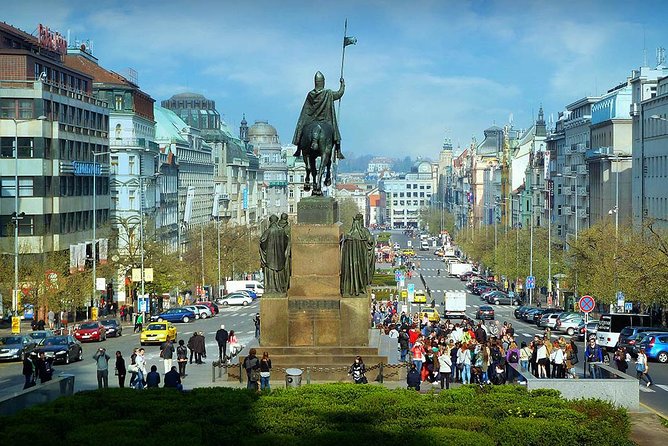
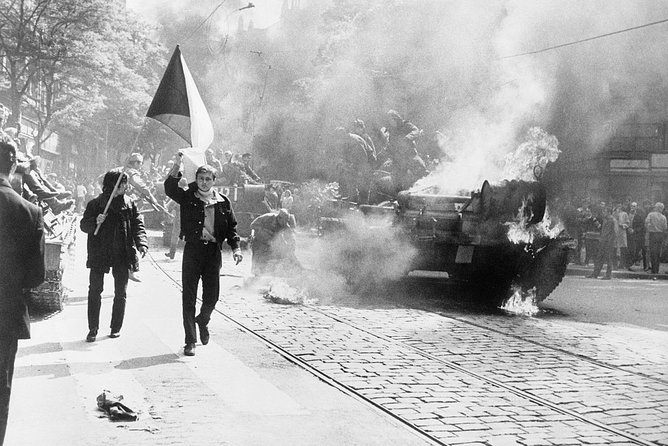
Stop 4 is Wenceslas Square, and the time there is about 20 minutes. The guide walks you through how this square has changed across centuries, starting with its founding in the 14th century. You then move through the eras when the square became a stage for occupying powers, military parades, and political tension, including the tragic events tied to Prague Spring.
Then you reach the part most people recognize: the Velvet Revolution. Here’s what makes this feel meaningful on a guided walk. You’re not only being told that crowds gathered. You’re being helped to understand why the moment mattered and how it developed. The tour ends with a “nuanced picture,” not just a triumphal narrative. That nuance is the value: you understand Communism’s rise, then the mechanisms of change, and then the way those events still echo in modern Czech Republic life.
One thing I’d watch for here is your energy. Wenceslas Square is open and exposed to weather. If it’s hot or cold, plan for comfort so you can stay present during the guide’s story beats.
The Upside-Down King Wenceslas and the Lennon Wall: Protest Gets a Shape
The tour also includes stops tied directly to political protest and public mood. Two are especially memorable because they feel like conversations carved into the city.
First, you’ll see the John Lennon Wall, presented as an important site of political protest. A wall covered in messages might sound simple, but that simplicity is the point. It’s a public place where people express dissent in a way that’s visible, shared, and hard to erase completely.
Second, you’ll pass the National Assembly building, described as the seat of Communist government. That kind of stop helps you connect street-level protest to state power. It’s one thing to learn the official story, it’s another to stand near the building where decisions were made.
Then there’s Stop 5: the Upside-Down Statue of King Wenceslas Riding a Dead Horse. It’s short, but it lands. The guide pushes you to consider how irony works in Central European politics. The statue’s angle forces you to think about what “authority” means when it’s literally turned on its head.
If you like your history to have a pulse, these stops deliver. They show you how political tension becomes art and how public messages keep moving long after a specific event ends.
Letna Hill and the Stalin Statue Story: When a Symbol Takes a Human Toll
Letna Hill is part of the tour’s Communist-site arc, and it brings a darker kind of realism. You’ll hear about the former site of an enormous Stalin statue and the tragic story of its sculptor.
I like this stop because it adds a missing layer. It’s easy to talk about regimes as faceless machines. The guide turns the lens toward the people behind monuments, including what happens to the individuals who create the symbols of power. It gives you a more complete picture of how propaganda is made, and what it can cost.
This also helps you connect Letna to Vitkov and the other monument stops. The buildings and statues aren’t only “about the past.” They’re evidence of how the political system shaped labor, risk, and public messaging.
Price and Value: Is $126.43 Worth It for 3 Hours?
At $126.43 per person for about 3 hours, this is not the cheapest way to tour Prague. But for what you’re getting, it often feels fair.
Here’s the value math I’d use:
- You get a historian guide, not just a standard walking guide voice.
- You’re in a small group with a maximum of 8, which makes the tour more like an on-the-ground lecture you can interrupt.
- Tram tickets are included, which helps you cover distance efficiently.
- You hit multiple high-impact sites in a short span, including the tunnel, Vitkov’s monument complex, and the political square area.
Also, this tour is booked about 195 days in advance on average, which tells me it’s a popular, well-timed experience for travelers who want a focused topic tour rather than generic Prague highlights.
Who gets the best value?
- You want context, not just photos.
- You like political history that stays grounded in real places.
- You prefer smaller groups and a guide who can react to your questions.
Who might want a different option?
- If you dislike hills, Vitkov can be a problem unless you arrange an alternative route that avoids the ascent.
- If you only want light sightseeing with minimal discussion, this theme tour may feel heavy.
Should You Book This Prague Cold War Walking Tour?
I’d book it if you’re curious about how Communist power was staged in public life, and you like understanding the “why” behind monuments, squares, and protest sites. The historian-led format, the small group cap, and the mix of places like Vitkov, Wenceslas Square, and the John Lennon Wall make it more than a list of Soviet-era visuals.
I’d think twice if your biggest travel challenge is physical climbing. Vitkov Hill is a real uphill commitment, and it’s central to the experience. If you can handle moderate walking and the climb, you’ll get the full story. If you cannot, ask about a version that skips that ascent.
If you like Prague in a way that’s more than pretty streets, this tour has the right tone. It turns the Cold War into something you can see, walk through, and explain back to yourself afterward.
FAQ
How long is the Prague Cold War Walking Tour?
It runs for about 3 hours.
Where does the tour start and where does it end?
You start at Náměstí Republiky 1077/2, Nové Město, 110 00 Praha-Praha 1, Czechia. The tour ends in Prague, Czechia.
What language is the tour offered in?
The tour is offered in English.
How many people are in the group?
The tour has a maximum of 8 travelers.
What is included in the price?
The tour includes a historian guide and tram tickets.
Is there a steep climb during the tour?
Yes. Vitkov Hill involves a steep climb, with 20 to 30 minutes uphill. If climbing is difficult for you, the provider recommends a private tour that leaves out Vitkov Hill.
What is the cancellation policy?
You can cancel for free up to 24 hours in advance for a full refund. If you cancel less than 24 hours before the start time, the amount you paid will not be refunded.
More Tours in Prague
More Tour Reviews in Prague
Between 1948 and 1989
Freshly written up in Prague
- World War II 4WD Tour from Prague with Lunch
★ 4.4 · 3 reviews - World War II History Tour of Prague’s Old Town
★ 5.0 · 3 reviews - Welcome to Prague – Private Tour with Licensed Guide
★ 5.0 · 3 reviews - Gourmet Brunch with Chef: Unlimited Drinks & Stunning River Views
★ 5.0 · 3 reviews - VIP Prague Segway Tour Around Monastic Breweries
★ 4.0 · 3 reviews
Communist Prague & Cold War History, compared.
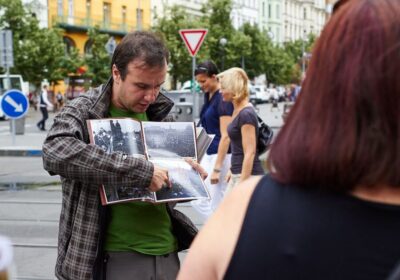 ★ 4.7Communism History and Nuclear Bunker Guided TourFrom $442,417 reviews
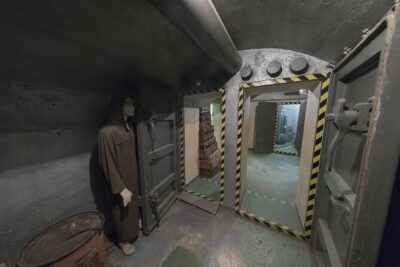 ★ 5.0Prague Communism History and Nuclear Bunker TourFrom $451,742 reviews
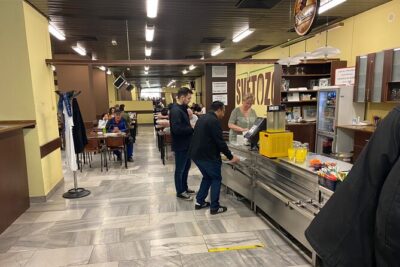 ★ 5.0Communism & Nuclear Bunker Tour + 70s Canteen Lunch (own expense)From $351,036 reviews
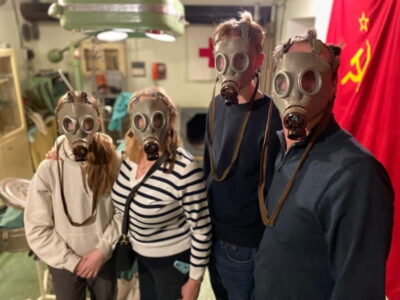 ★ 4.8Communism and Bunker Tour with 70s Canteen LunchFrom $33250 reviews
 ★ 4.7World War II and Communist History TourFrom $34130 reviews
 ★ 4.93–Hour Communism and World War 2 E-Bike TourFrom $7456 reviews
 ★ 5.0Second World War & Communism (Tip-based 3 hour tour)From $347 reviews
 ★ 5.0Communism and World War 2 Prague City TourFrom $7833 reviews
Browse the lists this tour appears in