
REVIEW · WWII & OPERATION ANTHROPOID TOURS
WWII and Communism History in Prague’s Old Town Private Tour
Prague’s center tells two brutal stories. This private walk connects World War II occupation, the Communist takeover, and the Velvet Revolution ending right where crowds once gathered on Wenceslas Square. You cover the places that shaped modern Czech identity, with a history-focused guide and a route that keeps the timeline clear.
I love that the itinerary starts in Josefov and goes right to the symbolic centers of power, so you see how oppression worked on both street level and government level. I also like the guide experience, and the fact that guides such as Sofija and Markéta bring sharp details plus small personal touches that make the facts easier to hold onto.
One possible drawback: this is not a light stroll. Between concentration camp deportations, interrogations, propaganda, and political executions, you should expect serious subject matter, and the 2-hour option skips the Museum of Communism ticket.
In This Review
- Key Things You Get Out Of This Tour
- A WWII to Velvet Revolution Route That Makes Prague’s Center Click
- Josefov Walk: Maisel and Spanish Synagogues and the Deportation Reality
- Old Town Square and the Astronomical Clock After May 1945
- Petschek Palace Area: Gestapo Headquarters and the Resistance Memorial Plaque
- Wenceslas Square: Nazi Demonstrations to the Velvet Revolution in One Place
- Museum of Communism Option: Cold War to Jan Palach to 1989
- Price and Logistics: Does $104 Feel Like Good Value?
- Who This Tour Suits Best (And Who Might Want to Think Twice)
- Final Call: Should You Book It?
- FAQ
- Where does the tour start?
- How long is the tour?
- What is included in the 2-hour option?
- Does the 4-hour option include the Museum of Communism?
- What languages are available for the guide?
- Is the tour wheelchair accessible?
Key Things You Get Out Of This Tour
- A timeline you can follow, from Nazi occupation through Communist rule to 1989 on Wenceslas Square
- Josefov sites with context, including Maisel and Spanish Synagogues and deportation to Theresienstadt
- Old Town Square war damage, tied to the May 5-9, 1945 battles and the Prague Uprising
- A clear look at Gestapo power, via the Petschek Palace area and a Czech resistance memorial plaque
- The Velvet Revolution in the right location, where Nazi demonstrations once happened too
- Optional Museum of Communism depth (only with the 4-hour option), covering Prague Spring and Jan Palach
Old Town listings, lane by lane
- Prague: Oldtown, Medieval Underground & Dungeon History Tour★ 4.2 · 8,244 reviews
- Prague: Old Town Hall Tower Entry Ticket★ 4.5 · 6,749 reviews
- Prague: 3-Hour Walking Tour of Old Town & Prague Castle★ 4.7 · 5,696 reviews
- Prague: 3-Hour Old Town and Prague Castle Tour in German★ 4.8 · 5,671 reviews
A WWII to Velvet Revolution Route That Makes Prague’s Center Click
What I like most about this tour is the way it makes Prague feel like one story instead of scattered stops. You start in Josefov, the Jewish quarter, then move through the Old Town areas that became stages for uprising and liberation. After that, you finish at Wenceslas Square, where the same public space meant different things under different regimes.
The route also helps you understand something many visitors miss, how quickly propaganda re-frames the past. The tour includes discussion of how the Red Army’s role in liberalizing the city was later used by the Czechoslovak Communist Party to boost support for communism. That angle matters, because it shows the difference between what happened and what people were told happened.
It’s a private tour, so the pacing can be adjusted to your interests and questions. And with an expert guide fluent in your language, you are not just collecting dates, you’re learning how people lived, resisted, and survived the systems around them. The duration is 2 to 4 hours, so you can choose a shorter walk or the longer version that adds a major museum stop.
Josefov Walk: Maisel and Spanish Synagogues and the Deportation Reality
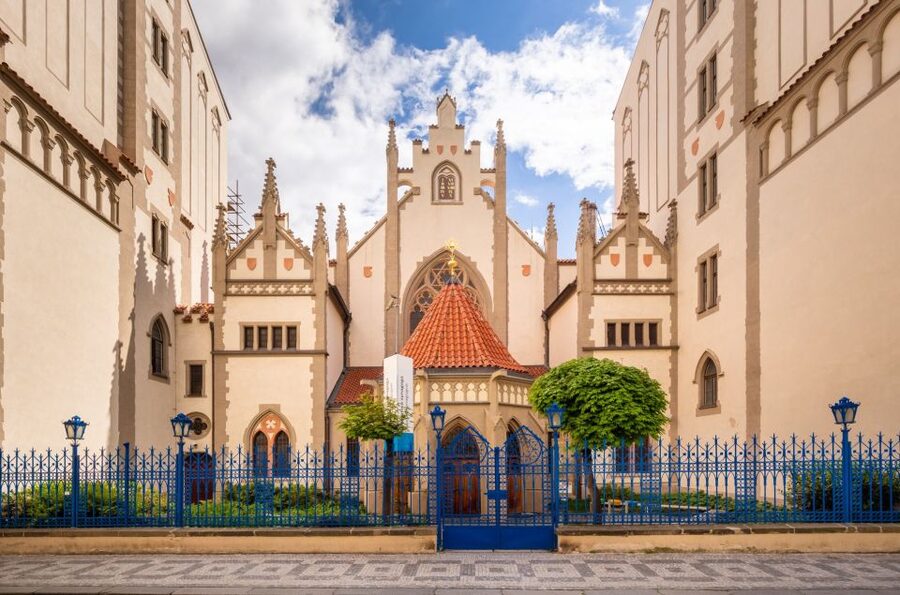
Josefov is where this tour earns its seriousness. You begin with a walk through this Jewish quarter, described as one of the best preserved Jewish Ghettos in Europe, and the guide uses that setting to ground the WWII story in real streets and real landmarks.
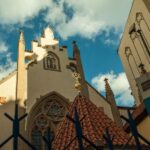
You’ll see the Maisel Synagogue and the Spanish Synagogue. The guide connects those buildings to what happened to Czech Jews during the Nazi occupation, including the horrors of transportation to the Theresienstadt concentration camp. Even if you know the basic outlines of the Holocaust, hearing it tied to these specific Prague locations gives your brain something concrete to hold onto.
One striking detail you should listen for is Hitler’s plan to create the museum of the extinct race. That is the kind of information that explains why the Nazis were not only killing people, they were also trying to control how the world would understand those people afterward. It’s a cold concept, but it helps you make sense of why propaganda and staged narratives mattered so much.
Practical note: this portion is walking, so wear comfortable shoes. Also, Josefov can feel like you’re stepping into a different Prague, quieter and more solemn than the tourist corners, which makes it a good place to slow down and really listen.
Old Town Square and the Astronomical Clock After May 1945

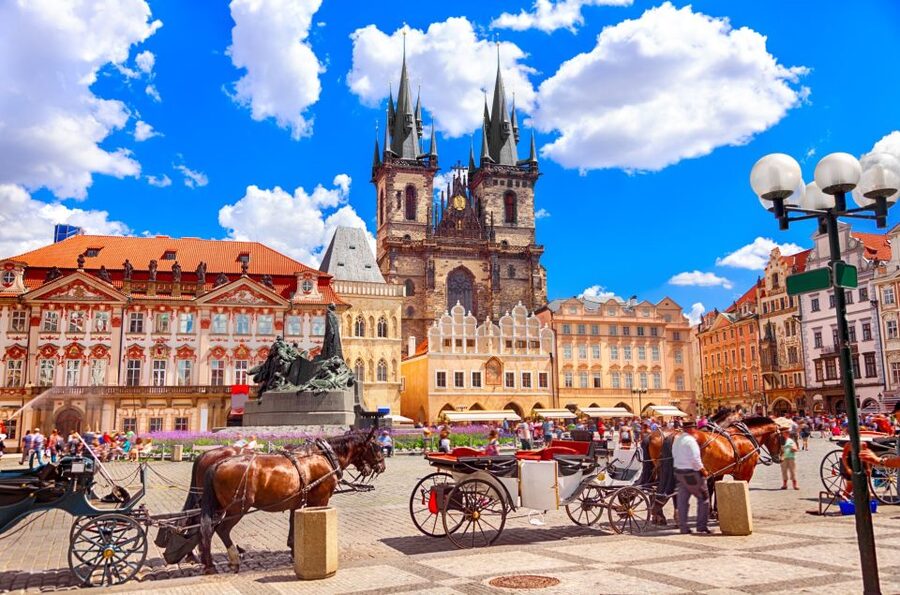
From Josefov, the tour moves you into Old Town territory, where Prague’s WWII uprising story plays out. The guide points you toward the locations tied to the Prague Uprising at Old Town Square, keeping the focus on what happened during the fighting and why it mattered.
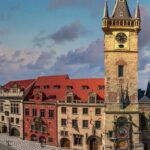
A key stop is the Old Town Hall facade and its iconic Astronomical Clock. You’ll learn that the clock suffered heavy damage during the bloody battles of May 5-9, 1945. That detail changes how you might look at the clock later. It’s not only a clock, it’s a survivor of a time when the city was under extreme pressure.
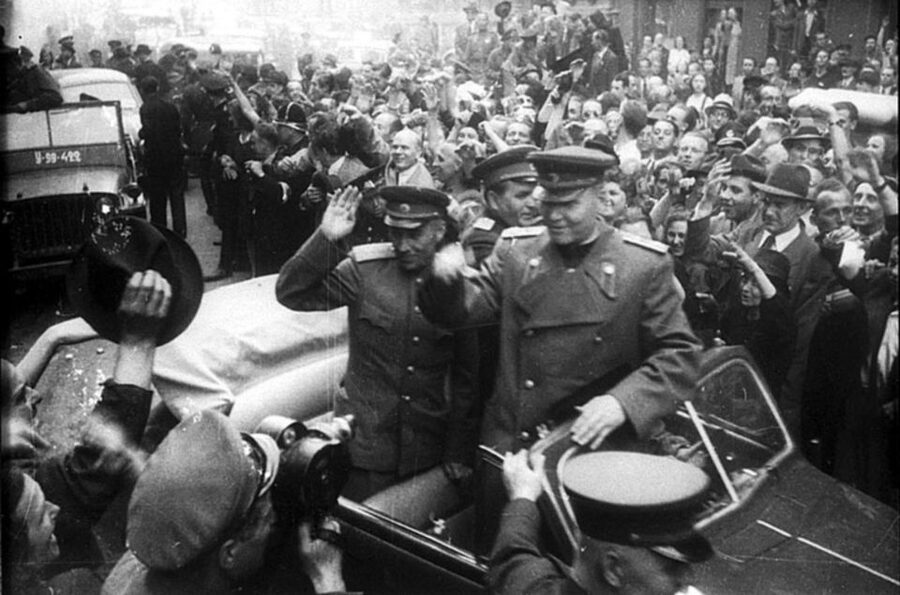
This section also includes the narrative connection between liberation and the later political shift. The tour explains how the involvement of the Red Army in the liberalization of the city was later used by the Czechoslovak Communist Party to increase support for communism. That adds a layer beyond pure WWII history, pushing you to think about the next chapter and who got to write the story.
If you care about turning points, this is one of them. You see how a liberation moment can become a propaganda tool once a different power structure takes over.
Further wartime ground covered in Prague
Petschek Palace Area: Gestapo Headquarters and the Resistance Memorial Plaque

Next you walk to the Petschek Palace, the former seat of the Gestapo headquarters. That alone makes this stop heavy, because you’re not just hearing about the concept of terror, you’re standing near a building connected to it.
The guide points out a memorial plaque dedicated to the Czech resistance on the corner of the building. Then you get the details of what resistance members endured, including interrogation and torture. This is the part of the tour where the story shifts from what the occupiers did to what the resistance faced when they pushed back.
What I like here is the balance of focus. The tour does not only spotlight the Gestapo as a faceless system. It ties that system to the resistance, which gives you a clearer sense of risk and courage, not just cruelty.
Drawback to be aware of: this stop can feel emotionally intense. If you’re visiting with kids, or you prefer lighter historical themes, this is the segment where you may want a slower pace or a quick pause.
Wenceslas Square: Nazi Demonstrations to the Velvet Revolution in One Place
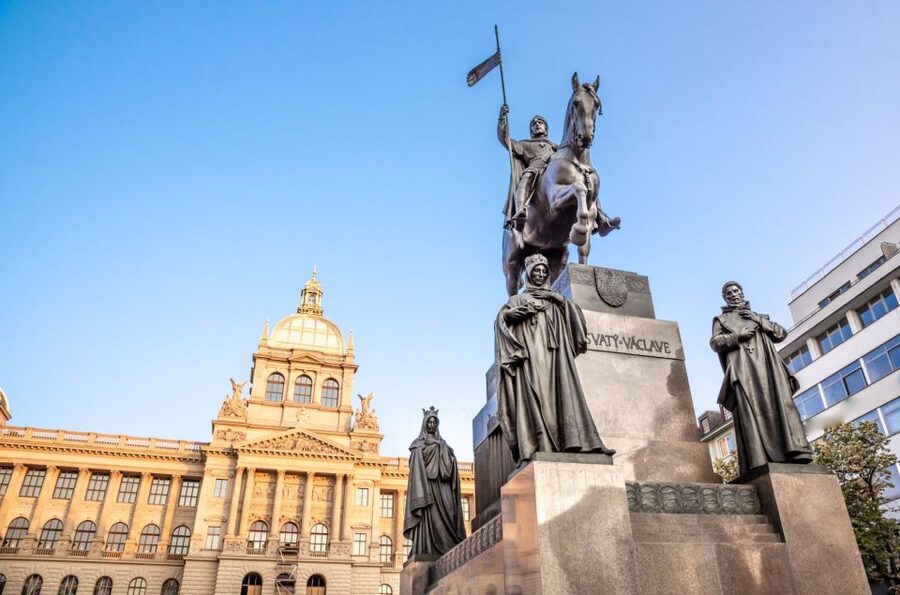
You end at Wenceslas Square, and the contrast is the point. The tour explains that the Nazis used the square for mass demonstrations. Then it brings you to 1989, when mass demonstrations for the Velvet Revolution took place here too.
This ending works well because it compresses decades into one public space. You can stand where people once gathered under one ideology and then imagine the same location turned into a platform for change. The guide helps connect those dots so the square feels like a living witness, not just a landmark with shops and traffic.
If you want the Communist era in practical terms, this finish is a strong way to grasp it. Communism is often taught as policy and ideology. Here, it’s tied back to street action, public assembly, and the pressure citizens applied to political systems.
This is also where you’ll likely get a better sense of what “Velvet Revolution” means beyond the phrase. The guide ties it to how people used public visibility to demand democracy, at a location that once helped authoritarian power display itself.
Museum of Communism Option: Cold War to Jan Palach to 1989
If you pick the extended 4-hour option, you add a major stop: the Museum of Communism. This is where the tour turns from walking history into lived-history detail, and it’s why the longer option often feels like better value if you genuinely want the Communist-era layer.
The museum covers the four decades of communist rule in the country. You’ll hear about the Cold War, the Prague Spring, the Soviet invasion of 1968, and the suicide of student Jan Palach. Then the story reaches the Velvet Revolution, tying the end of the regime back to earlier cracks and pressures.
The tour also flags themes you’ll want to watch for as you move through the museum: propaganda, censorship, political trials, and executions. That set of topics matters because it explains how power worked day to day, not only through laws or leaders, but through control of information and fear of consequences.
One practical difference: in the 2-hour option, Museum of Communism tickets are not included. The tour still covers WWII and the Communist-era story in the Old Town route, but the museum is where the Communist daily life and mechanisms get spelled out more fully.
Price and Logistics: Does $104 Feel Like Good Value?
At $104 per person, this tour sits in the “serious history” price tier for Prague, and your value depends on which option you choose.
For the 2-hour walk, the price is paying for an expert guide who delivers a structured, place-based narrative through multiple major WWII and Communist-era locations. You get Josefov, Old Town Square, the Astronomical Clock area, the Petschek Palace connection, and the finish at Wenceslas Square. For many people, that set alone is a big win because it covers two eras in one coherent route.
For the 4-hour option, the value improves if you want the Communist Museum. The museum tickets are included in that longer choice, and the museum topics list is extensive: Cold War, Prague Spring, 1968 invasion, Jan Palach, and the Velvet Revolution. If you’re the type who wants more than street-level context, the museum is where this becomes more than a walking lecture.
What also justifies the price is the private format and the language support. You can choose English, French, German, Italian, Polish, Russian, Spanish, or Czech. A private group also usually means the guide can answer follow-up questions without rushing you out the door.
Who This Tour Suits Best (And Who Might Want to Think Twice)
I think this tour is a strong fit if you want your Prague time to feel meaningful and structured. It’s especially good for people who like history with real locations, not only museum panels and big-picture timelines. If you’re interested in resistance stories, or in how public spaces take on political meaning, you’ll probably enjoy the arc from Josefov to Wenceslas Square.
It’s also a good match for curious question-askers. Guides such as Sofija and Markéta have been praised for handling questions and adding human-scale anecdotes on top of the facts. That matters because these topics can feel abstract until someone makes them understandable.
A word of caution: the subject matter is heavy throughout. Concentration camp deportations, torture, executions, censorship, and propaganda are all part of the storyline. If you want a light and scenic tour, this probably won’t be your best pick.
If you are sensitive to dark history, consider the 2-hour option so you do not add another museum experience on top of the walking stops. If you are comfortable with the topics and want the Communist-era mechanisms explained in detail, go for the 4-hour version.
Final Call: Should You Book It?
Book this tour if you want a private, guide-led route that connects WWII occupation to Communist rule, and then ends with the Velvet Revolution in the exact public space where it happened. The combination of Josefov landmarks, Old Town Square war context, the Gestapo headquarters site area, and Wenceslas Square makes it feel like Prague’s center tells one long political story.
I’d especially recommend the 4-hour option if you know you want the Communist Museum. That’s where the Cold War to Jan Palach to 1989 thread becomes clearer, and the included museum ticket saves you time and decision-making.
Skip it only if you’re looking for something casual, purely scenic, or upbeat. This is history with real weight, and it will ask you to pay attention.
FAQ
Where does the tour start?
Meet your guide in front of the World of Franz Kafka at Nám. Franze Kafky 16/1, 110 00 Staré Město, Czechia.
How long is the tour?
The duration is 2 to 4 hours, depending on the selected option.
What is included in the 2-hour option?
The tour includes a private WWII and Communism-themed walk through Prague’s Old Town, with the number of attractions depending on the option. Museum tickets to the Museum of Communism are not included in the 2-hour option.
Does the 4-hour option include the Museum of Communism?
Yes. The 4-hour option includes visiting the Museum of Communism, and regular tickets are included.
What languages are available for the guide?
The live guide is available in English, French, German, Italian, Polish, Russian, Spanish, and Czech.
Is the tour wheelchair accessible?
Yes, the tour is wheelchair accessible and it is a private group.
Between 1948 and 1989
Wartime Ground in Prague
Old Town, Lane by Lane
Freshly written up in Prague
- World War II 4WD Tour from Prague with Lunch
★ 4.4 · 3 reviews - World War II History Tour of Prague’s Old Town
★ 5.0 · 3 reviews - Welcome to Prague – Private Tour with Licensed Guide
★ 5.0 · 3 reviews - Gourmet Brunch with Chef: Unlimited Drinks & Stunning River Views
★ 5.0 · 3 reviews - VIP Prague Segway Tour Around Monastic Breweries
★ 4.0 · 3 reviews
WWII & Operation Anthropoid Tours, compared.
 ★ 4.7WWII Guided Tour & The Crypt of Operation AnthropoidFrom $421,030 reviews
 ★ 5.0WWII in Prague Tour & The Crypt of Operation AnthropoidFrom $43817 reviews
 ★ 5.0Small-Group World War 2 & Operation Anthropoid Tour in PragueFrom $33231 reviews
 ★ 4.8World War 2 and Operation Anthropoid Walking TourFrom $32193 reviews
 ★ 4.7World War II and Communist History TourFrom $34130 reviews
 ★ 4.7Communists and World War II TourFrom $2988 reviews
 ★ 5.0Half-Day WWII Prague Walking TourFrom $4768 reviews
 ★ 4.93–Hour Communism and World War 2 E-Bike TourFrom $7456 reviews
Browse the lists this tour appears in